Change or rekey · Toronto
Deadbolt Installation
The back door has a deadbolt in name only: a short bolt, a thin brass strike held by two little screws, and a jamb you can flex with your palm.
In plain words
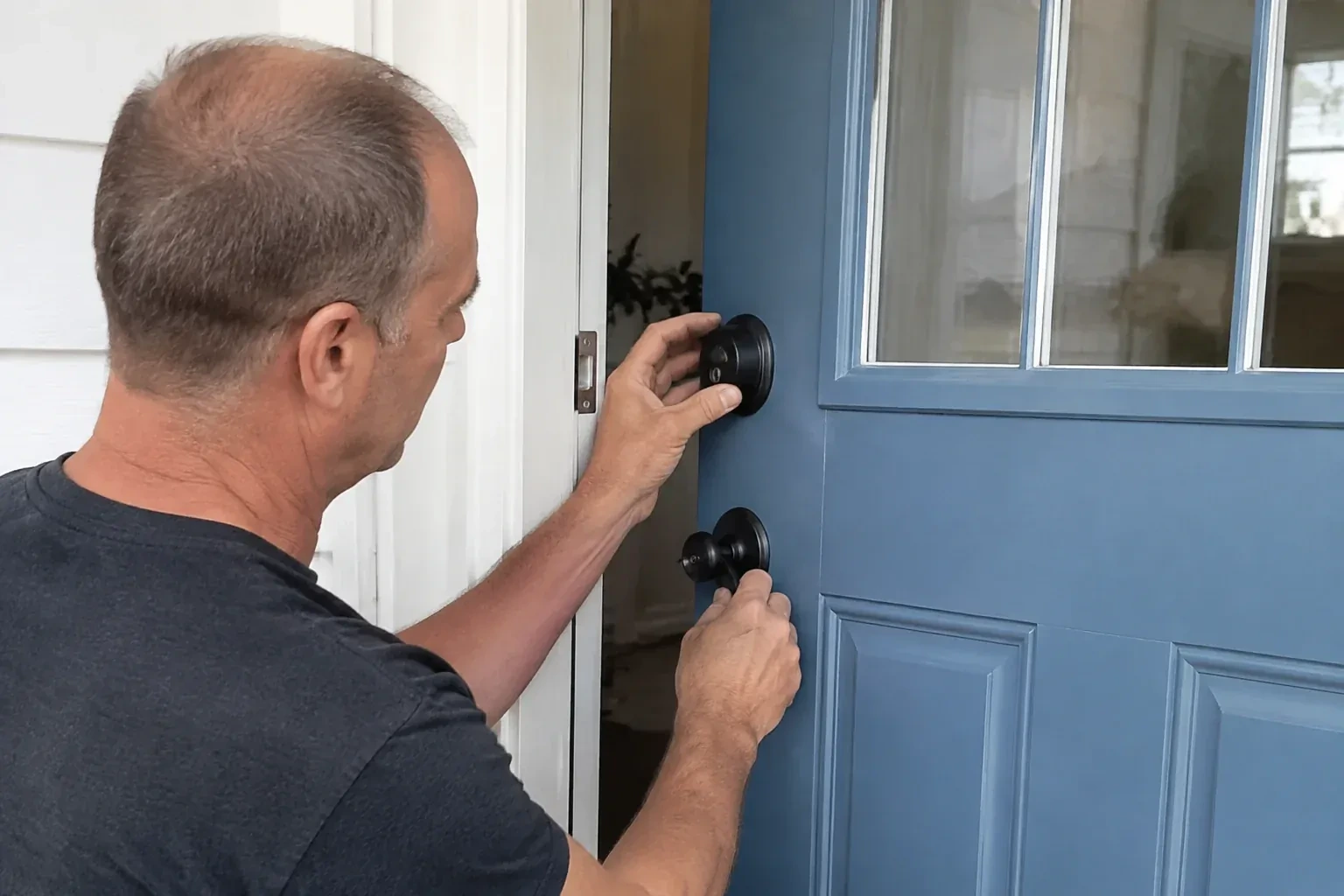
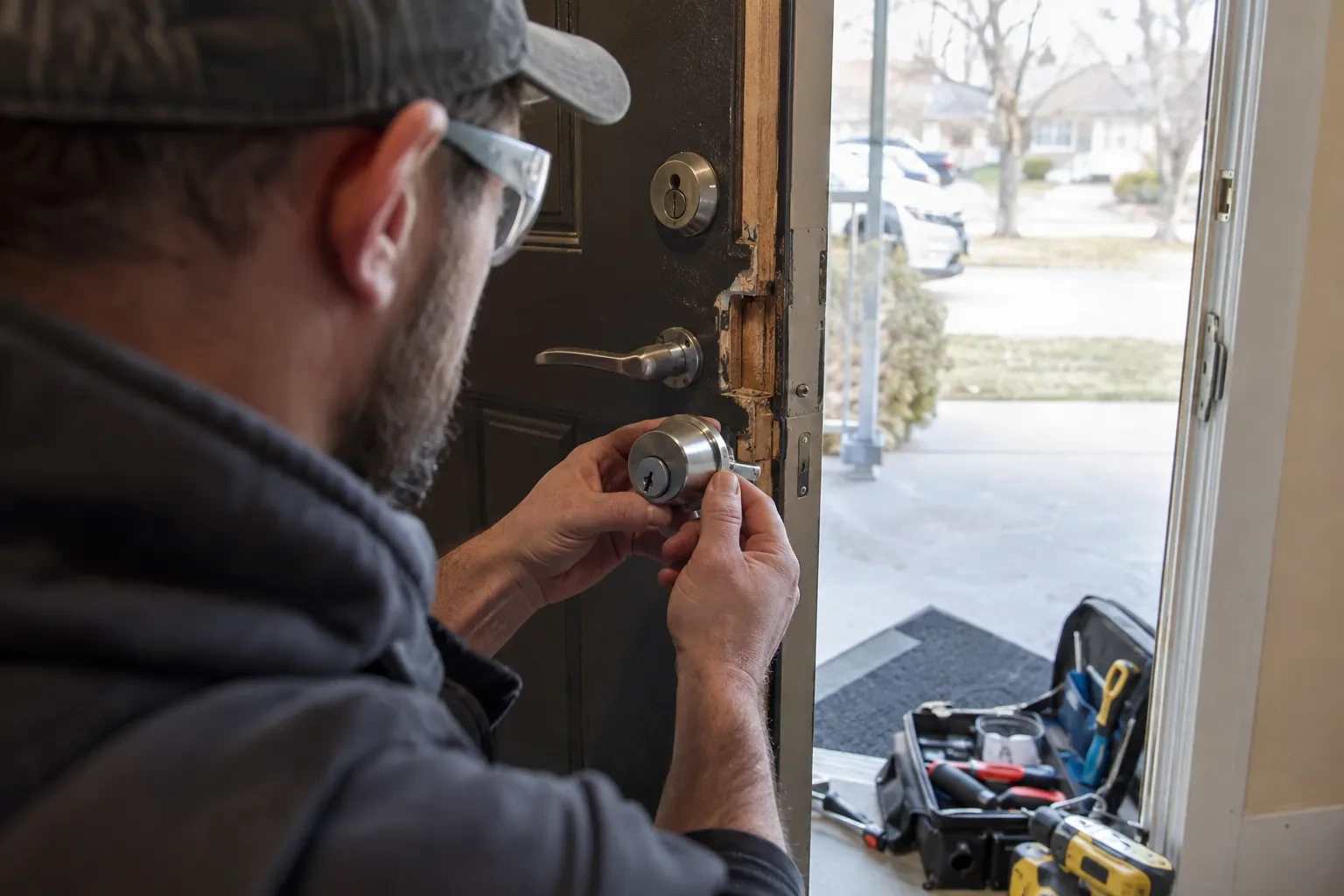
Steel-clad and fibreglass doors, the common insulated entry doors in newer subdivisions, take a deadbolt happily as long as they are cut for it properly. The skin is thin metal or resin over a foam core, often with a wood block at lock height, so the cross bore is made with a hole saw suited to the skin, at low speed, and the edge is finished with a plate rather than a chisel mortise. Solid wood doors in older homes are cut conventionally, with care for splitting at the edge. The locksmith reads the door before drilling and picks the method that leaves a clean opening and a true-running bolt.
How the visit goesThe bolt on the front door is keyed on both sides. Getting out at night means finding the key in the dark, and with a toddler in the house you have decided the inside should turn by hand. You want it done properly, not just swapped.
Deadbolt Installation
How the visit goes
Glass, sidelights and what is within reach
Glass changes the conversation about which deadbolt to fit. A pane in the door or a sidelight within an arm's reach of the lock means an inside thumb-turn could be reached by breaking the glass, which is why double-cylinder deadbolts are sometimes suggested. The locksmith measures the distance from the glass to the lock, notes whether it is tempered, laminated or plain, and lays out the options: a captive thumb-turn that needs a key only when you choose, a laminated pane or a tested security film that can delay an arm, or moving the bolt height. The aim is a door that keeps a stranger out and still lets everyone inside leave with one turn of the hand.
Marking and boring a fresh door
With the height agreed, the paper template is folded over the door edge and the two centres are marked: the cross bore on the face and the edge bore on the stile. A boring jig clamps over the door so the hole saw cannot wander, and the cross bore is cut from both faces to leave clean veneer or skin on each side. The edge bore is drilled with a 25 mm bit through the stile until it meets the larger hole. The locksmith then traces the bolt faceplate on the edge and chisels a shallow mortise so the plate sits flush, keeping the cut inside the lines so the edge stays sound.
Looking after it through the seasons
A deadbolt asks for very little, and most of it happens twice a year. In spring and again in autumn, throw the bolt with the door closed and notice whether it still slides in freely; wood doors swell in humid summers and shrink in dry winter air, and the first sign is a bolt that needs the door pulled before it will lock. If so, a small strike adjustment puts it right. Give the bolt and keyway a puff of whatever lubricant the lock's own maker specifies, often dry PTFE or graphite, since some cylinders are serviced with oil instead. Wipe salt off the outside trim after a slushy week so the finish stays bright.
Deadbolt Installation
In the van
Sharp chisel and mallet
Boring jig and 54 mm hole saw
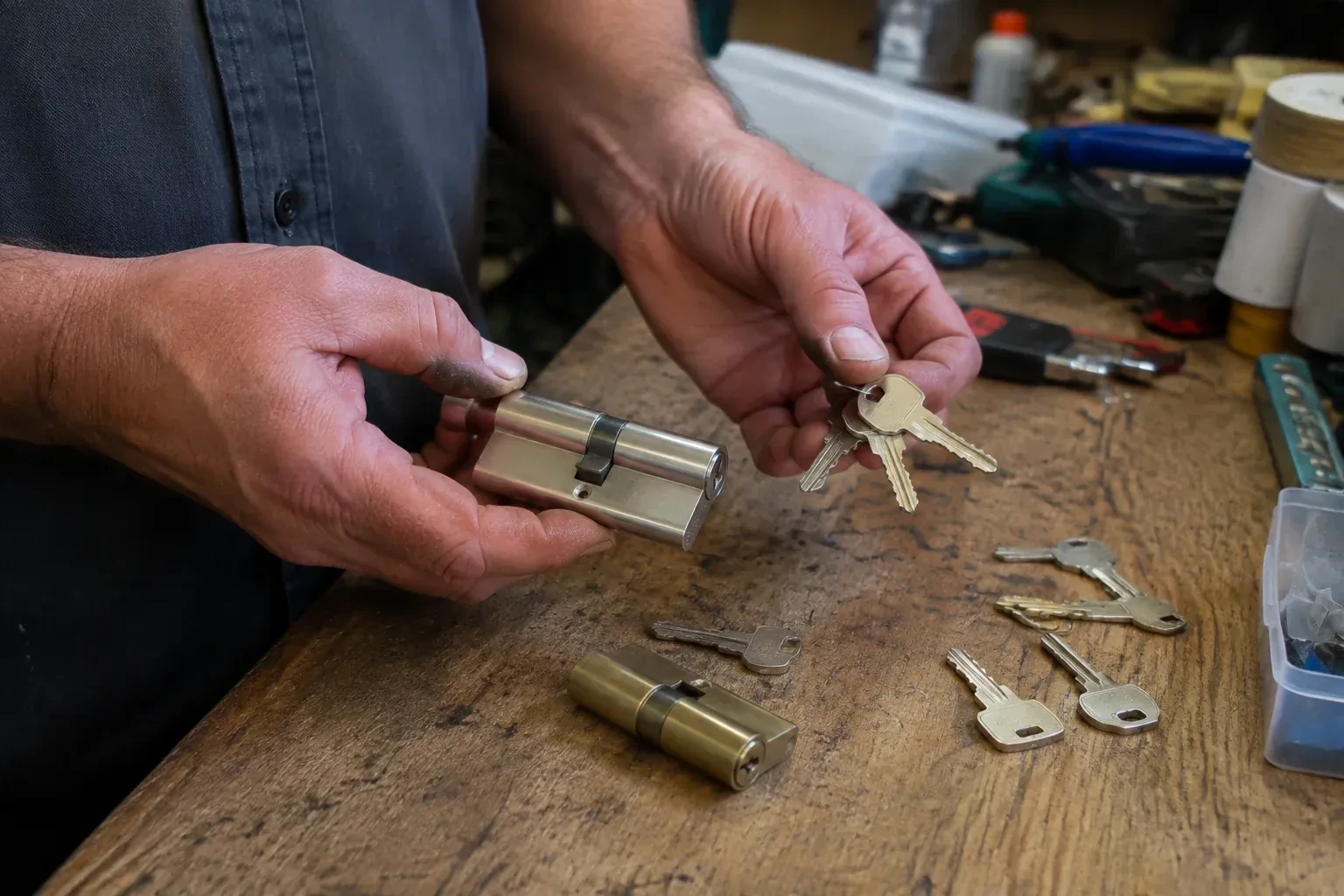
Rekeying pins and key blanks
Dry PTFE lubricant
Bolt faceplate or drive-in collar
Deadbolt Installation
What affects the quote
Finish and trim style
Coated finishes built for salt and sun, matching trim for an existing handleset, and low-profile faces cost differently from a standard brass or nickel unit, and you choose the level.
New bore or replacement into existing holes
Boring a door that has never had a deadbolt takes more time and tooling than dropping a new bolt into holes that are already there, and the quote reflects which of the two your door needs.
Door and hinge corrections
A sagging door, loose hinge screws or thick weatherstrip are put right before a bolt is fitted, and that adjustment is quoted as its own line rather than folded into the lock.
What to have ready
- Is the door between the garage and the house one of the doors you want bolted?
- Has the door or frame ever been forced, or are any screw holes stripped?
- Does the door have to be pulled or lifted before it latches or locks at the moment?
Deadbolt Installation: questions
QuestionsDoes a deadbolt work with a storm door or screen door?
It does, with one check: the thumb-turn and the outside cylinder have to clear the storm door when it closes. Most storm doors leave enough depth, but a low-profile deadbolt trim is chosen where the gap is tight. The storm door's own latch is separate and does not replace a bolt on the main door, since a screen frame gives little resistance on its own.
What is the difference between a deadbolt and the lock in my door knob?
The knob or lever holds the door shut with a spring latch: a bevelled tongue that snaps into the frame and can be pushed back by anything slid into the gap. A deadbolt is a solid rectangular bar driven by the key or thumb-turn alone, and when fully thrown it locks in place so it cannot be pressed back from the edge. The knob keeps the door closed; the deadbolt keeps it locked.
Should I choose a single-cylinder or a double-cylinder deadbolt?
For any door people leave the house through, a single cylinder with an inside thumb-turn is the sensible choice, and provincial building rules for dwellings call for exit doors that open from inside without a key. Double-cylinder bolts are keyed on both faces and are sometimes proposed where glass is near the lock, but a captive thumb-turn, laminated glass, or a tested security-film system with its specified attachment, addresses that without a key on the inside.
Related services
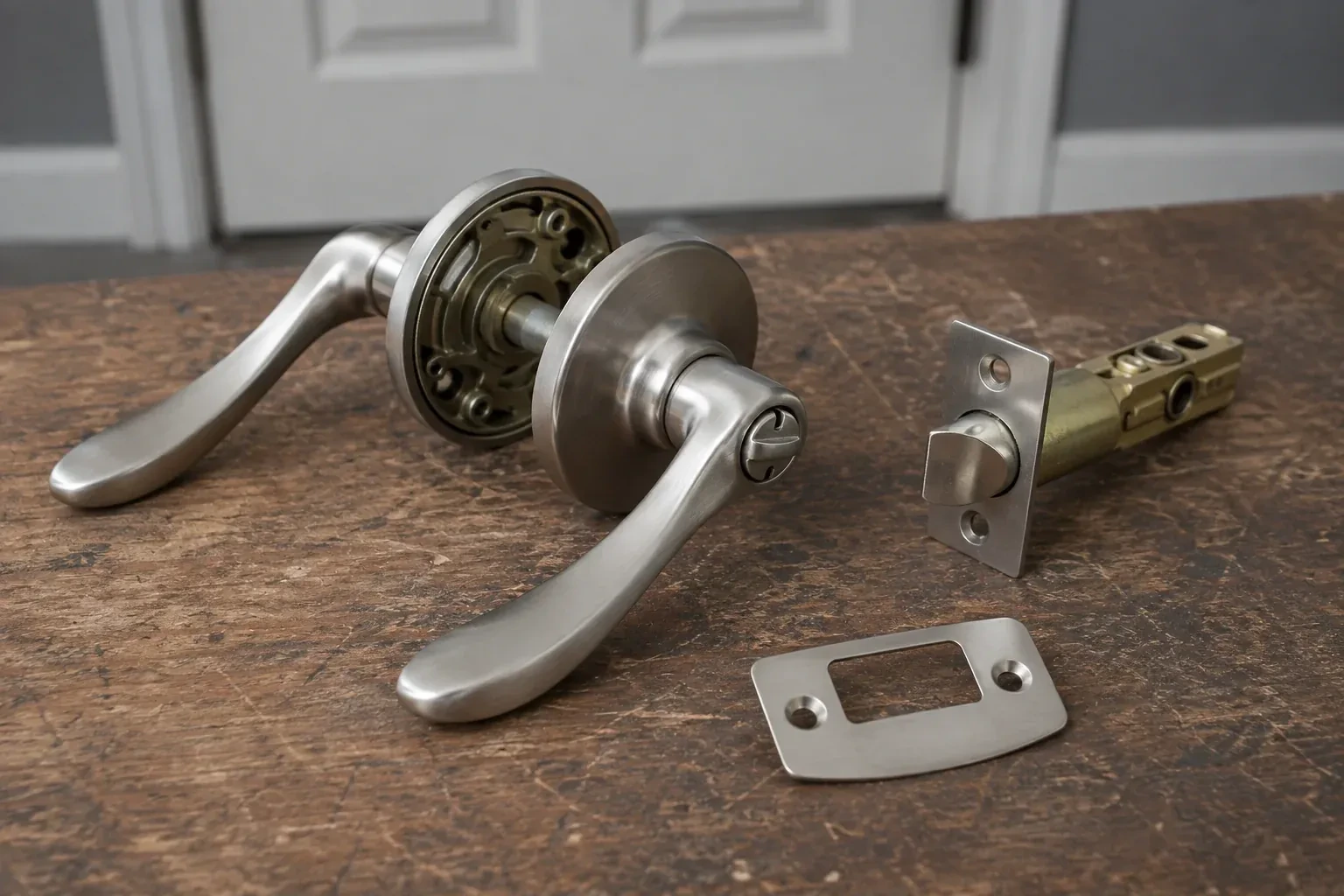
- Lock Replacement & UpgradeThe century home's original mortise lock takes a key the size of a spoon, sticks in humid weather and has worn its strike to a groove.
- Vintage Mortise Lock ServiceSomeone painted the door years ago without removing the hardware.
- Smart Lock InstallationYou have just taken possession of the house and the previous owners handed over a keypad deadbolt with a code nobody wrote down and an app account you cannot get into.