Change or rekey · Parkway East
Deadbolt Installation in Parkway East
The back door has a deadbolt in name only: a short bolt, a thin brass strike held by two little screws, and a jamb you can flex with your palm.
In plain words
The right deadbolt for a door depends on how the door is used and where it sits. A front door that a family goes through twenty times a day needs a durable mechanism and a finish that shrugs off salt spray and sun; a side door in a laneway wants a heavy bolt and a strike that reaches the framing. Residential deadbolts carry letter grades for security, durability and finish, and heavier commercial-pattern bolts carry numbered grades, so there is a plain way to compare. The locksmith talks through those options, then fits the one you choose with the same care whichever grade it is.
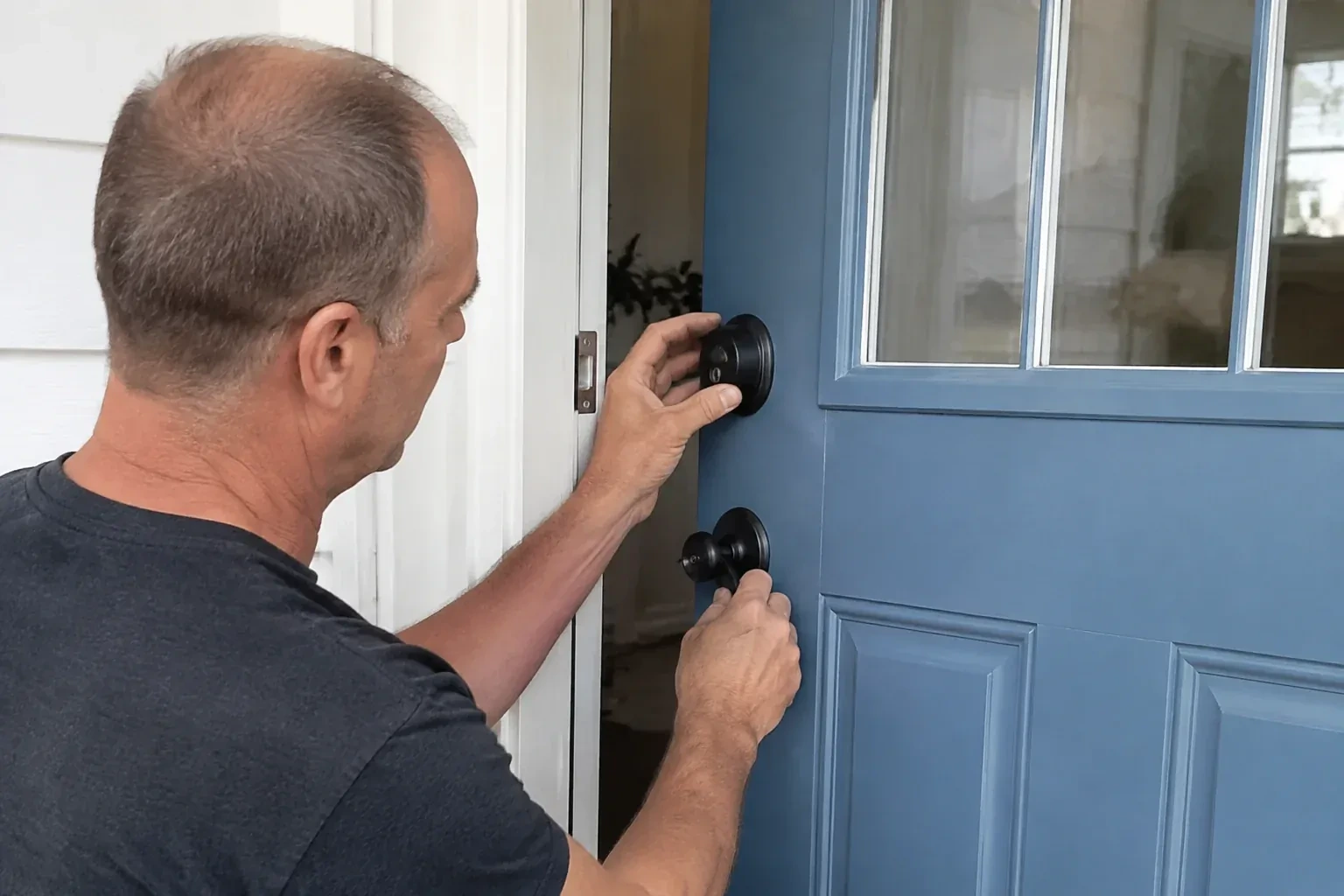
How the visit goesThe front door has a handsome lever and a keyed knob, and that is all. Nothing above it. When the door is shut, the only thing keeping it closed is a spring latch the width of a thumbnail, and you have started to notice.
Deadbolt Installation
How the visit goes
Exit, fire and who lives here
The last part of the first look is about the people, not the door. The locksmith asks whether this is the door the household leaves through, whether children, older relatives or anyone with limited hand strength use it, and whether it is a rental where the landlord holds keys. A door that serves as a way out gets a thumb-turn planned for it, so nobody has to hunt for a key to leave. A lever thumb-turn is easier for small or stiff hands than a knurled one, and a rental may need a note to the building manager. None of this takes long, and it shapes which box comes off the van.
Assembling the cylinder and thumb-turn
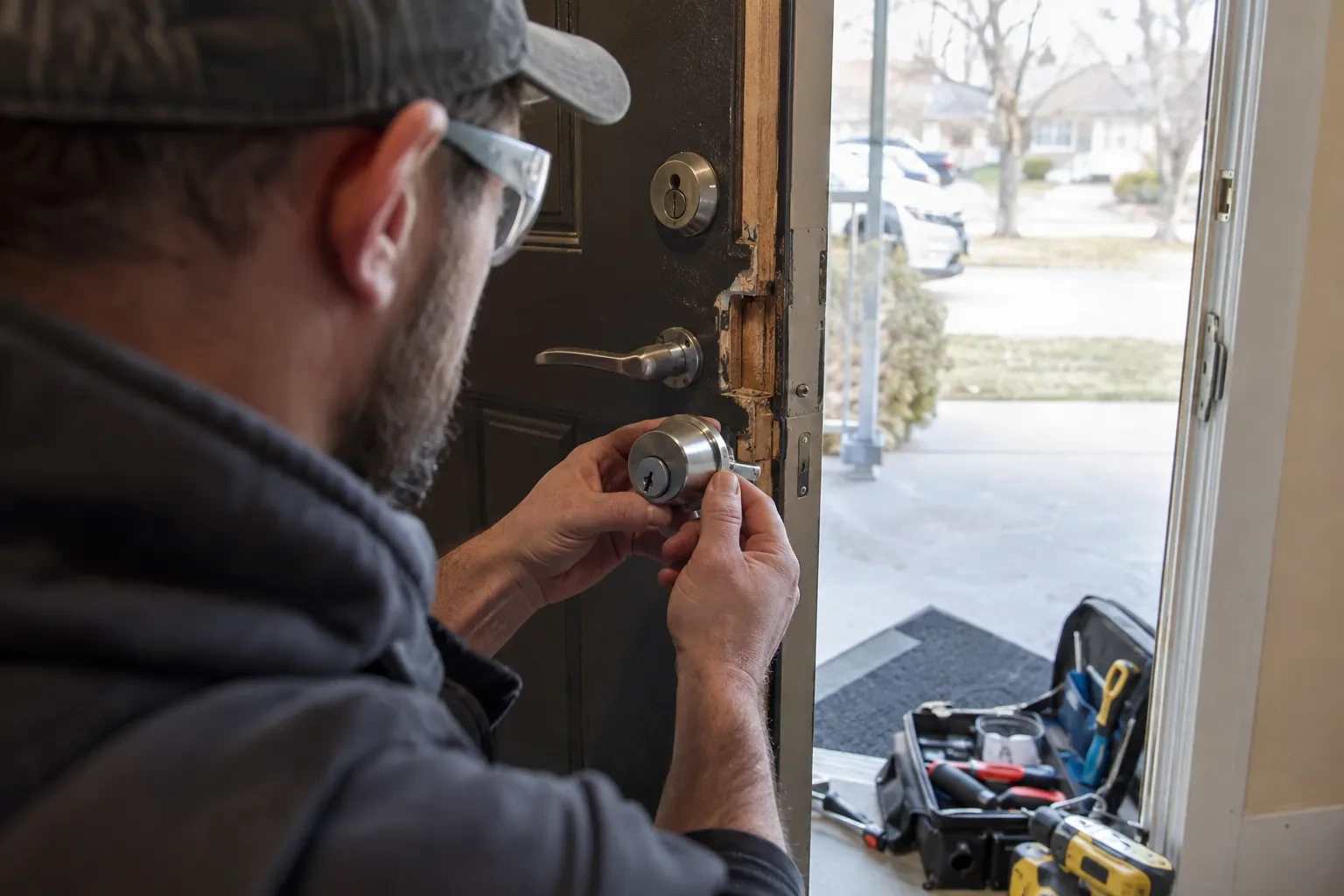
The outside housing goes on first, with its tailpiece threaded through the slot in the bolt cam and its mounting posts through the matching holes. Any plastic alignment bracket that ships with the lock is used on a 54 mm bore and removed on a smaller one. The inside thumb-turn plate is set against the door and the two long tapered screws are driven through it into the outside housing, snug rather than crushed, so the housings pull tight to the door without distorting the mechanism. The locksmith turns the thumb-turn before the door is closed to confirm the bolt throws its full length and returns without a catch.
Keys that open what they should
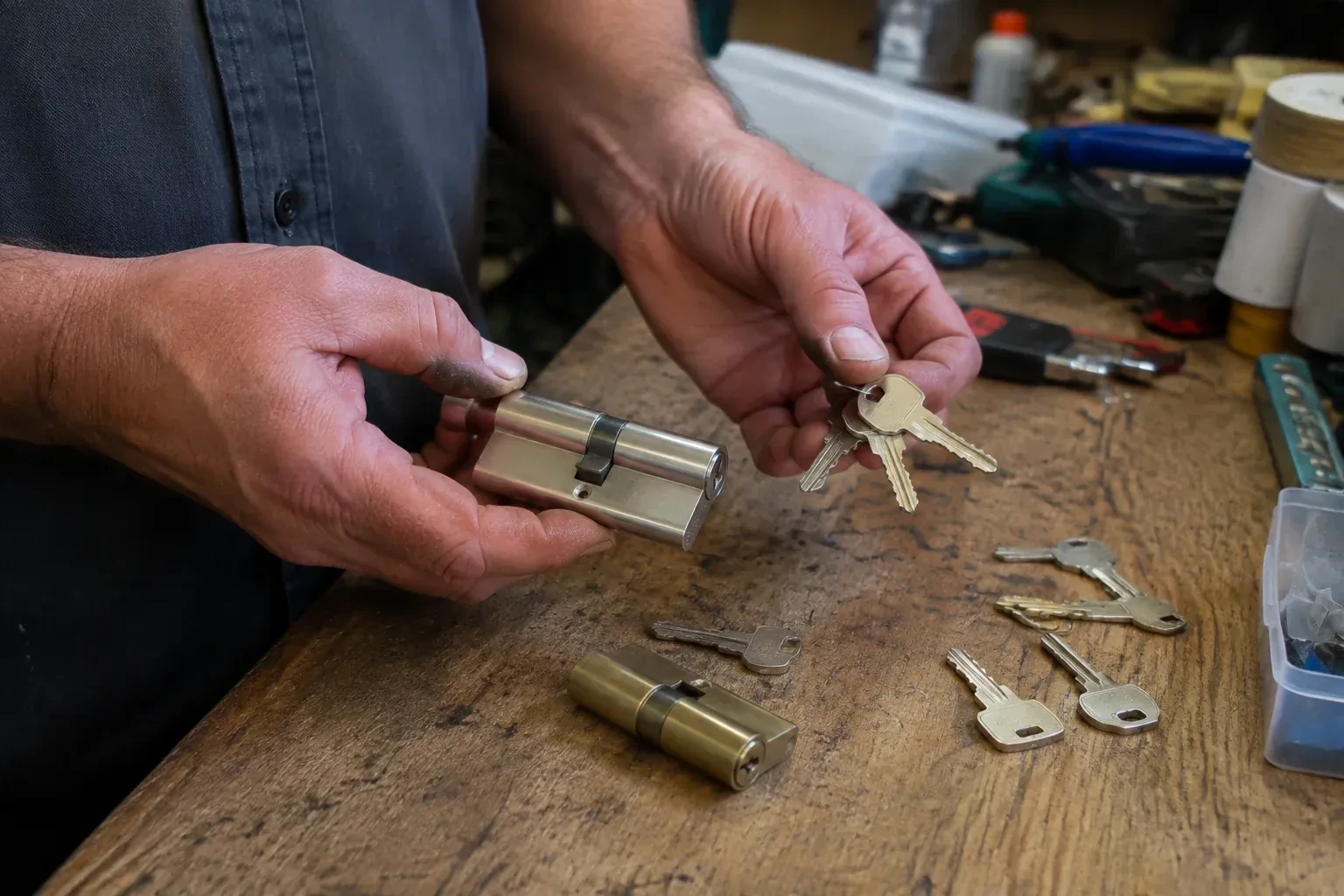
You leave with the keys sorted, whichever way you chose. If the new cylinder was pinned to your existing key, every ring in the house still works and the new door has simply joined the set. If it was set to a fresh key, you have a small bundle of new keys, cut from the pins rather than copied from a worn original, and a clear idea of which old keys no longer matter. Count them, decide who carries one, and test each in the new bolt before the locksmith leaves. A spare kept with a trusted neighbour or in a small lockbox is worth arranging on the same afternoon.
Deadbolt Installation
In the van
Sharp chisel and mallet
Boring jig and 54 mm hole saw
Rekeying pins and key blanks
Dry PTFE lubricant
Bolt faceplate or drive-in collar
Deadbolt Installation
What affects the quote
Non-standard bore or backset
Older doors with a small cross bore, an unusual backset or a mortise lock case need adapting or filling before a modern deadbolt fits, and that preparation is quoted before work begins.
Glass near the lock
A captive thumb-turn, laminated glass, security film or a relocated bolt height each carry their own cost, and the choice you make about glass shapes that part of the quote.
Door and hinge corrections
A sagging door, loose hinge screws or thick weatherstrip are put right before a bolt is fitted, and that adjustment is quoted as its own line rather than folded into the lock.
What to have ready
- Does anyone in the household have trouble with small knobs or stiff thumb-turns?
- Have you already bought the hardware, and if so which model and does the template come with it?
- Do you own the home, rent it, or manage it for someone else?
Deadbolt Installation: questions
QuestionsDoes a deadbolt work with a storm door or screen door?
It does, with one check: the thumb-turn and the outside cylinder have to clear the storm door when it closes. Most storm doors leave enough depth, but a low-profile deadbolt trim is chosen where the gap is tight. The storm door's own latch is separate and does not replace a bolt on the main door, since a screen frame gives little resistance on its own.
What is the difference between a deadbolt and the lock in my door knob?
The knob or lever holds the door shut with a spring latch: a bevelled tongue that snaps into the frame and can be pushed back by anything slid into the gap. A deadbolt is a solid rectangular bar driven by the key or thumb-turn alone, and when fully thrown it locks in place so it cannot be pressed back from the edge. The knob keeps the door closed; the deadbolt keeps it locked.
Should I choose a single-cylinder or a double-cylinder deadbolt?
For any door people leave the house through, a single cylinder with an inside thumb-turn is the sensible choice, and provincial building rules for dwellings call for exit doors that open from inside without a key. Double-cylinder bolts are keyed on both faces and are sometimes proposed where glass is near the lock, but a captive thumb-turn, laminated glass, or a tested security-film system with its specified attachment, addresses that without a key on the inside.
Related services
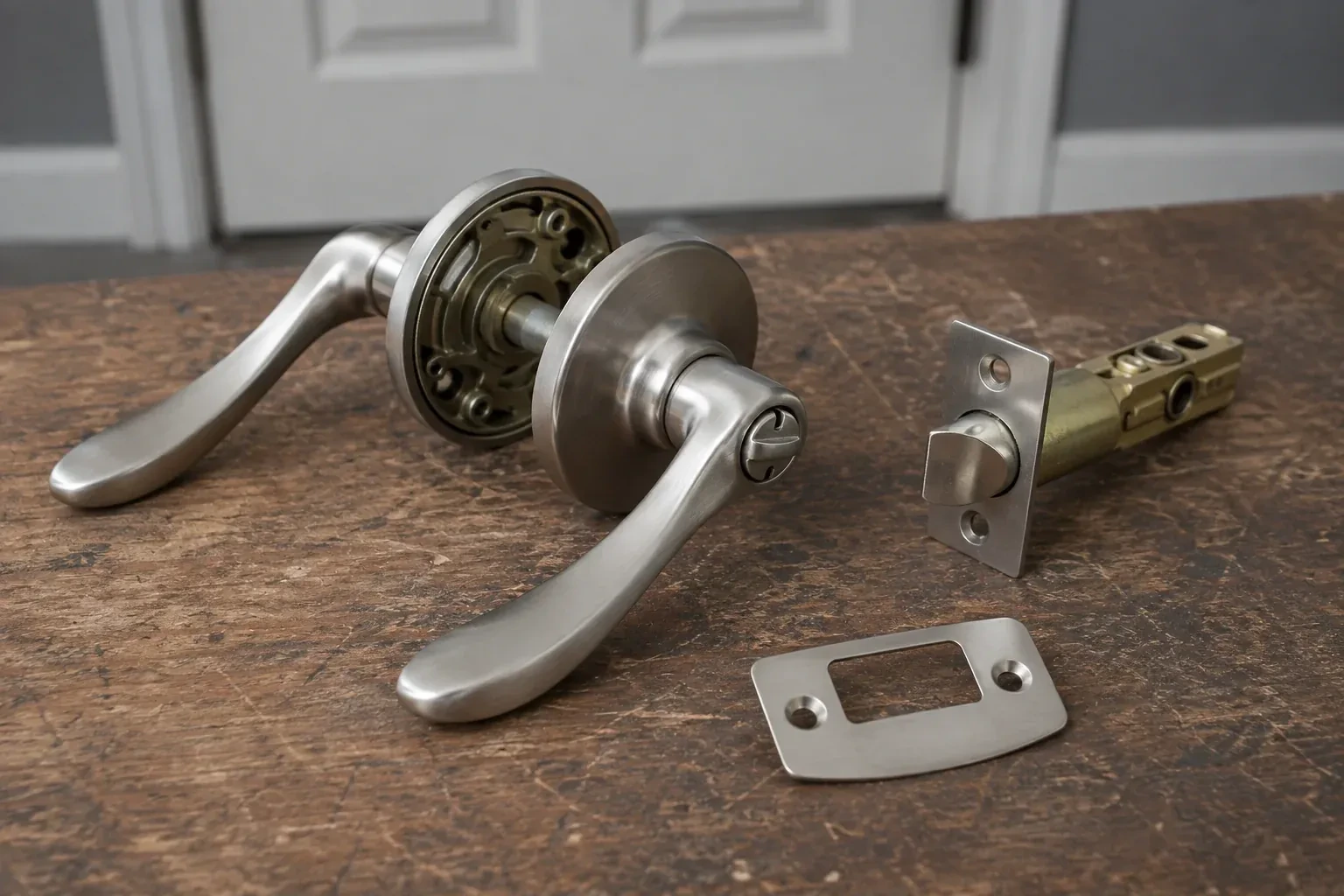
- Lock Replacement & UpgradeThe century home's original mortise lock takes a key the size of a spoon, sticks in humid weather and has worn its strike to a groove.
- Vintage Mortise Lock ServiceSomeone painted the door years ago without removing the hardware.
- Smart Lock InstallationYou have just taken possession of the house and the previous owners handed over a keypad deadbolt with a code nobody wrote down and an app account you cannot get into.