Locksmith in Henry Farm, OntarioCondo doorsand shared entrances
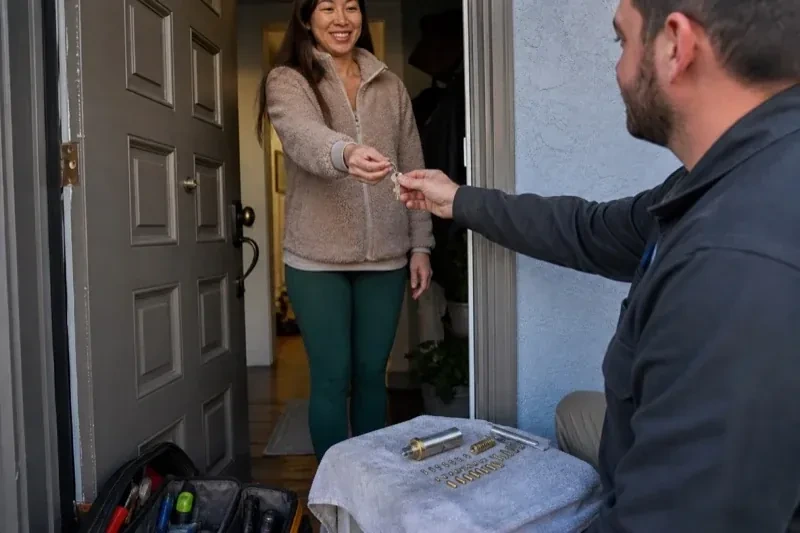
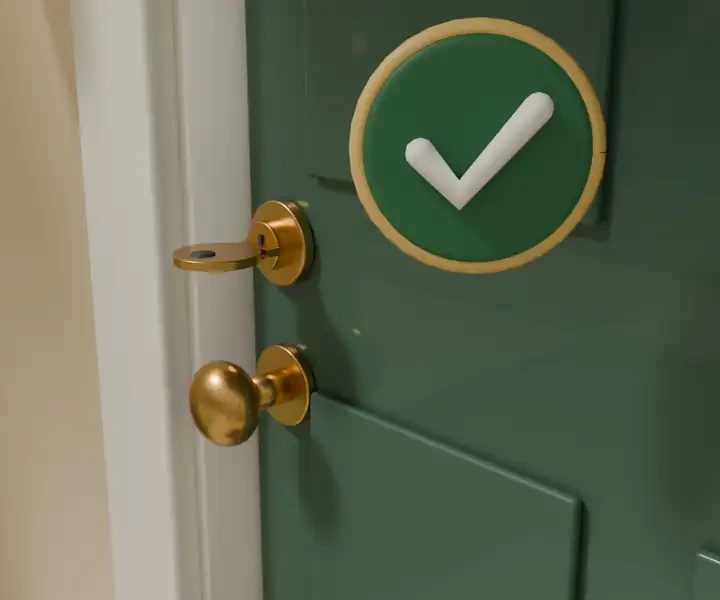
Living in a building in Henry Farm means two kinds of doors: the suite door you control and the common doors the building manages. We service both, working within house rules on the outer hardware and giving your own door a cylinder, strike and closer that suit how the unit is actually used.
Living in a building in Henry Farm means two kinds of doors: the suite door you control and the common doors the building manages. We service both, working within house rules on the outer hardware and giving your own door a cylinder, strike and closer that suit how the unit is actually used.
We look after the door, not just the lock.
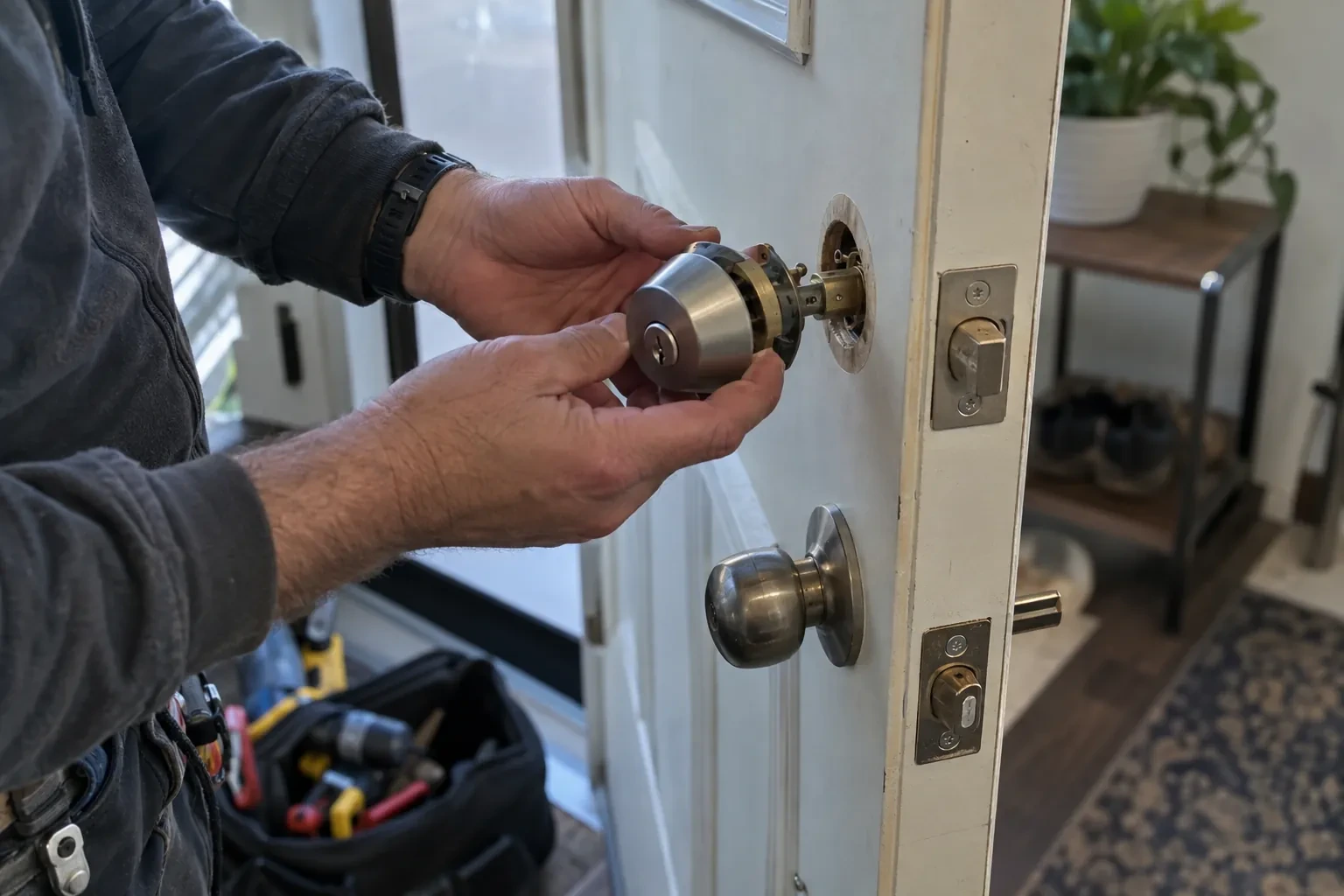
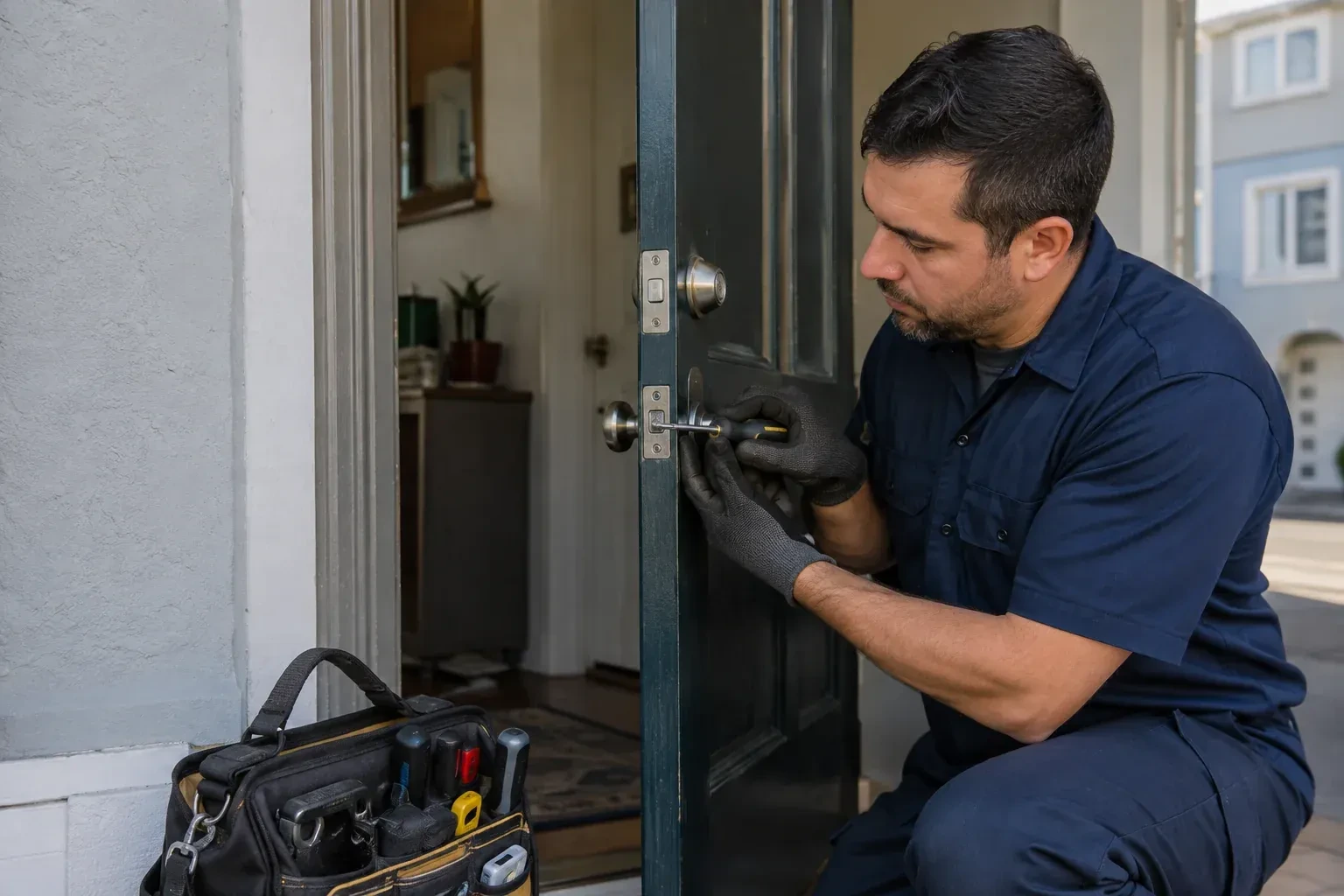
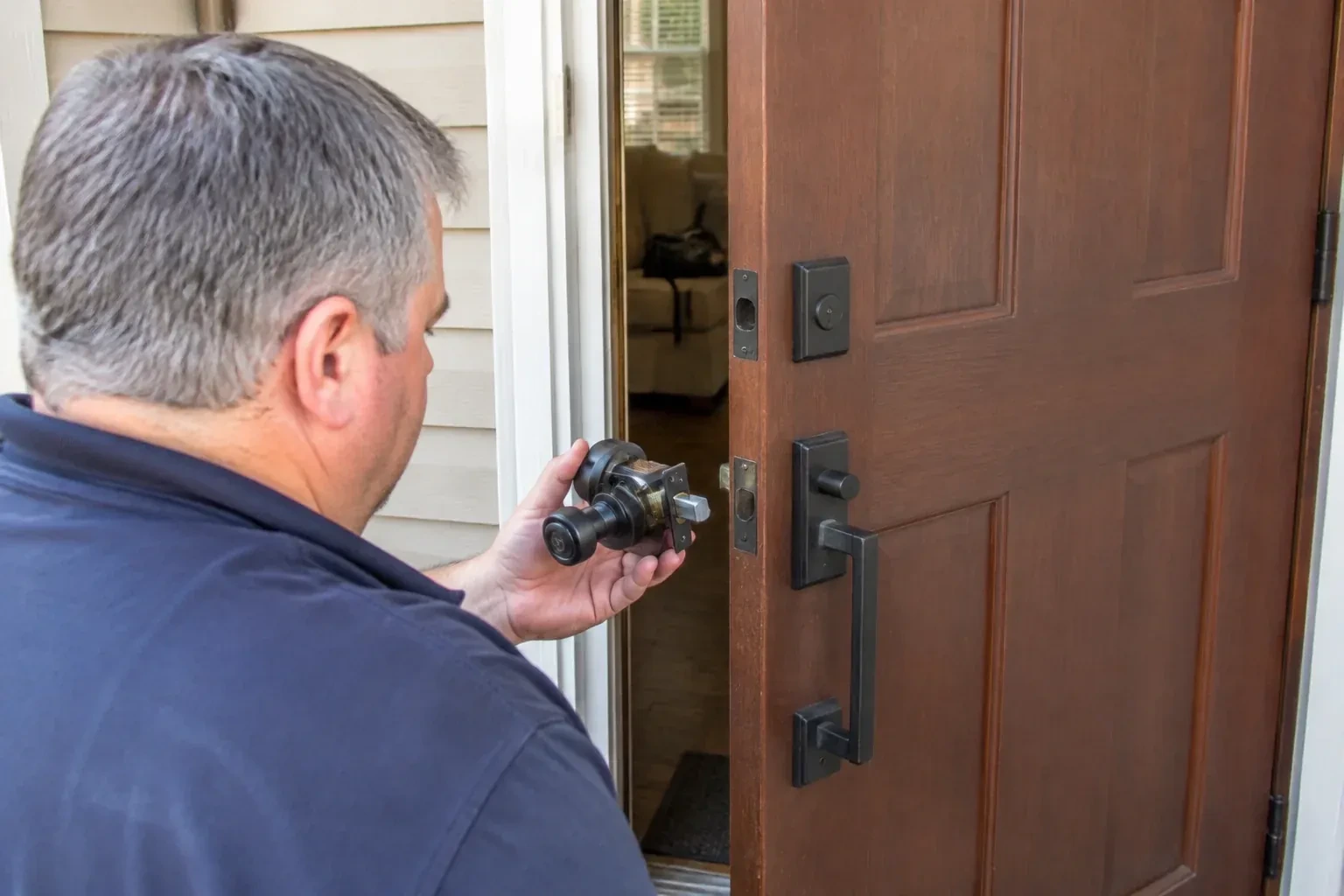
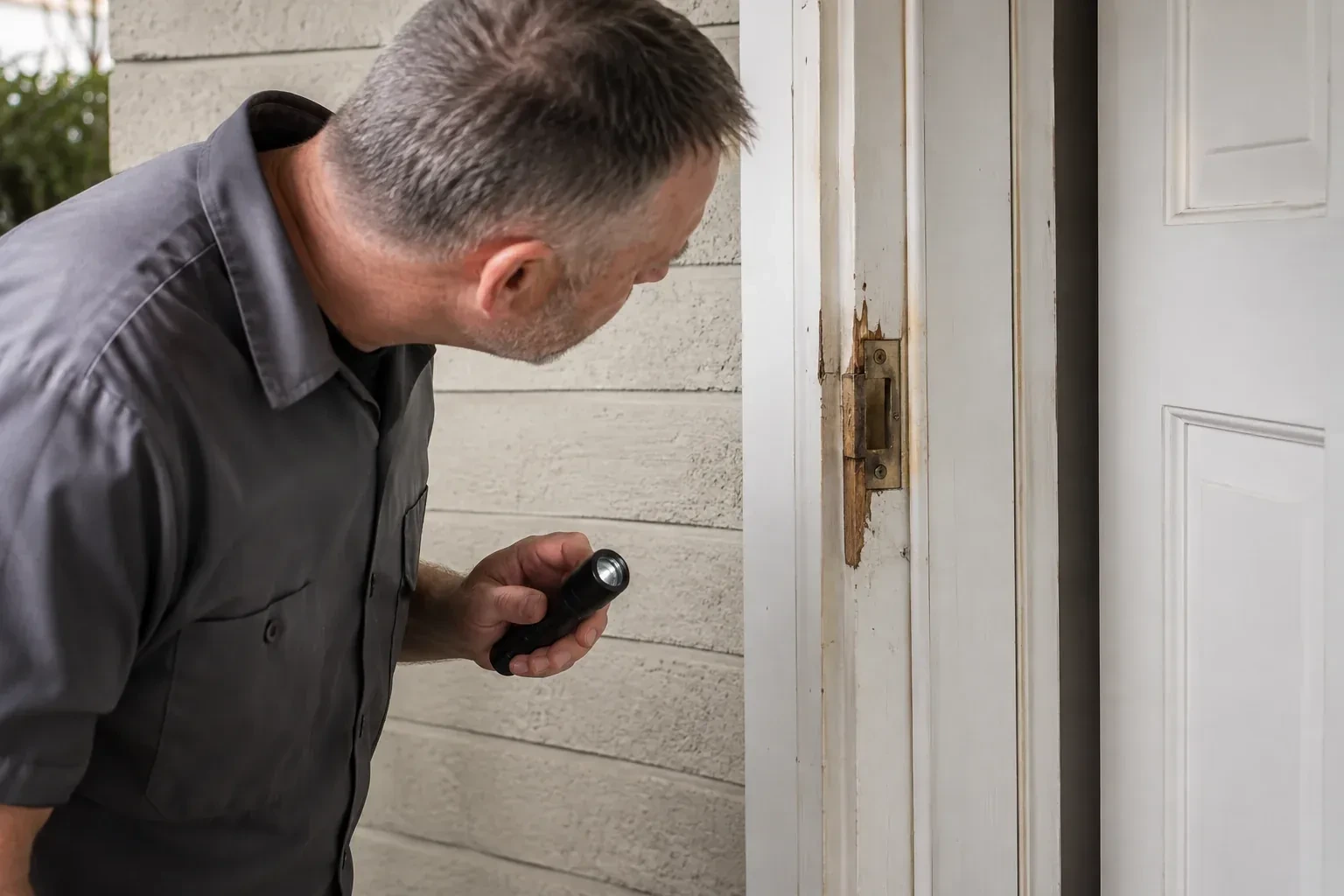
Every job in Henry Farm starts with a proper look before anyone touches a tool. The locksmith checks the cylinder, the latch, the strike and the way the door sits in its frame, then tells you what he found and what he suggests. The price is given at the door once that look is done, so it reflects the actual hardware rather than a guess, and it is the same fee at any hour.
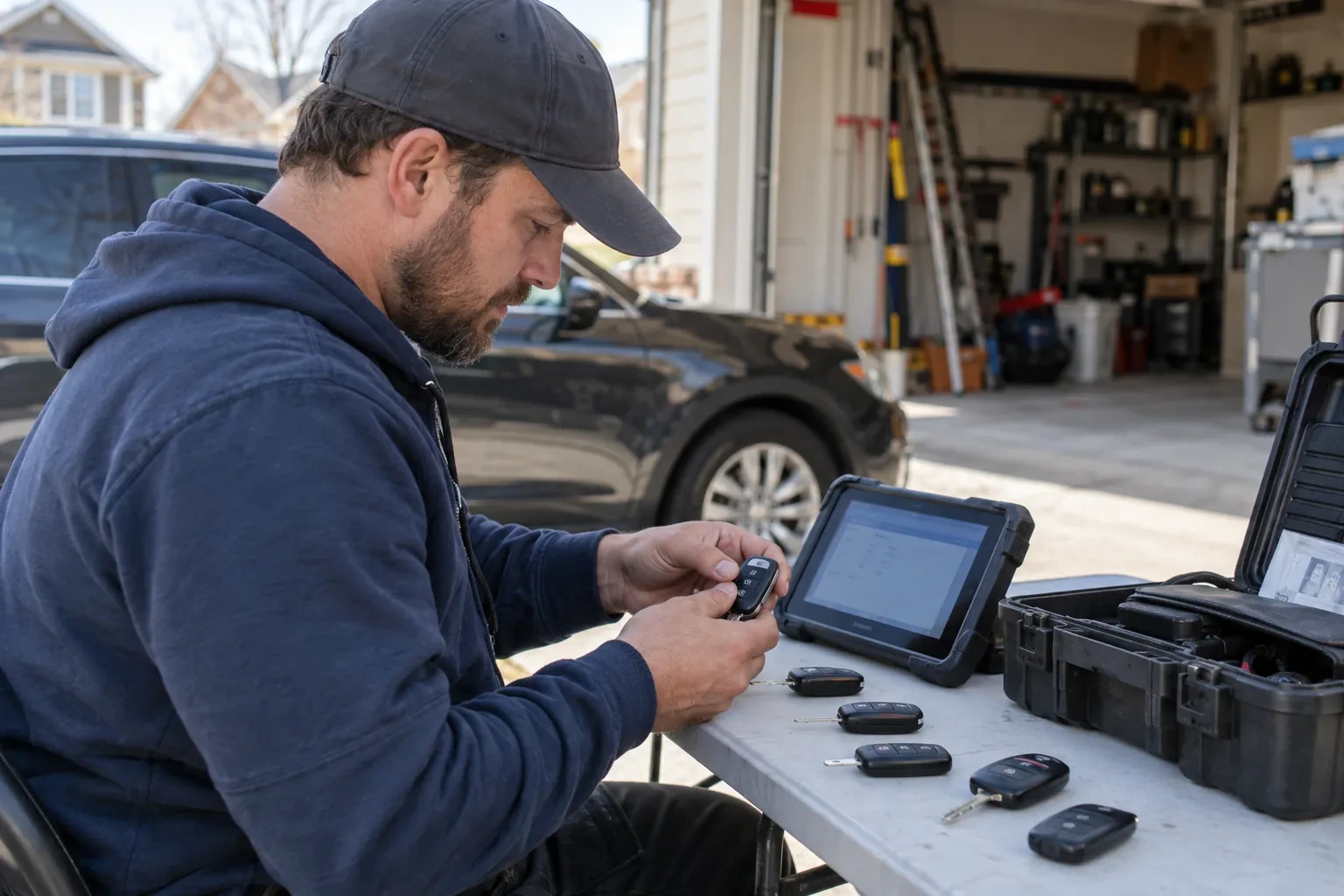
We serve Henry Farm from a van stocked for three kinds of door: the front door of a home, the back door of a business and the driver's door of a vehicle. Different tools, one approach. We confirm you are entitled to access, explain the plan, do the work cleanly and test every key and lock before we consider the visit finished.
11years in business
24/7open every day
Explained before any tool comes out. You will hear what we found, what we suggest and why, before anything is changed. If you want a minute to think, take it.
Choices, not a single answer. Most problems have more than one fix. We lay out the practical options and the trade-offs, then let you choose the one that fits your home and budget.
A tidy doorstep. Shavings swept, packaging taken away, the old hardware offered to you or disposed of. The only sign we were there is a lock that works.
Homes in Henry Farm bring us sticking deadbolts, lost keys, moves and upgrades. Businesses bring storefront doors, back doors, key control and safes. The services below cover both sides in detail, so whichever kind of door you are standing in front of, the right page is a click away.
About 58% of homes in Toronto were built in 1980 or earlier, according to the 2021 Census.
Older homes
Established homes often have non-standard bores and backsets from an earlier generation of hardware. A locksmith working in such an area carries adapter plates and cylinders in the older sizes, so an upgrade fits the existing door instead of forcing a new one.
Single-detached houses make up about 23% of homes in Toronto (2021 Census).
Where most people live in townhouses, apartments or condos, doors come in two kinds: the suite door you control and the shared entrances the building manages. A locksmith works on your door freely and coordinates with management on the rest.
You stepped out to grab the recycling bin and the door swung shut behind you. Through the glass you can see your keys hanging on the hook by the stairs, exactly where they always are, and the latch has caught.
Your purse was taken from the back of a chair at a restaurant. The cards can be cancelled by phone tonight, but the house keys were in the side pocket beside a driver's licence that shows exactly where those keys fit.
The bookkeeper who set the office safe's code retired in a hurry, and the float cash for tomorrow's registers is sitting behind a keypad nobody else in the building can operate.
The accountant's office keeps a decade of client files in cardboard boxes because the only safe in the building is a small drawer safe meant for a laptop, nowhere near large enough for binders of paper.
After the attempted break-in the police officer pointed at your door and said the strike plate was held by two short screws. Nobody got in, but you have looked at that door differently every evening since.
The drawer behind the counter holds a tangle of keys with tape labels: front old, side, Dave. Some open things, some open nothing, and the hardware-store copies mean the true count drifted long ago past anything written down.
A car sits at the cottage all season, and the only key to it lives on a ring three hours away in the city. Every visit begins with the same small worry about whether that ring made it into the right bag.
A replacement fob just arrived in its box, shiny and untouched. It looks identical to the one that has ridden on the keyring for years, but the car ignores it entirely: no lock click, no start authorization, nothing. It needs to be introduced to the vehicle first.
The remote fob has gone silent, the doors won't unlock with a button press, and the little emergency blade tucked inside it has not been used since the day the car was bought. Nobody remembers exactly where the metal edge is supposed to go once it's out.
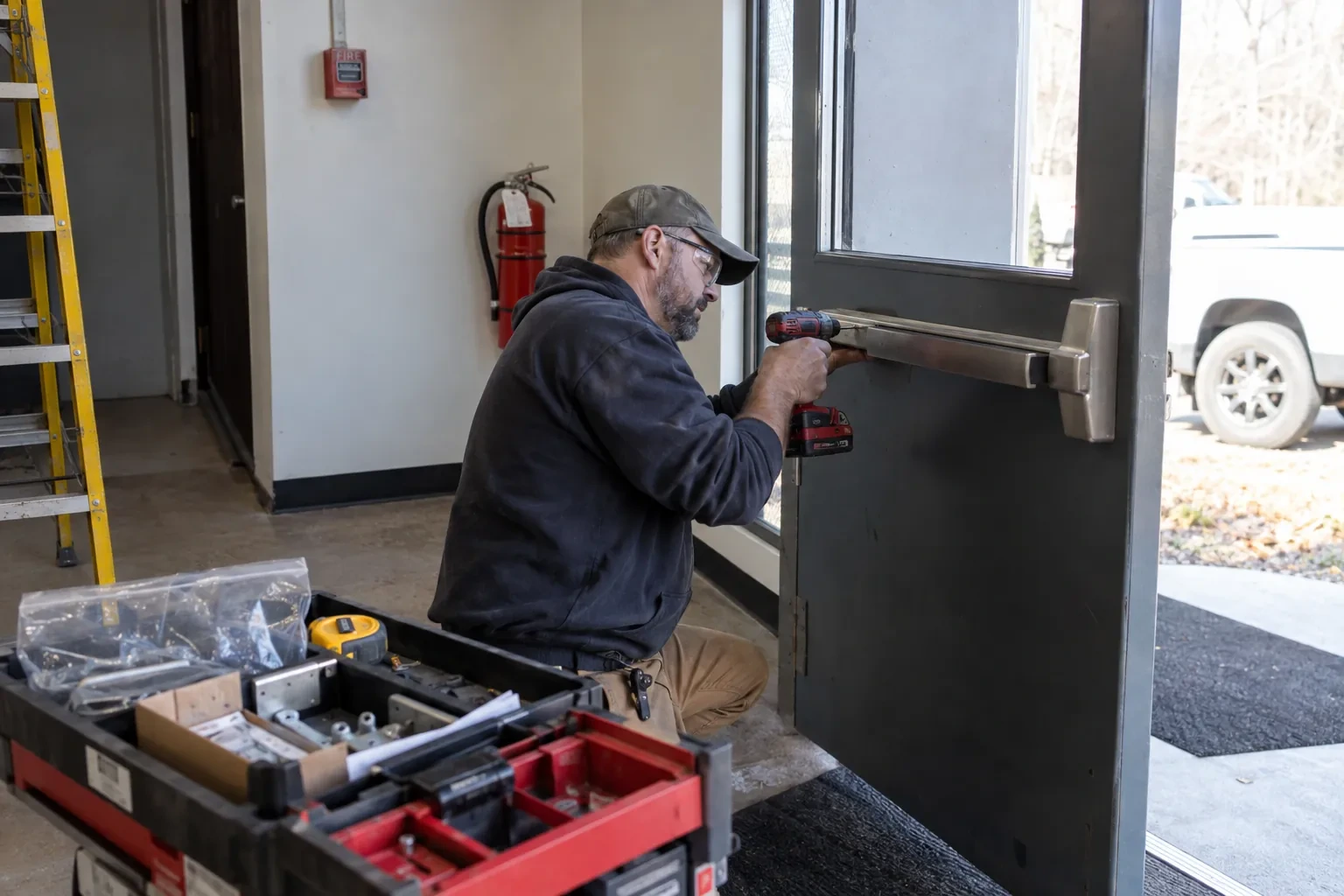
Doors with closers, exit devices, electric strikes and card readers have more parts to fail than a house door. When a commercial door stops behaving, we look at the whole assembly, find the part that is wrong and fix it without disturbing the rest.
WhyIf you rent, losing a key is handled in three steps rather than one.
The bookkeeper who set the office safe's code retired in a hurry, and the float cash for tomorrow's registers is sitting behind a keypad nobody else in the building can operate.
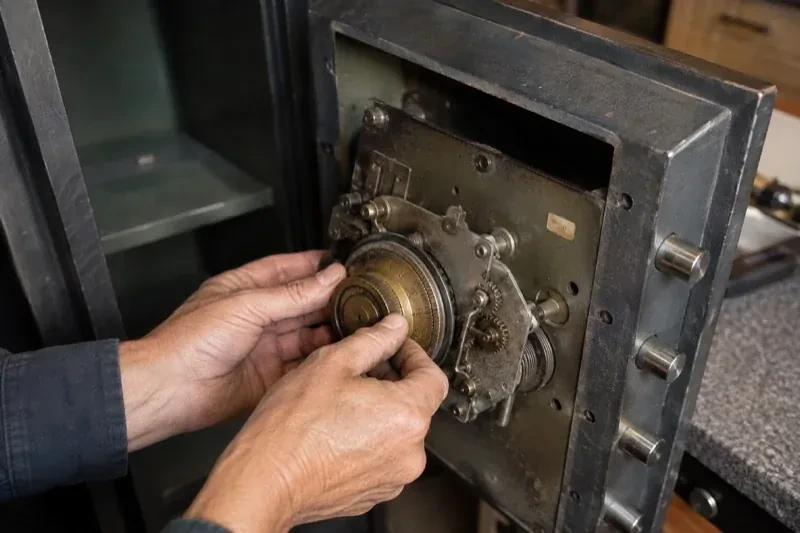
WhyTwo different problems can look identical from outside a locked safe: a combination that genuinely no longer opens it, and a mechanism that is jammed, corroded or blocked while the correct numbers still work perfectly.
The accountant's office keeps a decade of client files in cardboard boxes because the only safe in the building is a small drawer safe meant for a laptop, nowhere near large enough for binders of paper.
WhyBusinesses call for this service for two different reasons that sometimes overlap: protecting cash held overnight, and protecting paper records that would be enormously slow to recreate.
After the attempted break-in the police officer pointed at your door and said the strike plate was held by two short screws.
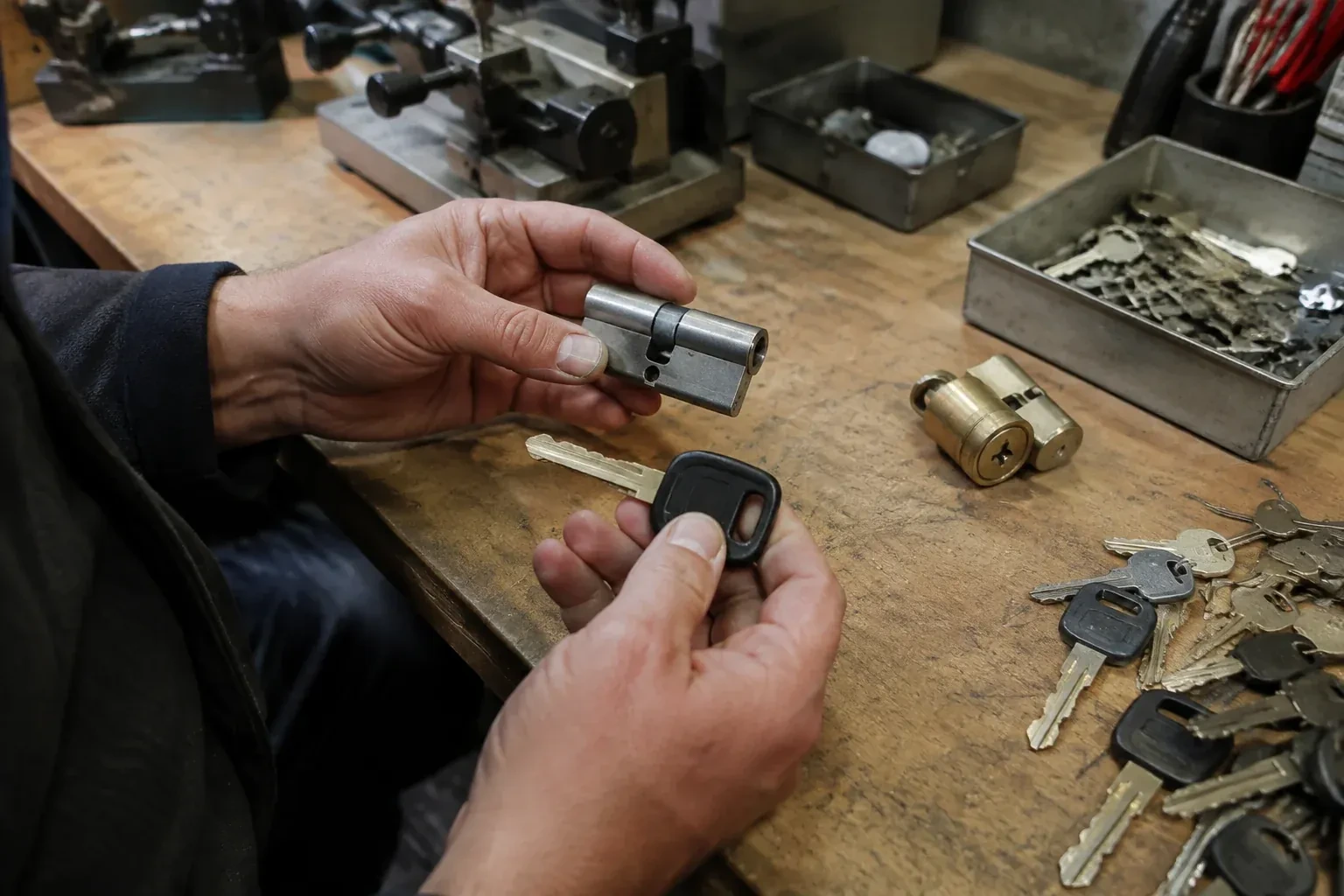
WhyCommercial rekeying changes the pins inside a business's existing lock cylinders so that a new key operates them and every earlier key stops working, while the hardware itself stays on the door.
A car sits at the cottage all season, and the only key to it lives on a ring three hours away in the city.
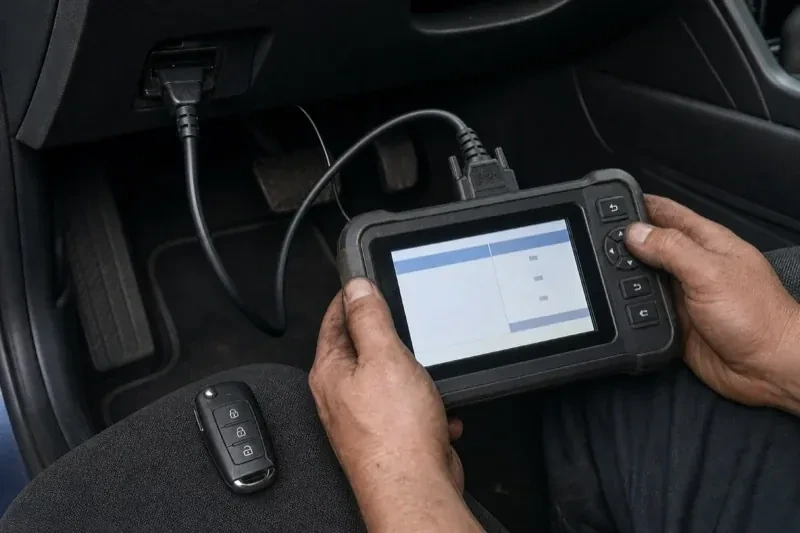
WhyMost vehicles on the road pair a cut metal blade with an invisible electronic layer, a chip in the head that the immobilizer checks before the engine is allowed to start.
A replacement fob just arrived in its box, shiny and untouched.
WhyFobs age the way most electronics do: batteries fade, buttons stick, cases crack after years on a keyring.
The remote fob has gone silent, the doors won't unlock with a button press, and the little emergency blade tucked inside it has not been used since the day the car was bought.
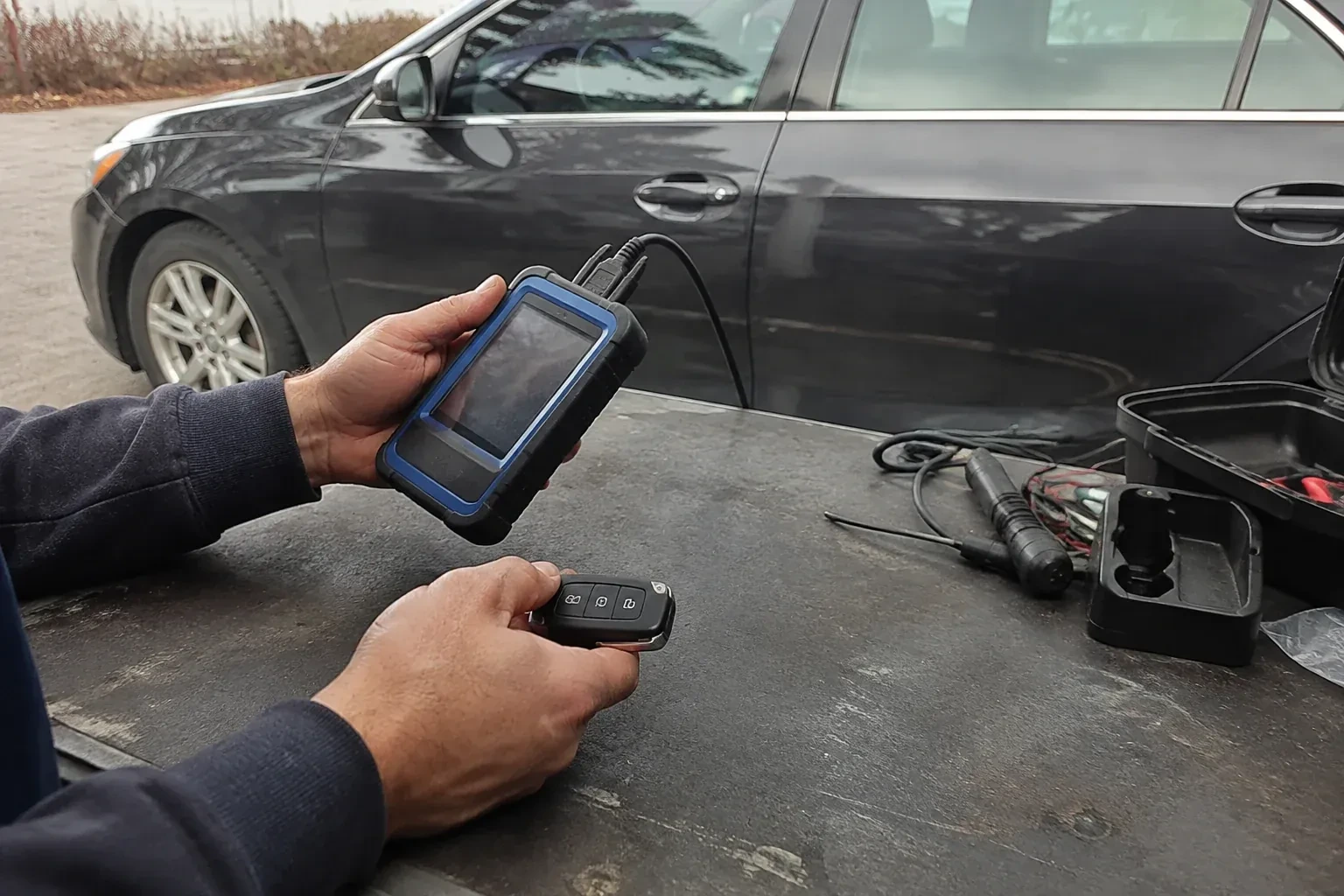
WhyWhen every key for a vehicle is genuinely gone, there is nothing left to vouch for a new one, so the visit starts by re-establishing secure access to the immobilizer's own module, sometimes through the vehicle's manufacturer network.
How a visit goes
Describe the property, the hardware and what has changed, and the visit starts from what you have seen.
1
2
3
01
Confirming it is your door
Before touching the lock we ask for identification or another way to show you live or work there. It protects you as much as anyone.
02
The gentlest opening that works
Most doors can be picked or bypassed with no damage. We start there and only move to a firmer method if the lock leaves no other choice, explaining as we go.
03
A working lock before we go
Once you are inside we check the lock still turns properly and that you have a key that works. If the lock was the reason you were stuck, we say so.
Yes. A tenant locked out of their own unit can arrange entry directly, and the identification check is the same: something that ties you to the address, such as a lease, a bill or a piece of mail, plus photo identification. Where you may want to involve your landlord is any change to the lock afterwards, because tenancy rules in this province expect landlords and tenants to agree on lock changes and to share keys. A locksmith can note what was done for the building manager.
Can I just have another key cut instead?
You can, and it solves being without a key. It leaves the lost one working, though, which is the half of the problem that keeps people awake. Rekeying takes about as much effort as a trip to a hardware store counter and ends with a new key in your hand and the old one retired. If the key was mislaid somewhere it will never be found and named nothing, a plain copy is a fair choice.
Can you help with a safe found in an inherited or estate property with no records at all?
Yes. The locksmith identifies the safe directly from its hardware, brand plate if one survives, and physical layout, then proceeds with the same manipulation, decoding or reset options used on any safe with an unknown history. Documentation such as a will, an executor's letter or a property transfer establishes your authority to have it opened.
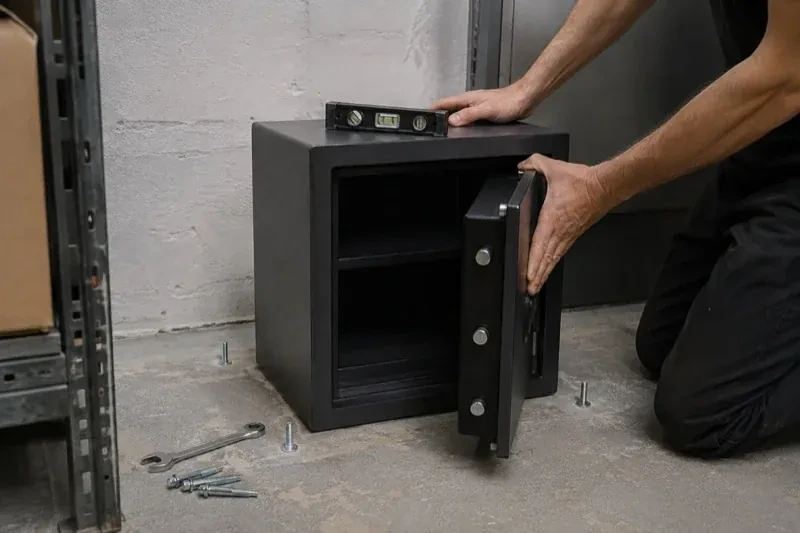
What kind of floor can a safe be anchored to?
Solid concrete is the most straightforward surface, taking a masonry anchor bolt directly. A wood subfloor works too, provided the anchoring reaches into the floor joists beneath the surface layer rather than just the plywood or the flooring on top. Tile is the awkward case, since a bolt through it tends to crack the surrounding tiles, and an alternative anchoring point or a different spot in the room is usually the better route there.
What does key control mean in practice?
It means your key can only be copied through the locksmith who manages your system, after checking that the person asking is on your list of authorised names. Blanks for the keyway are not sold to hardware stores or kiosks while the patent lasts. Each key is numbered and recorded, so you know how many exist. For a home that ends the worry about old copies; for a business it turns a lost staff key into a known, manageable event.
What is the difference between rekeying a business and replacing its locks?
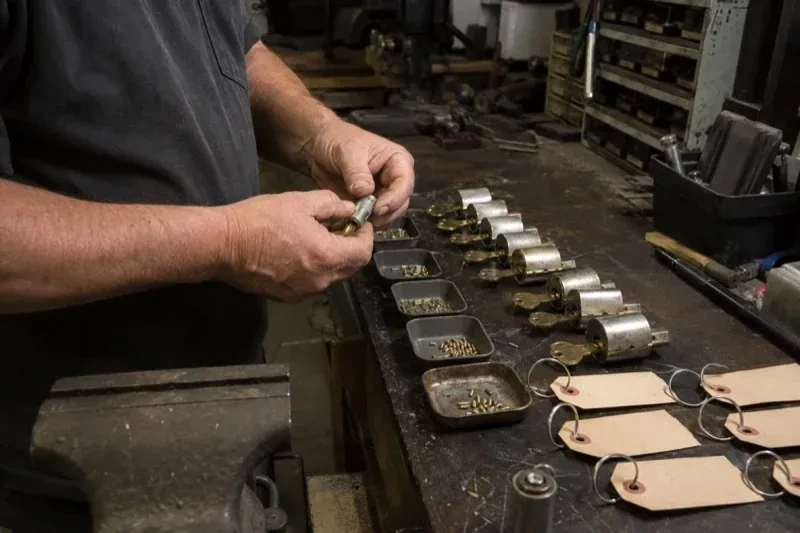
Rekeying keeps every lock on the door and changes only the pins inside the cylinder, so a new key works and the old ones stop. Replacing swaps the hardware itself. Commercial cylinders are made to be repinned many times, so rekeying suits any lock in sound condition and leaves the levers, trim and door untouched. Replacement is chosen door by door for cylinders that are worn, corroded or too light for what they protect.
What should I bring to the appointment?
Bring the vehicle, its existing key, photo identification, and something that ties you to the vehicle: registration, or a document showing you are authorized to hold a key if the car belongs to someone else, such as an employer or a family member. Knowing the VIN in advance, printed or photographed from the door jamb, also helps the locksmith confirm the exact key system before arriving.
How do I stop all my fobs from wearing out around the same time?
Replacing coin-cell batteries as soon as a fob's range starts to feel shorter, rather than waiting for it to go completely dark, is the simplest habit. Keeping fobs off a keyring crowded with heavy metal keys reduces wear on the case and buttons as well. Since fobs from the same purchase batch often age together, a fading one is worth treating as an early warning for the others.
Will adding a new key affect the keys I already have?
Adding a key is meant to leave every existing key exactly as it was; the new identity is written alongside the others rather than replacing anything. The locksmith checks that the older keys still work as part of the same visit, precisely so an oversight does not go unnoticed. Only a key you specifically ask to have cleared, such as one that was lost, stops working.
Request a visit
Every job in Henry Farm starts with a proper look before anyone touches a tool. The locksmith checks the cylinder, the latch, the strike and the way the door sits in its frame, then tells you what he found and what he suggests. The price is given at the door once that look is done, so it reflects the actual hardware rather than a guess, and it is the same fee at any hour.