Car keys · Toronto
Motorcycle & Scooter Keys
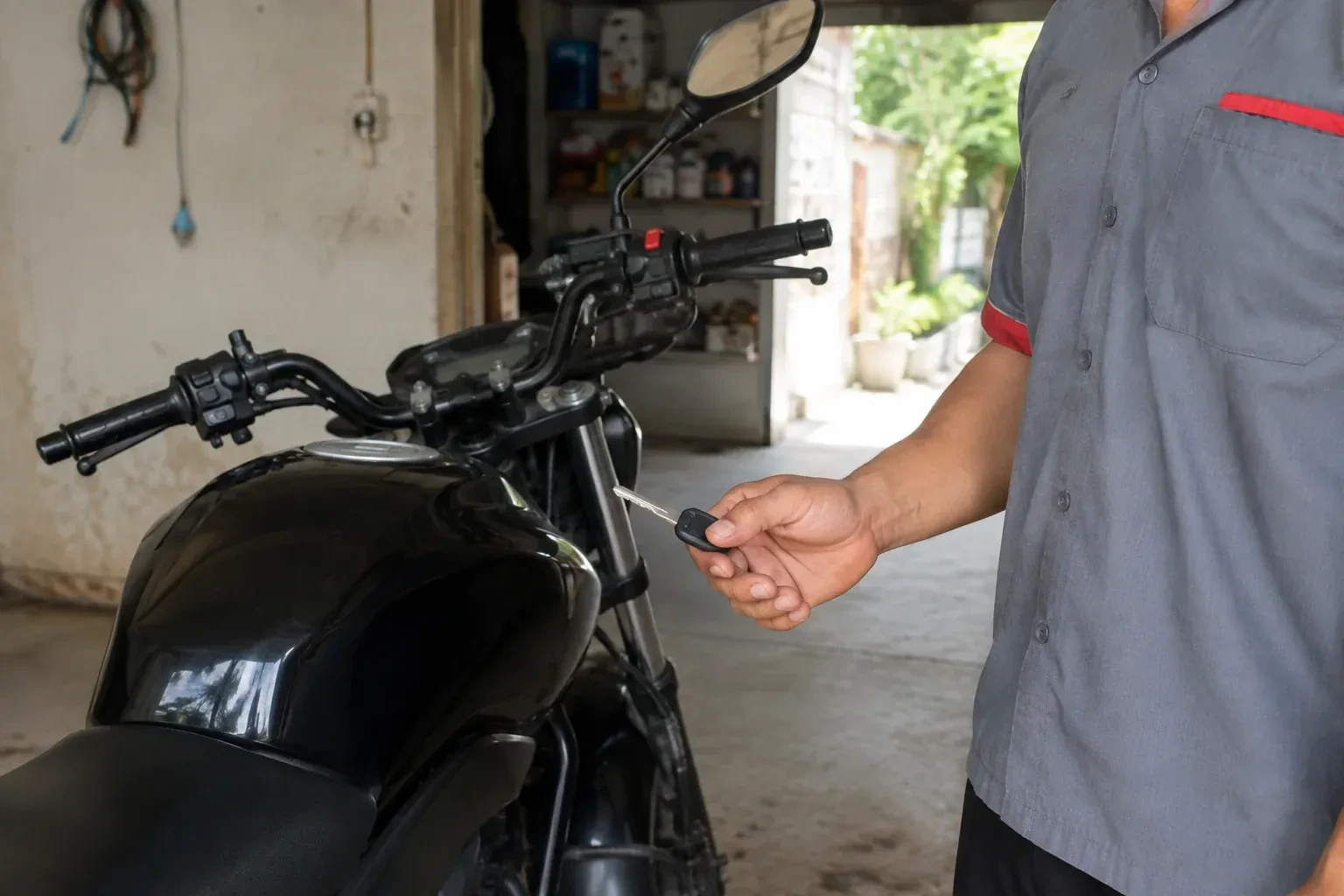
The bike came home from its previous owner with a single worn key that starts the engine but does nothing for the seat latch or the fuel cap, both of which answer to keys nobody handed over.
In plain words
Sometimes the machine is not the problem; the key is. A blade that has worn thin, bent slightly, or been copied one generation too many stops lifting the wafers cleanly, which shows up as a key that needs a wiggle or a lift to turn. Rather than living with an unreliable copy, a fresh key cut directly from the lock's code or read from the original wafers restores a clean, consistent turn, and the worn key can be retired instead of carried as a backup that may not work when needed.
How the visit goesThe bike came home from its previous owner with a single worn key that starts the engine but does nothing for the seat latch or the fuel cap, both of which answer to keys nobody handed over.
Motorcycle & Scooter Keys
How the visit goes
Any prior work or damage
Before starting, the locksmith asks whether anyone has already tried to open or copy the lock: a hardware-store duplicate that never worked well, a bent key left in the barrel, or an attempt with an improvised tool that scratched the keyway. Any of this changes what is found once the lock is opened up, and knowing about it in advance means the owner is told plainly what was already there rather than assuming new damage happened during the visit. It also sometimes explains a wafer that has been sitting slightly out of place for months.
Freeing a seized steering lock
A steering lock seized by rust, dried grease or months of disuse is worked open with the cleaning method the lock's own maker directs and small, repeated movements rather than a harder push on the key. The locksmith lets the fluid sit, works the lock gently from both directions, and repeats rather than reaching for more force, since a stuck lock forced past its resistance is more likely to break internally than release cleanly. Once it turns freely through its full range, it is cycled several times and dressed with whatever lubricant its maker specifies so it moves easily the next time the machine is parked.
Looking after a wafer lock
A wafer lock rewards a little occasional attention. Cleaning matters more than lubricant for a wafer lock like this; where the maker calls for it, a puff of the specified lubricant into the keyway once or twice a year keeps the wafers moving freely. Wiping the key itself clean before use, especially after a wet ride, keeps grime from being carried into the lock on every insertion. These are small habits, but they are the difference between a lock that turns the same way for years and one that slowly stiffens.
Motorcycle & Scooter Keys
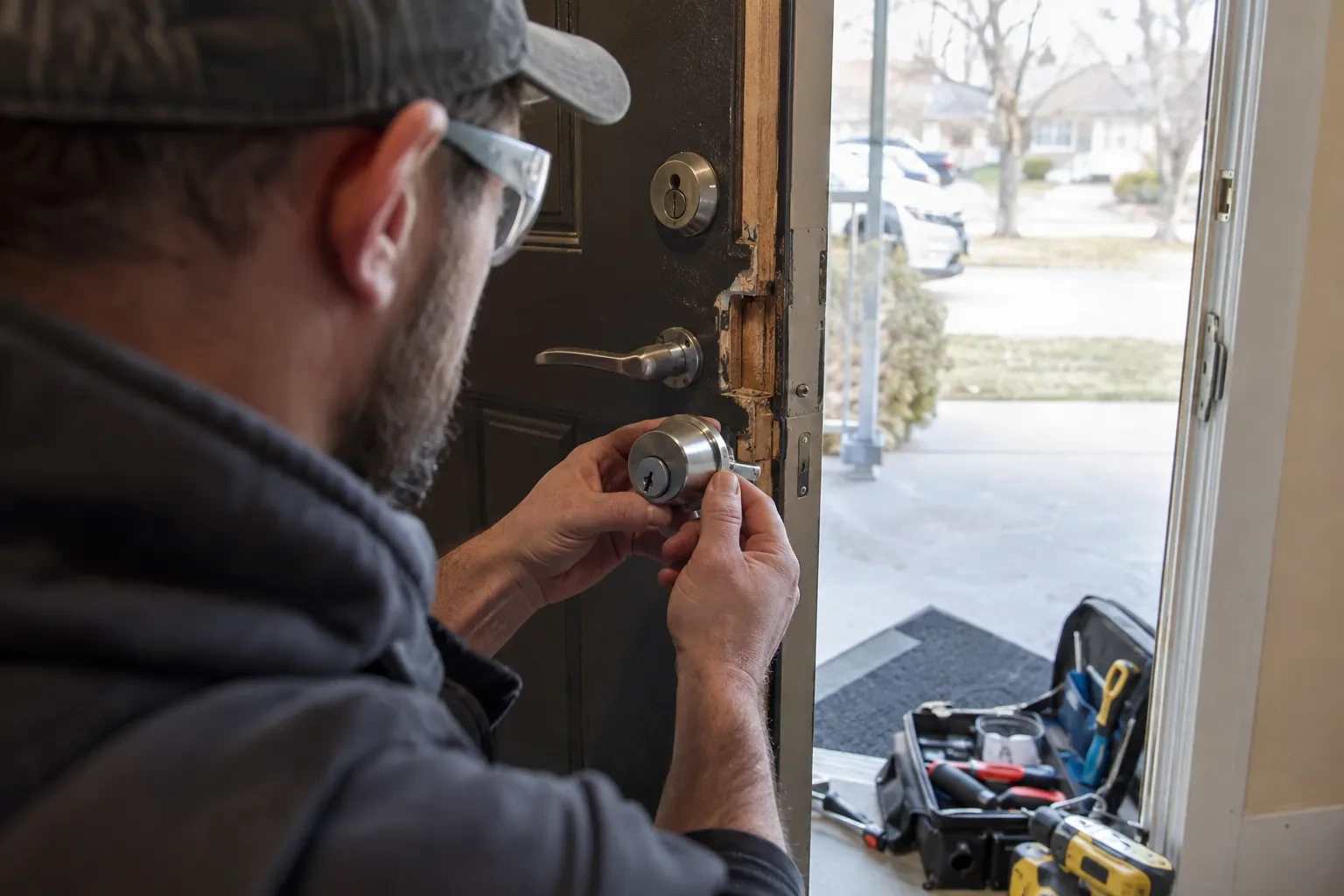
In the van
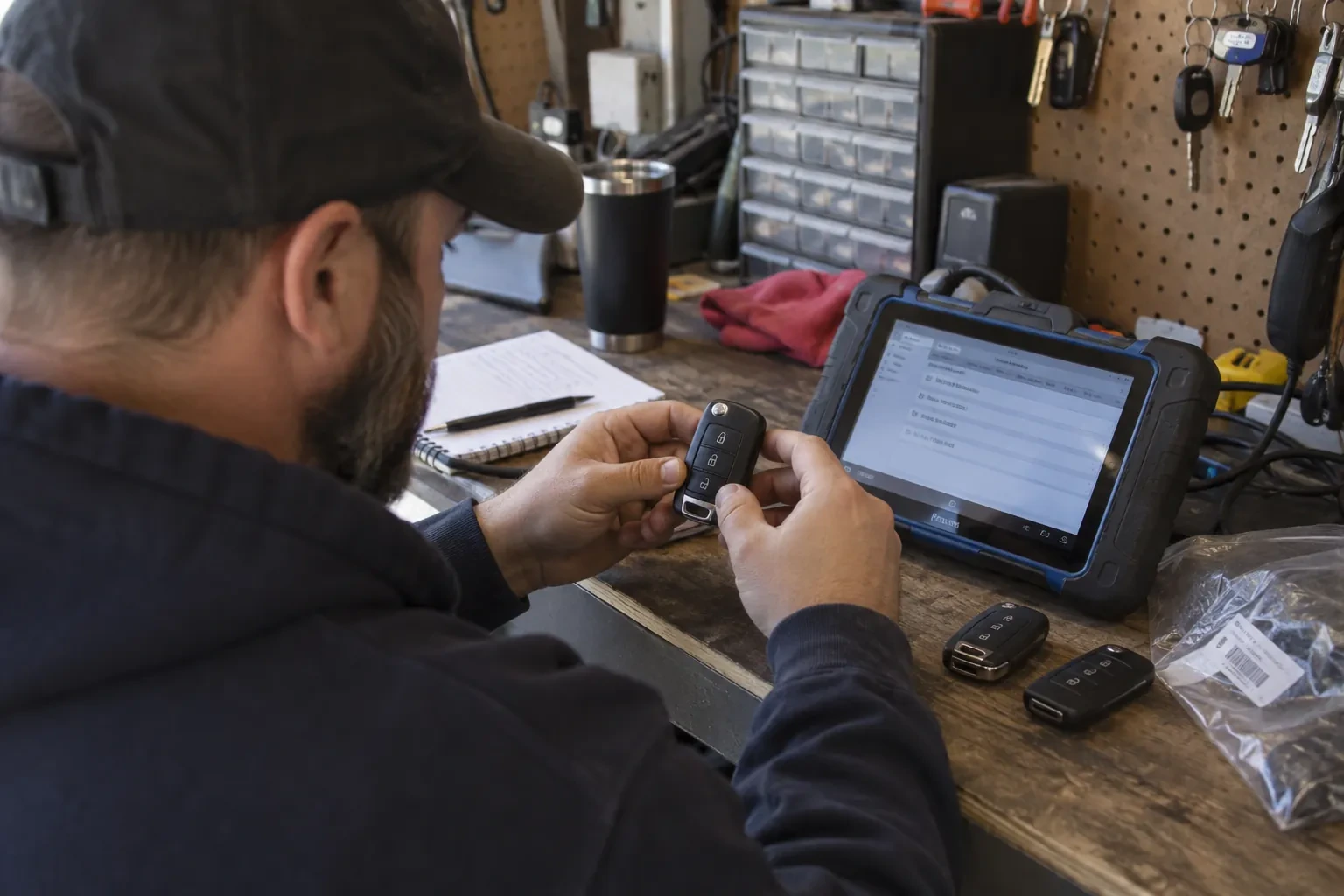
Fob shells and batteries
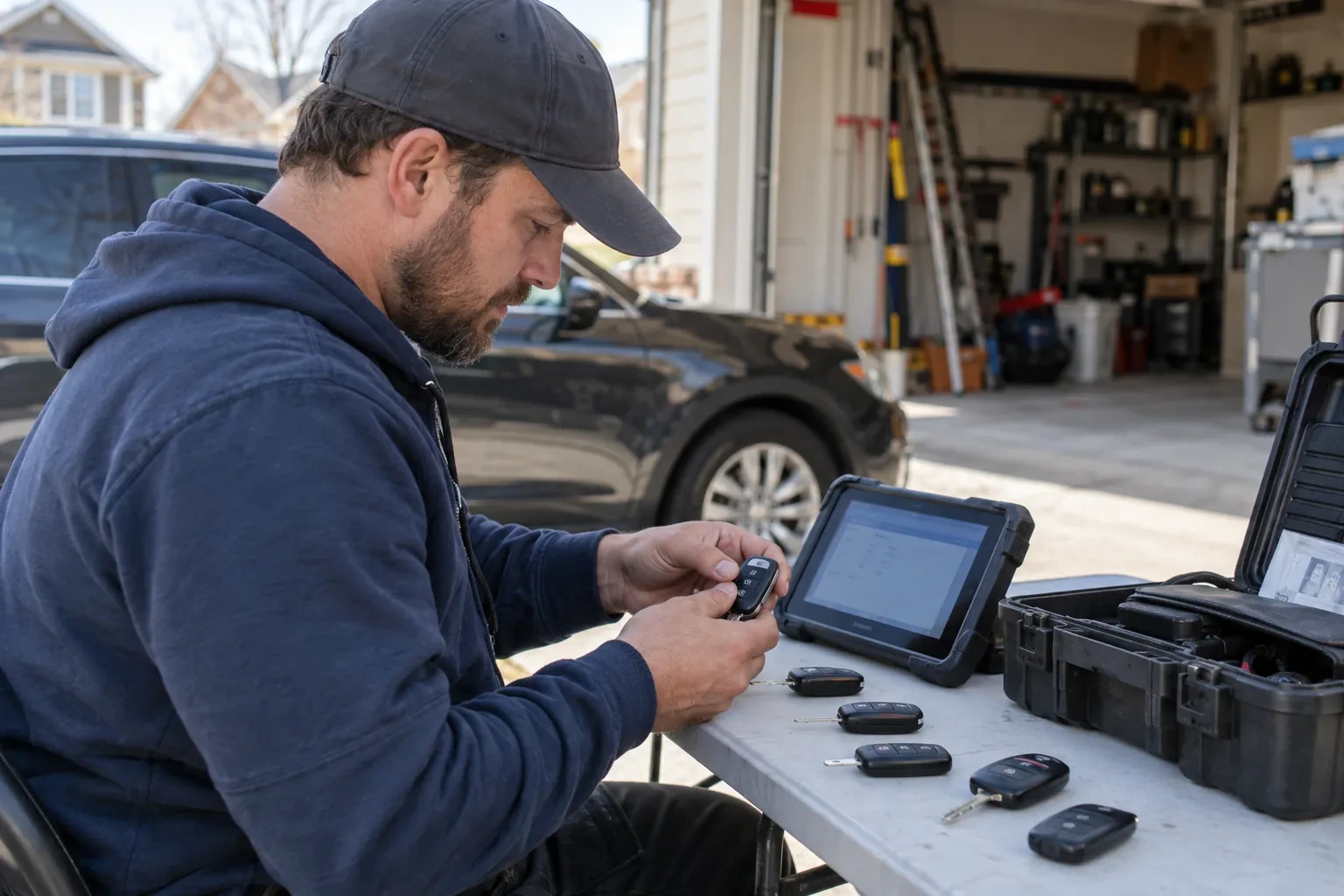
Transponder programming unit
Penetrating fluid
Motorcycle key blanks
Pick and tension tools
Motorcycle & Scooter Keys
What affects the quote
Weather affecting a seized lock
A lock seized by cold, ice or dried-out grease from a season of storage takes patient thawing and working before a key can be tested against it, which a winter call reflects.
Condition of the existing lock
A clean, well-maintained lock accepts a new key with little extra work. One affected by corrosion or grit may need cleaning or light service before a key can be tested reliably against it.
Whether an immobiliser is fitted
A machine with an immobiliser needs its electronics paired as well as its lock cut, which adds equipment and testing beyond a purely mechanical key, and is reflected as its own step in the quote.
What to have ready
- Is the steering lock turning freely, or does it feel stuck?
- What is the make, model and year of the machine?
- Was the machine bought used, and how many keys came with it?
Motorcycle & Scooter Keys: questions
QuestionsCan you cut a key for an older or vintage motorcycle?
Yes, provided the lock or an existing key survives to read from. Older mechanical locks are generally simpler than current wafer or transponder systems, and a locksmith familiar with vintage keyways can often decode or duplicate them the same way as a newer lock. Where a replacement lock is genuinely needed rather than a key, sourcing period-correct hardware can take longer than the key work itself.
I only have the key, not the bike here. Can you still cut one from it?
Yes, a key on its own can usually be read and duplicated without the machine present, since the cuts on the blade carry the information the locksmith needs. What cannot be confirmed without the bike is whether an immobiliser is fitted or whether other locks are keyed the same way, so bringing the machine, or at least a photo of the ignition and dash, helps decide whether anything beyond a straightforward copy is needed.
What counts as proof that I can request a key for this machine?
Vehicle registration or an insurance document that matches the plate is the simplest route. A bill of sale works for a recent purchase, and a dealership or family member who can vouch for the connection fills the gap when paperwork is not on hand. This check happens before any cutting or programming, since a working key should only go to someone with a genuine claim to the machine.
Related services
- Car Key ReplacementMinus twenty outside, the fob button does nothing, and the door keyhole has a crust of road salt over it because you have not used a metal key in that car since the day you bought it.
- Spare Car Key DuplicationA lockout last month ended with a locksmith opening the door and going home, and the same single key has been carried ever since with nothing behind it.
- Key Fob ProgrammingButtons on the fob still light up and the remote still clicks, but the vehicle refuses to start even with the fob sitting in the cupholder.