Car keys · Toronto
Vehicle Lock Repair
Every door drops into place together when the fob is pressed, except the driver's door, which stays unlocked while the rest click shut around it.
In plain words
Which lock is affected shapes the whole visit. A door that will not respond to the key usually points to the cylinder or the linkage rod behind it, a trunk or hatch that spins without opening points to a worn or disconnected cam, and a door that ignores the remote but still answers the key points to the power actuator rather than the lock itself. Reading the symptom correctly narrows where to look before the panel comes off, and checks of lock position, fit, cable routing, connectors and the harness follow before the repair settles on the part that failed, rather than replacing hardware that was never the issue.
How the visit goesSince the last heavy rain, the front passenger door has needed two or three tries before the key catches, and moisture seems to sit along the seal right where the lock is mounted. Every other door still opens on the first attempt.
Vehicle Lock Repair
How the visit goes
Checking the seal and the door's overall fit
Weatherstripping around the affected opening gets a look before the panel goes back on, because a perished or torn seal is often how moisture reached the parts that just failed. The locksmith also checks how the door or hatch sits in its frame, since a panel that has sagged slightly can put pressure on the latch and mimic a lock problem that is really a fit problem.
Reconnecting or replacing the linkage
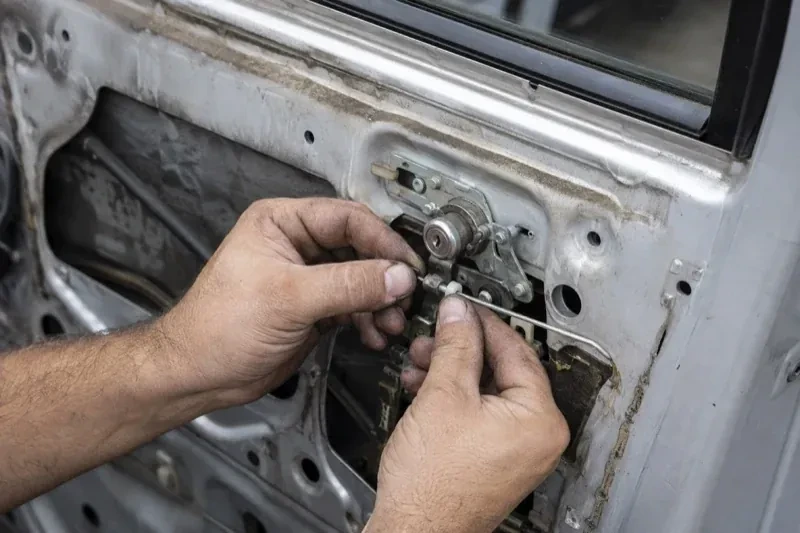
A key that spins without opening the door often means the linkage rod has slipped off the cam at the back of the cylinder or has broken outright, though some cylinders are built to freewheel against the wrong key or a forcing tool, so the locksmith checks which applies first. The locksmith reaches the linkage through the trim panel, reseats or replaces the rod and its clip, and checks that a small amount of free play remains so the mechanism is not binding once the panel goes back on.
A central locking set that behaves as one
With the failed link repaired, the central locking system should now behave the way the vehicle is designed to: every door meant to move together does so on a single press of the fob or turn of the key, and any door, trunk or tailgate meant to unlock separately still does. Testing this from a short distance away, the way you normally approach the vehicle, confirms the fix holds under real use rather than only when standing right at the door.
Vehicle Lock Repair
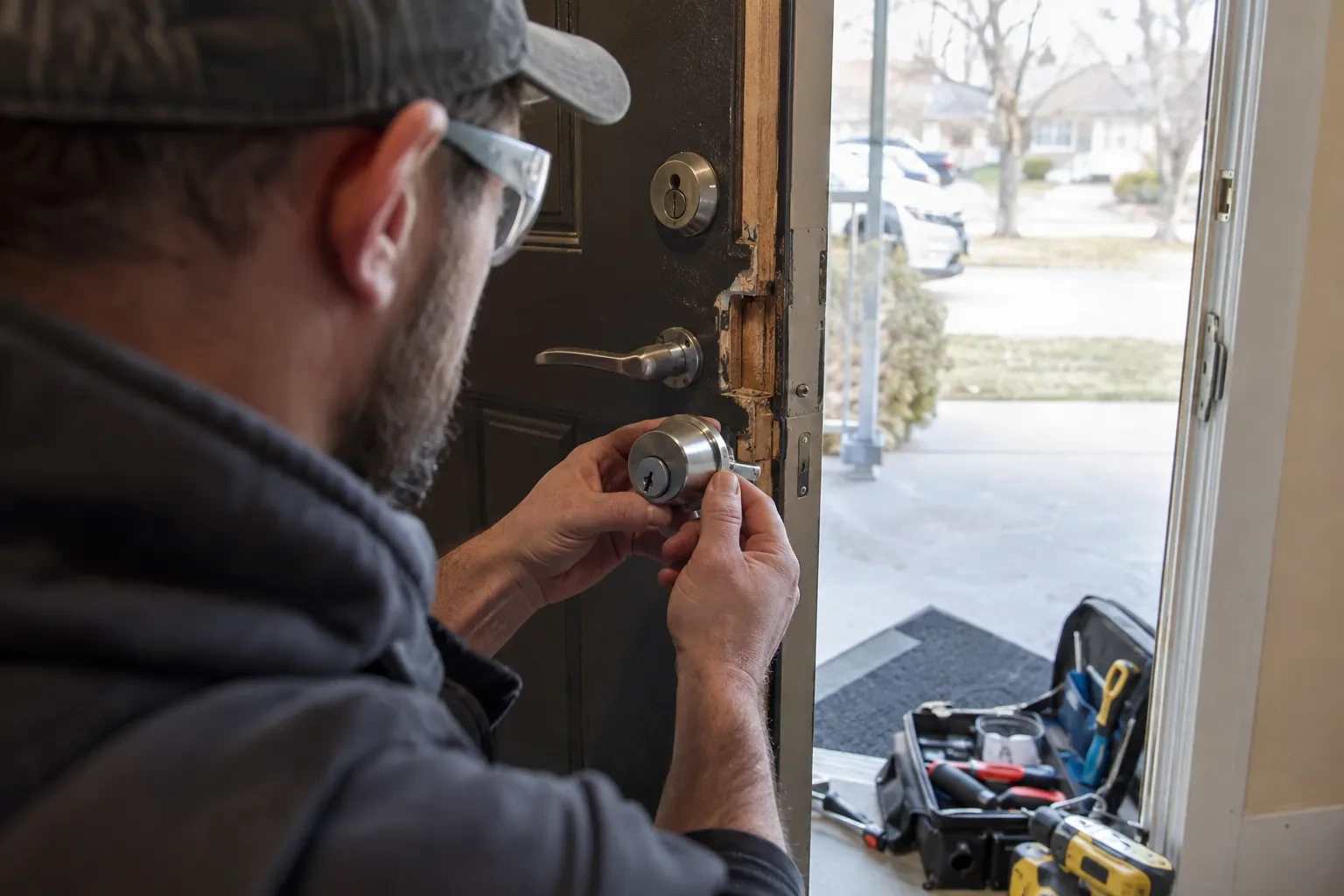
In the van
Weatherstripping and seal sections
Key blanks cut to code
Wiring harness door boot
Automotive pick and tension tools
Multimeter for wiring checks
Vehicle Lock Repair
What affects the quote
Corrosion from weather and road salt
A cylinder or actuator that has taken on winter brine or years of moisture through worn weatherstripping often needs more cleaning, drying or part replacement than one that has stayed dry, and the quote reflects that condition.
Mechanical or electronic fault
A worn cylinder or a slipped linkage rod is generally simpler work than a failed power actuator or a wiring fault reaching back to the hinge, and the quote reflects which side of the lock has failed.
Central locking versus a single door
A fault confined to one lock is more contained than one that involves the vehicle's central locking module or wiring shared across several doors, which takes longer to trace and quotes accordingly.
What to have ready
- Has the lock been getting stiffer gradually, or did it stop suddenly?
- Is the vehicle reachable and stationary right now, wherever it is parked?
- Would you like a spare key or fob cut during the same visit?
Vehicle Lock Repair: questions
QuestionsIs a mismatched key the same problem as a broken lock?
Not always. A key cut for a different vehicle, or an old worn copy, can feel exactly like a failing cylinder from the driver's seat. Testing a fresh key against the existing lock is one of the first checks, since it sometimes resolves what looked like a hardware fault.
Does a repaired vehicle lock still use my original key?
Wherever possible, yes. The point of repairing rather than replacing a lock outright is to keep it working with the key and fob you already carry, so the whole vehicle continues to answer to one set rather than needing a second key for one door.
How long has my vehicle's lock actually been going bad before I noticed?
Sometimes not long at all: a stiff key, a remote that occasionally needs a second press, or a door that hesitates can come from unrelated causes, debris in the key groove, a low fob battery or interference, rather than one wear process running its course, so the technician checks each on its own before assuming a shared history.
Related services
- Car Key ReplacementMinus twenty outside, the fob button does nothing, and the door keyhole has a crust of road salt over it because you have not used a metal key in that car since the day you bought it.
- Spare Car Key DuplicationA lockout last month ended with a locksmith opening the door and going home, and the same single key has been carried ever since with nothing behind it.
- Key Fob ProgrammingButtons on the fob still light up and the remote still clicks, but the vehicle refuses to start even with the fob sitting in the cupholder.