Commercial
Commercial Locks
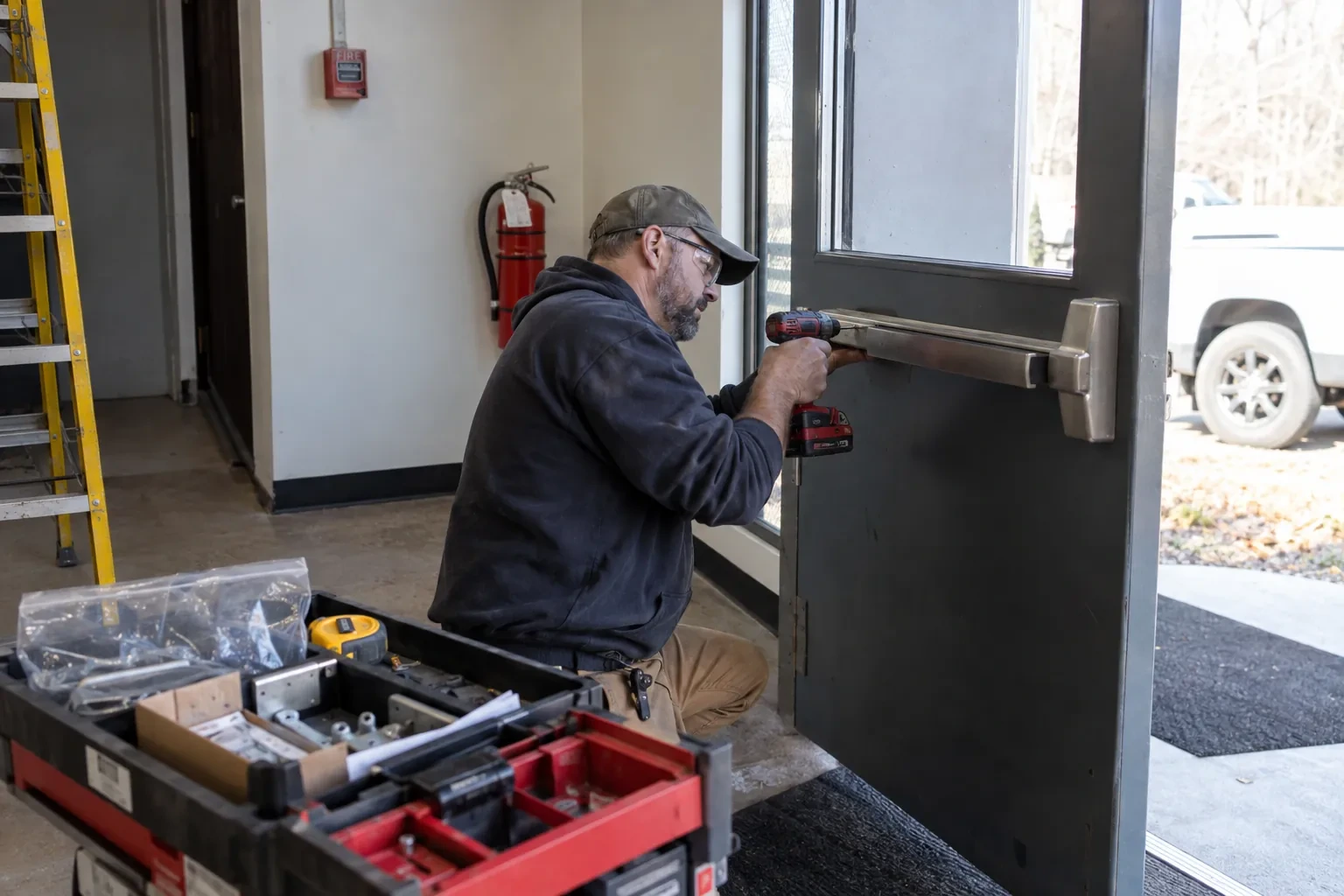
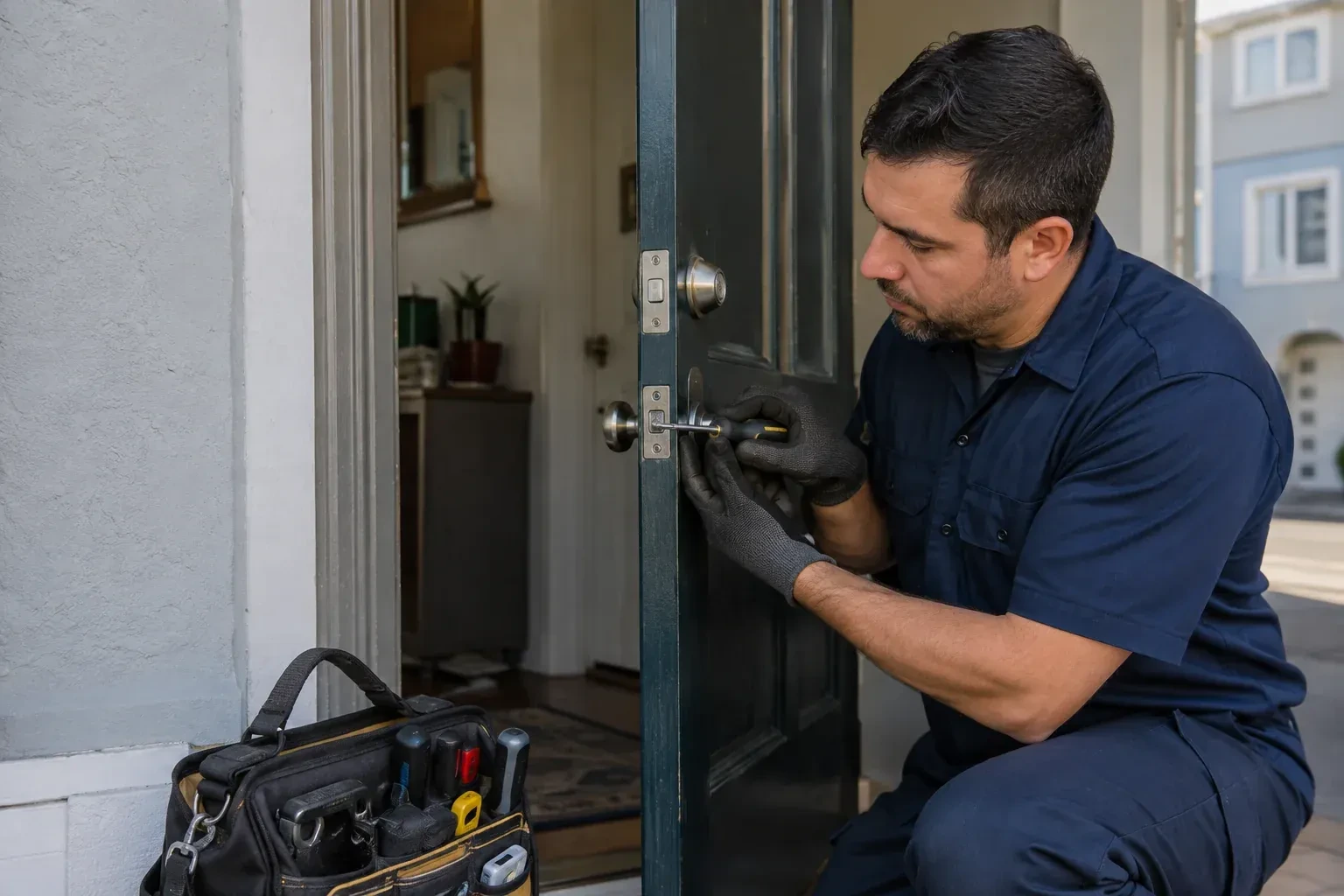
Doors with closers, exit devices, electric strikes and card readers have more parts to fail than a house door. When a commercial door stops behaving, we look at the whole assembly, find the part that is wrong and fix it without disturbing the rest.
Which one do I need?
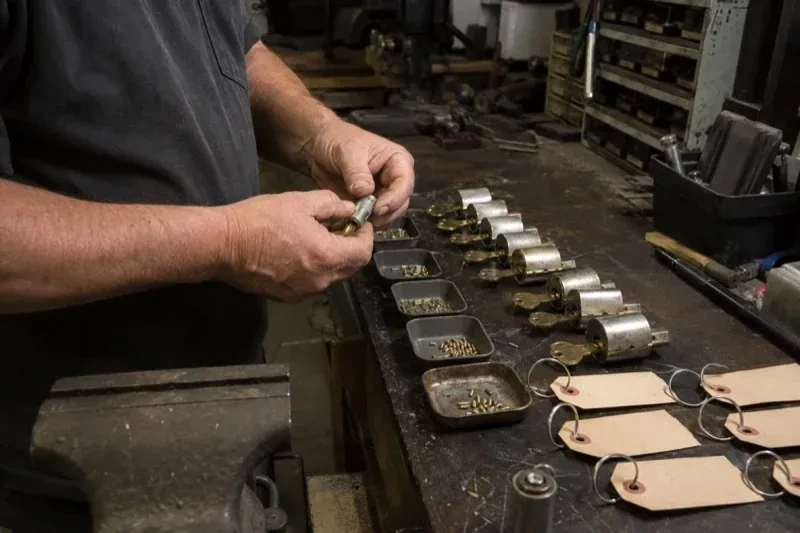
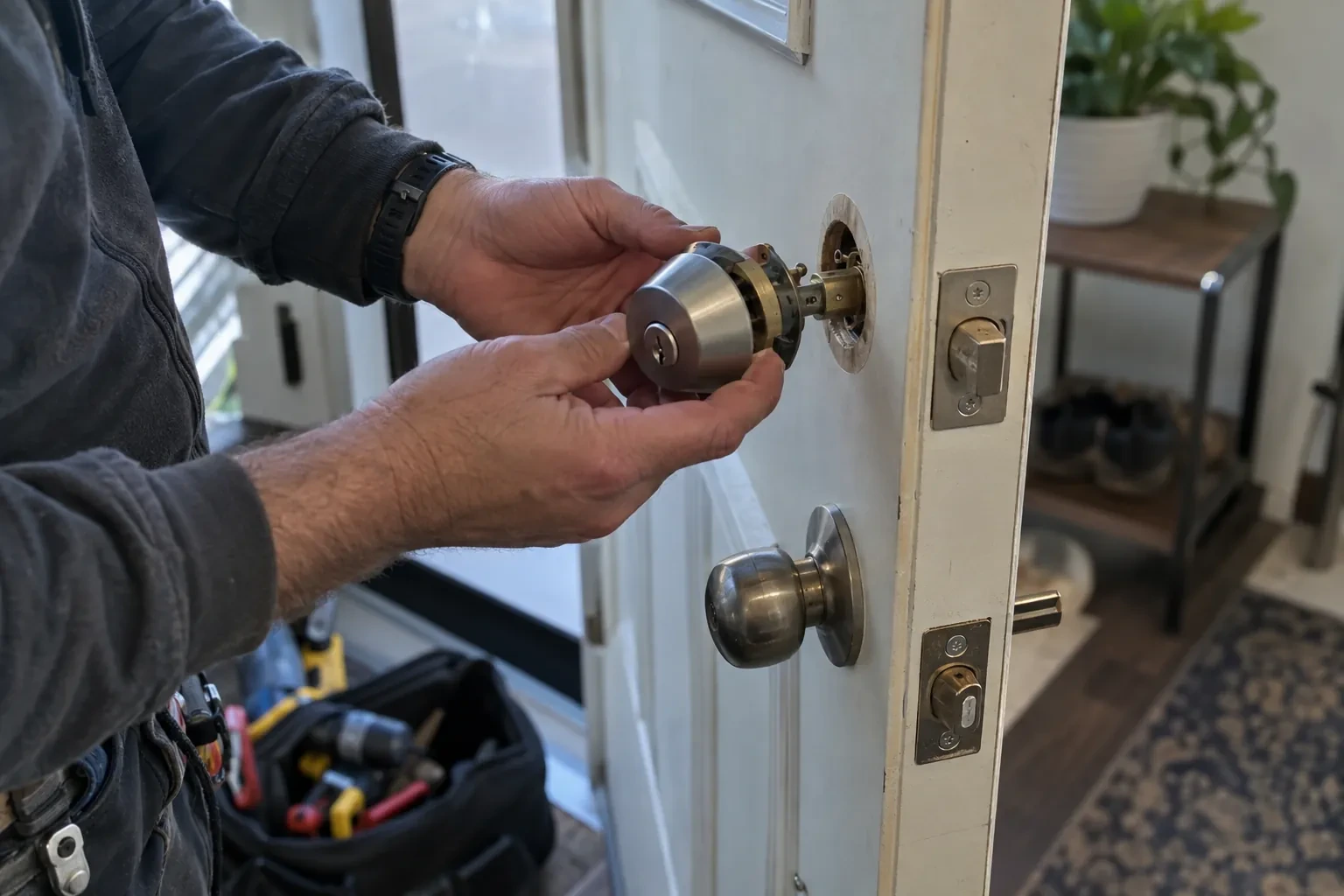
- The renovation is finished and the contractors have gone, along with the loaner keys they used for six weeks.Commercial Rekeying
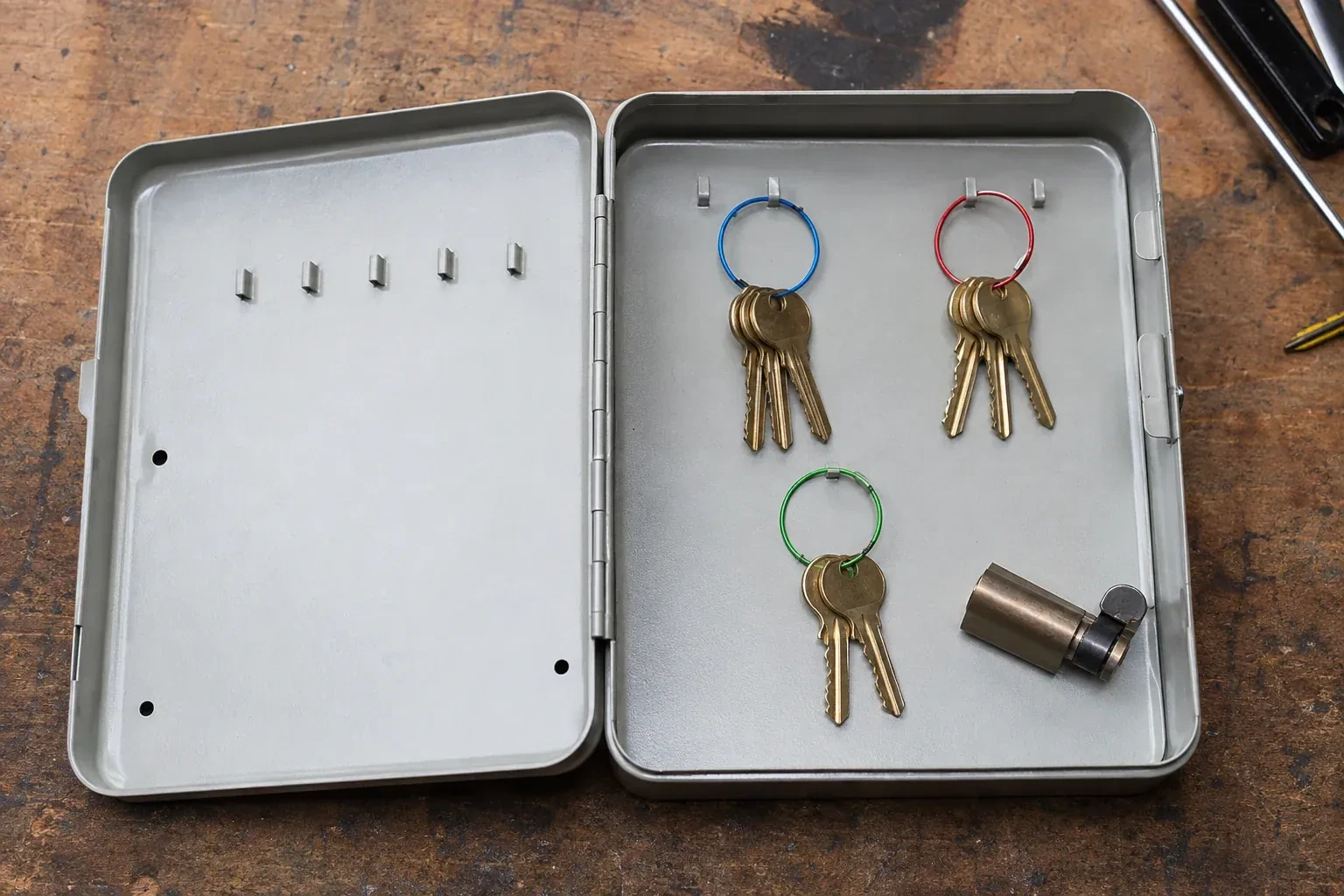
- The office key ring has become the org chart.Master Key System Design
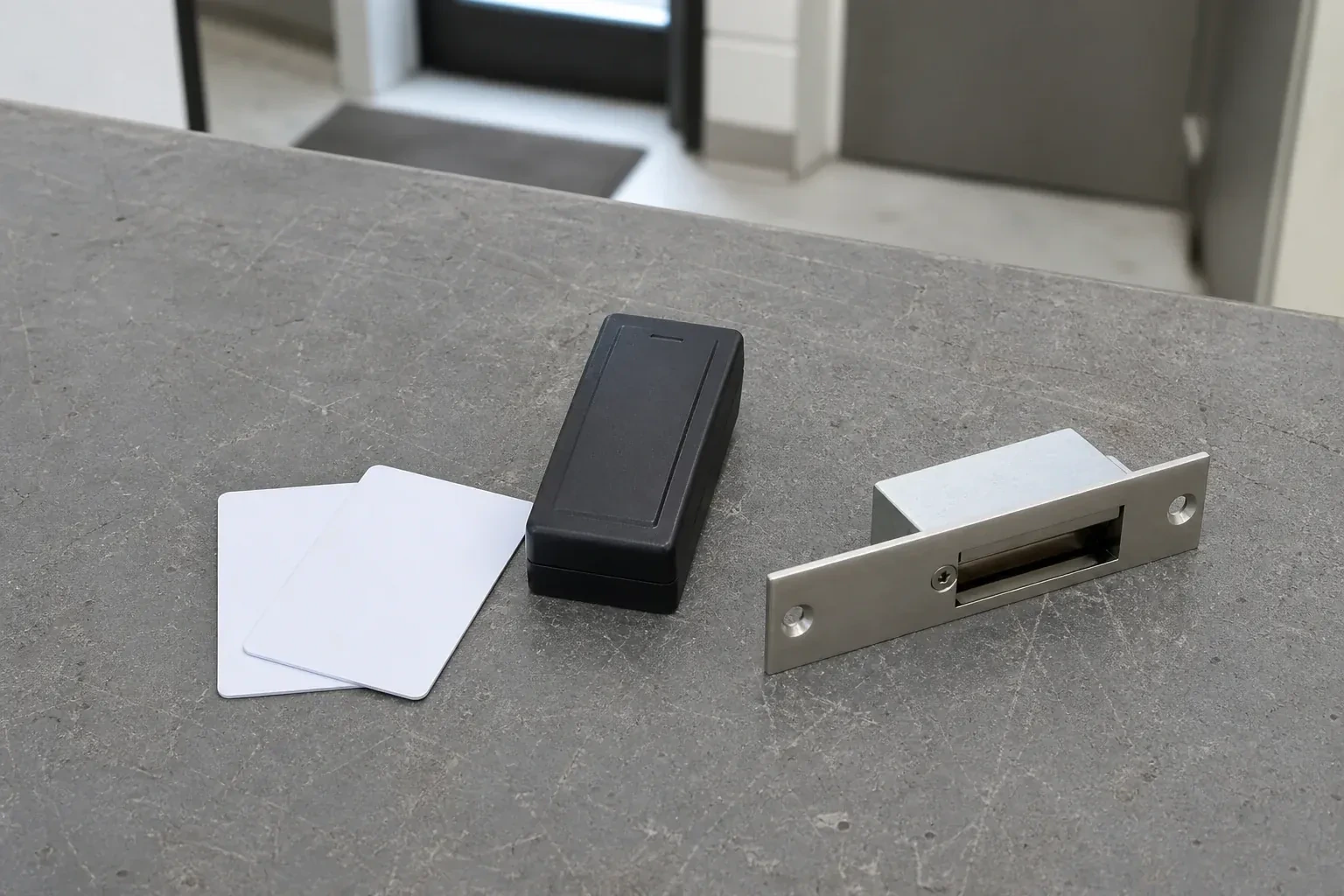
- The keypad on the side door has started sticking on cold mornings, codes get shared instead of reset, and half the staff still remember a code you meant to retire two hires ago.Access Control Installation
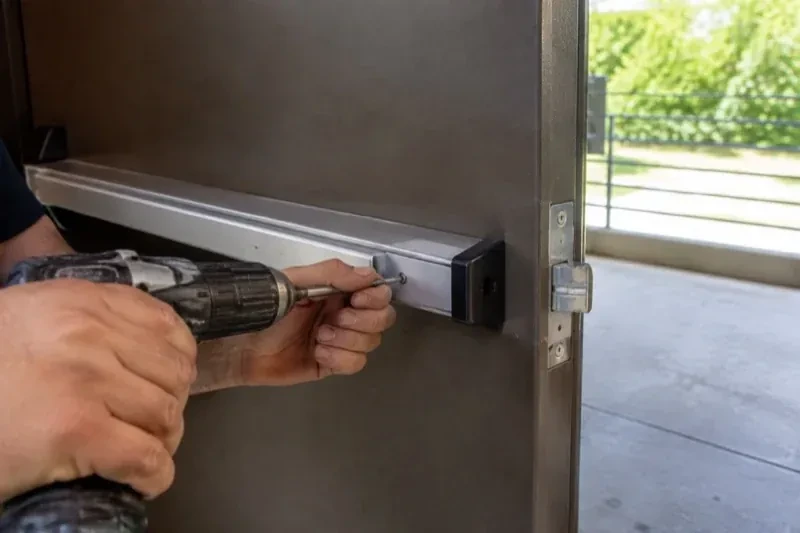
- The fire inspector's note is blunt: the banquet hall's second exit still turns on a deadbolt, and the crowd it is rated to hold needs a door that opens under one motion, no key involved.Panic & Exit Hardware
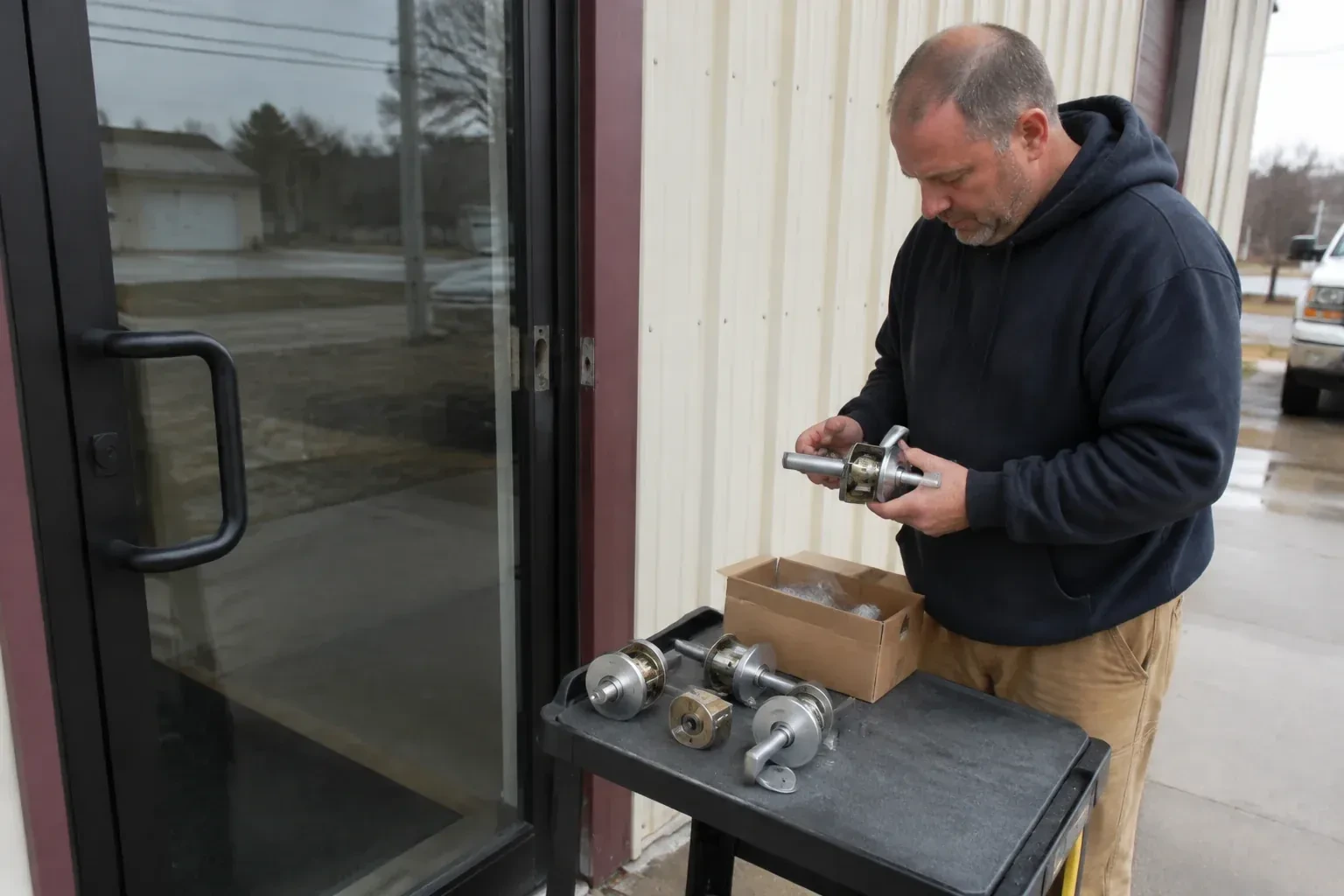
- Head office wants every branch keyed alike under one system, and half the locations are still running whatever lockset the original contractor happened to install years ago.Commercial-Grade Lock Replacement
Commercial Locks
Locks for shops, offices and buildings: rekeying at turnover, commercial-grade hardware, exit devices, master key systems and access control.

Commercial Rekeying
Who is entitled to order the change
Every commercial rekey starts by confirming that the person asking for it has the standing to do so. For a small business that is usually the owner or a director; for a larger one, a facilities manager or property manager acting under written authority. The lease matters here too, because it decides which doors are the tenant's to alter and which remain the landlord's, and many leases ask that the landlord be given a key or told when locks change.
Getting this straight before any cylinder comes out protects the business, its neighbours in the building and the locksmith, and it means the finished keying chart lands in the right hands.