Change or rekey · Toronto
Gate & Building Entry Locks
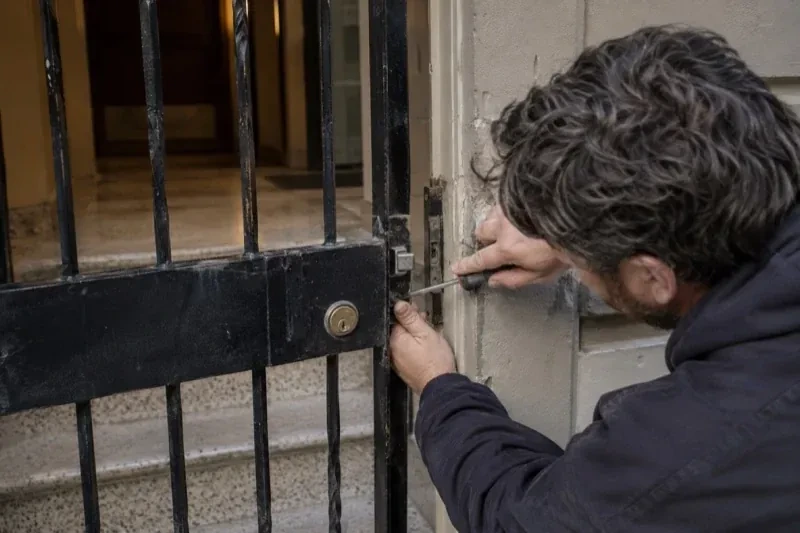
Every time the courtyard gate closes, it slams hard enough to rattle the fence panels, and the deadlatch never quite drops into the keeper before the spring yanks it the rest of the way.
In plain words
Some building entries add a buzzer, a keypad or an electric strike to the mechanical lock, and any one of those pieces can be the reason a door stops releasing on cue. This service checks the wiring, the power supply and the mechanical override together with the lock itself, rather than assuming the fault sits wherever the last person guessed. Whatever combination of electronic and mechanical hardware the entry uses, it leaves working as one system: a mechanical key still able to open it wherever the installed lock provides one, and a fail-safe strike or maglock still releasing on its own if the power ever goes out.
How the visit goesEvery time the courtyard gate closes, it slams hard enough to rattle the fence panels, and the deadlatch never quite drops into the keeper before the spring yanks it the rest of the way. One good gust of wind and it bounces right back open.
Gate & Building Entry Locks
How the visit goes
Taking stock of who holds a key
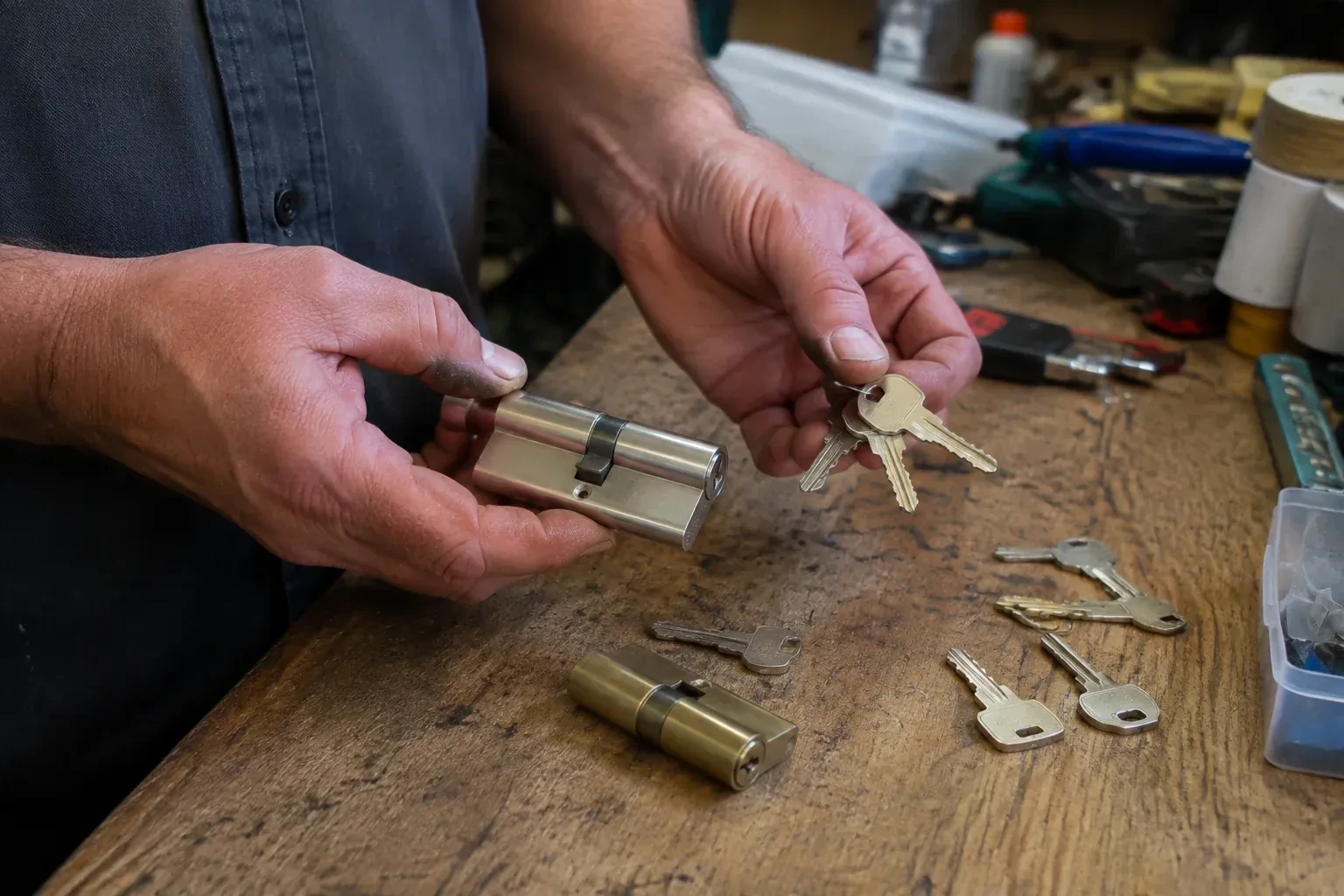
On a shared entry, the lock is only half the picture; the other half is who currently has a working key. The locksmith asks how many units or households rely on this door, whether anyone has moved out without returning a key, and whether other gates or entries on the property are meant to share the same one. That inventory decides whether a straightforward rekey covers everyone or whether some doors need to be brought onto a common key during the same visit, so nobody is left holding a key that no longer opens anything.
Correcting a frost-heaved or leaning post
When ground movement is the real cause, the fix goes to the post rather than the lock. Depending on what the post is set in, this can mean resetting it plumb, packing or replacing the base it sits in, or adding bracing so it stops drifting with each freeze-thaw cycle. The strike is then repositioned to match the corrected post, and the gate is cycled through several full closes to confirm the latch now meets it consistently, in place of chasing the same misalignment again after the next frost.
A seasonal habit worth keeping
A gate or shared entry that was serviced once benefits from a short look each season afterward, particularly heading into winter: cycling the gate to check the closer still settles it into the latch, glancing at the cylinder for the first signs of pitting, and confirming hinge or post hardware has not worked loose. Catching a stiff cylinder or a slow closer in the fall is a smaller job than reaching the same gate once it is genuinely frozen or has sagged further over a winter of neglect.
Gate & Building Entry Locks
In the van
Cylinder decoder and pick set
Keyed-alike cylinders
Voltage tester for electric strikes
Corrosion-resistant fasteners
Gate and door closers
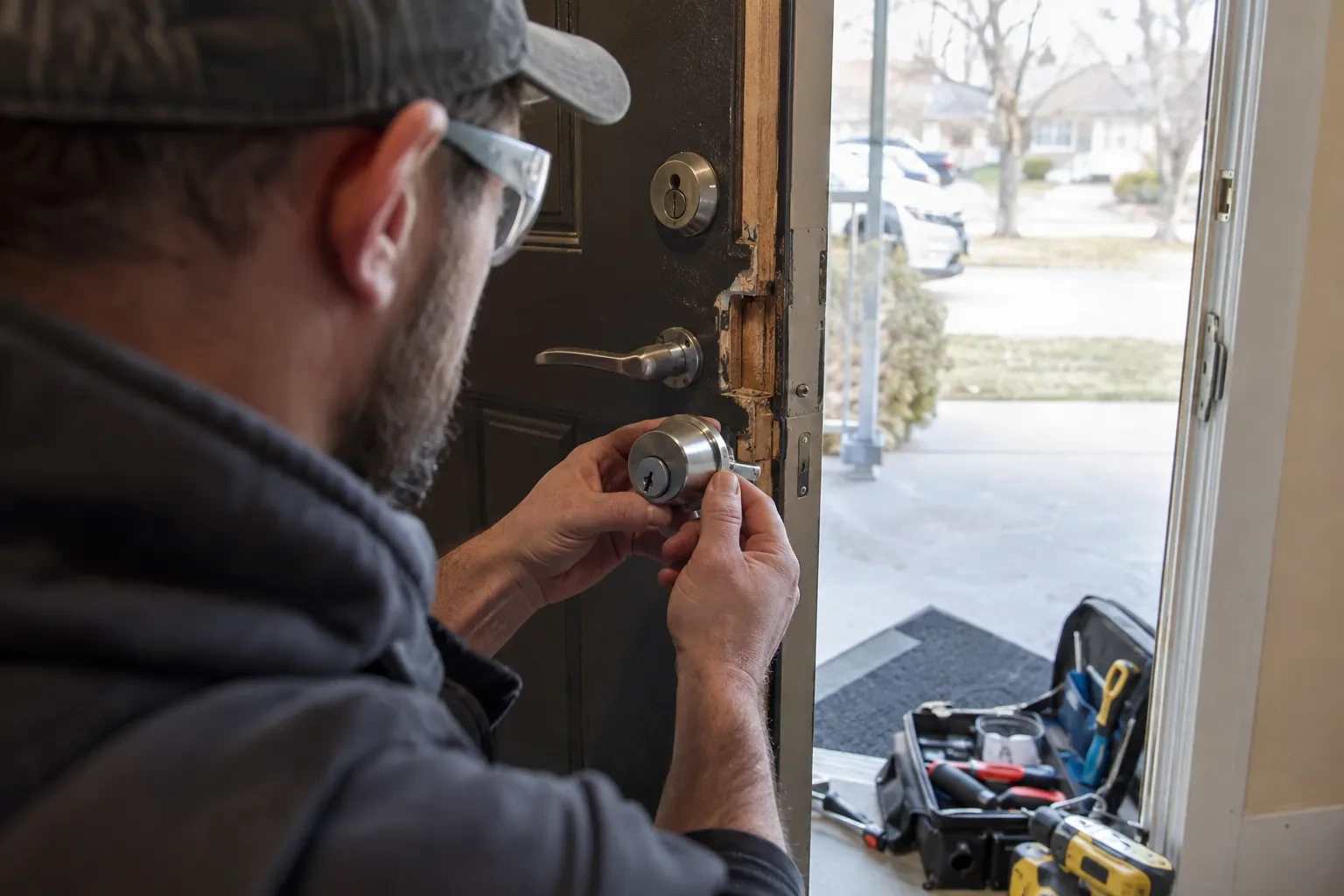
Gate & Building Entry Locks
What affects the quote
Weather-rated versus standard hardware
Hardware built and sealed for outdoor exposure differs from standard indoor-grade hardware, and choosing the weather-rated option for anything mounted outside is reflected in the parts portion of the quote.
Time of year and weather on the day
A cylinder frozen solid or a closer stiffened by cold takes patient work before adjustment or replacement can even begin, so a call made during a cold snap is quoted with that extra time in mind.
How many current key holders need new keys
Keys cut on site are counted individually into the quote. A single household needs far fewer than a multi-unit building entry where every current resident is being issued a fresh key at once.
What to have ready
- Roughly how many people currently need a working key?
- Is the gate wood, metal, aluminum or vinyl?
- Are there other gates on the property that should share a key?
Gate & Building Entry Locks: questions
QuestionsWho is allowed to ask for a rekey on a shared building entry?
Because a shared entry serves more than one household, the locksmith looks for someone with authority over the whole door: an owner, a landlord, a property manager or a condo board, rather than any single resident acting alone. An individual tenant can usually request work on their own unit's door without issue, but changing the lock everyone in the building relies on to get in is treated as a decision for whoever manages the property, with current residents given new keys once it is done.
What should I have ready before the locksmith arrives?
It helps to know which gate or door is affected, roughly how old the lock or closer is, and what exactly is happening: dragging, slamming, refusing a key, or a buzzer that stopped releasing the door. If the entry is shared, a rough idea of how many households or units currently need a working key speeds up the visit considerably. For a building entry, having contact information for a property manager or condo board on hand is useful if a decision needs their sign-off.
What makes a cylinder weather-rated, and does it matter?
A weather-rated cylinder is built with materials and seals meant to resist water, salt and temperature swings better than a standard indoor cylinder, which matters a great deal for anything mounted on an exterior gate or a street-facing door. Without that rating, a cylinder exposed to rain, road spray and freeze-thaw cycles tends to pit, stiffen or seize well before an equivalent indoor lock would show any wear. Choosing the rated version at the outset is usually simpler than replacing a corroded one a season or two later.
Related services
- Deadbolt InstallationThe back door has a deadbolt in name only: a short bolt, a thin brass strike held by two little screws, and a jamb you can flex with your palm.
- Lock Replacement & UpgradeThe century home's original mortise lock takes a key the size of a spoon, sticks in humid weather and has worn its strike to a groove.
- Vintage Mortise Lock ServiceSomeone painted the door years ago without removing the hardware.