Change or rekey · York Height
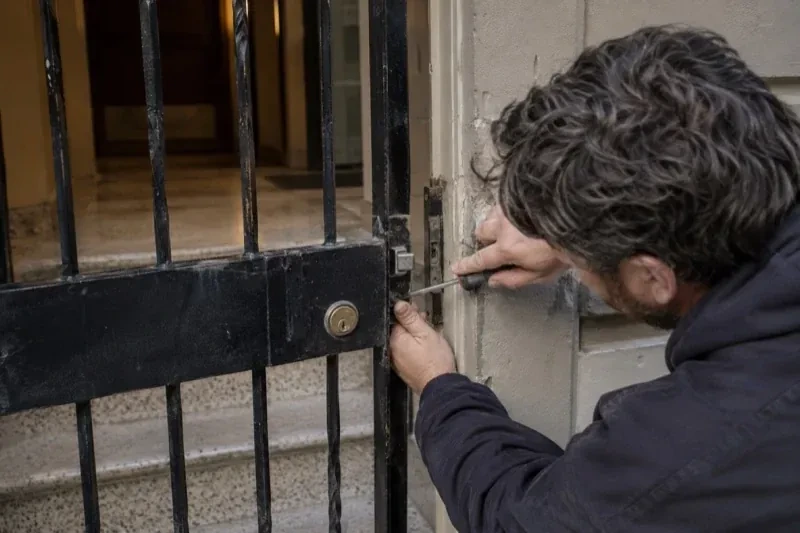
Gate & Building Entry Locks in York Height
Every time the courtyard gate closes, it slams hard enough to rattle the fence panels, and the deadlatch never quite drops into the keeper before the spring yanks it the rest of the way.
In plain words
Hardware bolted to a gate or an exterior building door lives outside every day of the year, which is a different job from a lock tucked behind a storm door. This service treats that exposure as the starting point: cylinders rated for weather, fasteners that resist road salt, and a closer set up to keep working through a freeze-thaw cycle rather than seizing at the first cold snap. The result is a gate or entry that keeps operating through the season it is most likely to struggle in.
How the visit goesThe gate to the side yard used to close with a satisfying click. After a winter of frost heaving the fence post, the latch now sits a full inch below where the strike is waiting for it, and the gate swings free no matter how hard it is pulled shut.
Gate & Building Entry Locks
How the visit goes

Identifying the hardware family
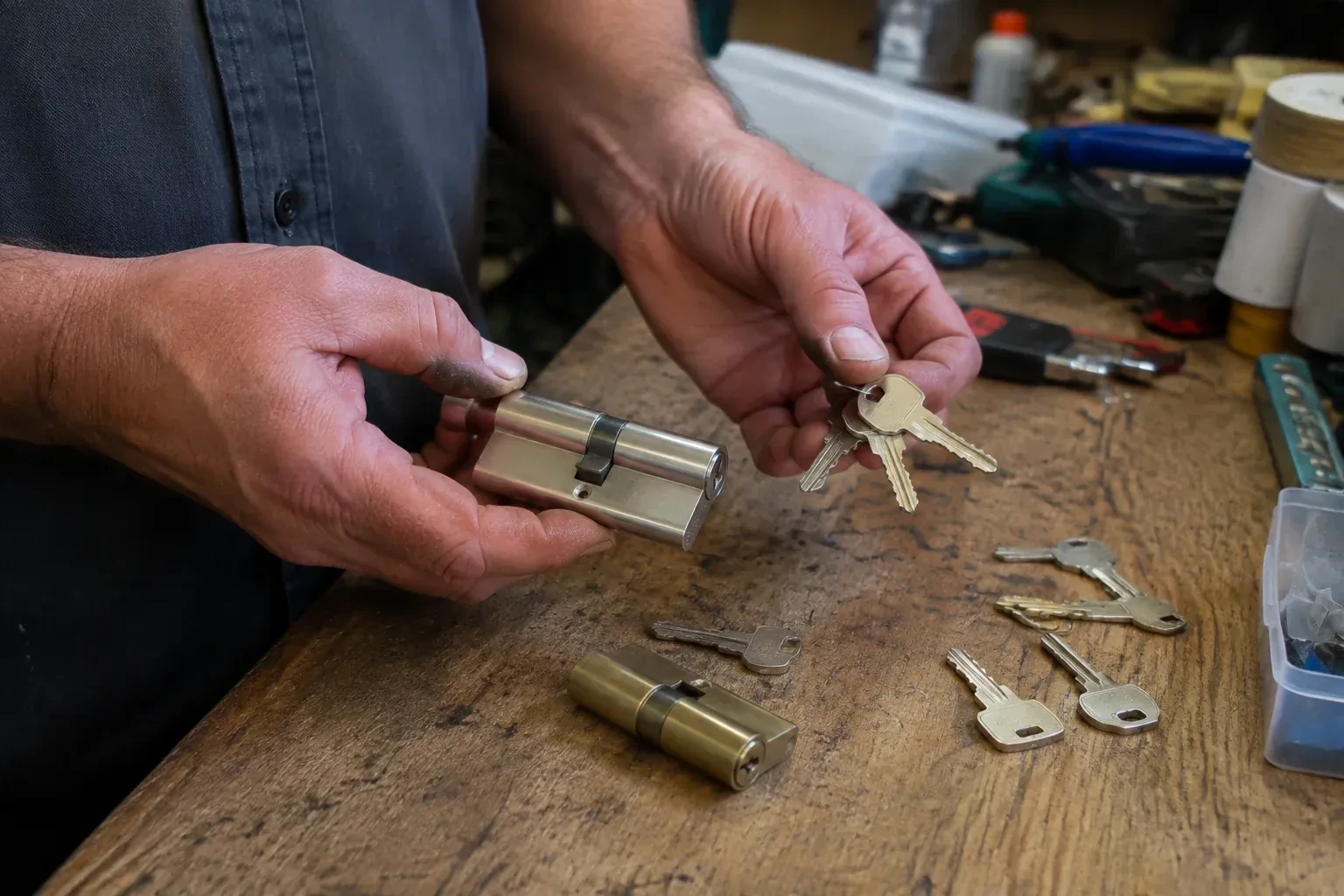
Every lock on a gate or shared entry belongs to a family with its own habits: a surface-mounted gate lock, a mortise case built into a heavier door, a rim cylinder feeding an electric strike, or a panic device on a fire exit. The maker's mark, the keyway shape and whether a thumb-turn or a second keyed side is present all point to which family sits on the door. Getting this right before opening anything up is what lets the visit move straight to adjustment or replacement instead of guessing at parts that will not fit the housing already there.
Freeing a seized or salted padlock
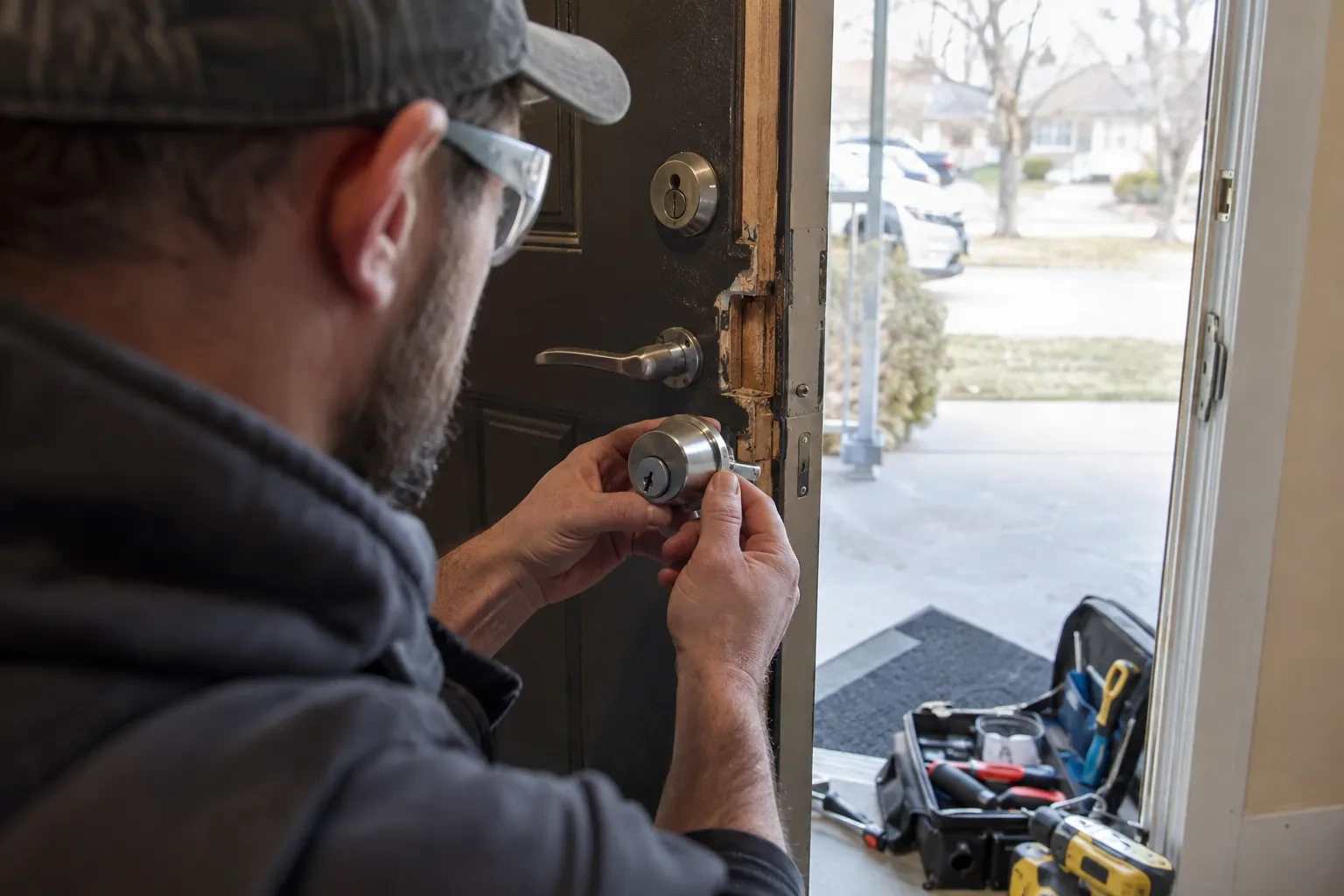
A padlock or gate cylinder stiffened by rust, dried grease or old grit is worked open with patience: a penetrating product suited to locks, gentle heat where appropriate, and a pick or the original key worked in small movements rather than forced. Where the internals have corroded past saving, the padlock or cylinder is replaced with a weather-rated unit built for that kind of exposure. Afterward the mechanism is dried and treated with the lubricant the manufacturer specifies for that cylinder, since the right product for one model can gum up another.
An electronic entry tested as one system
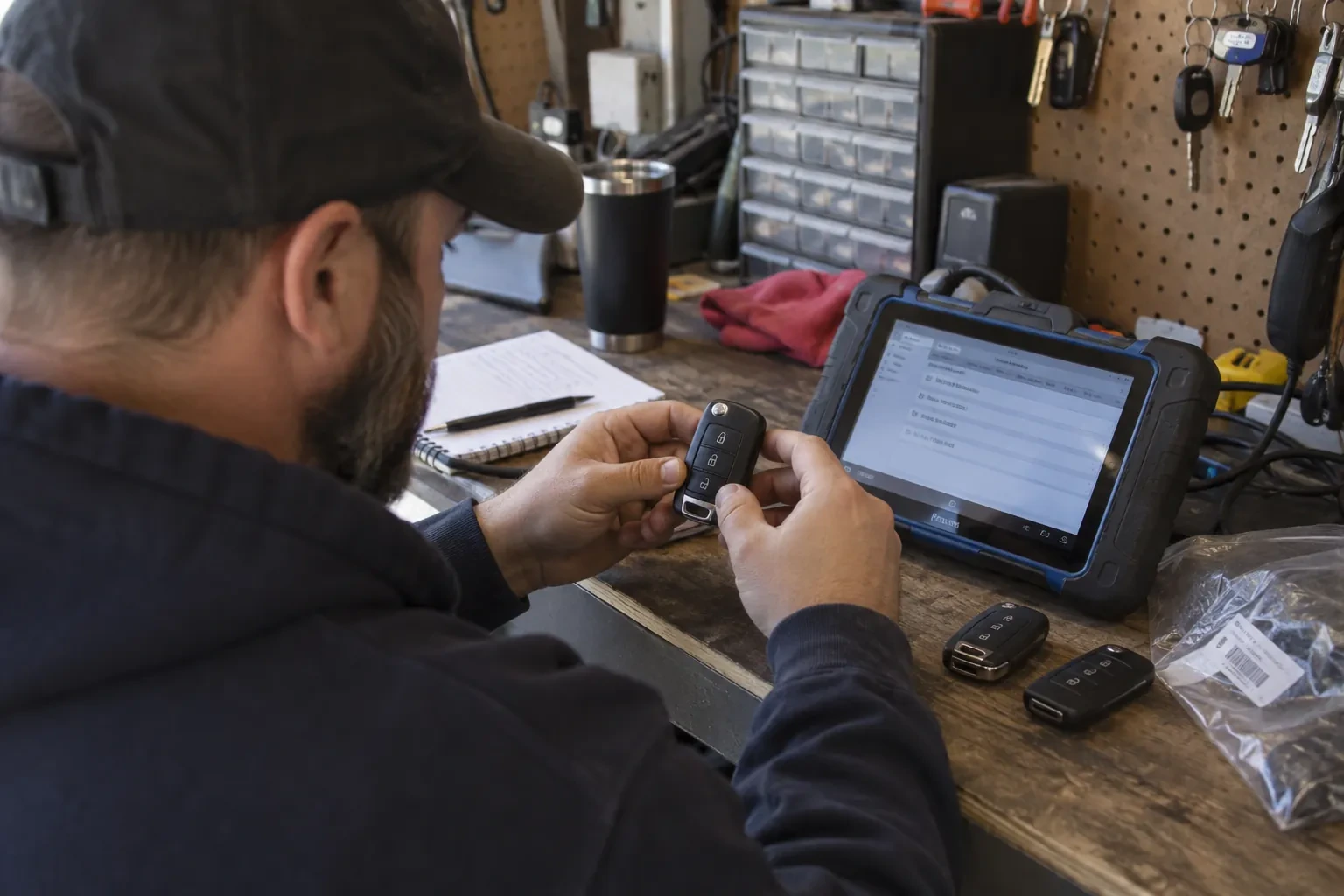
Where the entry includes a buzzer, keypad or electric strike, you see it worked before the locksmith leaves: the intercom releasing the door on a buzz, the keypad accepting a code, and, where the installed lock includes one, the mechanical override key turning cleanly as a backup. Batteries or settings that were touched during the visit are confirmed, and, if a backup key exists, you are shown where it lives so it is not lost track of. An entry with both a working backup key and working electronics now has two independent ways to open it, worth keeping in mind the day the power or the app misbehaves.
Gate & Building Entry Locks
In the van
Cylinder decoder and pick set
Keyed-alike cylinders
Voltage tester for electric strikes
Corrosion-resistant fasteners
Gate and door closers
Gate & Building Entry Locks
What affects the quote
Whether keys need coordinating across doors
Rekeying a single lock is one task. Bringing several gates or a shared entry onto one common key, or setting up a master key arrangement across a property, adds planning and cylinder work beyond a single rekey.
Time of year and weather on the day
A cylinder frozen solid or a closer stiffened by cold takes patient work before adjustment or replacement can even begin, so a call made during a cold snap is quoted with that extra time in mind.
Electronic components on the entry
A buzzer, keypad, electric strike or maglock adds its own diagnostic and testing time beyond the mechanical lock itself, and any electronic part that needs repair or replacement is priced as its own line.
What to have ready
- Is the gate wood, metal, aluminum or vinyl?
- Roughly how many people currently need a working key?
- Is there any sign the gate or lock was recently forced?
Gate & Building Entry Locks: questions
QuestionsWho is allowed to ask for a rekey on a shared building entry?
Because a shared entry serves more than one household, the locksmith looks for someone with authority over the whole door: an owner, a landlord, a property manager or a condo board, rather than any single resident acting alone. An individual tenant can usually request work on their own unit's door without issue, but changing the lock everyone in the building relies on to get in is treated as a decision for whoever manages the property, with current residents given new keys once it is done.
What should I have ready before the locksmith arrives?
It helps to know which gate or door is affected, roughly how old the lock or closer is, and what exactly is happening: dragging, slamming, refusing a key, or a buzzer that stopped releasing the door. If the entry is shared, a rough idea of how many households or units currently need a working key speeds up the visit considerably. For a building entry, having contact information for a property manager or condo board on hand is useful if a decision needs their sign-off.
What makes a cylinder weather-rated, and does it matter?
A weather-rated cylinder is built with materials and seals meant to resist water, salt and temperature swings better than a standard indoor cylinder, which matters a great deal for anything mounted on an exterior gate or a street-facing door. Without that rating, a cylinder exposed to rain, road spray and freeze-thaw cycles tends to pit, stiffen or seize well before an equivalent indoor lock would show any wear. Choosing the rated version at the outset is usually simpler than replacing a corroded one a season or two later.
Related services
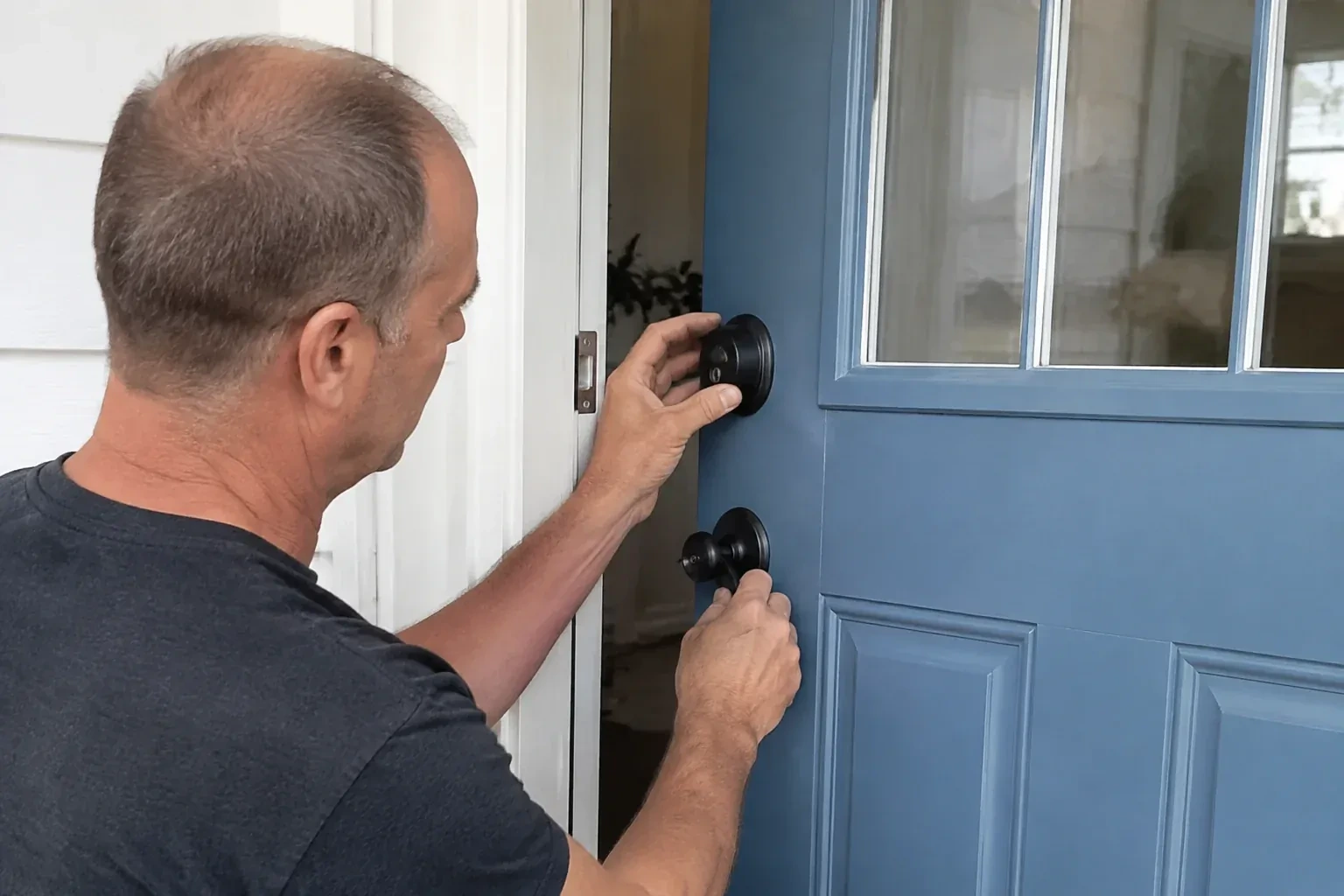
- Deadbolt InstallationThe back door has a deadbolt in name only: a short bolt, a thin brass strike held by two little screws, and a jamb you can flex with your palm.
- Lock Replacement & UpgradeThe century home's original mortise lock takes a key the size of a spoon, sticks in humid weather and has worn its strike to a groove.
- Vintage Mortise Lock ServiceSomeone painted the door years ago without removing the hardware.