Commercial · York Height
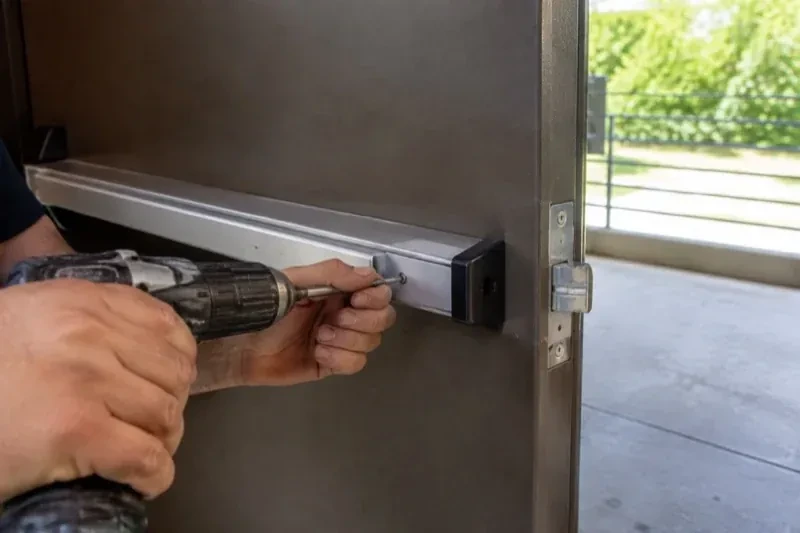
Panic & Exit Hardware in York Height
The fire inspector's note is blunt: the banquet hall's second exit still turns on a deadbolt, and the crowd it is rated to hold needs a door that opens under one motion, no key involved.
In plain words
Which device goes on a door depends on what the door already is. A single interior door usually takes a rim exit device and a simple pull or lever outside. Listed fire-exit hardware covers many tall, narrow-stile and fire-rated openings too, so a mortise or vertical-rod device is chosen for its latching arrangement or the door's own preparation, not from height or fire rating alone, and a fire-rated opening can never be held open by a mechanical dogging function. Reading the door correctly before ordering hardware is most of the job; fitting it well is the rest.
How the visit goesSomeone at the front counter always has to unlock the side door by hand before the lunch rush, because the round doorknob out there was never meant to be an exit for a room this size.
Panic & Exit Hardware
How the visit goes

Confirming why the door needs this hardware
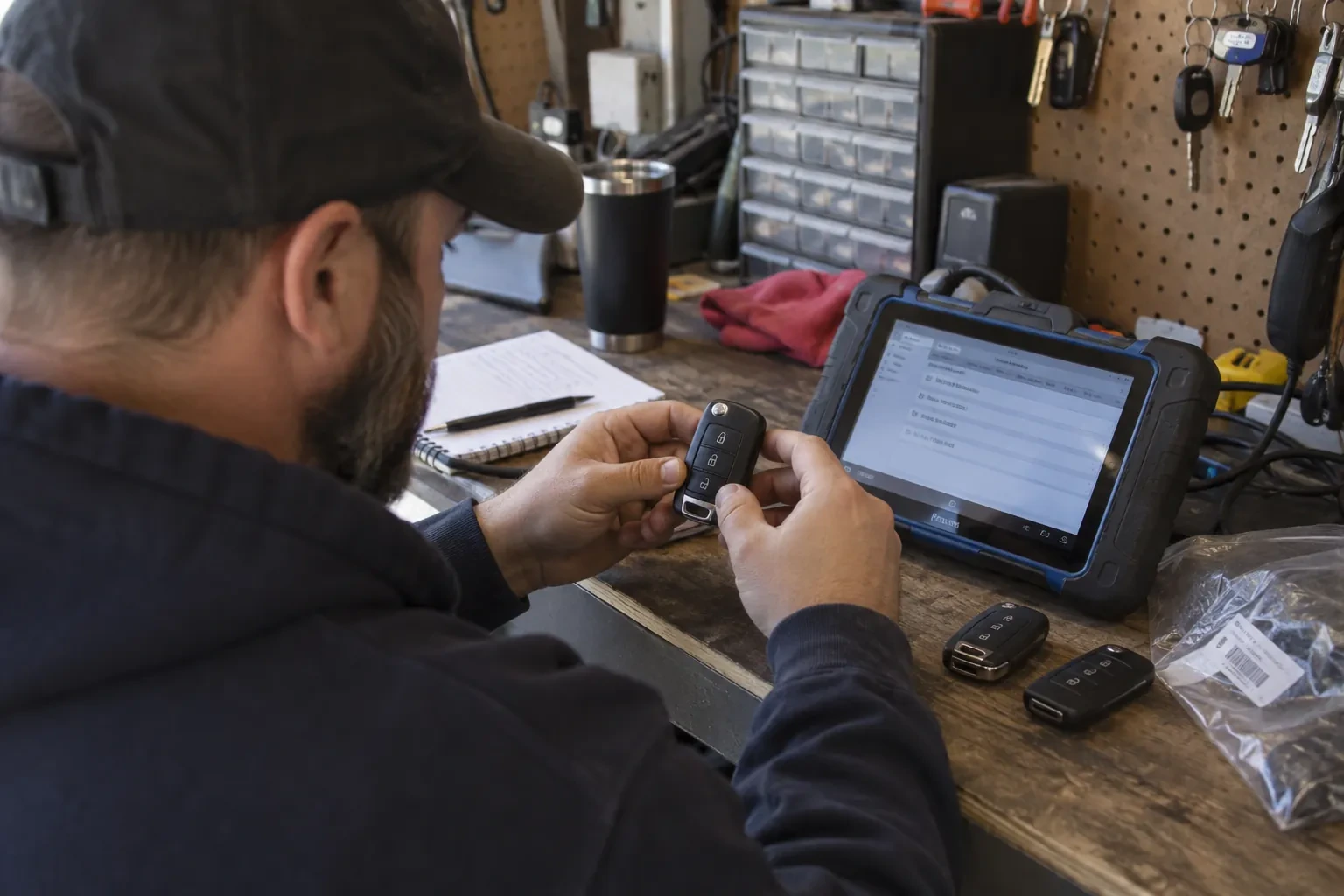
The visit starts with the reason exit hardware is being discussed at all: an occupant load that has crossed a threshold, a fire inspector's note, a new use for the room, or an existing device that has stopped working the way it should. Confirming this first decides everything downstream, because a door required to have a releasing device is treated differently from one where an owner simply wants easier egress. Whoever is responsible for the building is asked directly what triggered the visit, and the answer is recorded alongside the door it concerns before any hardware is chosen.
Fitting outside trim that still controls entry
The inside of the door stays simple: push to leave, every time. The outside gets whatever lets the right people in, a plain pull for a door nobody needs to unlock from outside, a lever with a key cylinder for staff entry, or a keyed cylinder alone where entry is occasional. Whichever trim is chosen, it operates entirely independently of the inside crossbar, so locking the outside never has any effect on a person's ability to leave from within.
A maintenance rhythm worth keeping
Exit devices are mechanical hardware and benefit from the same light attention as any other: a periodic check that the release force has not crept up, that the latch still seats fully, and that nothing has been added to the door that would block its exit function. Fire door assemblies carry their own inspection and testing rhythm, and folding the exit hardware into that same routine check keeps the whole opening, not just the lock, in the condition it was fitted in.
Panic & Exit Hardware
In the van
Request-to-exit switch
Through-fixings and mounting hardware
Coordinator for door pairs
Installation template and jig
Signage and labels
Panic & Exit Hardware
What affects the quote
Number of openings involved
One door with a single device is the simplest case. A building with several affected exits, such as doors from a stairway plus an assembly-room exit, is quoted as the sum of each opening's own work.
Single door or a pair
A pair of doors that needs ordered closing calls for a coordinator or an astragal, and one being converted into a single wide exit needs a mullion removed and replaced with vertical-rod devices on each leaf, both of which add work beyond a single-door installation.
Condition of the existing hardware
A device that only needs adjustment, cleaning and new fasteners costs less in labour than removing a seized or badly worn device and fitting a replacement in its place.
What to have ready
- Is access control or an alarm system planned for any of these doors?
- Do you want outside entry by pull, lever or keyed cylinder?
- Does any door already have a hasp, padlock or extra deadbolt fitted?
Panic & Exit Hardware: questions
QuestionsHow is occupant load actually counted for this decision?
Occupant load is calculated from the floor area and the intended use of the room, using published factors for that occupancy type, rather than a headcount taken on a busy night. A building official or a locksmith familiar with the calculation can work through it for a specific room, and the result is what decides whether the exit doors serving that room need a releasing device.
Does a retrofit into an older building work the same way as new construction?
The device and trim choices are the same, but a retrofit usually has to work with a door and frame that already carry someone else's old hardware preparation. Reading what holes and reinforcement already exist, and choosing a device that can use or cleanly replace them, is a bigger part of a retrofit than of a new opening built with the hardware in mind from the start.
What is the difference between a rim, mortise and vertical-rod device?
A rim device sits on the surface of the door and suits most single openings, including many tall and fire-rated doors on their own. A mortise device fits into a pocket cut in the door's edge and is chosen where a heavier case or a particular trim style is wanted. A vertical-rod device runs rods to the top, or top and bottom, of the frame, which suits an opening that specifically needs latching at more than one point rather than height by itself.
Related services
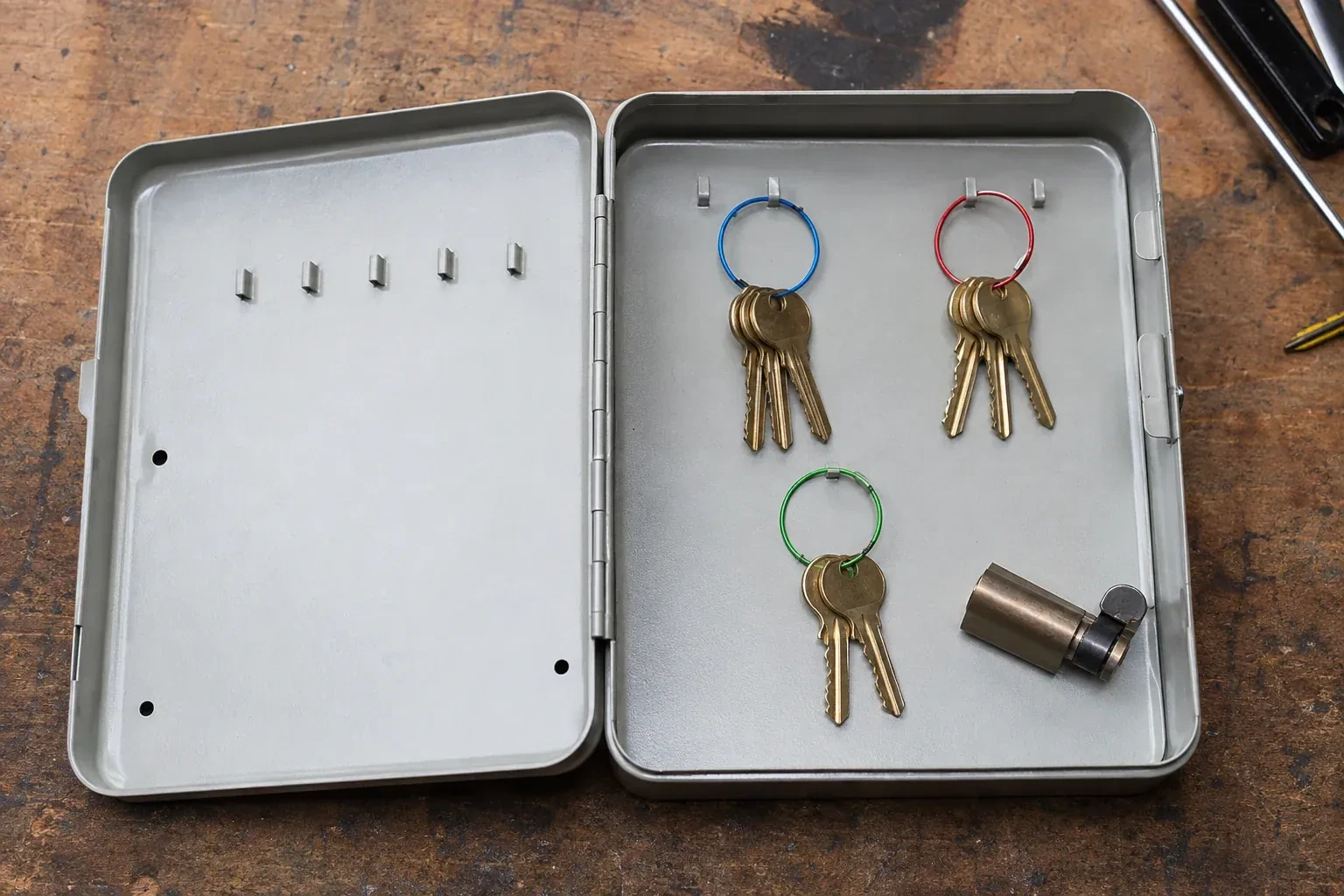
- Master Key System DesignThe office key ring has become the org chart.
- Access Control InstallationThe keypad on the side door has started sticking on cold mornings, codes get shared instead of reset, and half the staff still remember a code you meant to retire two hires ago.
- Commercial-Grade Lock ReplacementHead office wants every branch keyed alike under one system, and half the locations are still running whatever lockset the original contractor happened to install years ago.