Car keys · Toronto
Ignition Lock Repair
After a slushy week the key barely reaches accessory before it stalls, gritty and reluctant, where it used to move cleanly through every position.
In plain words
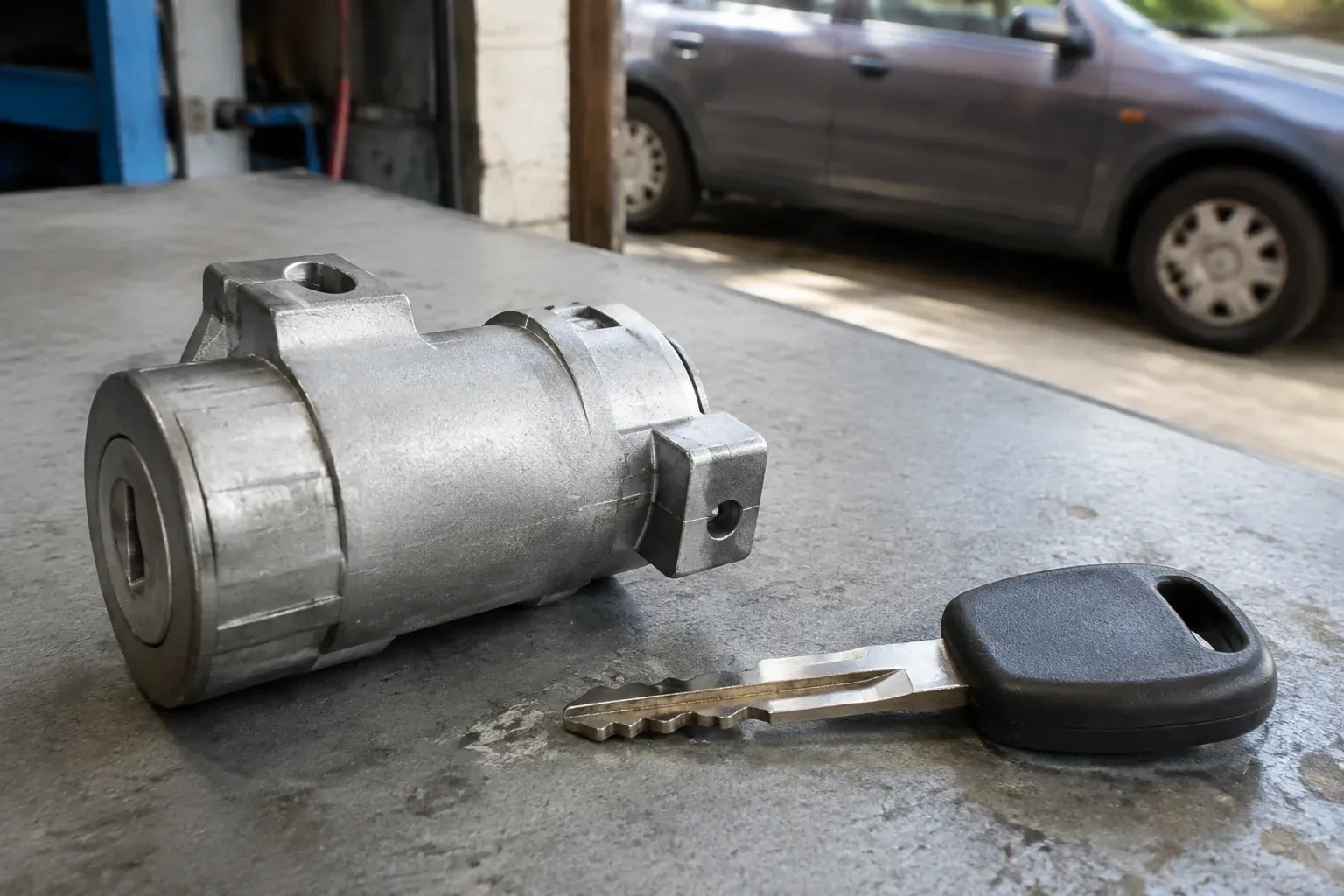
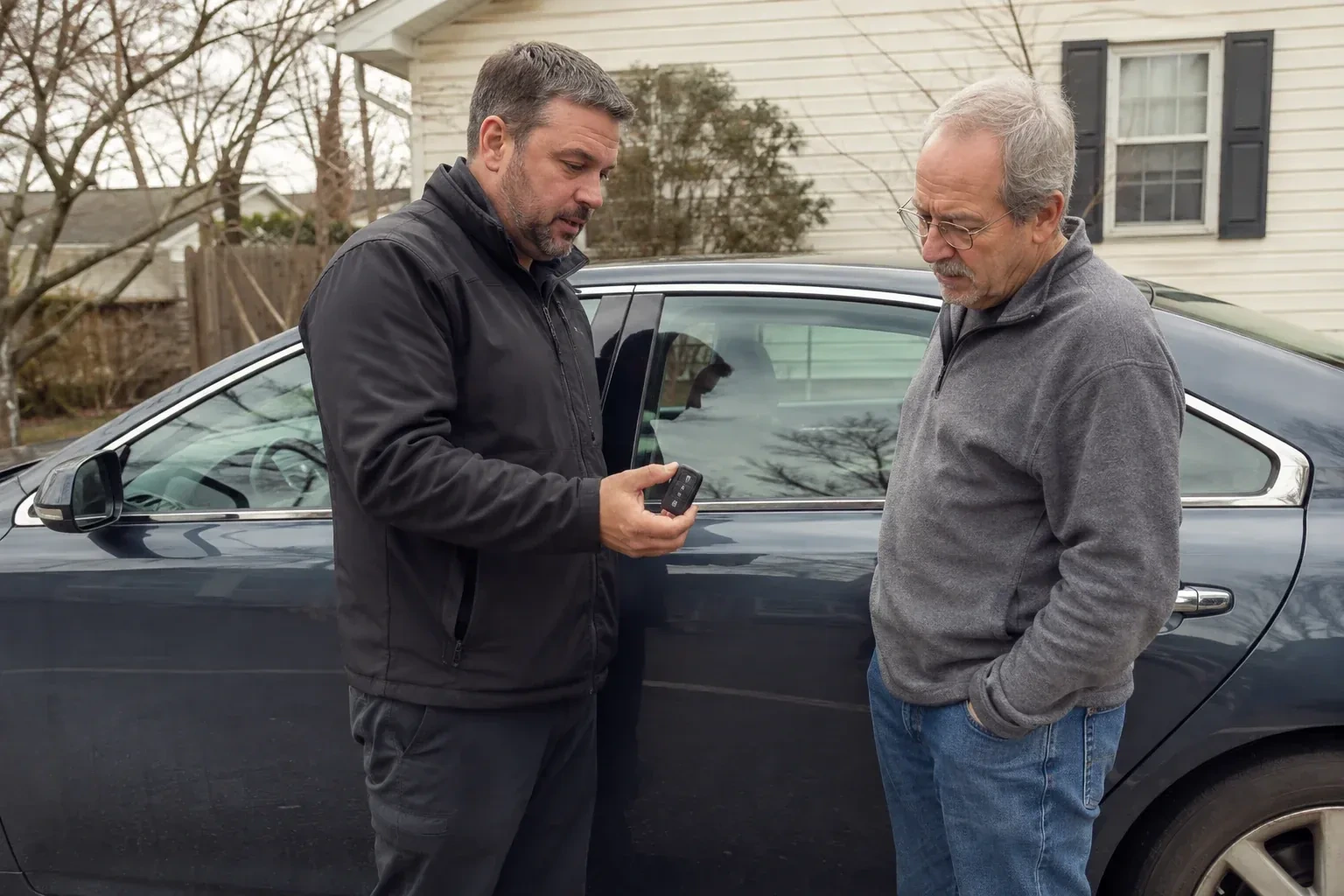
Ignition Lock Repair addresses the mechanical cylinder in the vehicle's keyed ignition assembly, commonly at the steering column though some are instrument-panel mounted, that a key turns through accessory, on and start, separately from any electronic immobilizer or transponder system layered behind it. After confirming who owns the vehicle or is authorized to have it serviced, the locksmith reads the exact symptom, works on the cylinder or housing itself, and keeps the vehicle's existing key operating wherever the hardware allows. A further step such as chip programming or dealer-level diagnostics is identified as its own decision rather than assumed to be part of the same visit.
How the visit goesHalf the key is still in your hand. The other half stayed behind in the ignition when it snapped, and now the dash won't light and the wheel won't unlock no matter how carefully you nudge what is left.
Ignition Lock Repair
How the visit goes
Mechanical fault or electronic fault
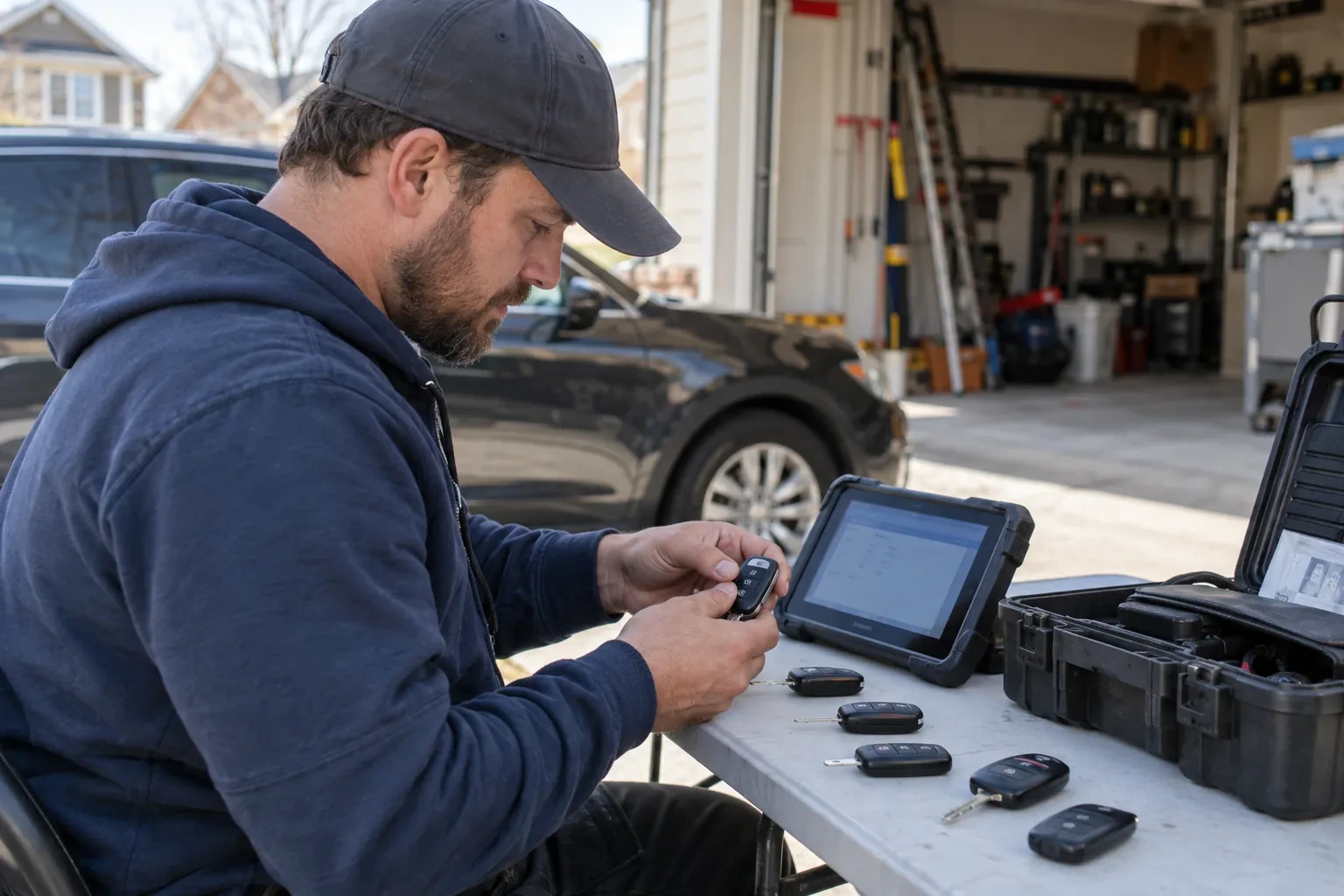
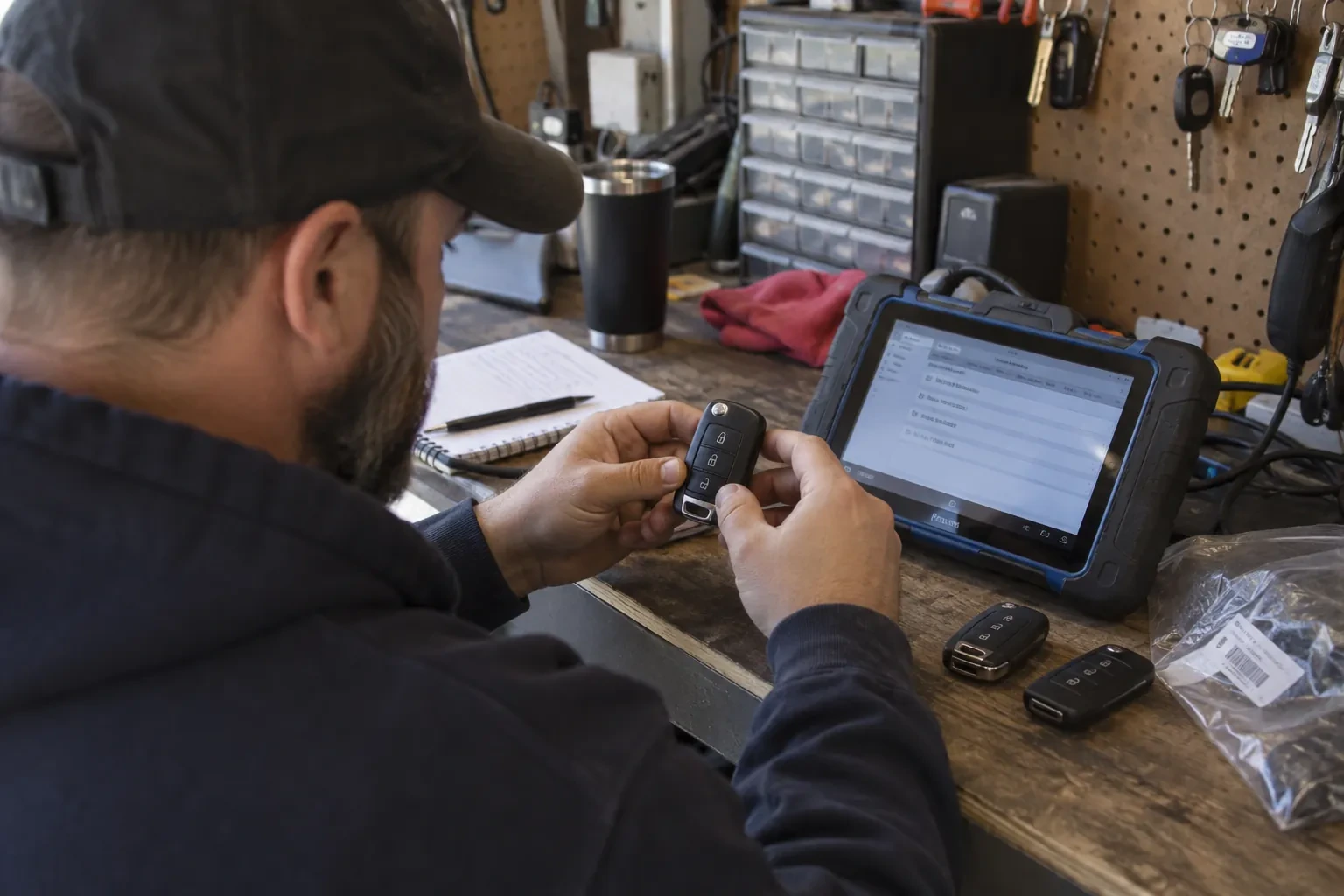
A cylinder that turns cleanly but leaves the vehicle silent makes a mechanical keyway fault less likely, though the cause can still be the immobilizer, the transponder chip, the wiring behind the switch, or an unrelated starting fault such as the battery, starter or park/neutral circuit. The locksmith checks whether the barrel physically moves through accessory, on and start, whether the steering lock disengages, and whether dash lights respond at each position. Where the mechanical side checks out cleanly, the remaining question is named and set aside as separate, dealer-level work rather than folded into the same repair.
Testing every position before calling it finished
A repaired or replaced cylinder is cycled through every stop, off, accessory, on and start, with the key the owner will actually use afterward. The steering lock is engaged and released several times, the dash is watched for the expected response at each position, and the engine is started and shut off to confirm the whole sequence holds up in practice rather than just on the workbench.
Ready for the next stretch of rough weather
After a repair prompted by grit, salt or old grease, the cylinder is dried, cleaned and freshly lubricated, which carries it through a good stretch of the next season's driving. Keeping the key itself clean and dry, and avoiding a heavy keyring that drags on the barrel every time the vehicle starts, both help the repaired mechanism hold up through the weather that caused the original problem in the first place.
Ignition Lock Repair
In the van
Key code reader
Ignition lock cylinder
Pick and tension tools
Plug follower
Keyed-alike pinning kit
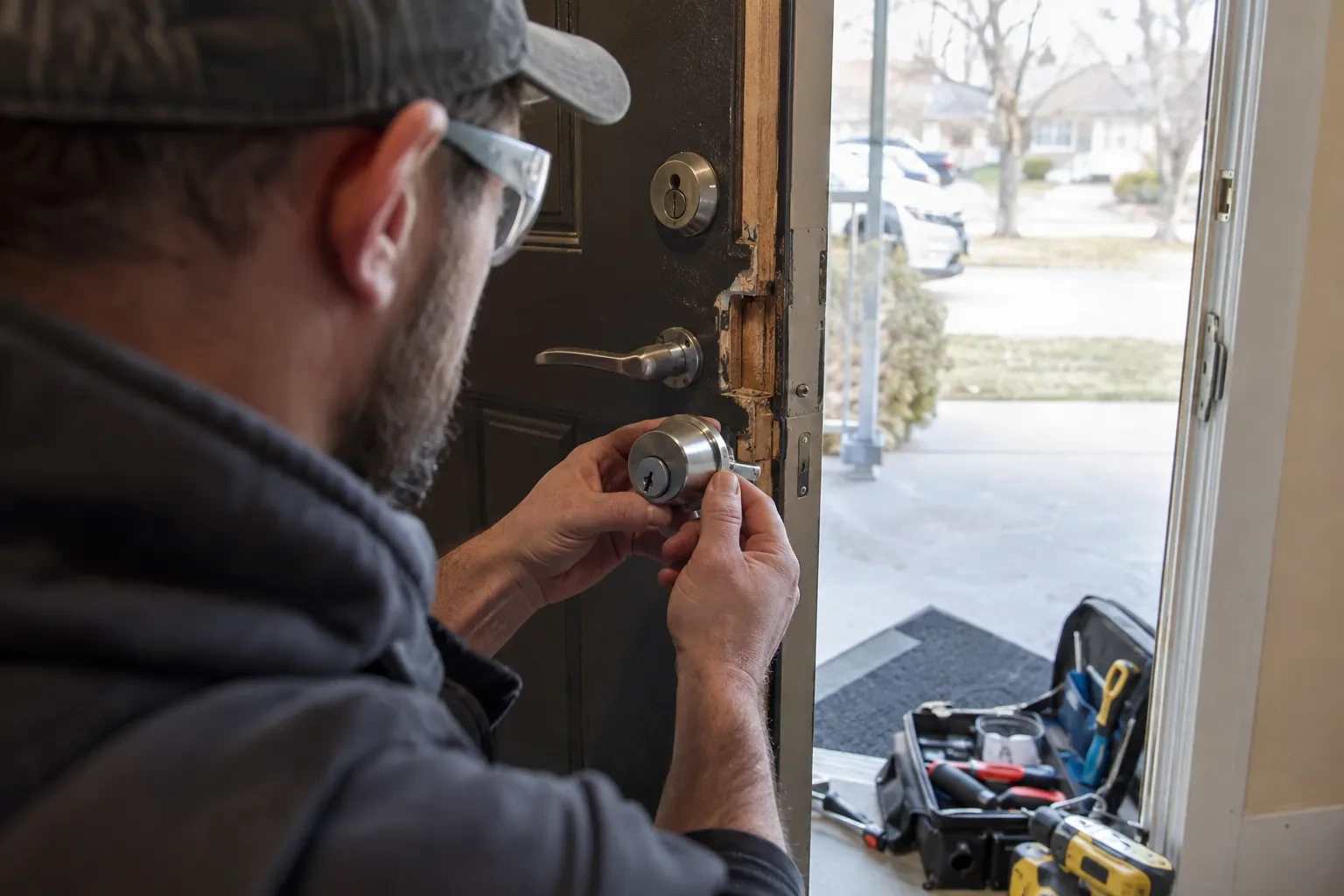
Ignition Lock Repair
What affects the quote
A key broken off inside the barrel
Extracting a snapped key fragment adds its own step before any other work can begin, and the cylinder is then checked for the wear that likely caused the break in the first place.
Whether an electronic diagnosis is also needed
When the mechanical repair alone does not account for everything the vehicle is doing, checking the immobilizer or transponder side becomes a separate task, priced and scoped apart from the lock cylinder itself.
Weather and road conditions on the day
A barrel packed with road salt, grit or old grease from a rough season takes longer to clean and free than one that has simply worn with ordinary use over the years of driving.
What to have ready
- Do you have a spare or second key available?
- Do you have the vehicle permit or proof of ownership handy?
- Has anyone already tried to force the lock?
Ignition Lock Repair: questions
QuestionsWhat information should I have ready when I call?
The vehicle's year, make and model, and exactly what the key does: whether it inserts, turns, engages anything, or is stuck. Mention whether a spare key exists, whether anything has already been tried on the lock, and whether the vehicle's warning lights or dash behave normally otherwise. Having the vehicle permit or registration nearby helps the ownership check move along smoothly.
What if there are scratches or damage around my ignition slot already?
That is noted honestly before any work begins, since it often means an earlier attempt was made on the lock. Damage like this usually points toward a full cylinder and housing replacement rather than a simple service, because the internal parts of a lock that has already been forced are rarely trustworthy afterward. You are shown what was found before deciding how to proceed together.
Do you also program the chip or transponder in the key?
Ignition lock repair covers the mechanical cylinder itself, the part a key physically turns. Transponder programming and immobilizer resets are a separate electronic step that some vehicles need alongside a mechanical repair and some do not. Where that separate step turns out to be necessary, it is named clearly and scoped as its own piece of work rather than folded into the mechanical visit.
Related services
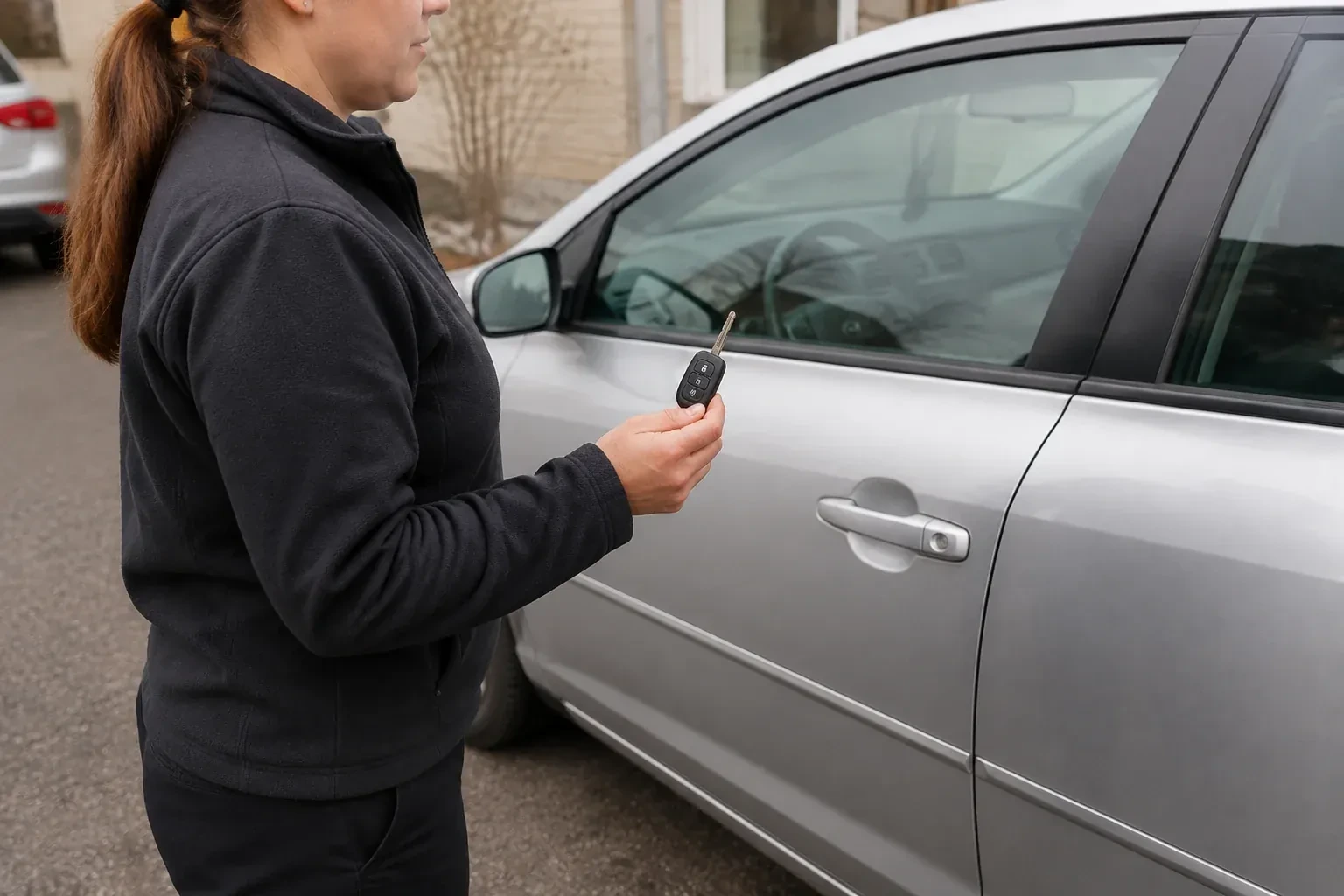
- Car Key ReplacementMinus twenty outside, the fob button does nothing, and the door keyhole has a crust of road salt over it because you have not used a metal key in that car since the day you bought it.
- Spare Car Key DuplicationA lockout last month ended with a locksmith opening the door and going home, and the same single key has been carried ever since with nothing behind it.
- Key Fob ProgrammingButtons on the fob still light up and the remote still clicks, but the vehicle refuses to start even with the fob sitting in the cupholder.