Car keys · Toronto
Car Lockout Service
You dropped the duffel bag in the trunk, closed the lid with your elbow, and heard the keys land inside a heartbeat too late.
In plain words
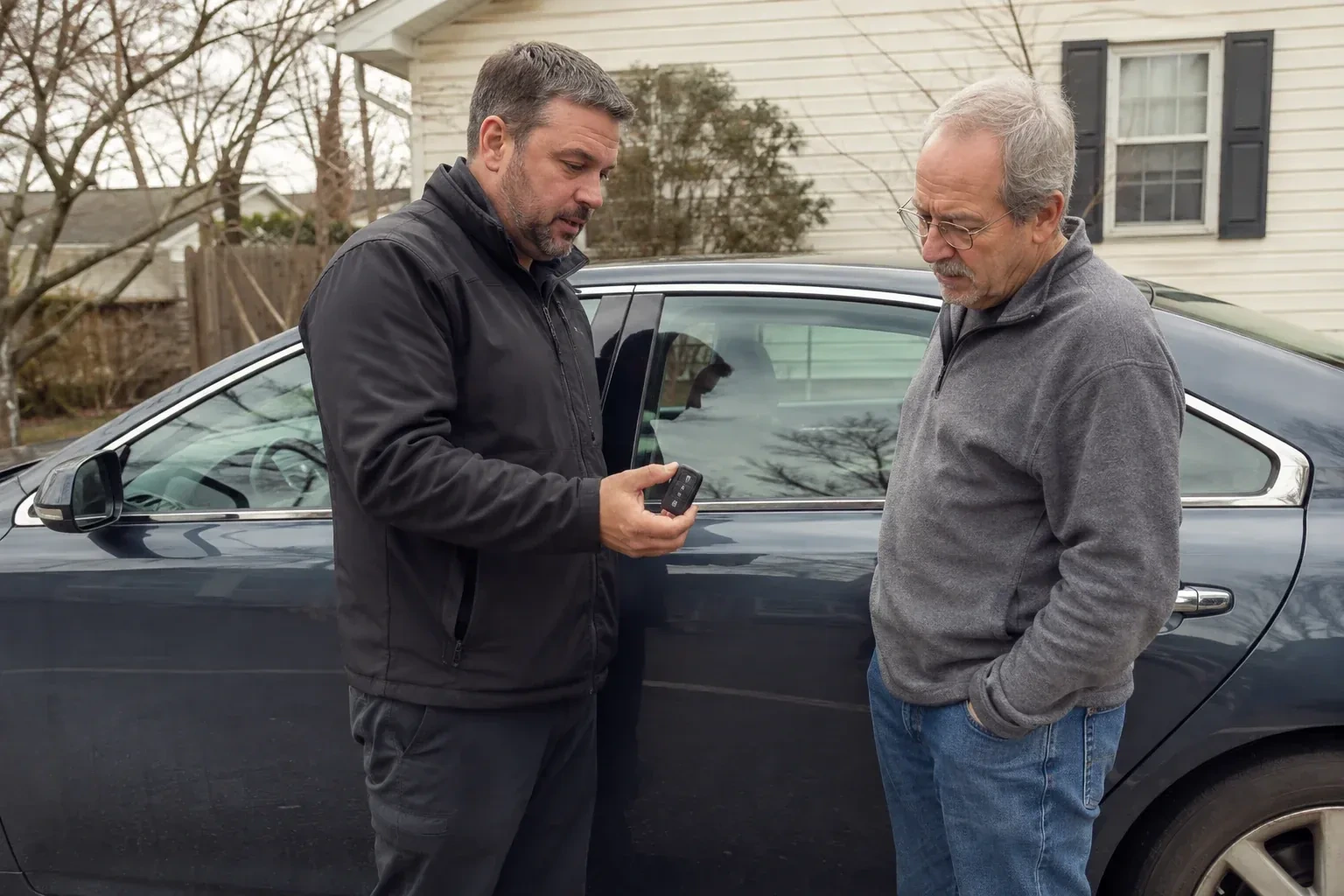
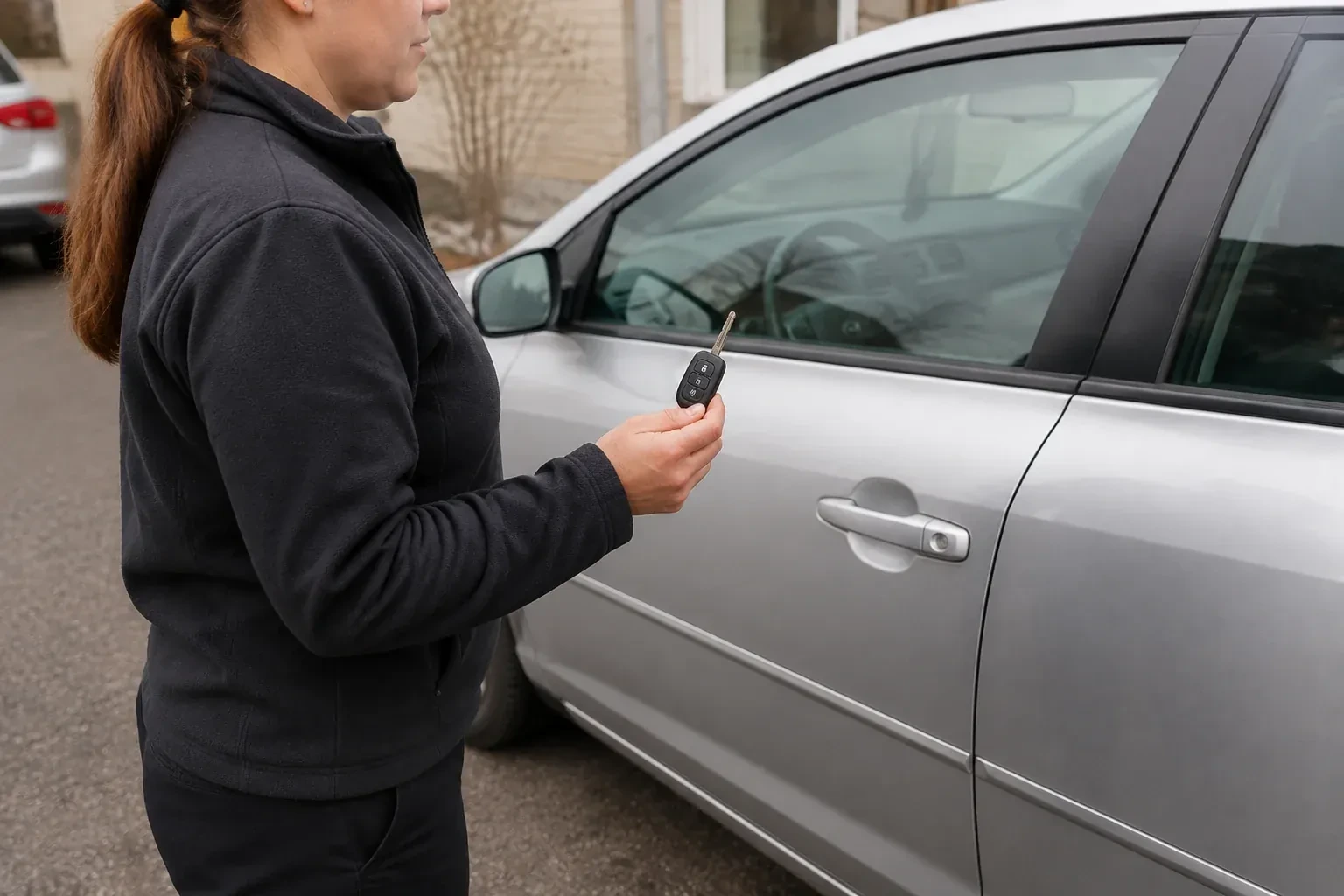
Winter makes its own lockouts. Slush runs into a door cylinder by day and freezes solid by night; a door bonds to its rubber seal in a cold snap; a fob battery gives up on the first minus-twenty morning; and a weak car battery leaves the remote with nothing to talk to. A cold-weather lockout visit treats the car gently: de-icer and warmth instead of force on a frozen cylinder, a careful release of a door stuck to its seal, a fresh coin battery in the fob, and a jump for the car if needed, then silicone on the seals so the next freeze passes quietly.
How the visit goesIt is a January morning, minus twenty with the wind, and the key will not enter the door cylinder. Yesterday's slush ran into the keyhole and froze overnight. The door itself is glued to its rubber seal, and the fob has gone quiet in the cold.
Car Lockout Service
How the visit goes
Where the keys actually are
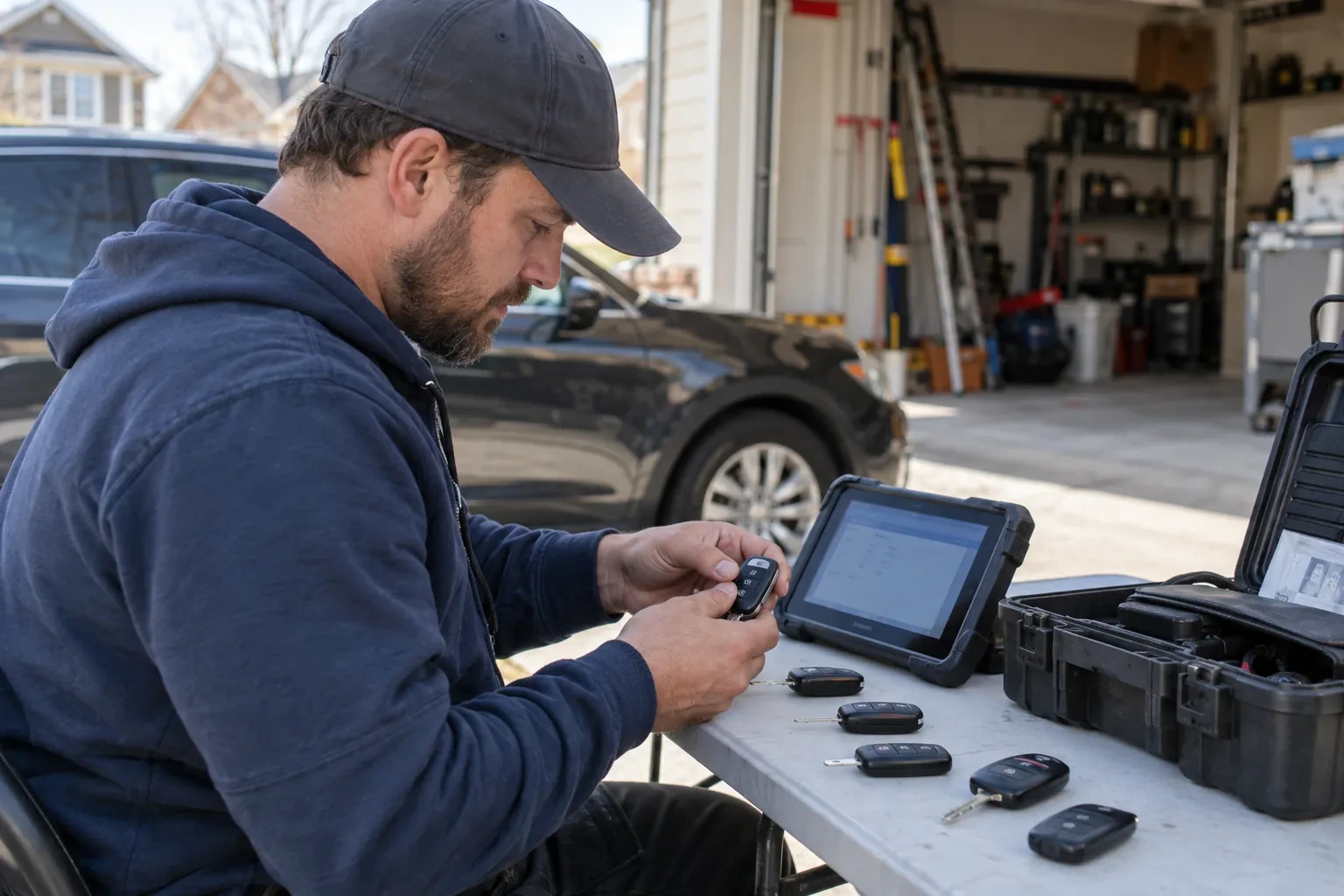
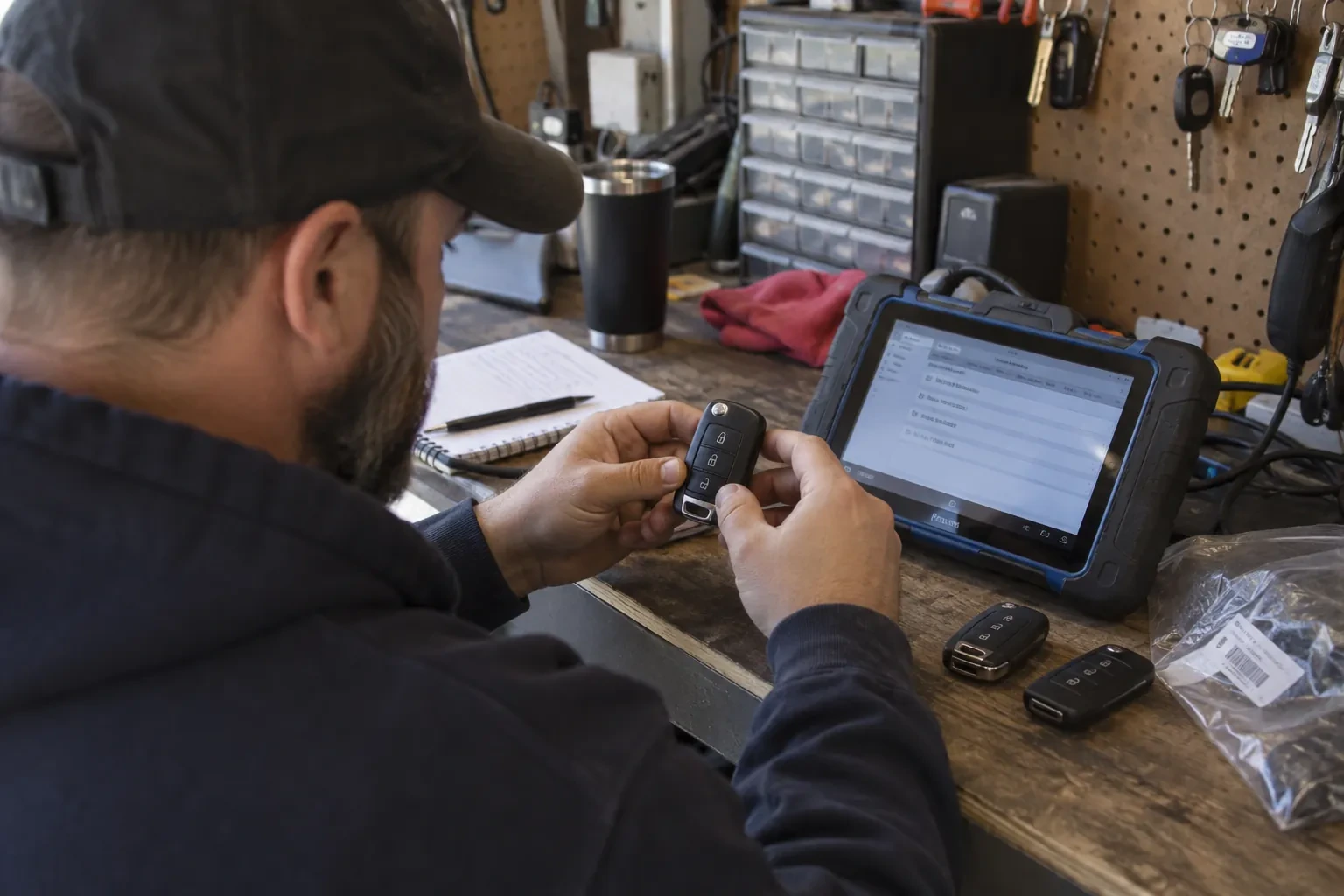
The second question decides the shape of the visit. Keys on the seat or in the ignition mean a cabin opening only. Keys in the trunk mean the cabin is tried first where a usable release exists, and the trunk cylinder itself is decoded where it does not. A silent fob may mean a flat coin battery, a dead car battery, or a fob left inside a car that locked anyway. Keys lost on a trail, in the snow or with a stolen bag mean that entry is the start and a new key is the finish. A few honest sentences about the last time you saw the keys tell the locksmith what to bring to the door.
Silencing the alarm and finishing properly
An opening often wakes the alarm, and quieting it is part of the job: a turn of the key in the door or ignition, or a press of the fob once the car has power, usually does it, and an aftermarket alarm is reset from its own valet switch. With the car quiet, the locksmith retrieves the keys, cycles every door and the trunk with both key and fob, checks that the window sits true in its seal and the door closes with the usual sound, and puts back any handle cap that was removed. You are shown what was done, and the car is locked and unlocked once more in front of you.
Ready for the next freeze
After a winter lockout the car is set up to take the next cold snap in stride. The door cylinder has been dried and given whatever lubricant the vehicle maker specifies for cold weather, and the door seals have been wiped and treated with silicone so they release instead of bonding to the frame. A small tube of lock de-icer for a coat pocket, never left in the locked car, covers the mornings a keyway ices over. Parking nose-out of the wind where you can, keeping the driver's door seal clean of slush, and swapping the fob battery each autumn are the small habits that carry a car through to spring.
Car Lockout Service
In the van
Door-edge guards
Transponder key blanks
Fob coin batteries
Lock de-icer
Padded long-reach tool
Car Lockout Service
What affects the quote
Number of keys made
One replacement gets you home; a second cut and programmed at the same time saves a future call. Each key is counted into the quote individually, so say how many you want.
Programming through the diagnostic port
Pairing a new key or fob to the immobiliser is skilled work with specialised equipment, and some models need security access from the manufacturer. That step is quoted separately from cutting the blade.
Type of key or fob
A plain metal key, a transponder key with a chip, a remote-head key and a proximity fob each cost different amounts as parts, and each takes its own programming step when one has to be replaced.
What to have ready
- Where are the keys right now: inside, in the trunk, lost, broken or in a fob that has stopped working?
- Is anyone, including a child or a pet, inside the car?
- Does the car use a keyless fob or push-button start?
Car Lockout Service: questions
QuestionsThe lock is frozen and the door will not budge. What will you do?
Ice is handled gently. Lock de-icer and mild warmth free the cylinder so it turns without force, and a door stuck to its seal is released by pressing along the edge to crack the ice rather than pulling the handle, which can tear the rubber. Hot water is never used because it refreezes and can crack glass. Afterwards the cylinder is lubricated with whatever product the vehicle maker specifies and the seals are treated with silicone.
The alarm went off. Is that a problem?
It is expected. Opening a door without the fob or key wakes most factory alarms, and quieting them is part of finishing the job: a turn of the key in the door or ignition, or a press of the fob once the car has power, usually does it. An aftermarket alarm is reset from its own valet switch. The locksmith stays until the car is quiet and every lock has been cycled.
There is a dog inside and the car is getting hot. Who do I call?
Call 911, and the provincial animal protection line if you cannot reach the owner; the province asks the public to report animals left in hot or cold vehicles rather than break glass themselves. Police and animal welfare inspectors have authority to enter a vehicle for an animal in distress. A locksmith can attend as well, and if you are the owner, the same careful opening gets you and the dog reunited with the car undamaged.
Related services
- Spare Car Key DuplicationA lockout last month ended with a locksmith opening the door and going home, and the same single key has been carried ever since with nothing behind it.
- Key Fob ProgrammingButtons on the fob still light up and the remote still clicks, but the vehicle refuses to start even with the fob sitting in the cupholder.
- Transponder Key ProgrammingThe remote fob has gone silent, the doors won't unlock with a button press, and the little emergency blade tucked inside it has not been used since the day the car was bought.