High security · Toronto
Safe Installation & Servicing
A homeowner inherited a heavy old dial safe from a parent's house, moved it into the new place, and has no idea whether the bolt-work still works, whether the lock is sound, or how it should be anchored.
In plain words
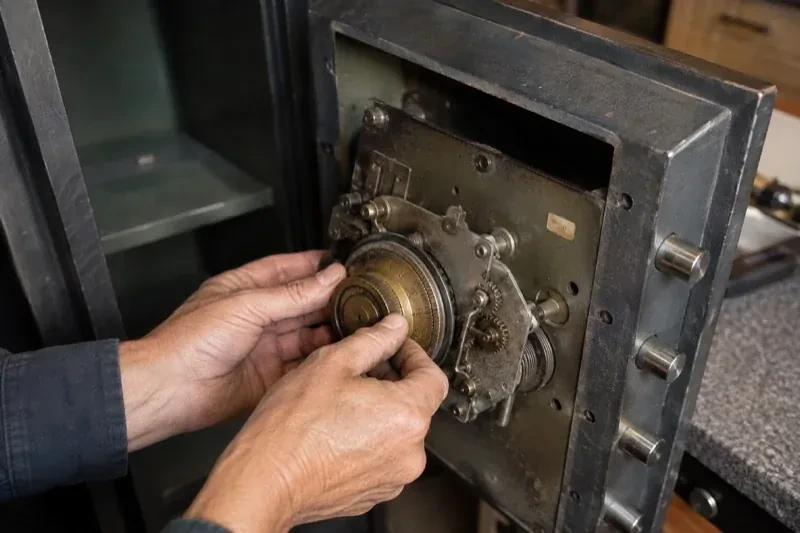
The lock on a safe is either a mechanical dial built around a wheel pack and gates, set and tested by a trained hand, or an electronic keypad running on batteries, and each has its own service needs. A new mechanical lock is set to a combination chosen by the owner and tested through a full open-and-close cycle before installation is called finished. An electronic lock gets fresh batteries, a reprogrammed code, and a check that the low-battery warning actually sounds before it dies. Either way, nobody but the owner leaves with the working combination or code.
How the visit goesThe office is moving three blocks over, and the old commercial safe that has sat bolted to the concrete for fifteen years now needs to come out, travel across town, and go back down just as solidly.
Safe Installation & Servicing
How the visit goes
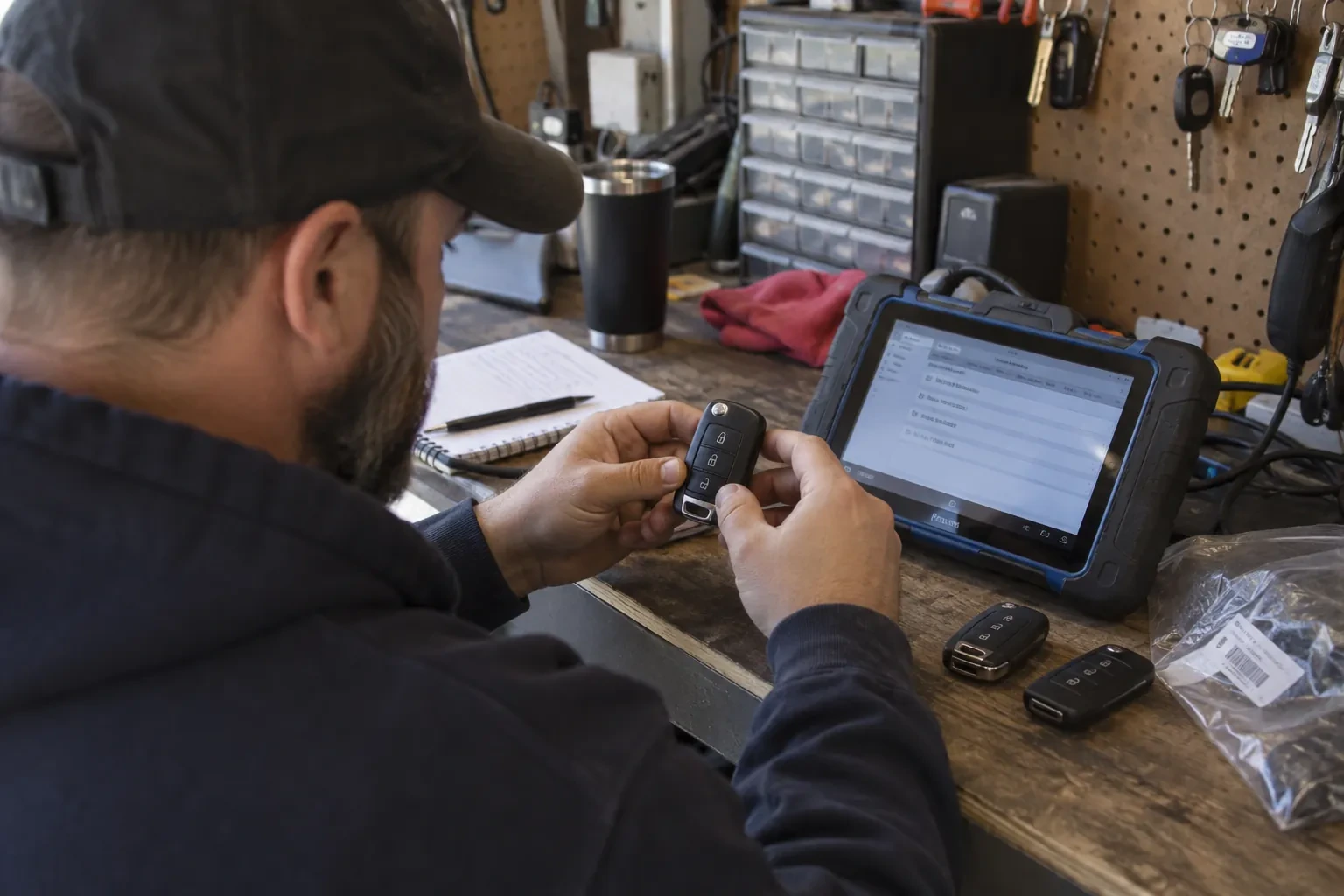
Getting a heavy unit to its final spot
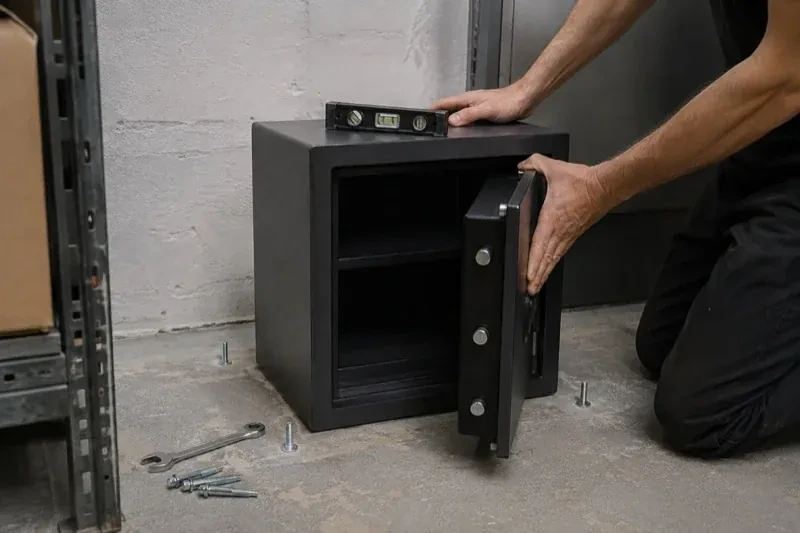
A commercial safe can weigh several hundred pounds before anything is inside it, so the route from the door to the final position matters as much as the safe itself. The locksmith measures doorways, hallway turns, stairs, and any tight corner along the path, and checks whether an elevator, loading dock, or ramp is involved. A safe that cannot clear a doorway in one piece, or a floor that struggles to bear that weight partway up a building, changes the plan before delivery day rather than becoming a problem on site.
Anchoring into a wood subfloor
A wood subfloor calls for a different approach, since a bolt into surface plywood alone pulls out under real weight. The locksmith locates the floor joists beneath the finished surface, drills pilot holes through the subfloor into solid framing, and drives long lag bolts or structural screws with washers that spread the load across the wood. Carpet, vinyl, or laminate over the subfloor is worked around rather than through wherever possible, so the finished floor is left as close to undisturbed as the anchoring allows.
Batteries that get changed before they fail
An electronic lock gives some warning before it dies, usually a beep or a flashing light during normal use, and treating that warning as a job to do that same week rather than eventually is what keeps a dead battery from turning into a locked-out morning. Keeping a spare battery of the correct type near the safe, rather than searching for one after the warning starts, closes the loop. The mechanical override key behind the keypad is worth keeping somewhere separate from the safe itself, not taped underneath it.
Safe Installation & Servicing
In the van
Nine-volt backup battery
Mechanical or electronic lock
Mounting plate
Desiccant packets
Wood subfloor lag bolts and washers
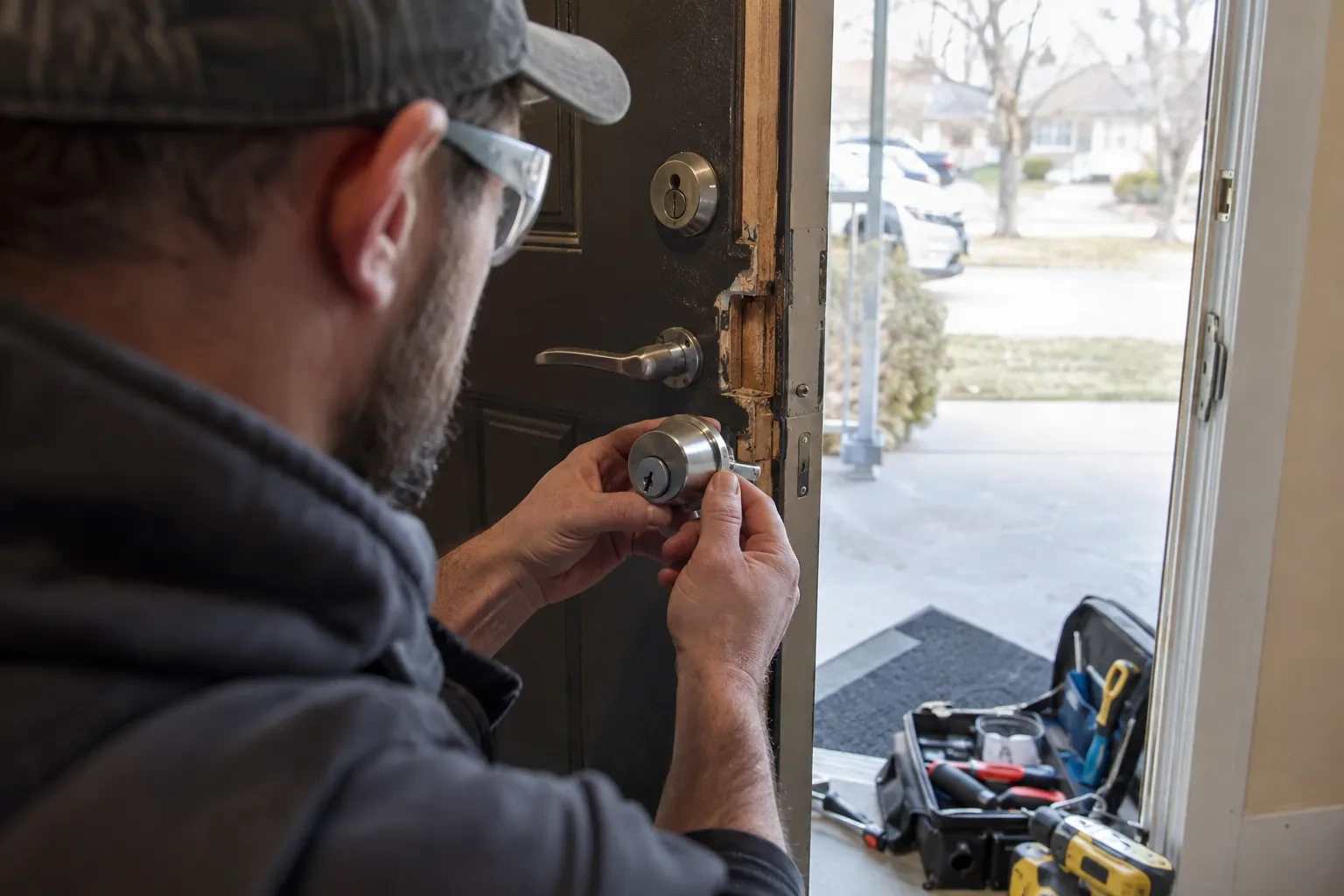
Safe Installation & Servicing
What affects the quote
An insurer's or head office's stated requirement
Some businesses are told by a policy or a head office exactly what rating a safe on the premises needs to meet, which narrows the choice of unit before other factors are weighed.
Fire rating and duration chosen
A longer fire-rated duration or a lower protected temperature for digital media generally means thicker insulation and a larger overall footprint for the same interior storage space.
Floor or wall construction
Solid concrete, a wood subfloor reaching into joists, and tile each call for a different anchoring approach and different hardware, and the substrate is confirmed before any drilling begins.
What to have ready
- Is that floor concrete, wood subfloor, or tile?
- Are there stairs or narrow doorways between the entrance and that spot?
- Do you currently know the combination or code?
Safe Installation & Servicing: questions
QuestionsIs a fireproof safe also resistant to a break-in?
Not automatically. Fire resistance comes from an insulated, sealed construction that is not necessarily built to resist tools, while burglary resistance comes from thick steel and hardened plate that is not necessarily built to survive a sustained fire. Some units are built and rated to both standards at once, but a fire-only safe left unrated for burglary should not be assumed to hold up against a determined attempt with tools.
What kind of floor can a safe be anchored to?
Solid concrete is the most straightforward surface, taking a masonry anchor bolt directly. A wood subfloor works too, provided the anchoring reaches into the floor joists beneath the surface layer rather than just the plywood or the flooring on top. Tile is the awkward case, since a bolt through it tends to crack the surrounding tiles, and an alternative anchoring point or a different spot in the room is usually the better route there.
Can the combination or code be changed after installation?
Yes, on both mechanical and electronic locks. A mechanical dial is reset to a new combination by working inside the lock body, while an electronic keypad is simply reprogrammed at the keypad or through its service menu. Changing it after a change in staff, a move, or simply out of caution is routine work rather than anything unusual, and it can be arranged as its own visit.