Car keys · Toronto
Car Key Replacement
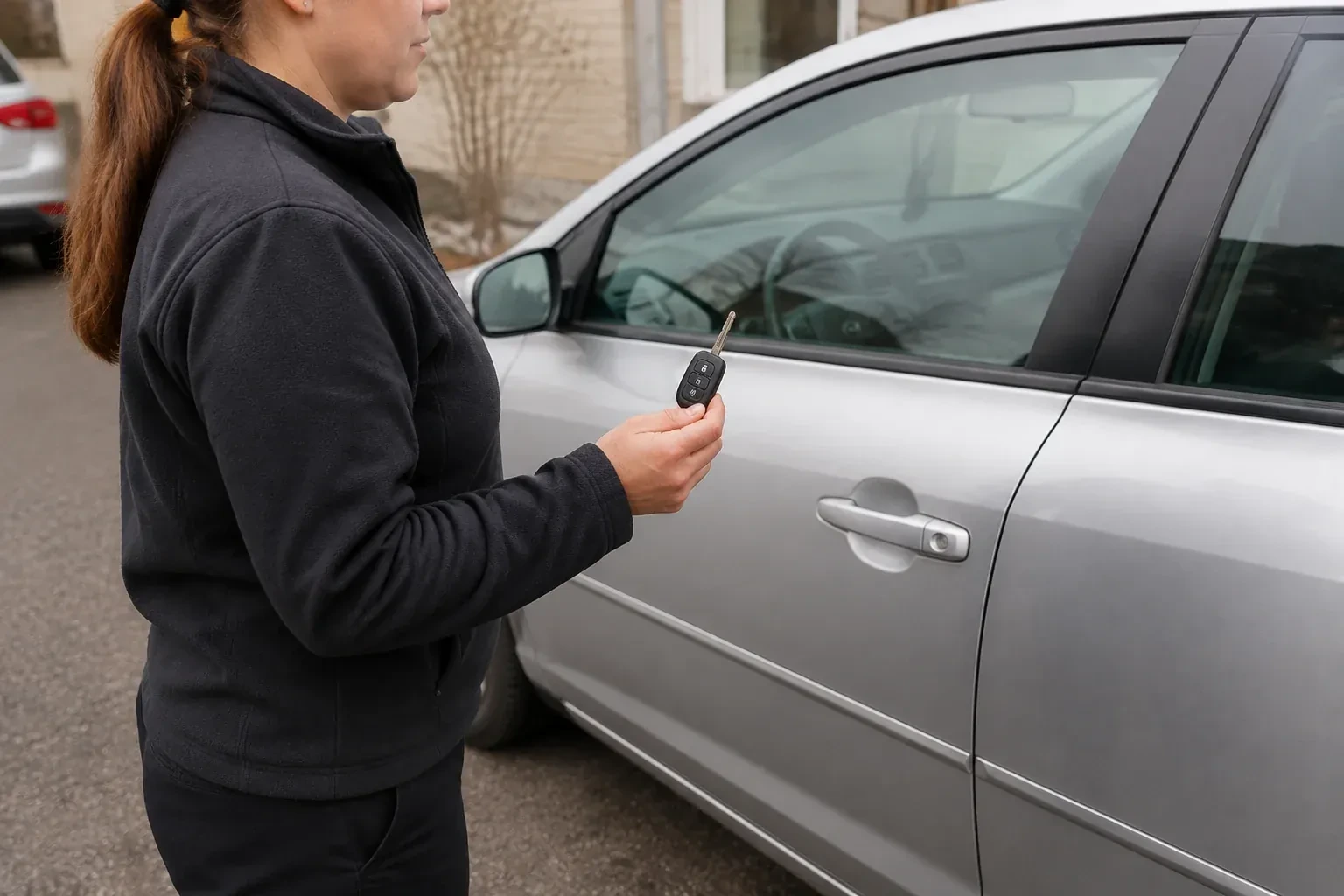
Minus twenty outside, the fob button does nothing, and the door keyhole has a crust of road salt over it because you have not used a metal key in that car since the day you bought it.
In plain words
Winter produces its own kind of key trouble. Coin cells lose output in deep cold, so a fob that was fine in October goes quiet in January; a fob dropped in slush or lost under a snowbank is gone until spring; and the mechanical door lock on a keyless car, untouched for years and crusted with road salt, is stiff exactly when you need it. A replacement visit in these conditions covers it all: a working fob, fresh batteries, a cut emergency blade, and a door cylinder cleaned and lubricated per the maker's instructions, so the metal key is a real backup rather than a decoration.
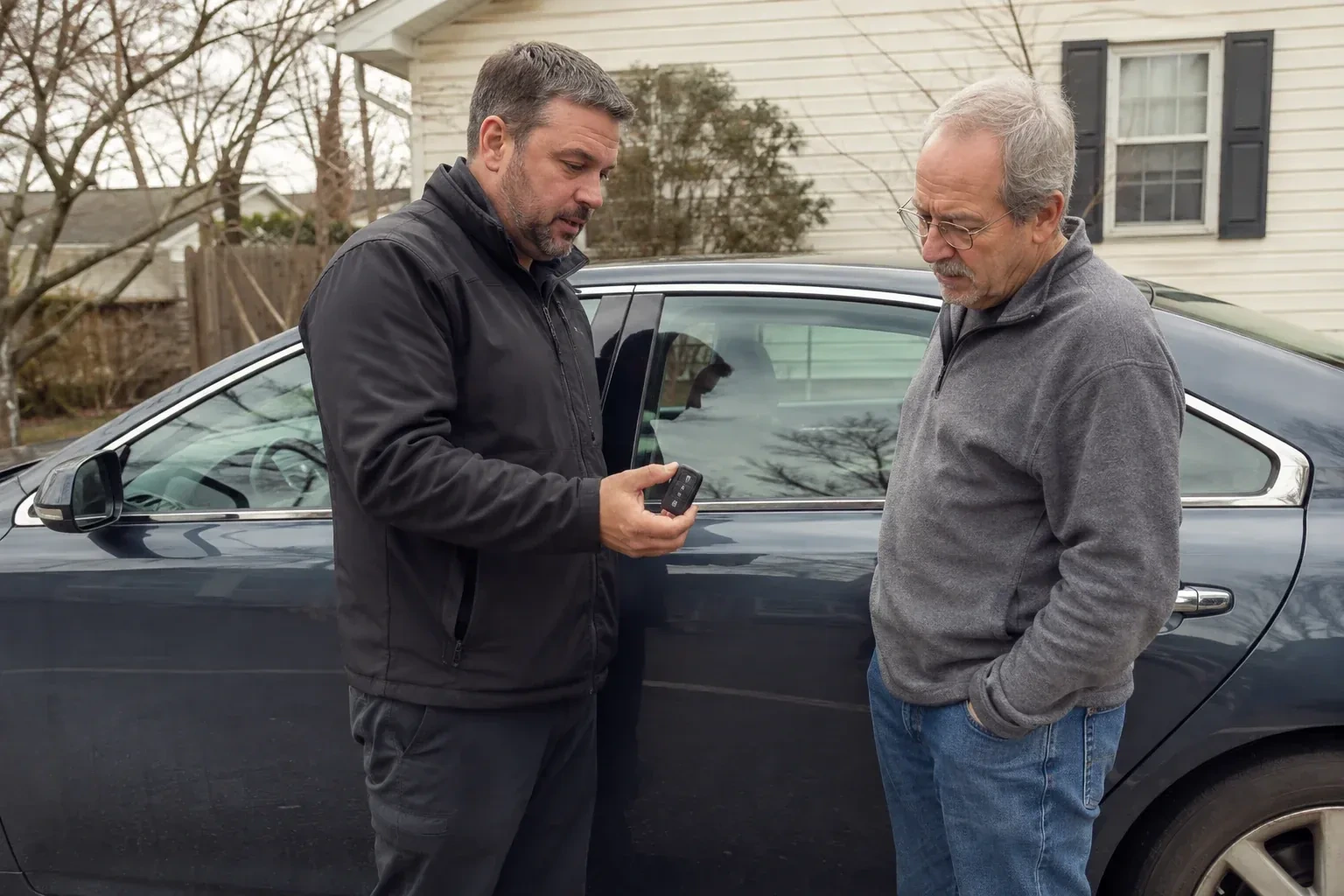
How the visit goesAfter fifteen years the blade has worn to a smooth sliver. It needs a jiggle in the ignition most mornings, this week it took three tries, and a copy cut from that same worn key would only carry the wear forward.
Car Key Replacement
How the visit goes
What is left of the old key
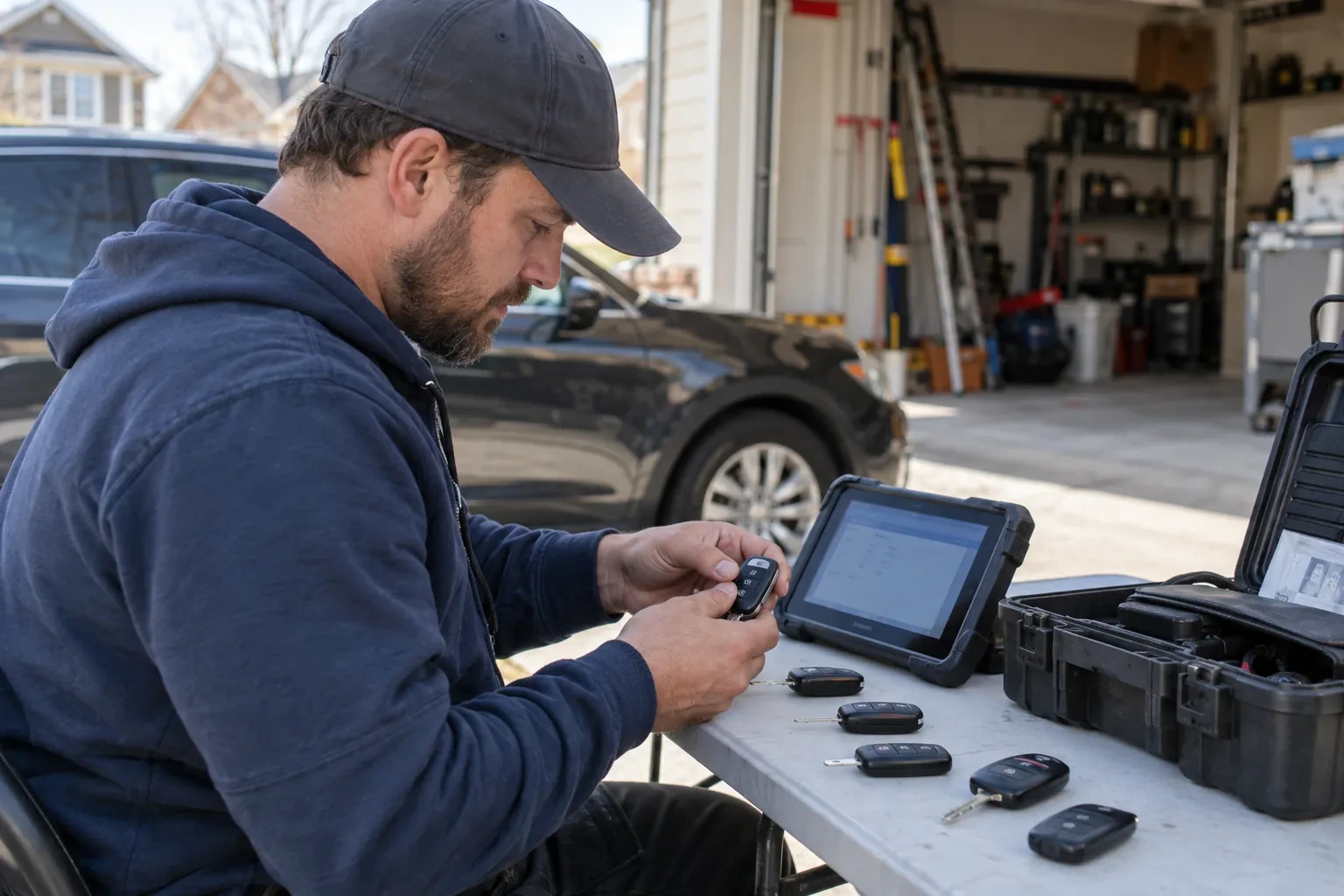
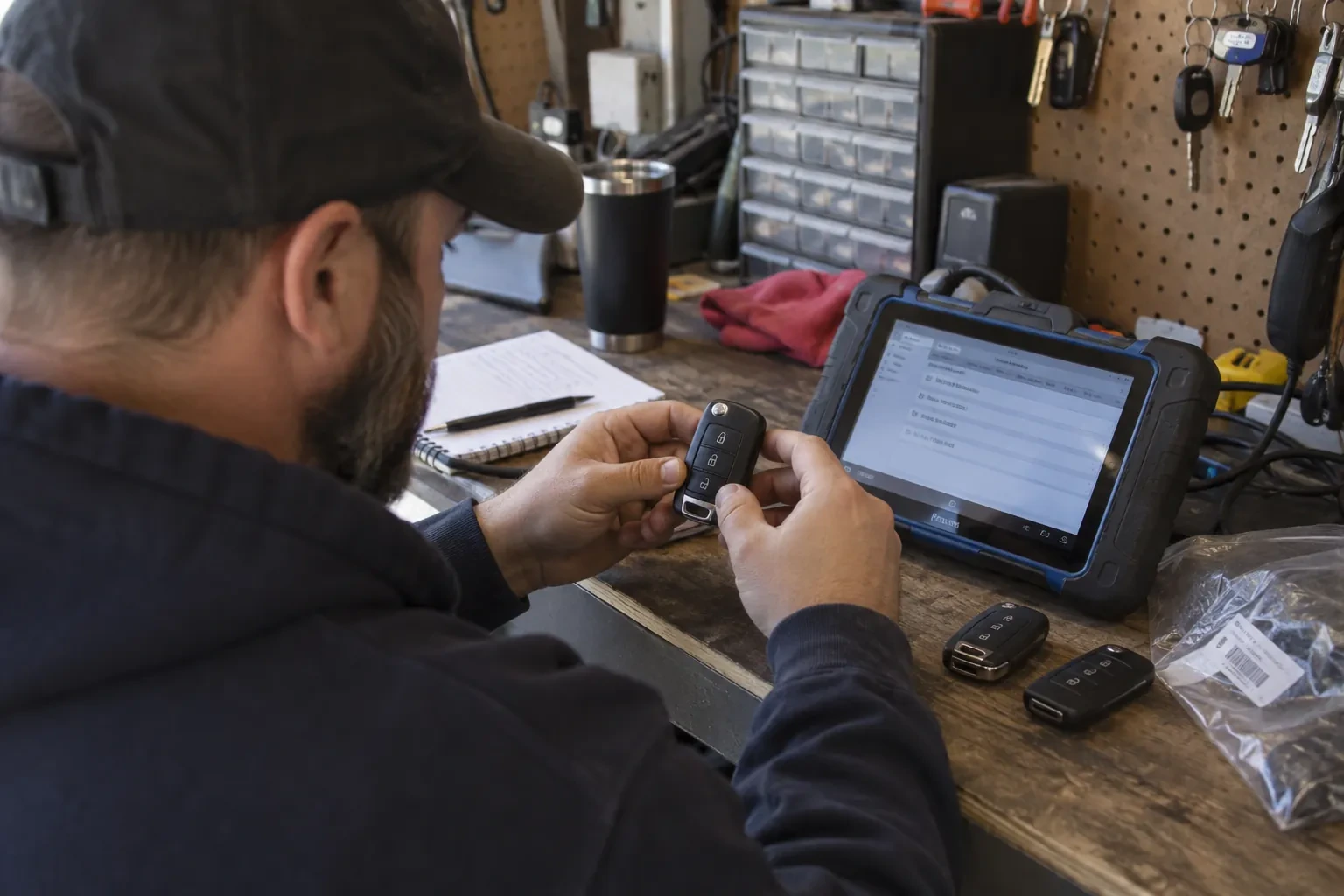
A damaged key is examined before anything is ordered, because its parts may be reusable. A cracked shell often still holds a healthy circuit board and transponder; those can move into a new case with a freshly cut blade, and no programming is needed. A snapped blade with an intact head keeps its chip and remote. A key that went through the wash may have lost the remote but kept the chip, since the transponder has no battery of its own. Sorting this out with a battery test and a chip reader decides whether you need a shell, a blade, a remote, or a complete new key.
Rebuilding a damaged key around its electronics
A key with a cracked case, a broken ring loop or a snapped blade often keeps a perfectly good circuit board and transponder inside. The locksmith opens the old shell, lifts out the board and the chip, and seats them in a new case of the correct pattern. A fresh blade is cut to code and fitted to the new head, and a new coin cell goes in while the case is open. Because the chip and the remote circuit have not changed, no programming is required, and the rebuilt key behaves exactly as the original did on the day it left the factory.
A spare, and the reason to keep it away from the car
Two working keys change the shape of every future visit. With one in hand, adding another is a short programming routine; with none, the car has to be opened, decoded and reset. For that reason the locksmith will usually suggest making the spare while the tools are out, and will suggest a home for it that is not the glovebox, the console or a magnetic box under the bumper. A drawer at home, a trusted family member or a small lockbox all work. Test the spare every few months so a flat coin cell is discovered on a Sunday afternoon rather than in a parking lot.
Car Key Replacement
In the van
Transponder key blank
Security PIN or secure-data access
Remote-head key shell
OBD programming tool
Code-cutting machine
Car Key Replacement
What affects the quote
Where the vehicle is
Travel is part of every mobile call. A car on a driveway across town and one in a lot at the end of a rural road involve different trips, and the quote reflects the distance.
Edge-cut or high-security blade
A plain edge-cut blade is cut on a code machine in moments. An internal high-security blade is milled to fine tolerances on a different machine, and the blanks themselves are dearer, so the blade type shows up in the quote.
Time of the call
A weekday afternoon and a holiday evening cost the same amount for a car key replacement. The locksmith confirms the exact figure on site once the vehicle, the fob type and the number of keys needed have been checked in person.
What to have ready
- Do you have photo identification and the vehicle permit with you?
- What buttons did the old key have: lock, unlock, trunk, panic, remote start?
- Where is the car parked right now, and is it locked?
Car Key Replacement: questions
QuestionsAre there vehicles where the dealer has to be involved?
A few. Some manufacturers lock key programming behind data or tooling that only their dealer network can run, particularly on the newest models and on certain all-keys-lost situations. The locksmith checks your VIN against what the equipment supports before the visit and tells you plainly if the dealer route applies. Even then, the locksmith can often cut the emergency blade, open the car and handle the mechanical side so the dealer step is a small one.
My key needs a wiggle in the ignition. Will a new key help?
Often, yes. A key that has been copied from copies or worn thin over the years lifts the wafers to the wrong heights, and a fresh blade cut to code restores the fit. If the wiggle continues with the new key, the wafers in the ignition cylinder have worn as well, and that cylinder can be overhauled so both the old and new keys turn cleanly. The locksmith checks the cylinder during the visit and tells you which it is.
Does programming a new key affect the keys I already have?
Adding a key leaves the existing keys in place; the car simply learns one more. The exception is a deliberate all-keys-lost reset or an erase you ask for, which clears every stored key and then registers only the ones you present. For that reason the locksmith asks you to bring every key you own to the visit, so each one can be re-registered and tested rather than left behind and forgotten by the car.
Related services
- Spare Car Key DuplicationA lockout last month ended with a locksmith opening the door and going home, and the same single key has been carried ever since with nothing behind it.
- Key Fob ProgrammingButtons on the fob still light up and the remote still clicks, but the vehicle refuses to start even with the fob sitting in the cupholder.
- Transponder Key ProgrammingThe remote fob has gone silent, the doors won't unlock with a button press, and the little emergency blade tucked inside it has not been used since the day the car was bought.