Car keys · Parkway East
Car Key Replacement in Parkway East
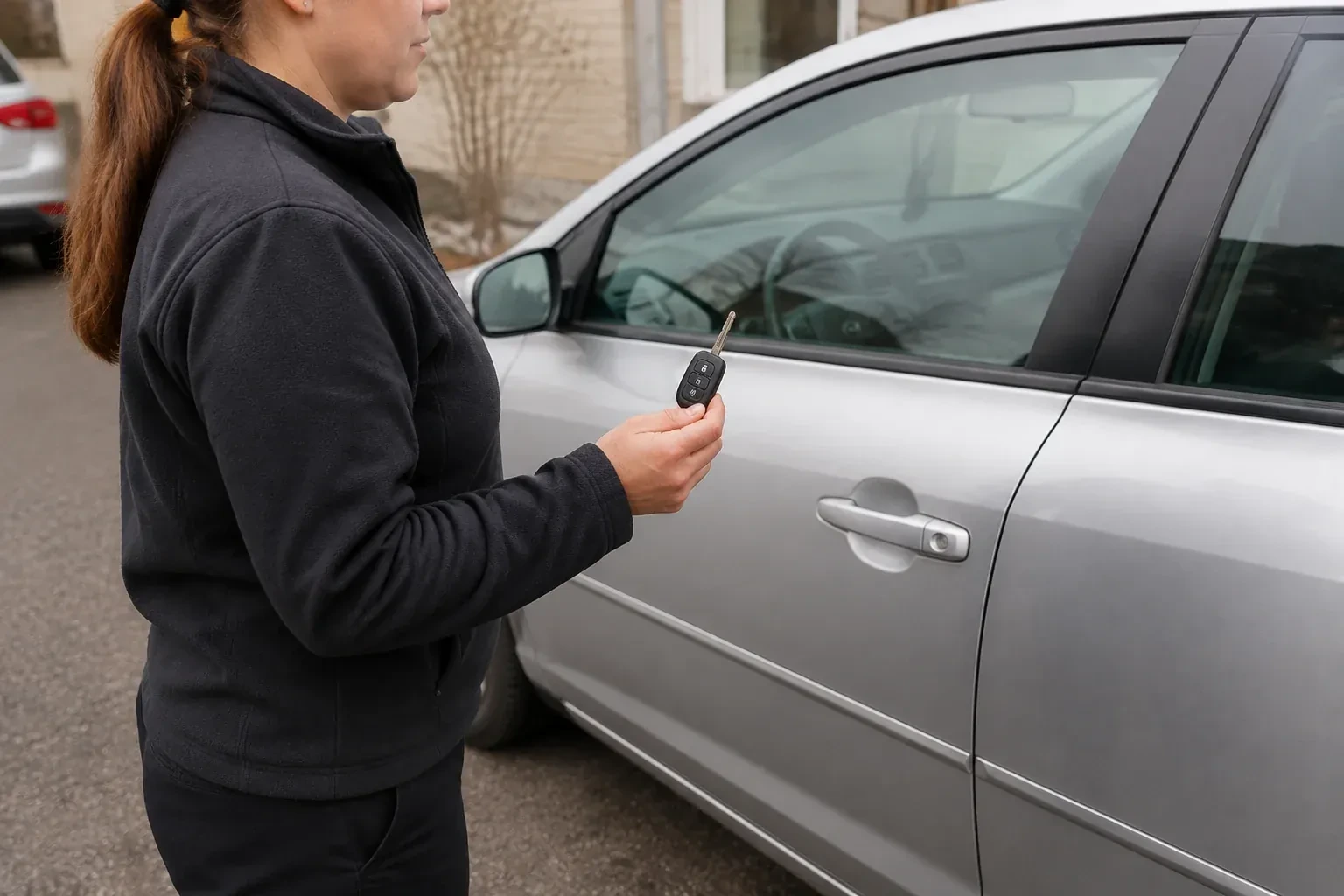
Minus twenty outside, the fob button does nothing, and the door keyhole has a crust of road salt over it because you have not used a metal key in that car since the day you bought it.
In plain words
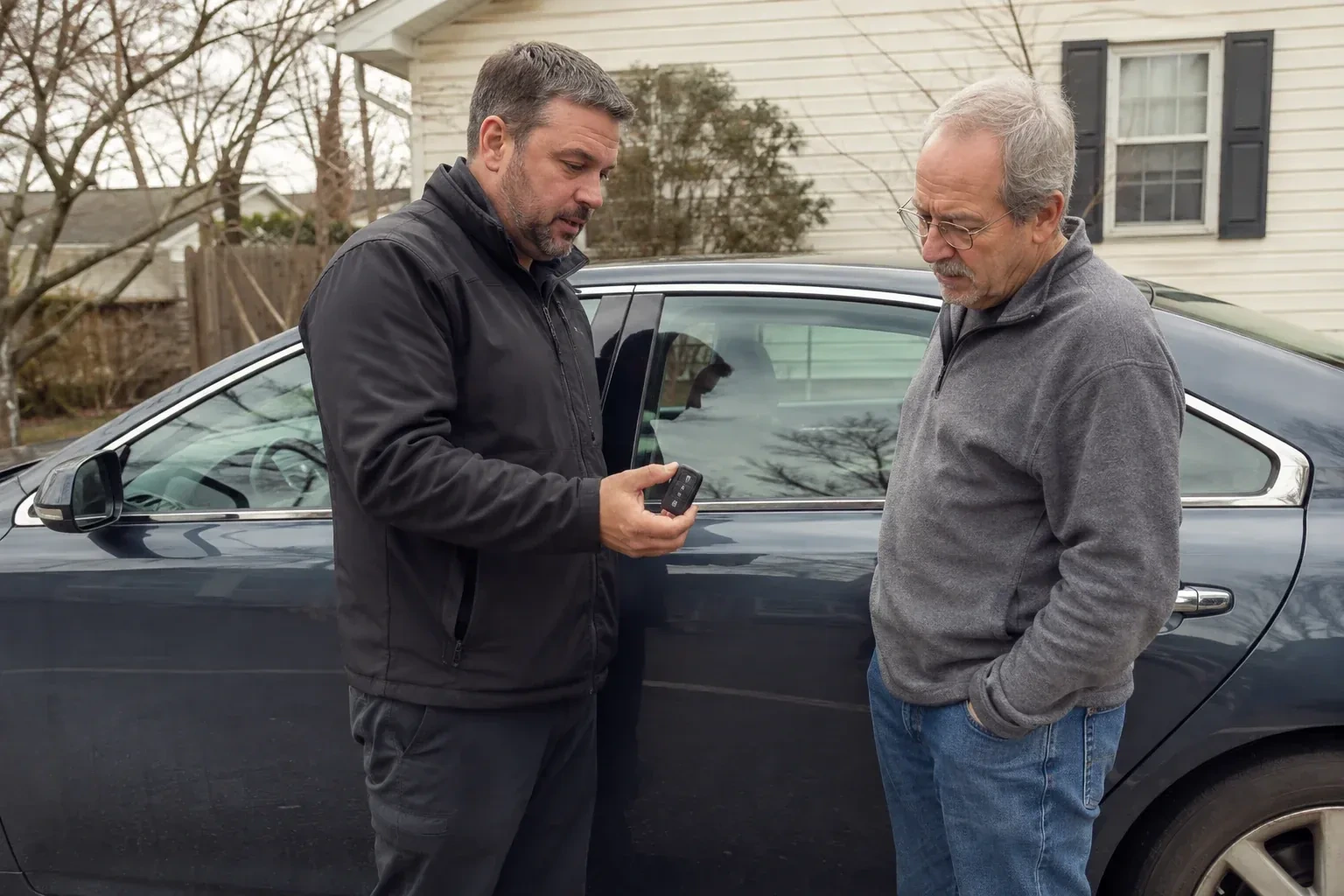
There are two starting points, and the first question on the phone is which one you are in. If any working key exists, the job is to add a key: cut, then registered alongside it, often a short procedure. If every key is gone, the locksmith starts from what the vehicle supports: on many cars, the door lock is decoded to produce a blade and the immobilizer is reset to erase the missing keys before new ones are stored, while a key-card, phone-key or dealer-only vehicle follows its own route. Both end with a working key, but the second takes more steps, which is why a spare is worth having.
How the visit goesThe key snapped at the head while you were turning it in a stiff, frosty door lock. Half the blade is in your hand, the rest is inside the lock, and the plastic head still lights up when you press a button.
Car Key Replacement
How the visit goes
The locks and ignition, not only the key
A new key is only as good as the cylinders it turns, so the check looks at the car too. A door lock that has gone unused for years on a keyless vehicle can be stiff with salt and grit; an ignition that needed a jiggle with the old key has worn wafers that will feel tight with a fresh blade; a previous replacement may have left the doors and ignition on different cuts. Aftermarket alarms and remote starters can also sit between the key and the immobilizer. Spotting these early lets the locksmith bring the right parts and explain what else the car may need so the new key feels right.
Decoding the door lock when there is no code
When the code is unavailable, the lock itself becomes the source. The locksmith works a decoding pick into the driver's door cylinder, feels each wafer to its set position and reads off the depth, producing a full cut sequence without removing the lock from the door. The blank is then cut to that reading and tried in the door and the ignition. On cars where the ignition carries an extra wafer the door lacks, the last position is found by trying the small number of possible depths. This is careful, patient work that leaves the door lock exactly as it was.
A crisp new blade in a well-used ignition
A blade cut to code is made to the lock's original dimensions, so it should turn smoothly from the first use. What it should never do is need the wiggle the old key needed; if it does, or it feels stiff or forced, that points to worn ignition wafers or a cutting issue, and the cylinder is checked and serviced or rebuilt rather than waited out. Keep the new key on a light ring, since a heavy bunch hanging from the ignition is what wears the wafers in the first place.
Car Key Replacement
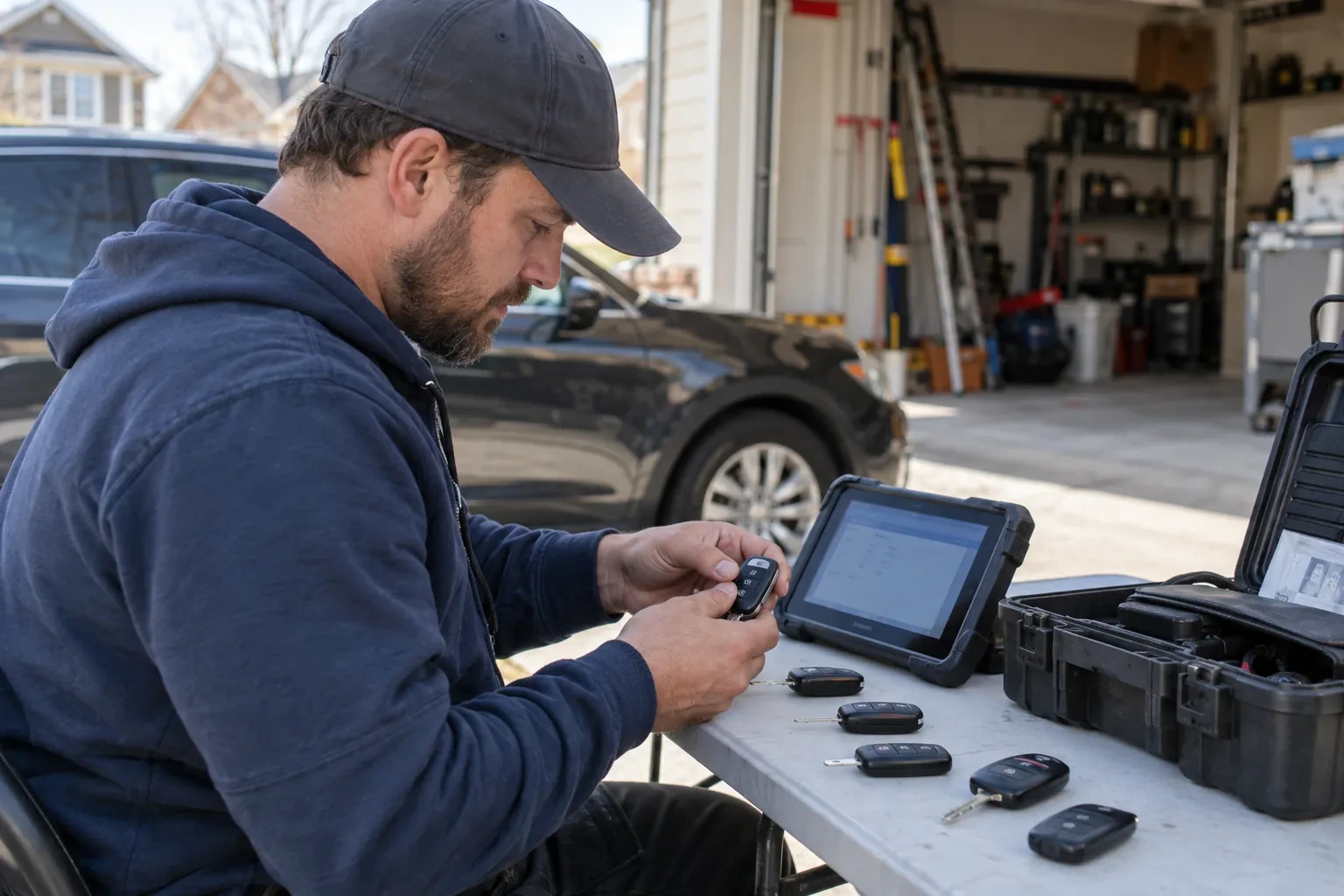
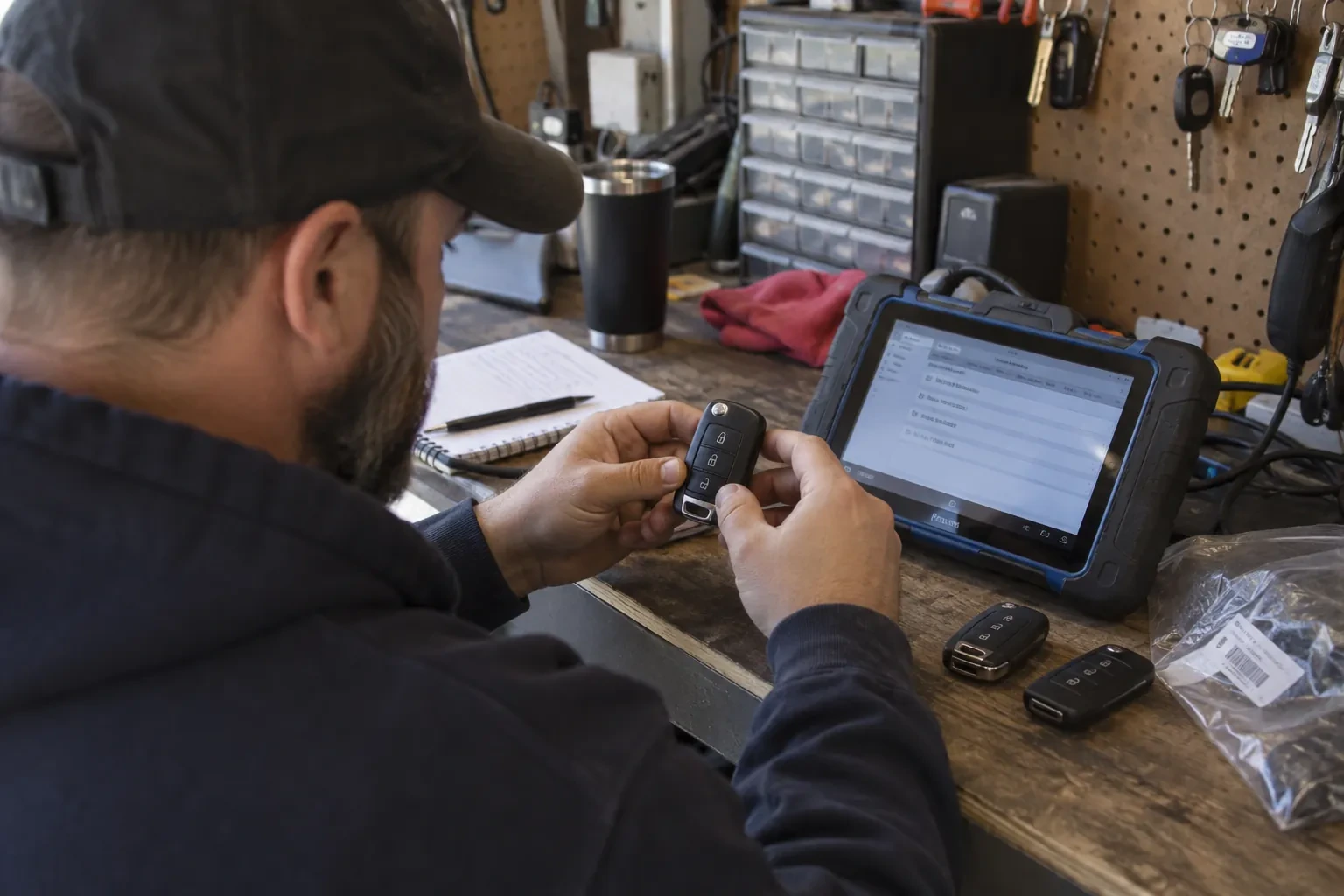
In the van
Transponder key blank
Security PIN or secure-data access
Remote-head key shell
OBD programming tool
Code-cutting machine
Car Key Replacement
What affects the quote
Extracting a broken key
Drawing a snapped blade out of a door or ignition cylinder without harm to the lock is a separate piece of work, done before the new key is cut, and it appears on the quote as its own line.
How many keys you leave with
Each key is a blank, a cut and a programming slot, so the total follows the count. Making the spare during the same visit is usually the sensible time to do it.
One working key or none
A spare added beside a working key is a shorter routine. Starting from nothing means working through whatever that vehicle's own all-keys-lost procedure calls for, commonly opening the car, decoding the lock and resetting the immobilizer, and the quote reflects those extra stages.
What to have ready
- Do you have any key that still starts the car, or are they all gone?
- Does the car start with a key in the ignition or with a push button?
- Has the car's battery been flat or disconnected recently?
Car Key Replacement: questions
QuestionsAre there vehicles where the dealer has to be involved?
A few. Some manufacturers lock key programming behind data or tooling that only their dealer network can run, particularly on the newest models and on certain all-keys-lost situations. The locksmith checks your VIN against what the equipment supports before the visit and tells you plainly if the dealer route applies. Even then, the locksmith can often cut the emergency blade, open the car and handle the mechanical side so the dealer step is a small one.
My key needs a wiggle in the ignition. Will a new key help?
Often, yes. A key that has been copied from copies or worn thin over the years lifts the wafers to the wrong heights, and a fresh blade cut to code restores the fit. If the wiggle continues with the new key, the wafers in the ignition cylinder have worn as well, and that cylinder can be overhauled so both the old and new keys turn cleanly. The locksmith checks the cylinder during the visit and tells you which it is.
Does programming a new key affect the keys I already have?
Adding a key leaves the existing keys in place; the car simply learns one more. The exception is a deliberate all-keys-lost reset or an erase you ask for, which clears every stored key and then registers only the ones you present. For that reason the locksmith asks you to bring every key you own to the visit, so each one can be re-registered and tested rather than left behind and forgotten by the car.
Related services
- Spare Car Key DuplicationA lockout last month ended with a locksmith opening the door and going home, and the same single key has been carried ever since with nothing behind it.
- Key Fob ProgrammingButtons on the fob still light up and the remote still clicks, but the vehicle refuses to start even with the fob sitting in the cupholder.
- Transponder Key ProgrammingThe remote fob has gone silent, the doors won't unlock with a button press, and the little emergency blade tucked inside it has not been used since the day the car was bought.