Commercial · Parkway East
Commercial-Grade Lock Replacement in Parkway East
Head office wants every branch keyed alike under one system, and half the locations are still running whatever lockset the original contractor happened to install years ago.
In plain words
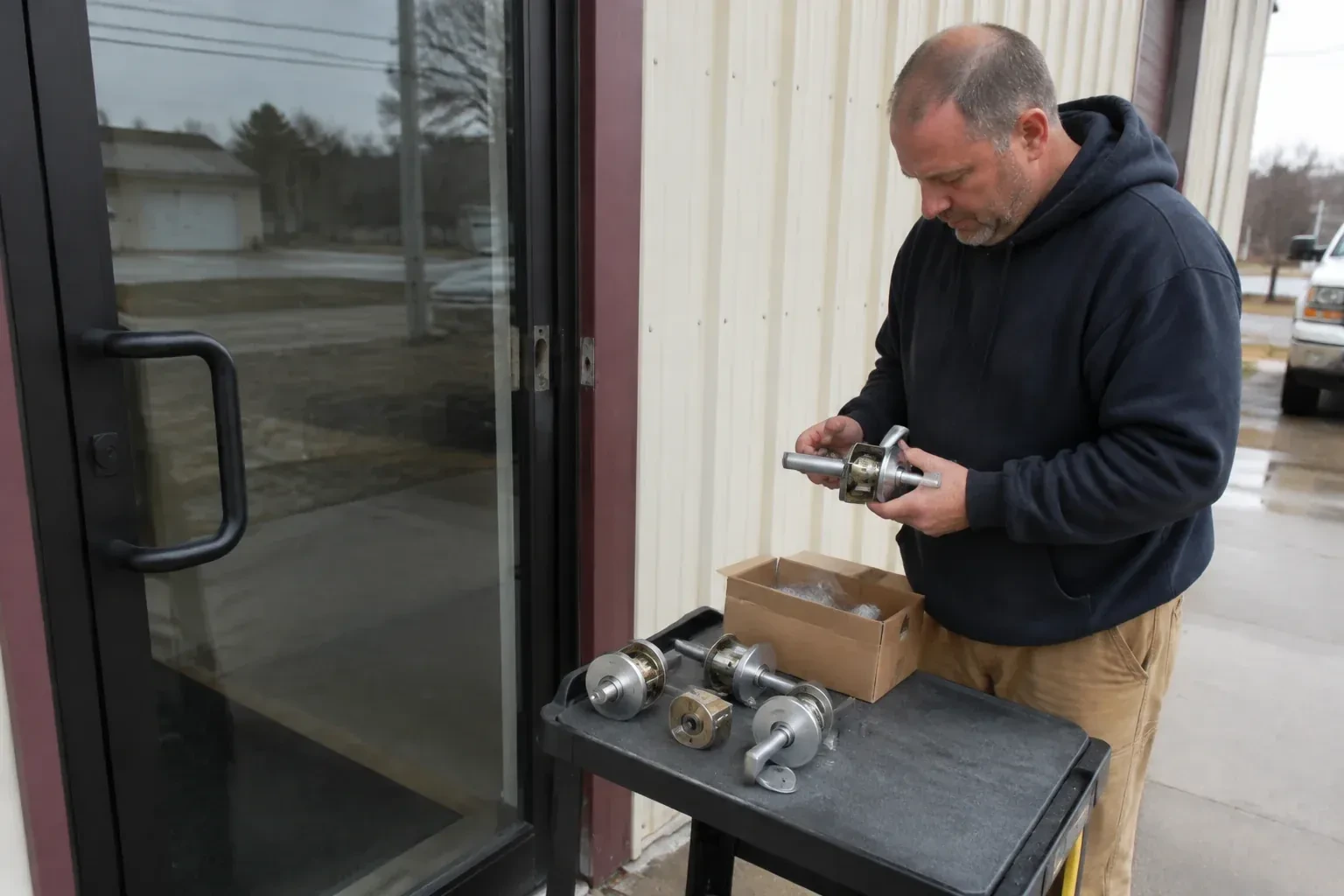
Fire separations and exit routes add a layer that a house entry door never has, and this service is where that layer gets handled properly. A door that forms part of a fire separation needs hardware listed for that door's rating, and a door on a required exit may need to open with a single motion and no key once the building's occupant load crosses a threshold. The locksmith checks whether either condition applies to this specific opening, selects hardware that satisfies it, and installs the new lock so the door still closes and latches the way a fire-rated or exit door is required to.
How the visit goesA new tenant moved into the unit next door, and the property manager just found three different cylinders on three doors, none of them cut to the same key.
Commercial-Grade Lock Replacement
How the visit goes
Checking for a fire rating or an exit requirement
Some commercial doors are part of a fire separation or a required exit route, and that status changes which hardware is legal to install on them. The locksmith looks for a fire label on the door and frame, checks whether the opening serves an assembly space or a high-occupant-load area that calls for listed, push-type release hardware, and confirms whether the door is required to close and latch on its own. None of this is guesswork; it is read directly off the door, its label, and the building's own occupancy information.
Selecting hardware built for this opening
With the assessment complete, the locksmith orders hardware to match: a mortise lock body for a mortise-prepped door, a heavy cylindrical lockset for a standard bored door, or a narrow-stile lock or hookbolt for an aluminum storefront. Where the door is part of a fire separation or a required exit, the hardware chosen is listed for that rating and function rather than a general-purpose substitute. Grade and finish are matched to the traffic the door takes, so a heavily used delivery door gets hardware built for that duty rather than the lightest option available.
Fire and exit requirements satisfied, not just noted
Where the door forms part of a fire separation or a required exit route, the new hardware is listed for that use and the door has been tested to confirm it still closes and latches on its own. Any push-type release hardware installed to meet an occupant-load threshold has been checked across the whole route it serves, not just at the one door where the call started. The business leaves with an opening that satisfies the condition that triggered the work, rather than a lock that merely looks similar to what was there before.
Commercial-Grade Lock Replacement
In the van
Interchangeable-core cylinder
Narrow-stile storefront lock
Listed panic or exit hardware
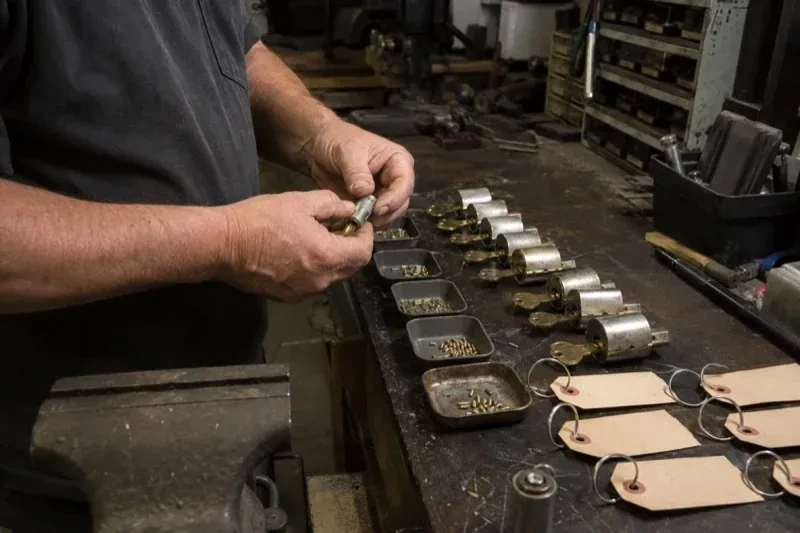
Key-control log and tags
Restricted keyway cylinder
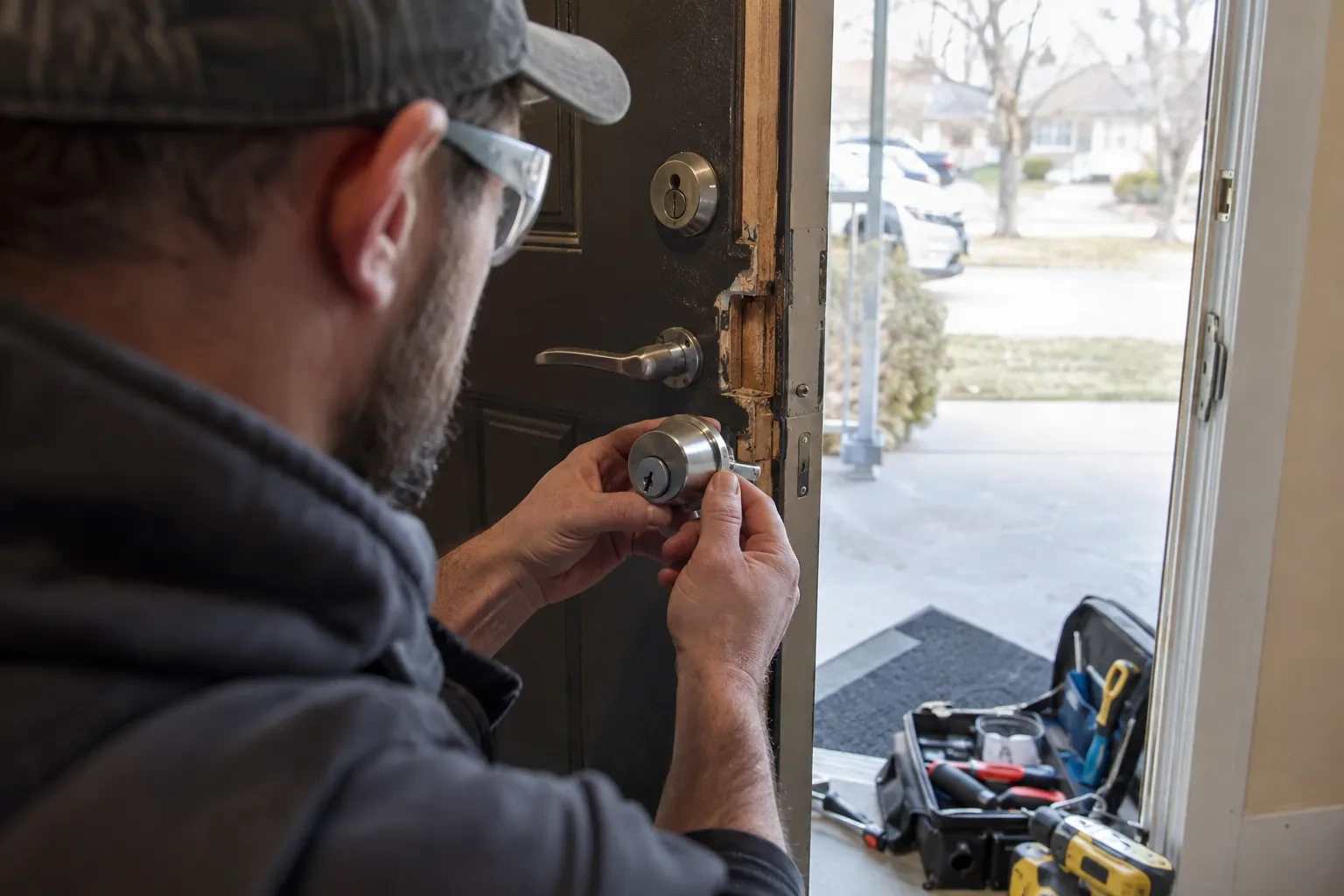
Commercial-Grade Lock Replacement
What affects the quote
Timing relative to a lease or renovation
Work scheduled around a tenant turnover, a renovation, or a building-wide upgrade across several units can be planned and quoted as a coordinated project rather than a series of separate calls.
Panic or exit hardware
Listed exit devices cost more than a standard lockset and are quoted per opening, since a route requiring this hardware often needs it consistently across more than one door along that path.
Coordination with other trades or systems
Where a door closer, an alarm panel or a building-wide access-control platform is involved, coordinating the lock replacement with whoever manages those systems can add planning time that the quote reflects.
What to have ready
- What is currently installed: a knob, a deadbolt, a mortise lock, or an exit device?
- Who can authorize the work and sign for new keys?
- Do you want a master key system, an interchangeable core, or a stand-alone lock?
Commercial-Grade Lock Replacement: questions
QuestionsWhat should I do with the old hardware once it is replaced?
That is entirely your choice. Some businesses keep old hardware briefly in case a spare part is needed elsewhere on the same system, others prefer it removed from the site straightaway, particularly after a break-in where the damaged pieces are no longer wanted around. The locksmith can leave it with you or take it away, whichever you prefer.
Why would my business need panic or exit hardware?
Once a space holds enough people, or handles a high enough hazard, its exit doors need to open with a single motion and no key, which is what panic or exit hardware provides. It is not a preference; it is a function tied to how many people the space is built to hold and what is happening in it.
Can you replace just the cylinder instead of the whole lock body?
Often, yes, particularly with an interchangeable-core system where the core is designed to be swapped without removing the lock body from the door. Where the lock body itself is worn, damaged or of a grade that no longer suits the door's traffic, replacing the cylinder alone would leave the underlying problem in place, so the locksmith says which option actually fits the situation found.
Related services
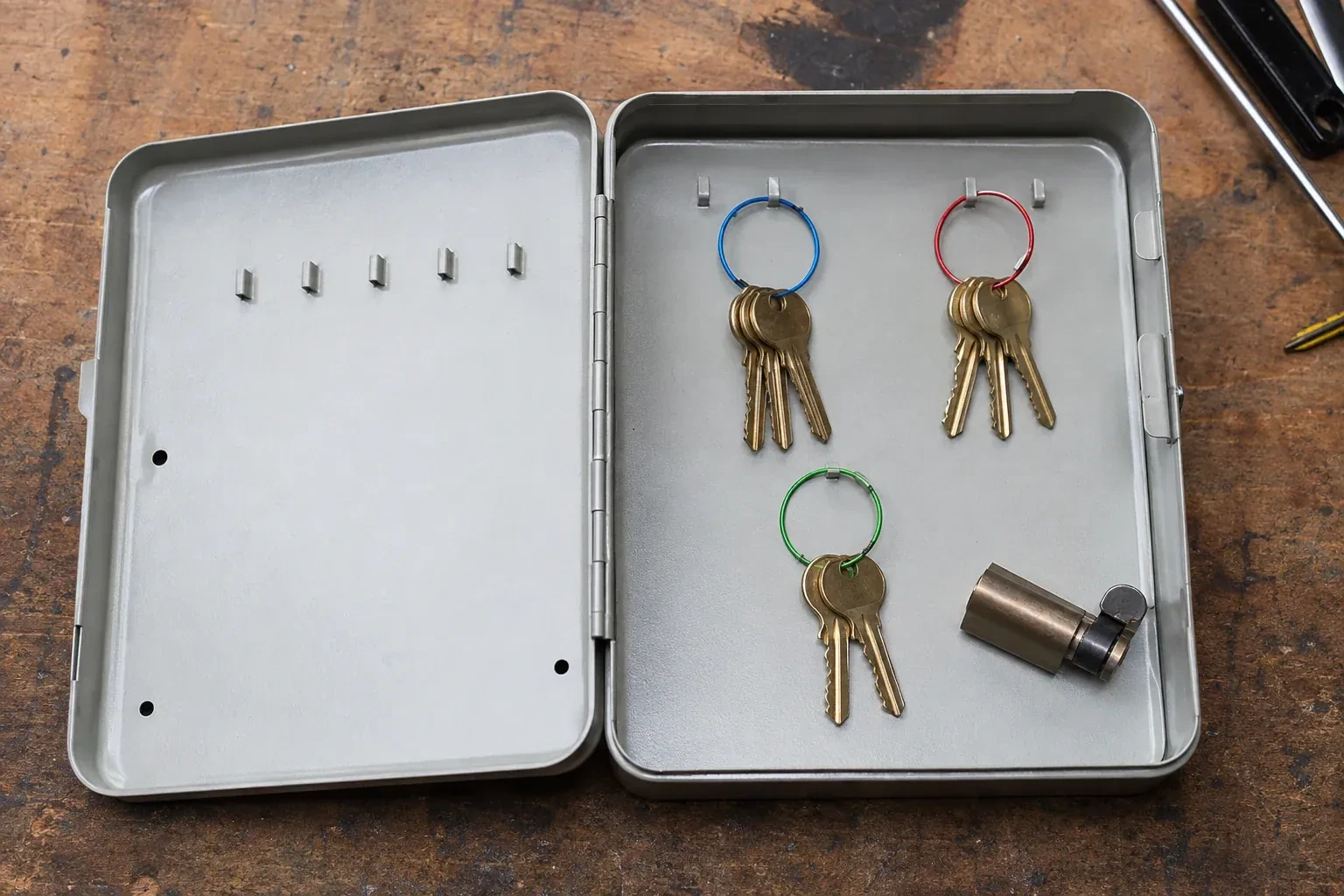
- Master Key System DesignThe office key ring has become the org chart.
- Access Control InstallationThe keypad on the side door has started sticking on cold mornings, codes get shared instead of reset, and half the staff still remember a code you meant to retire two hires ago.
- Panic & Exit HardwareThe fire inspector's note is blunt: the banquet hall's second exit still turns on a deadbolt, and the crowd it is rated to hold needs a door that opens under one motion, no key involved.