Locksmith in Maryvale, OntarioBroken key?Leave the pieces to us.
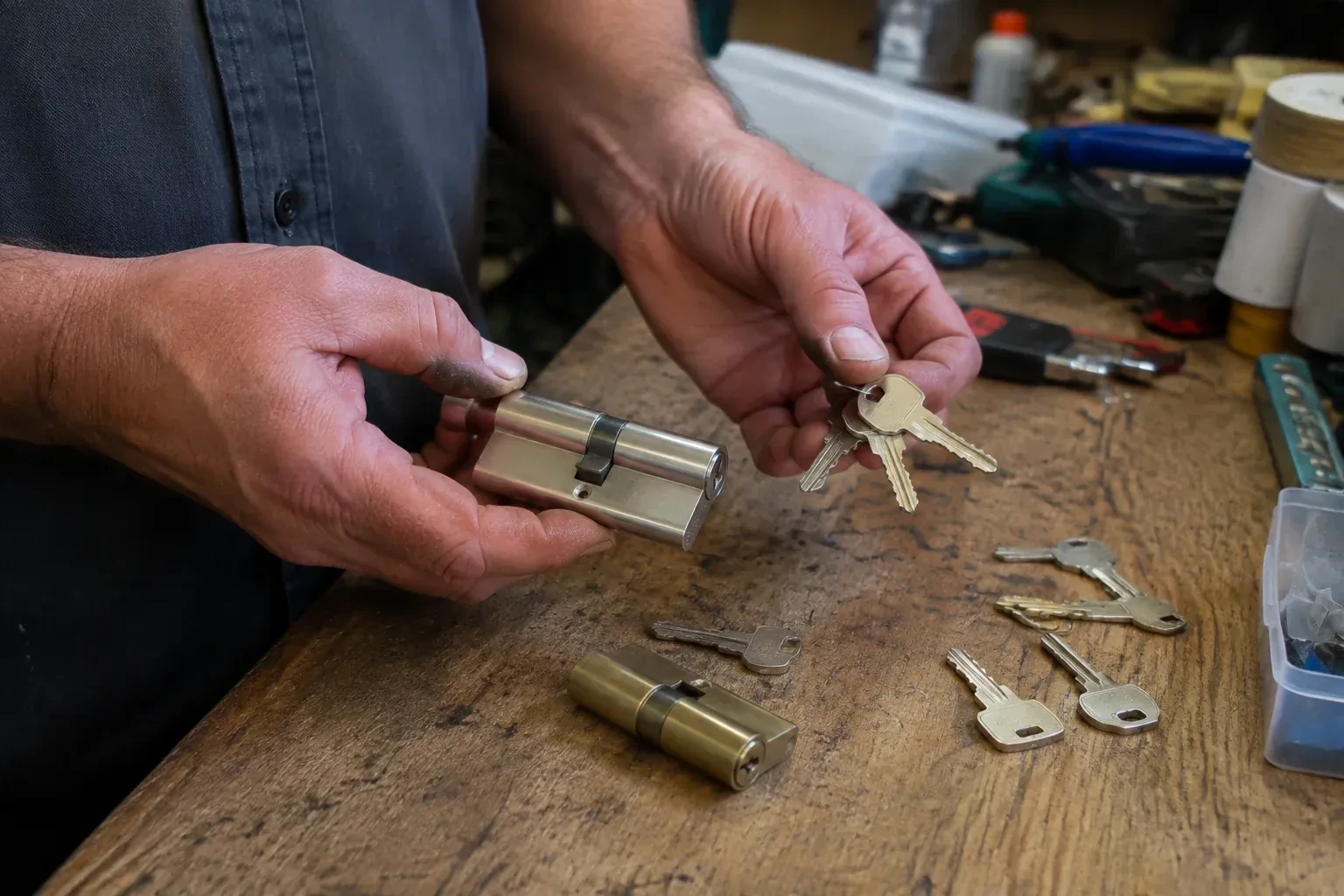
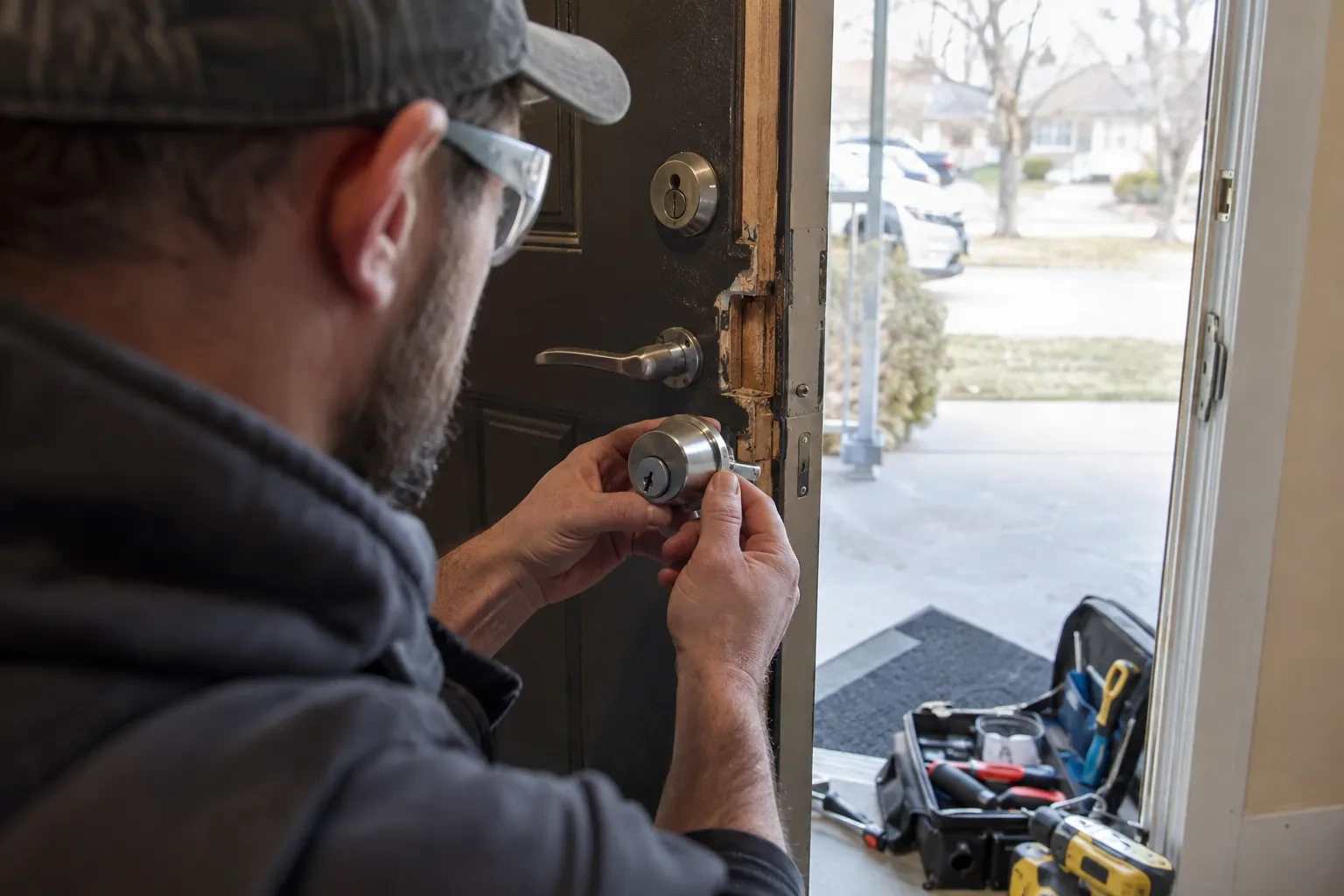
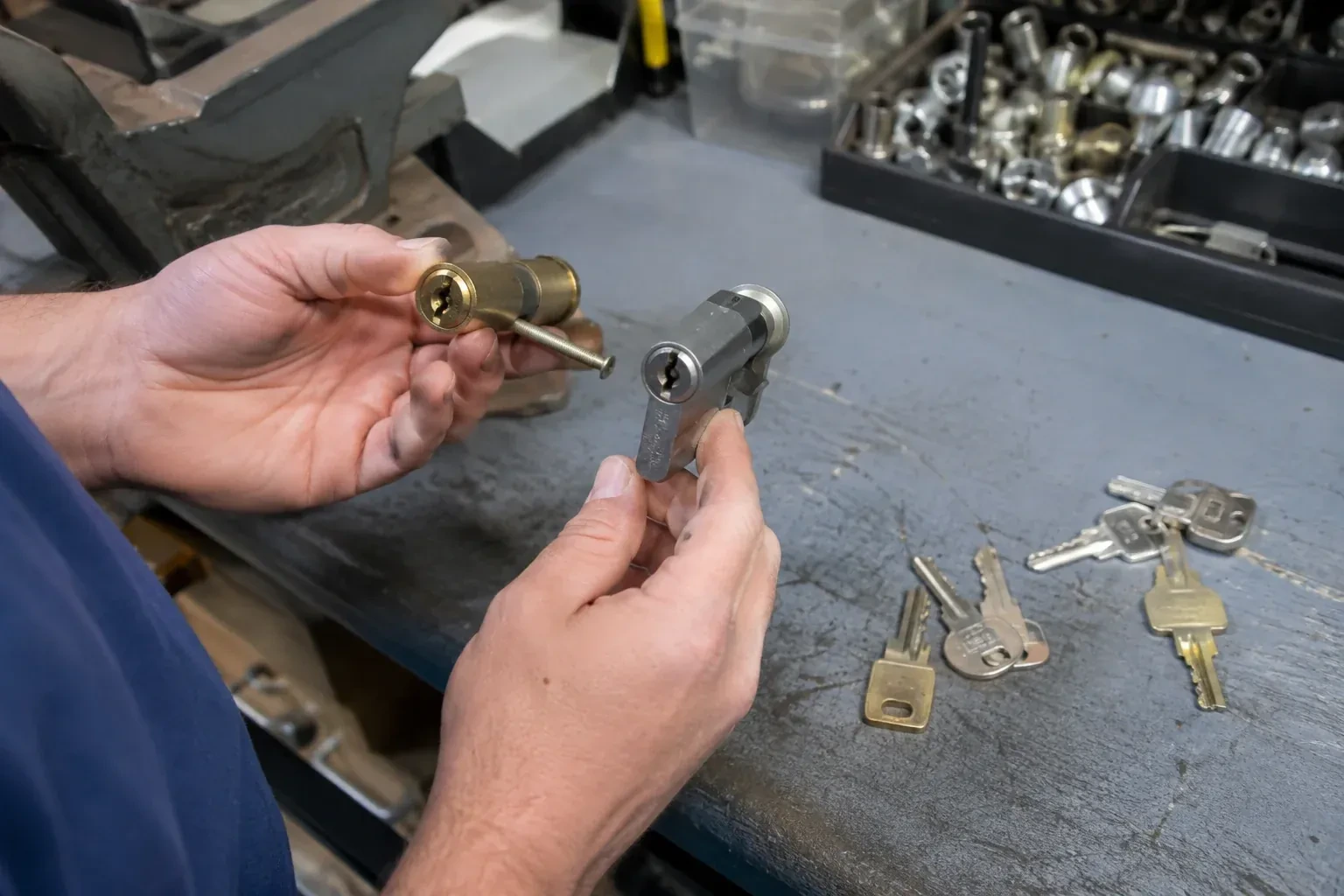
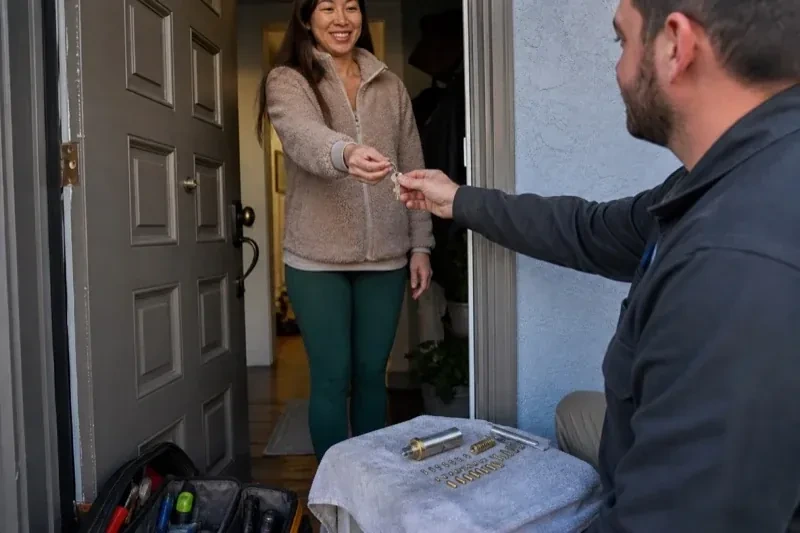
Cold mornings in Maryvale are hard on tired brass, and a key that has been bending for years finally lets go inside the lock. We remove the snapped piece without harming the cylinder, look at why it failed, and cut a fresh key from the code or the remaining half before we leave.
Cold mornings in Maryvale are hard on tired brass, and a key that has been bending for years finally lets go inside the lock. We remove the snapped piece without harming the cylinder, look at why it failed, and cut a fresh key from the code or the remaining half before we leave.
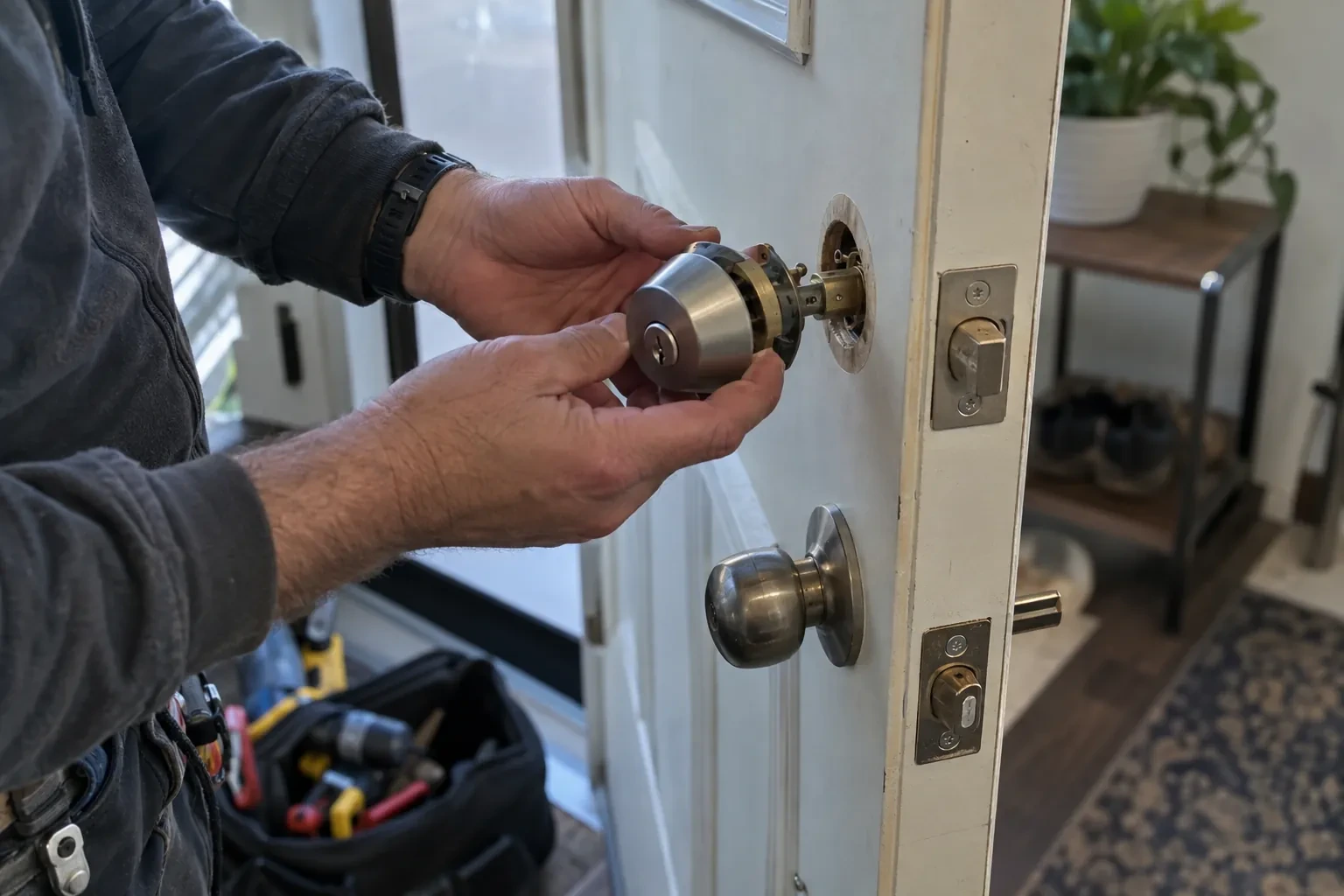
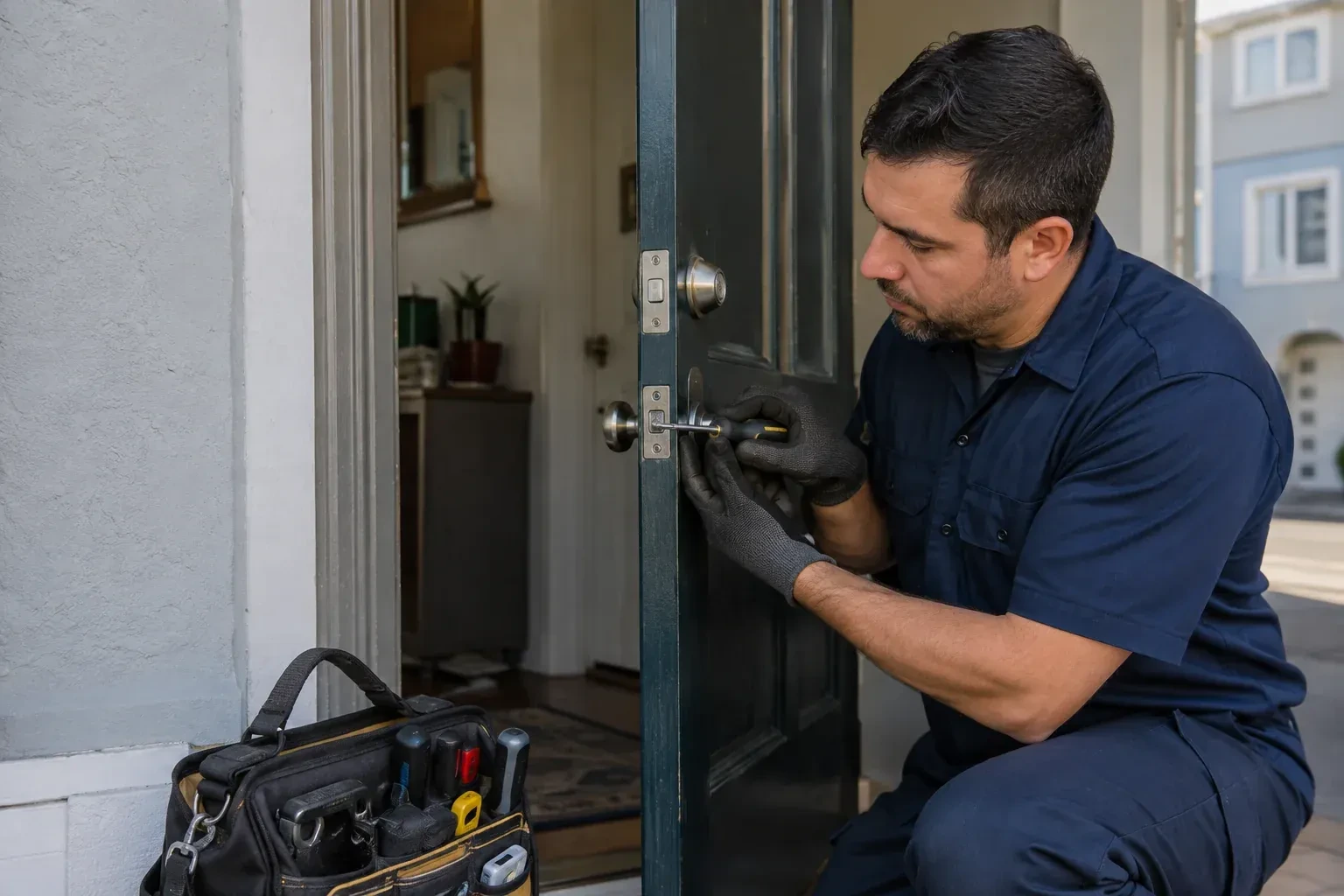
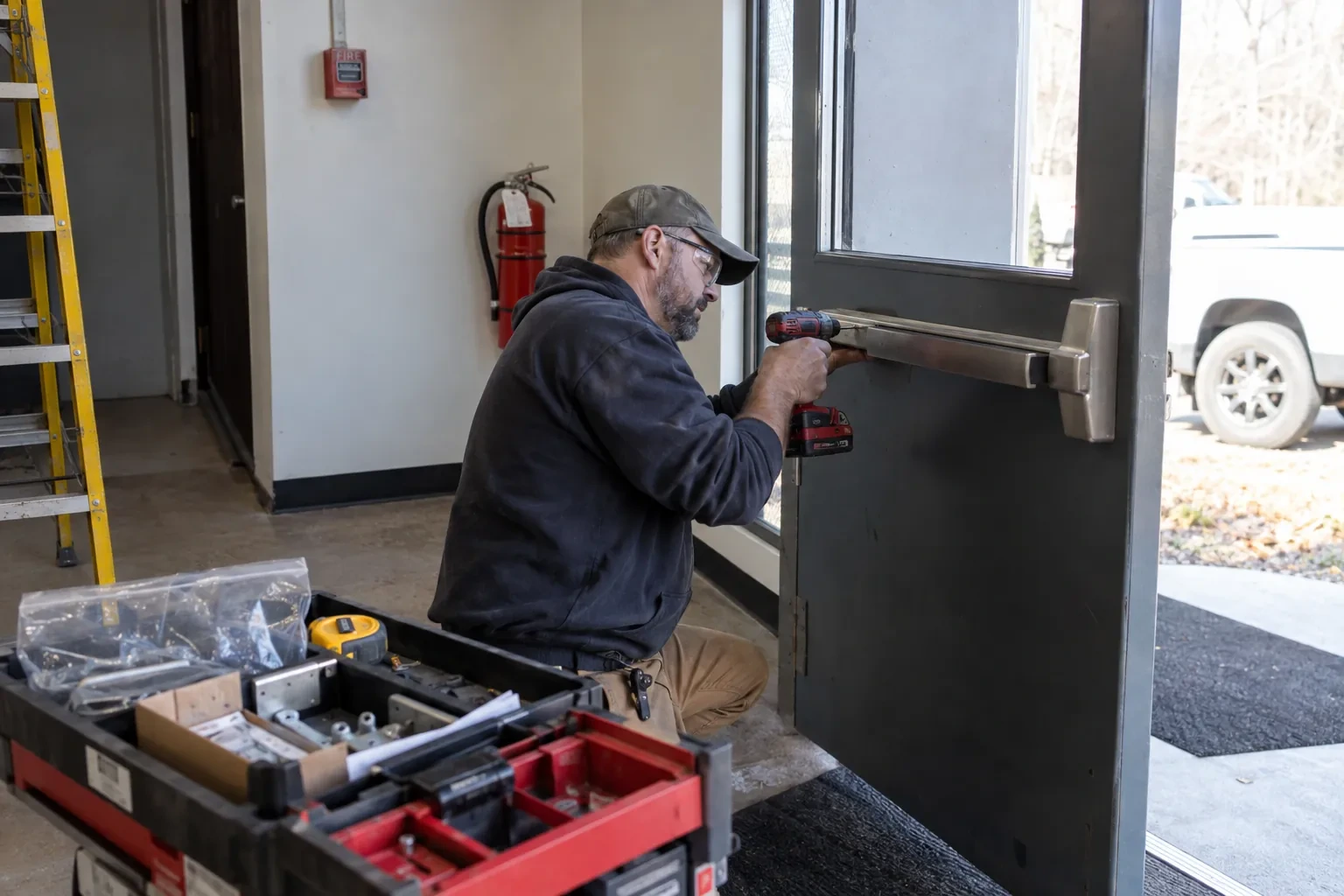
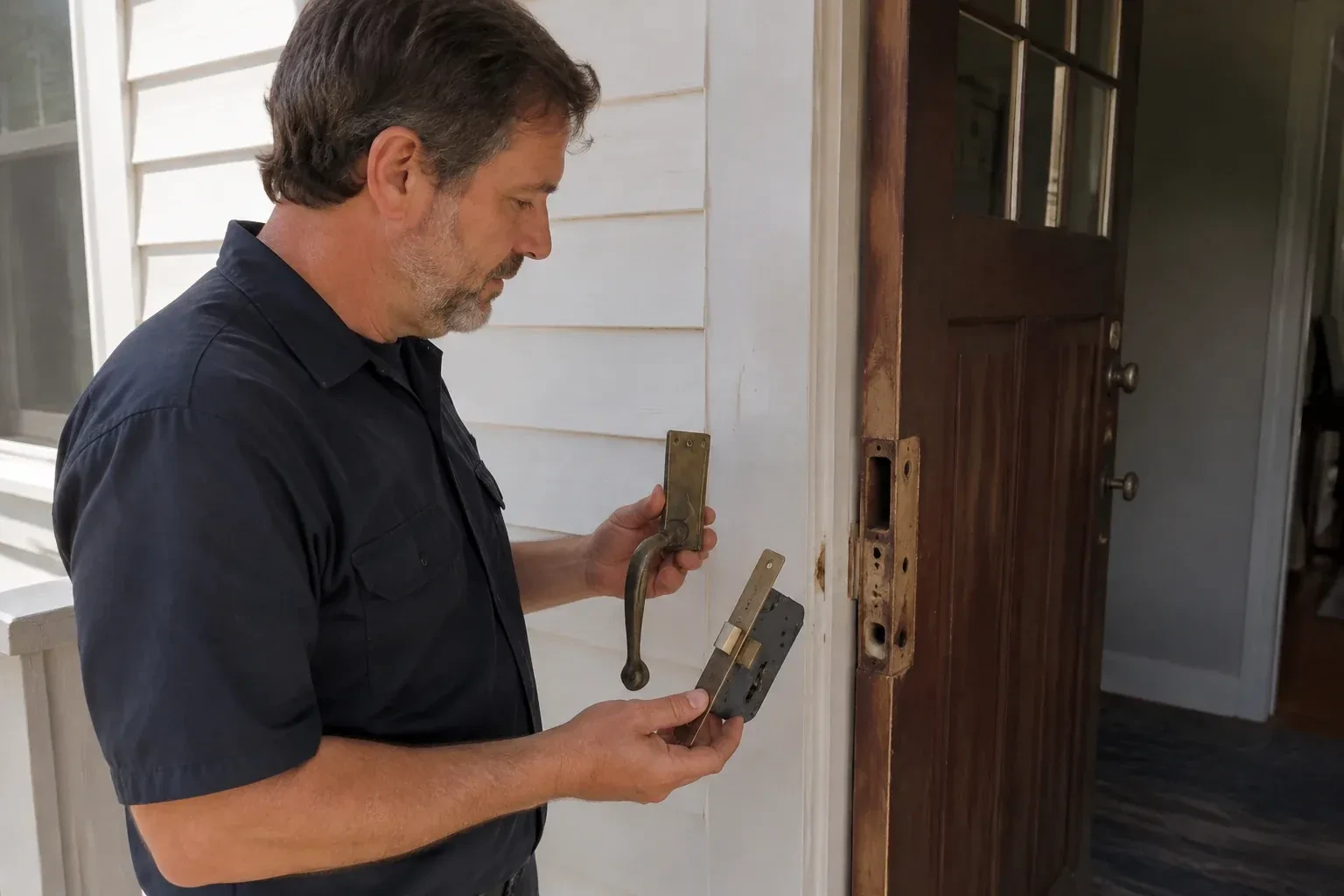
We look after the door, not just the lock.
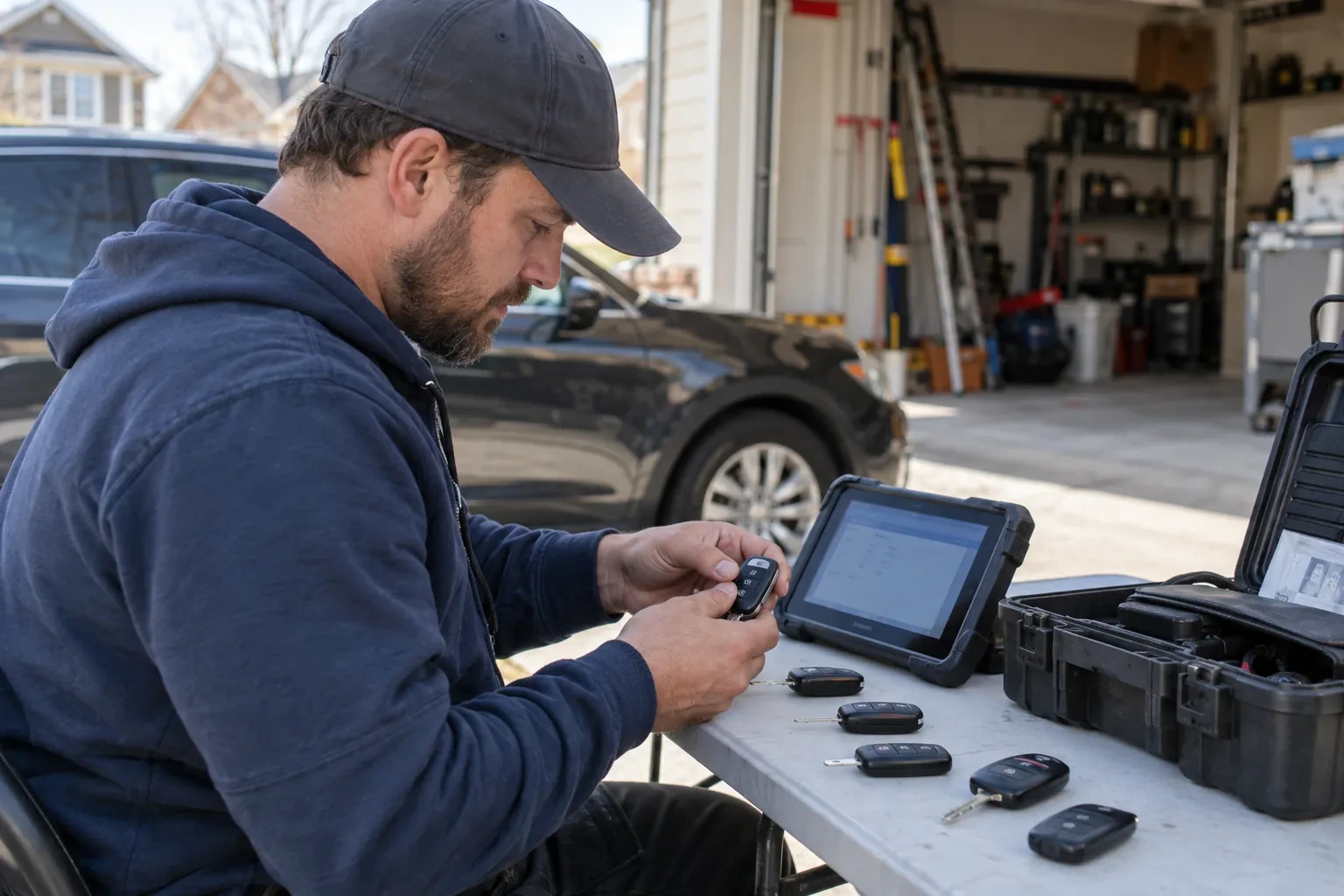
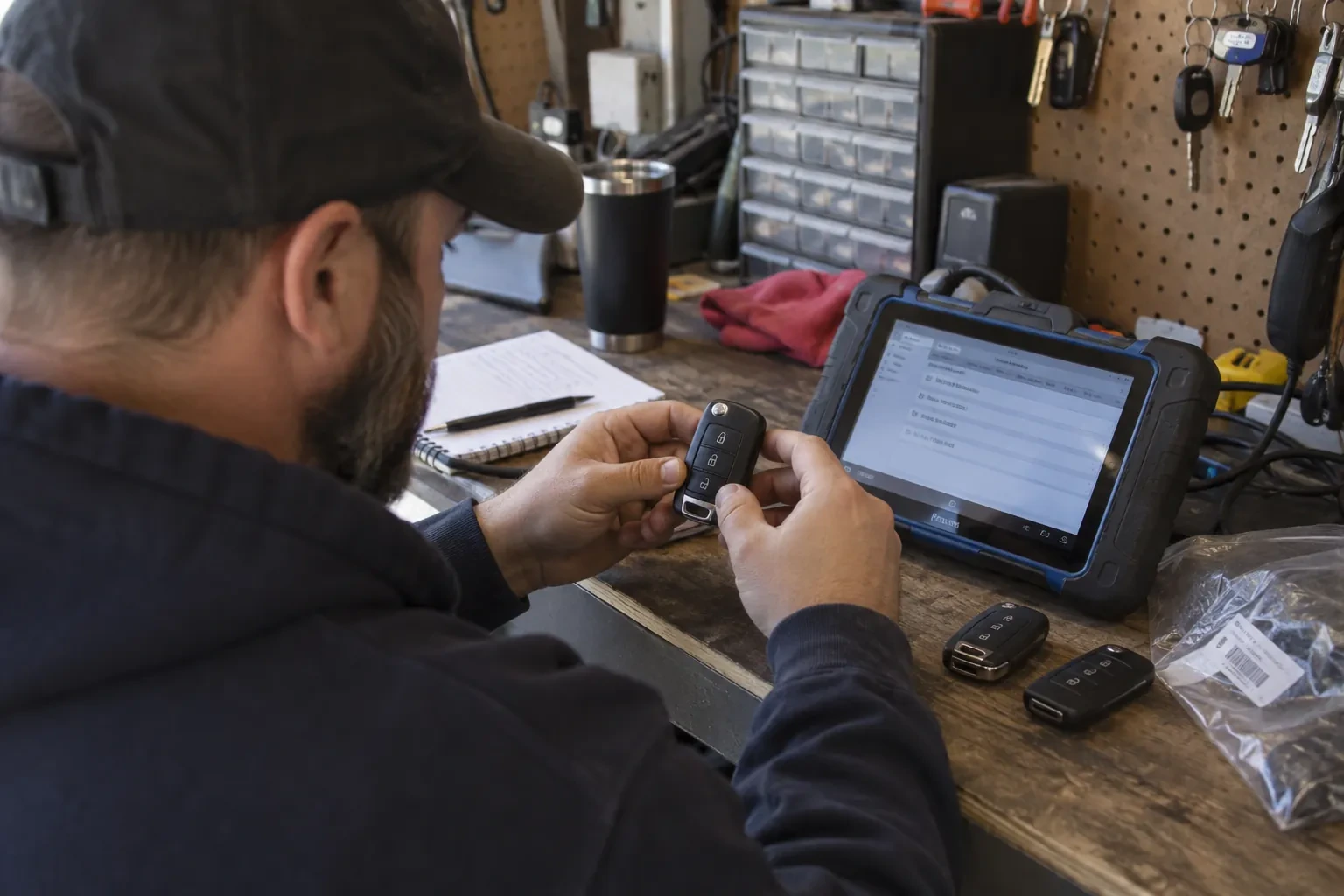
Every key we cut in Maryvale is tested in the lock it belongs to before we leave. It sounds obvious, but a key that works on the bench and sticks in the door is a common complaint about lock work. We turn each one, from both sides where the door allows, and adjust the cut or the cylinder until every key slides in and turns cleanly.
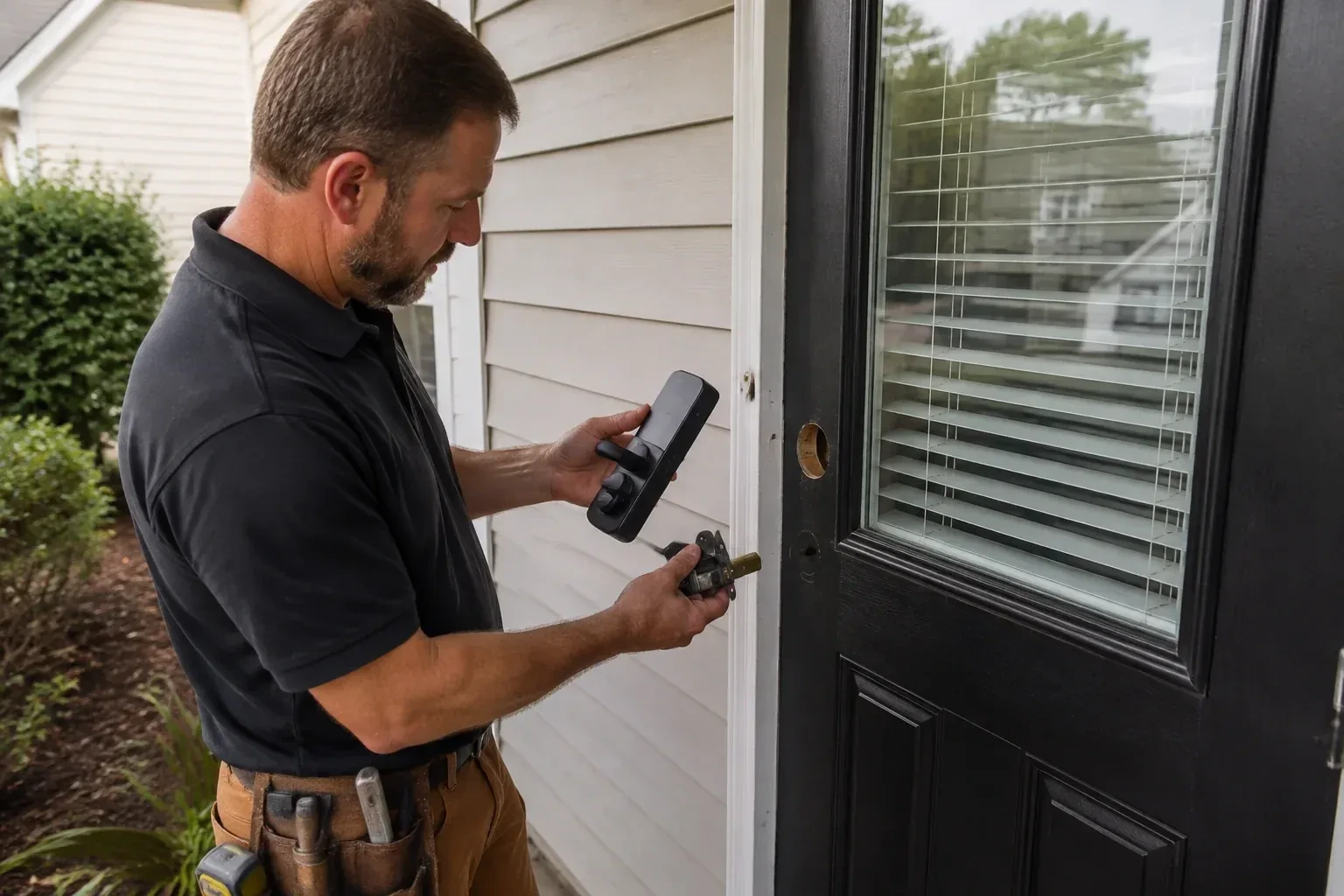
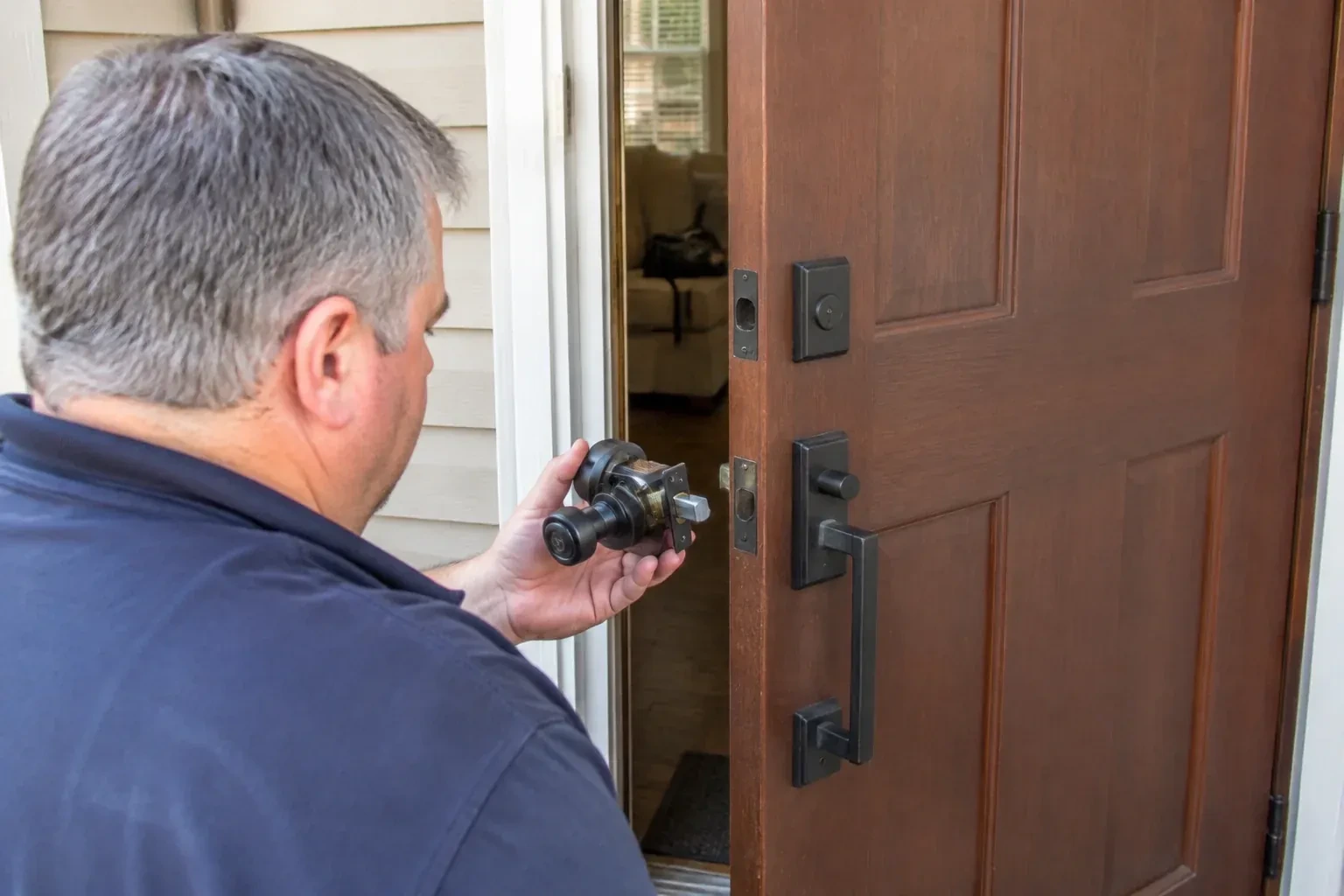
Smart locks are turning up on more doors in Maryvale, and they bring their own questions. Which models cope with cold weather, how they behave when the battery dies, whether the door is aligned well enough for the motor to throw the bolt. We fit, program and troubleshoot them, and we say honestly when a plain mechanical deadbolt would serve you better.
11years in business
24/7open every day
Explained before any tool comes out. You will hear what we found, what we suggest and why, before anything is changed. If you want a minute to think, take it.
Choices, not a single answer. Most problems have more than one fix. We lay out the practical options and the trade-offs, then let you choose the one that fits your home and budget.
A tidy doorstep. Shavings swept, packaging taken away, the old hardware offered to you or disposed of. The only sign we were there is a lock that works.
Homes in Maryvale bring us sticking deadbolts, lost keys, moves and upgrades. Businesses bring storefront doors, back doors, key control and safes. The services below cover both sides in detail, so whichever kind of door you are standing in front of, the right page is a click away.
About 58% of homes in Toronto were built in 1980 or earlier, according to the 2021 Census.
Older homes
Where housing is mostly older, many entries still have only a knob lock and no deadbolt at all. Adding one is a straightforward job on a solid wood door, and it is the single upgrade that changes most for a house of this kind.
Single-detached houses make up about 23% of homes in Toronto (2021 Census).
In buildings, the suite door often has a closer and a heavy frame, and the deadbolt sits in a metal or metal-clad door. A locksmith fitting or rekeying one brings the tools and cylinders that suit that construction rather than a wooden house door.
Rather than one purchase, think of high security as a run of decisions. Which doors, which cylinders, how many keys, who may order more, whether a safe belongs inside. We walk those decisions with you and write the answers down.
The pharmacy's drop safe has a keypad that finally lost power for good, and the little override key that was supposed to live behind the counter cannot be found anywhere.
A homeowner inherited a heavy old dial safe from a parent's house, moved it into the new place, and has no idea whether the bolt-work still works, whether the lock is sound, or how it should be anchored.
Which fix fits?
Minus eighteen with a wind, and the exterior cylinder on the shop door has frozen solid overnight after yesterday's slush.
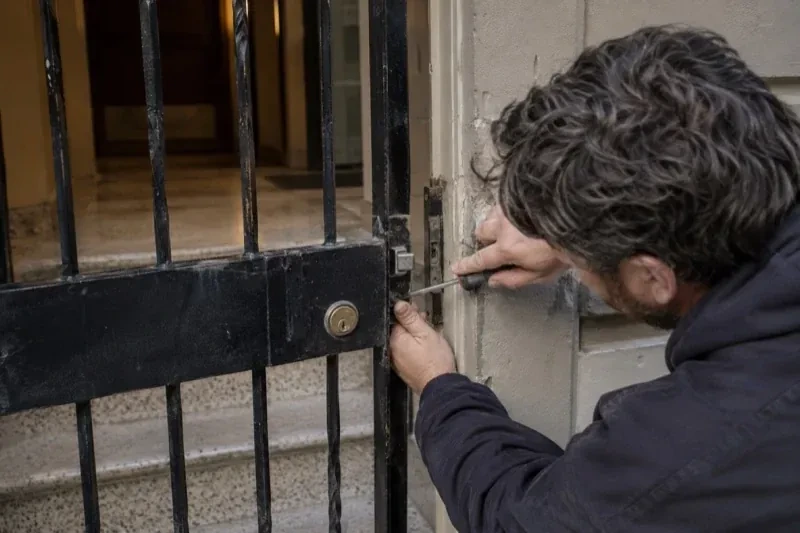
WhyWhen several households share one street gate or one building entry, a lock change on its own solves little if half the keys in circulation still work afterward.
The key still turns, but lately it spins a half-circle further than it used to before the little door lets go, and some mornings it takes a second try.
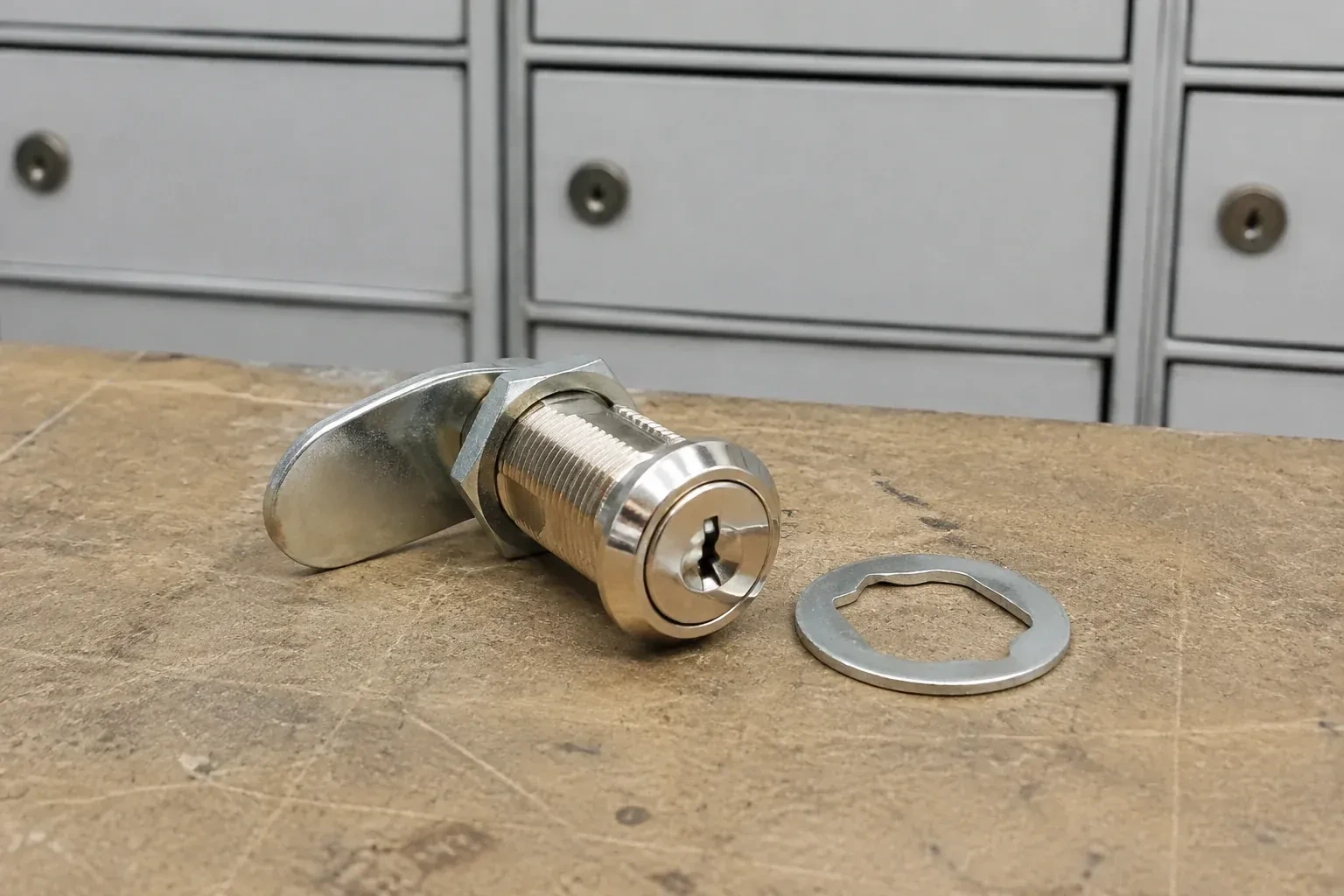
WhyA mailbox lock lives or dies by a handful of measurements: the cylinder's length, its diameter, and the reach and angle of the cam arm that actually catches the door frame when the key turns.
A self-storage operator wants the office, the tenant gate and the equipment shed on three different levels of access for staff, but every lock on the property currently answers to the same handful of interchangeable keys handed out over the years.
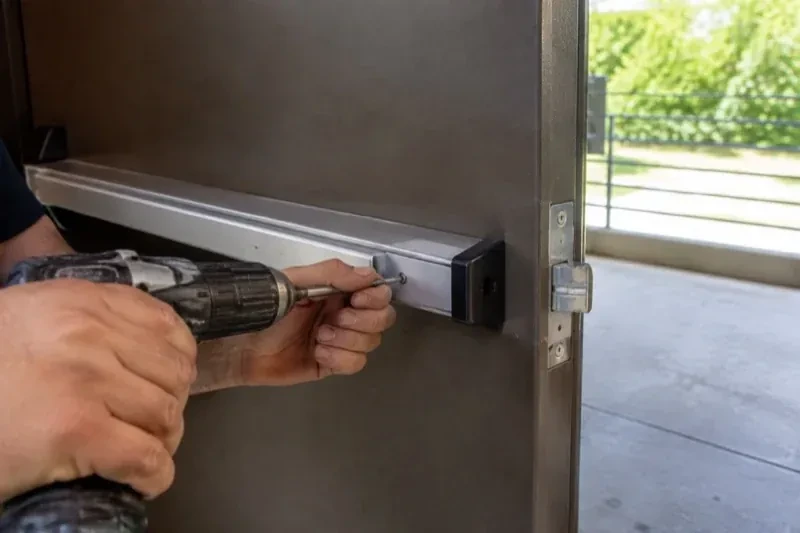
WhyAn exit door does not stop being an exit once it is wired into an access control system.
Two doors used to swing as a pair at the community hall entrance, but one leaf has started closing before the other, catching the astragal and leaving a gap wide enough to worry the caretaker.
WhyElectrified exit hardware adds a layer without changing the basic behaviour of the door: a person inside can still leave under one motion of the hand, every time.
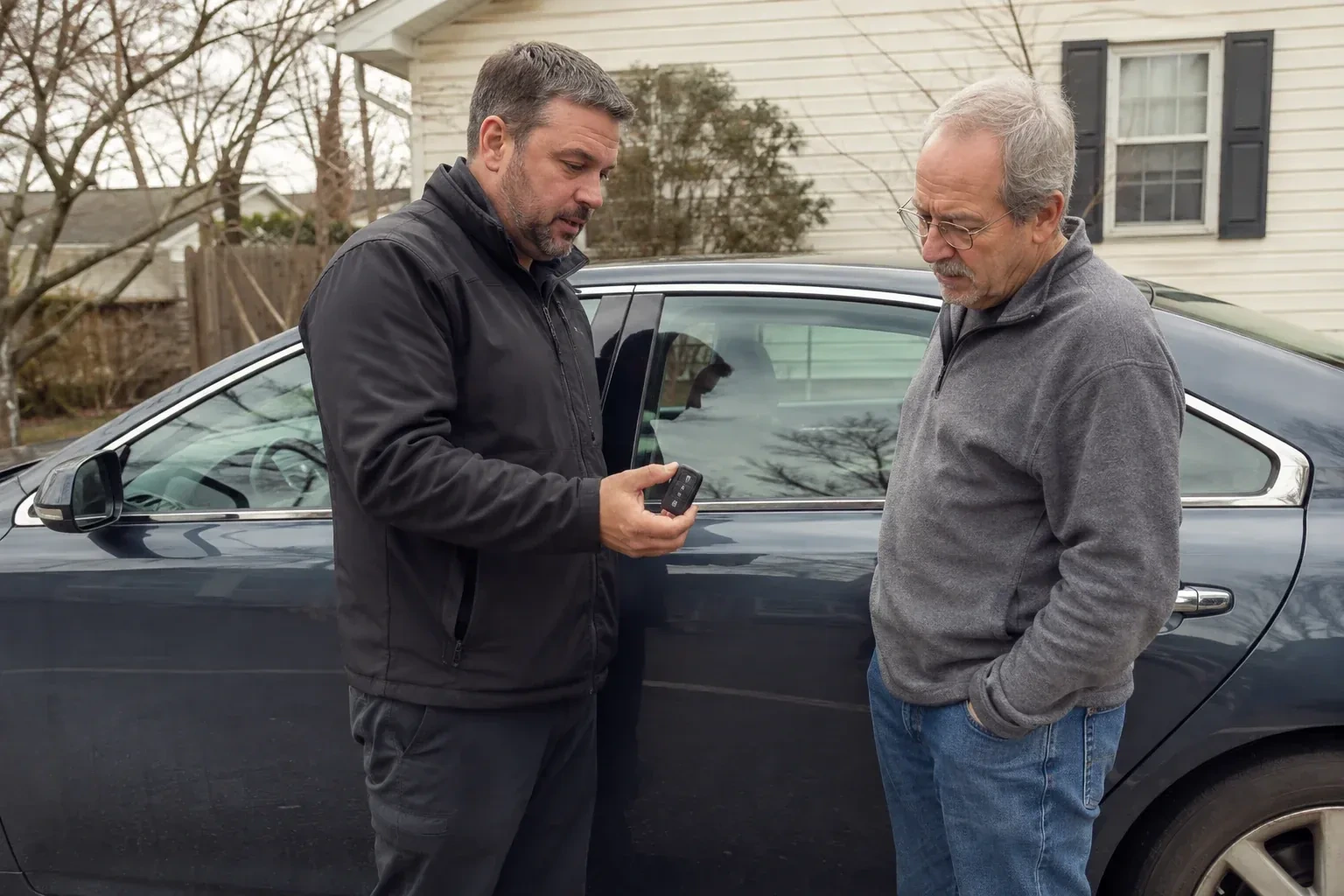
WhySafety and authorisation frame every car lockout, and both are on your side.
How a visit goes
Describe the property, the hardware and what has changed, and the visit starts from what you have seen.
1
2
3
01
Confirming it is your door
Before touching the lock we ask for identification or another way to show you live or work there. It protects you as much as anyone.
02
The gentlest opening that works
Most doors can be picked or bypassed with no damage. We start there and only move to a firmer method if the lock leaves no other choice, explaining as we go.
03
A working lock before we go
Once you are inside we check the lock still turns properly and that you have a key that works. If the lock was the reason you were stuck, we say so.
Good days. Start with a turn.
1/9Business Lockout Service
Minus eighteen with a wind, and the exterior cylinder on the shop door has frozen solid overnight after yesterday's slush. The key goes in halfway and stops. The delivery driver is due, the phone is ringing inside, and nobody can reach it.
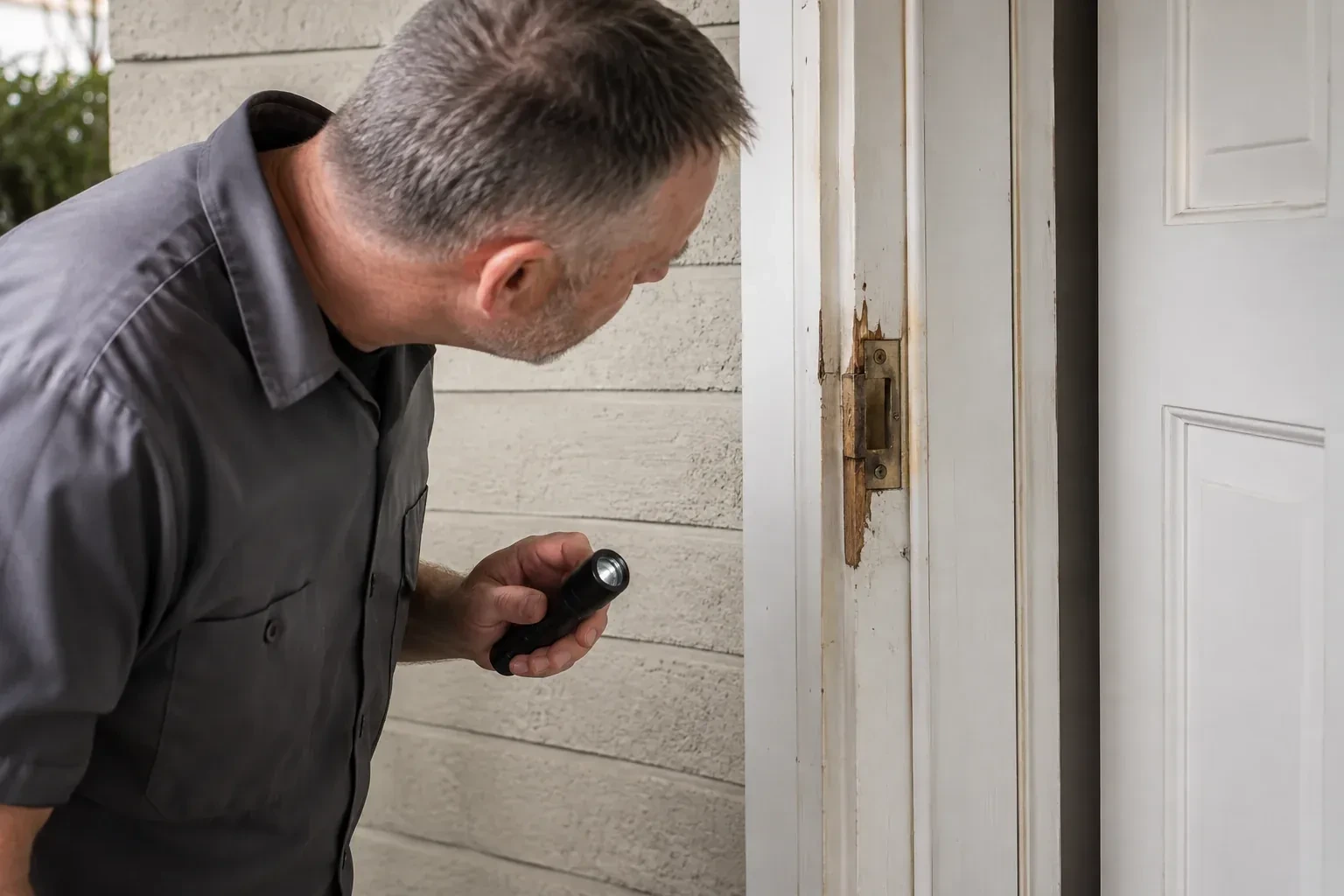
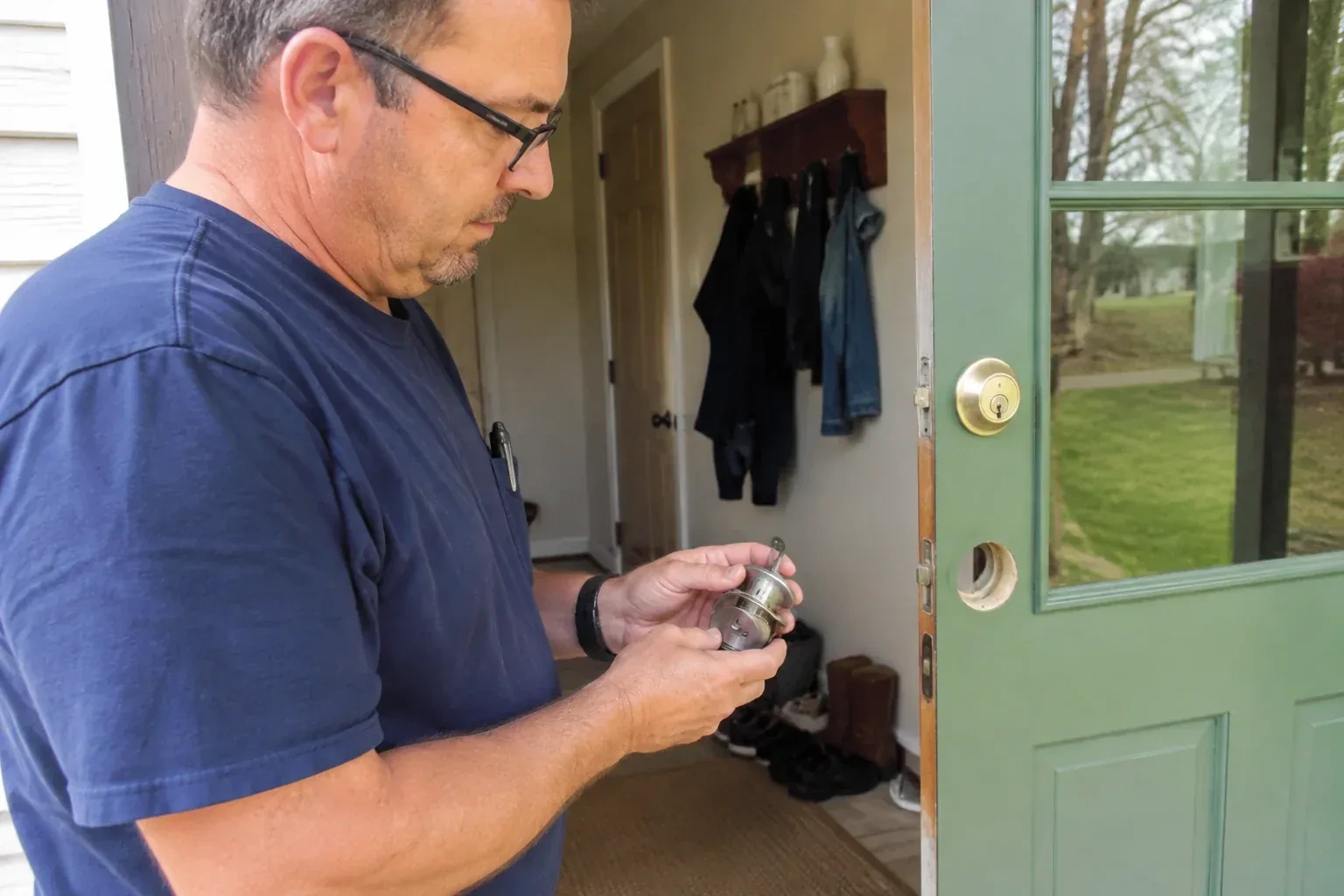
There is a hole where the cylinder used to be. Somebody twisted it out of the deadbolt with a wrench, and now the empty bore looks straight through to the kitchen, with the bolt still stuck in the frame.
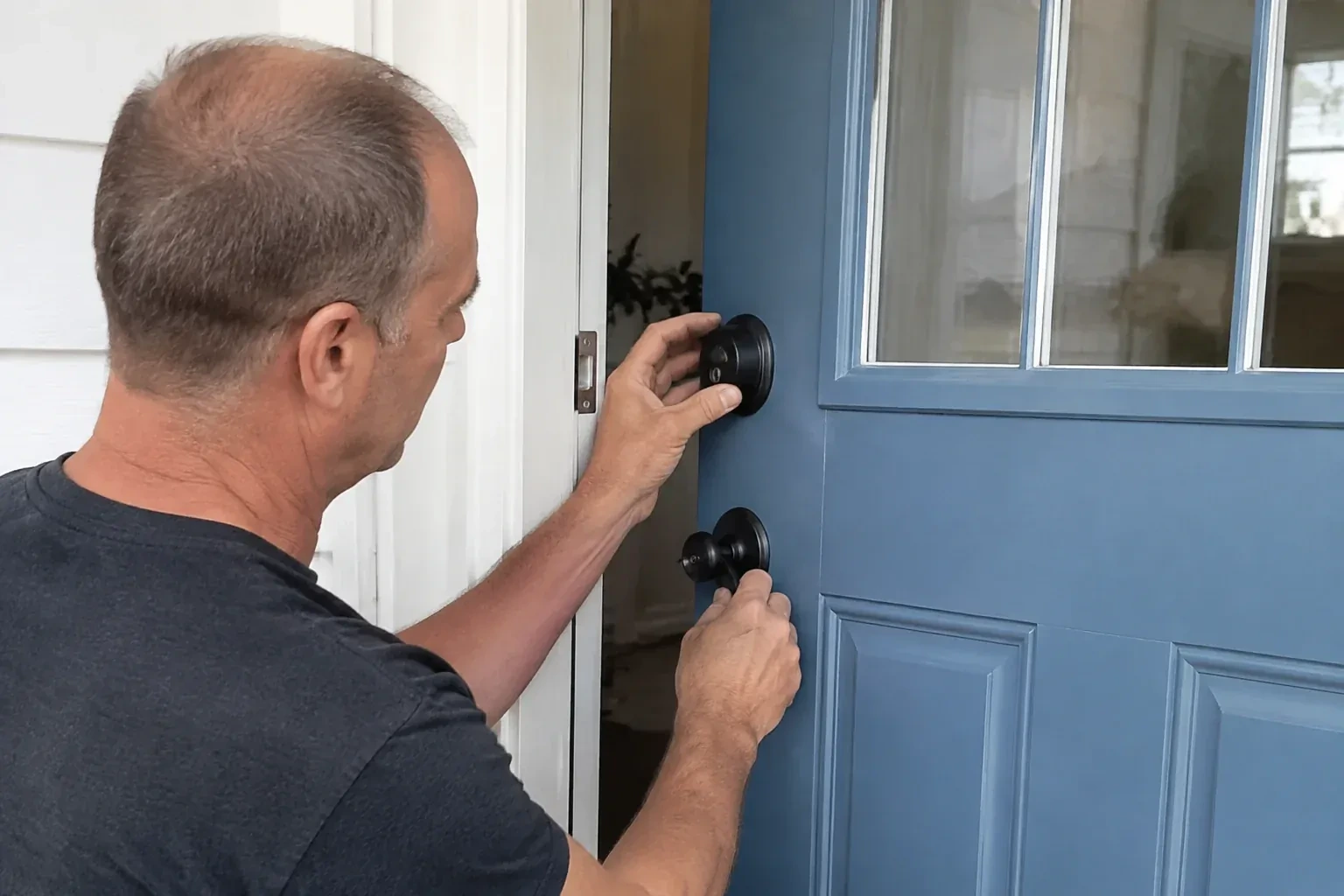
The bolt on the front door is keyed on both sides. Getting out at night means finding the key in the dark, and with a toddler in the house you have decided the inside should turn by hand. You want it done properly, not just swapped.
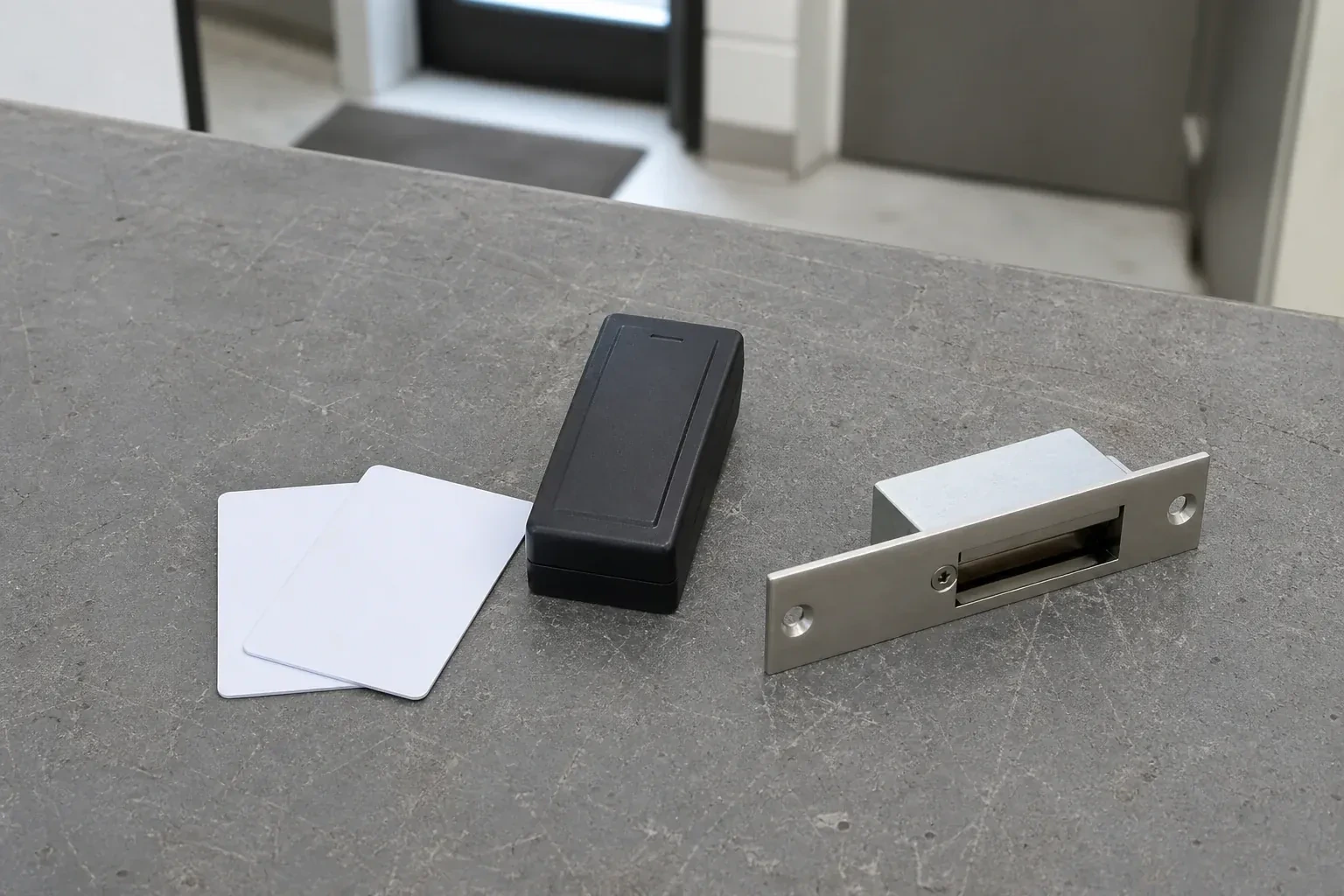
A visitor buzzes from the panel downstairs, someone presses the button by the door, and nothing happens. The electric strike on the lobby door used to click open on cue; now it stays silent, and residents are propping the entry with a folded flyer instead.
The key still turns, but lately it spins a half-circle further than it used to before the little door lets go, and some mornings it takes a second try. The small cam lock inside is simply worn out.
A self-storage operator wants the office, the tenant gate and the equipment shed on three different levels of access for staff, but every lock on the property currently answers to the same handful of interchangeable keys handed out over the years.
Another employee left and the keys never came back. You changed the locks again, cut copies for everyone who stayed, and paid for a job that repeats itself the next time someone quits, taking a working key out the door with them.
Two doors used to swing as a pair at the community hall entrance, but one leaf has started closing before the other, catching the astragal and leaving a gap wide enough to worry the caretaker.
The rental van came with one key. It went into the door lock, turned partway, and snapped, leaving half the blade in the cylinder and the other half in your hand. The delivery is due, the van is locked, and the rental desk is an hour away.
What is a restricted keyway and is it worth having for a business?
A restricted or patented keyway is one whose blanks are supplied only through the manufacturer's authorised channels, so duplication is controlled rather than available at an ordinary counter, though the exact authorisation step varies by program and is not always a signed letter. For a company with staff turnover, cleaners and contractors, it means the keys in circulation are far easier to track. It can be introduced during a rekey, on the exterior doors only or across the whole premises, and works alongside a key register.
What is a security strike box and why fit one?
A security strike is a heavier plate with a formed steel pocket that wraps around the bolt instead of leaving it in bare wood. It is set into the jamb and fixed with long screws, typically three inches, that pass through the jamb and the shim space into the framing, with the longest screws placed nearest the door stop where the bolt bears. Manufacturers specify the pocket depth so the bolt extends fully. The result spreads a kick across the wall stud rather than two small screws.
What is the difference between a deadbolt and the lock in my door knob?
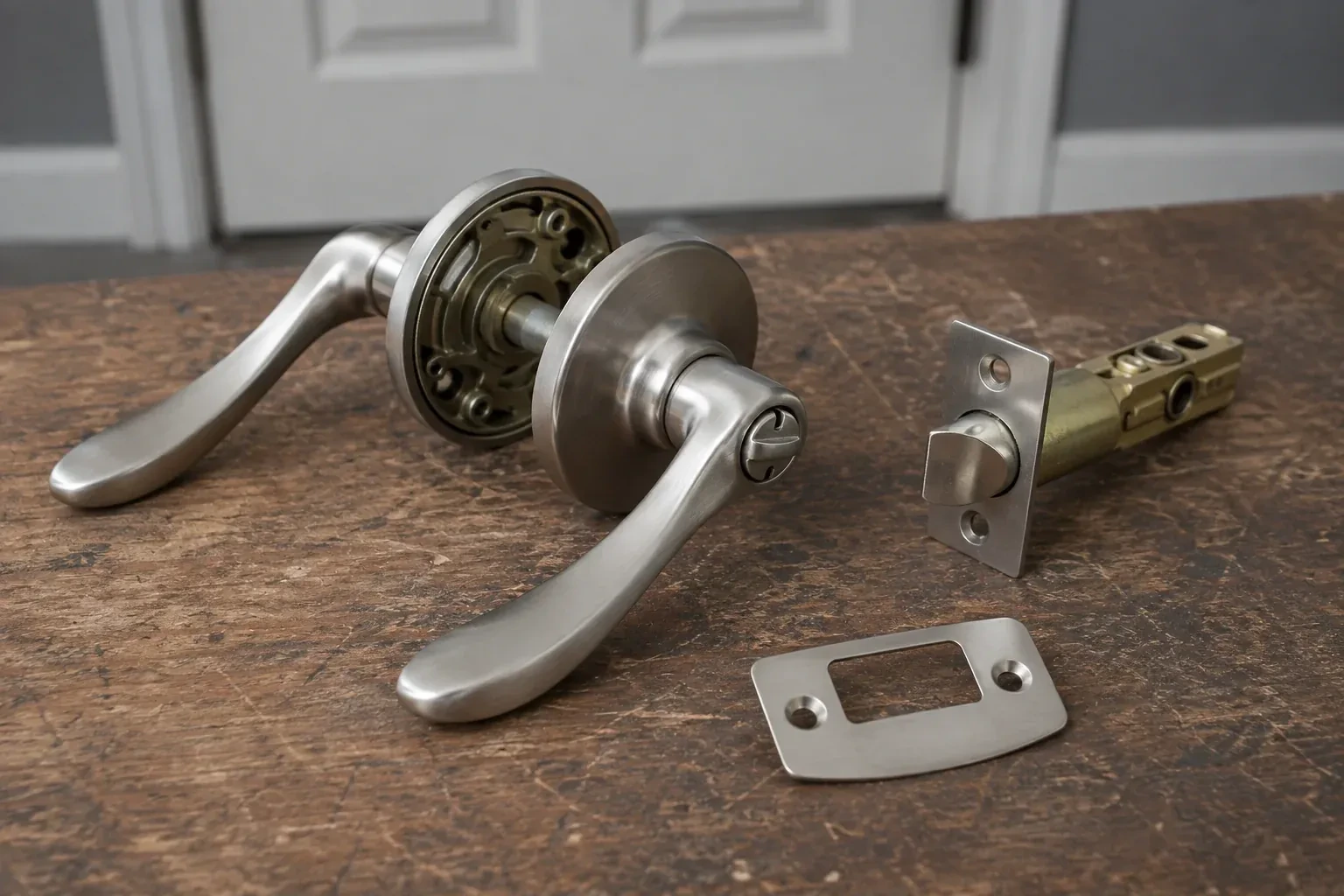
The knob or lever holds the door shut with a spring latch: a bevelled tongue that snaps into the frame and can be pushed back by anything slid into the gap. A deadbolt is a solid rectangular bar driven by the key or thumb-turn alone, and when fully thrown it locks in place so it cannot be pressed back from the edge. The knob keeps the door closed; the deadbolt keeps it locked.
What should I have ready before the locksmith arrives?
It helps to know which gate or door is affected, roughly how old the lock or closer is, and what exactly is happening: dragging, slamming, refusing a key, or a buzzer that stopped releasing the door. If the entry is shared, a rough idea of how many households or units currently need a working key speeds up the visit considerably. For a building entry, having contact information for a property manager or condo board on hand is useful if a decision needs their sign-off.
What if my mailbox key snapped off inside the lock?
The broken piece is removed first, using extraction tools that grip and draw it out rather than push it further in, and then the lock is opened the usual way. A key rarely snaps in a lock that is otherwise healthy, so the old cylinder is checked afterward, and if wear caused the break, replacement rather than a repeated repair is the sensible next step.
How do you decide how many sub-master levels a business actually needs?
The number follows the organization, not a preference for tidy diagrams. Genuinely distinct groups, such as separate departments or floors with different access needs, each justify a level; access differences that exist only on paper usually do not. A hierarchy with more levels than the business uses in practice is harder to administer without making anyone's day-to-day access meaningfully better.
Who keeps administrative control of the software after installation?
The business does. Handover includes a full administrator account with the ability to add and revoke credentials, change schedules, and pull an entry log, confirmed working before the locksmith leaves. Whether the installer keeps any support or portal access beyond that is a setting agreed with the business, not a fixed feature of every system, so it is worth confirming as part of that handover.
Does a retrofit into an older building work the same way as new construction?
The device and trim choices are the same, but a retrofit usually has to work with a door and frame that already carry someone else's old hardware preparation. Reading what holes and reinforcement already exist, and choosing a device that can use or cleanly replace them, is a bigger part of a retrofit than of a new opening built with the hardware in mind from the start.
The alarm went off. Is that a problem?
It is expected. Opening a door without the fob or key wakes most factory alarms, and quieting them is part of finishing the job: a turn of the key in the door or ignition, or a press of the fob once the car has power, usually does it. An aftermarket alarm is reset from its own valet switch. The locksmith stays until the car is quiet and every lock has been cycled.
Request a visit
Every key we cut in Maryvale is tested in the lock it belongs to before we leave. It sounds obvious, but a key that works on the bench and sticks in the door is a common complaint about lock work. We turn each one, from both sides where the door allows, and adjust the cut or the cylinder until every key slides in and turns cleanly.