
Commercial · Maryvale
Master Key System Design in Maryvale
The office key ring has become the org chart.
In plain words
A master key hierarchy usually has three layers. At the bottom, an individual change key opens one door or a small keyed-alike group for the person who needs it. In the middle, a sub-master opens a defined group, such as every door on a floor or in a department. At the top, a single master opens the whole set and is kept to a short list of people. Master key system design is the process of deciding where those layers sit for a particular business, choosing hardware that can support them, and cutting and testing the keys so each layer works exactly as planned, no more and no less.
How the visit goesA self-storage operator wants the office, the tenant gate and the equipment shed on three different levels of access for staff, but every lock on the property currently answers to the same handful of interchangeable keys handed out over the years.
Master Key System Design
How the visit goes


Who holds the top-level master
A single top-level master, if the property has one at all, is deliberately kept to the shortest list the business can operate with. The check here is a direct conversation about who genuinely needs to open every door on the property versus who only thinks they might one day, since every extra holder is another way a full-access key can go missing. This conversation happens before cutting begins, because narrowing the list afterward means recovering and replacing keys that have already been issued to people no longer on it.
Building the hierarchy from the bottom up
Design starts with the smallest unit, the individual change key, and works upward. Each door that stands alone gets its own combination; doors that should share access are grouped under a sub-master; and a single top-level master is reserved for the short list agreed earlier. Building in this order keeps the levels honest, since a sub-master or master is only created where a real group of doors justifies it, rather than being added because it seems useful in the abstract. The result is a hierarchy that matches the organization rather than one imposed on top of it.
Keys that say less if they go missing
The keys handed over are marked by role or level, not by door or address, so a key that is lost or set down somewhere it should not be tells whoever finds it very little about what it actually opens. Combined with a restricted keyway where one was chosen, this cuts the odds of an unauthorized copy, though the chart still shows that a lost top-level master reaches every cylinder it was cut to operate, which is why that level gets watched most closely.
Master Key System Design
In the van
Key marking tools
Cylinder decoders
Master pin kits
Bench test fixture
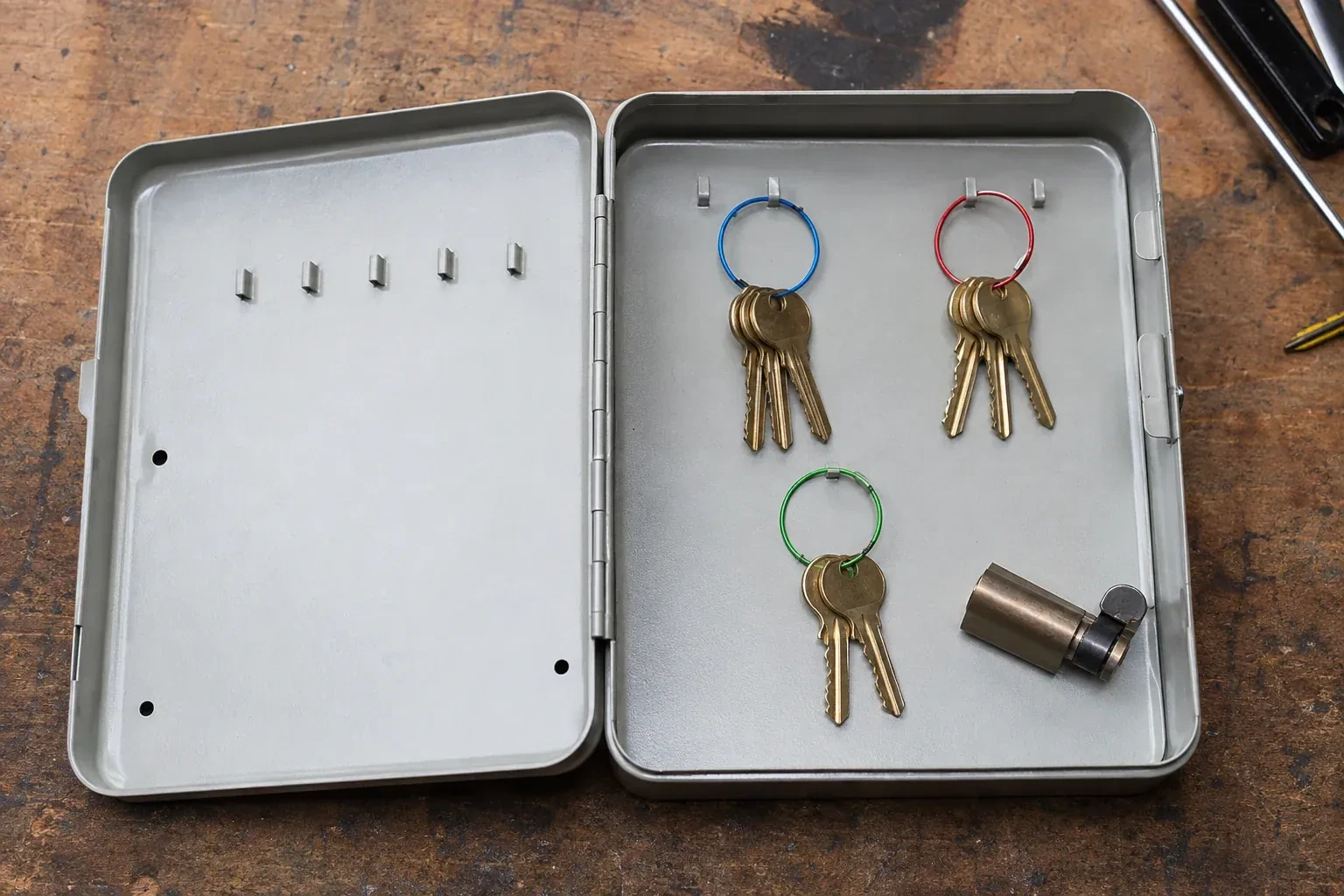
Change and master keys

Master Key System Design
What affects the quote
Documentation and chart detail requested
A simple chart listing levels and holders is the baseline. Some businesses want a more detailed record, cross-referenced by department, room number or staff role, which takes additional time to prepare and is quoted as part of the documentation work.
Room reserved for future growth
Building spare capacity into the keying platform so a business can add doors later without a full redesign takes deliberate planning during the design stage. A property with clear expansion plans may choose a platform with more reserved combinations, priced differently from a minimal, current-needs-only design.
Collecting and retiring old keys
Gathering up old keys that are being replaced, confirming they no longer operate any cylinder, and retiring them from circulation is a small additional step some businesses want included, separate from the core design and cutting work.
What to have ready
- Who should be named as the system's administrator going forward?
- Which roles or departments need genuinely different levels of access?
- Are there any doors you want left outside the master system entirely?
Master Key System Design: questions
QuestionsWhat is tested before the keys are handed over?
Every cylinder is tested on the bench against its assigned keys, then again once installed: the change key on its own door, the relevant sub-master across its whole group, and the top-level master across every door in the system. Any lock that responds to a key it should not is corrected before handover rather than left for the owner to discover later.
How do you decide how many sub-master levels a business actually needs?
The number follows the organization, not a preference for tidy diagrams. Genuinely distinct groups, such as separate departments or floors with different access needs, each justify a level; access differences that exist only on paper usually do not. A hierarchy with more levels than the business uses in practice is harder to administer without making anyone's day-to-day access meaningfully better.
What records should I keep once the system is installed?
The keying chart itself, a log of which key or fob was issued to which person or role, and receipts signed when keys change hands. Together these let the business answer, at any point, who currently holds which level and when it was issued, rather than relying on memory once the locksmith who built the system is no longer involved.
Related services
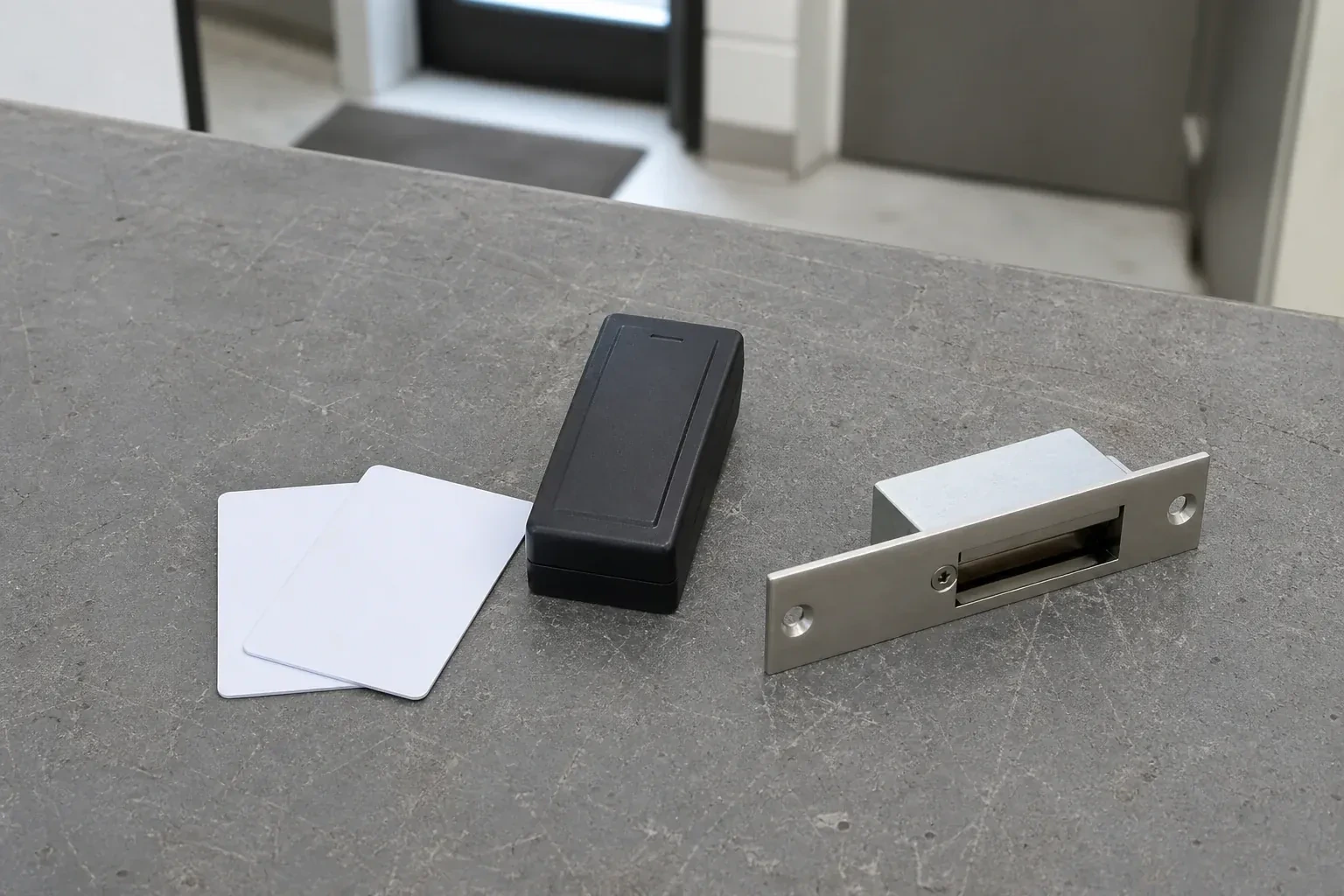
- Access Control InstallationThe keypad on the side door has started sticking on cold mornings, codes get shared instead of reset, and half the staff still remember a code you meant to retire two hires ago.
- Panic & Exit HardwareThe fire inspector's note is blunt: the banquet hall's second exit still turns on a deadbolt, and the crowd it is rated to hold needs a door that opens under one motion, no key involved.
- Commercial-Grade Lock ReplacementHead office wants every branch keyed alike under one system, and half the locations are still running whatever lockset the original contractor happened to install years ago.