
Commercial · Toronto
Master Key System Design in Toronto
The office key ring has become the org chart.
In plain words
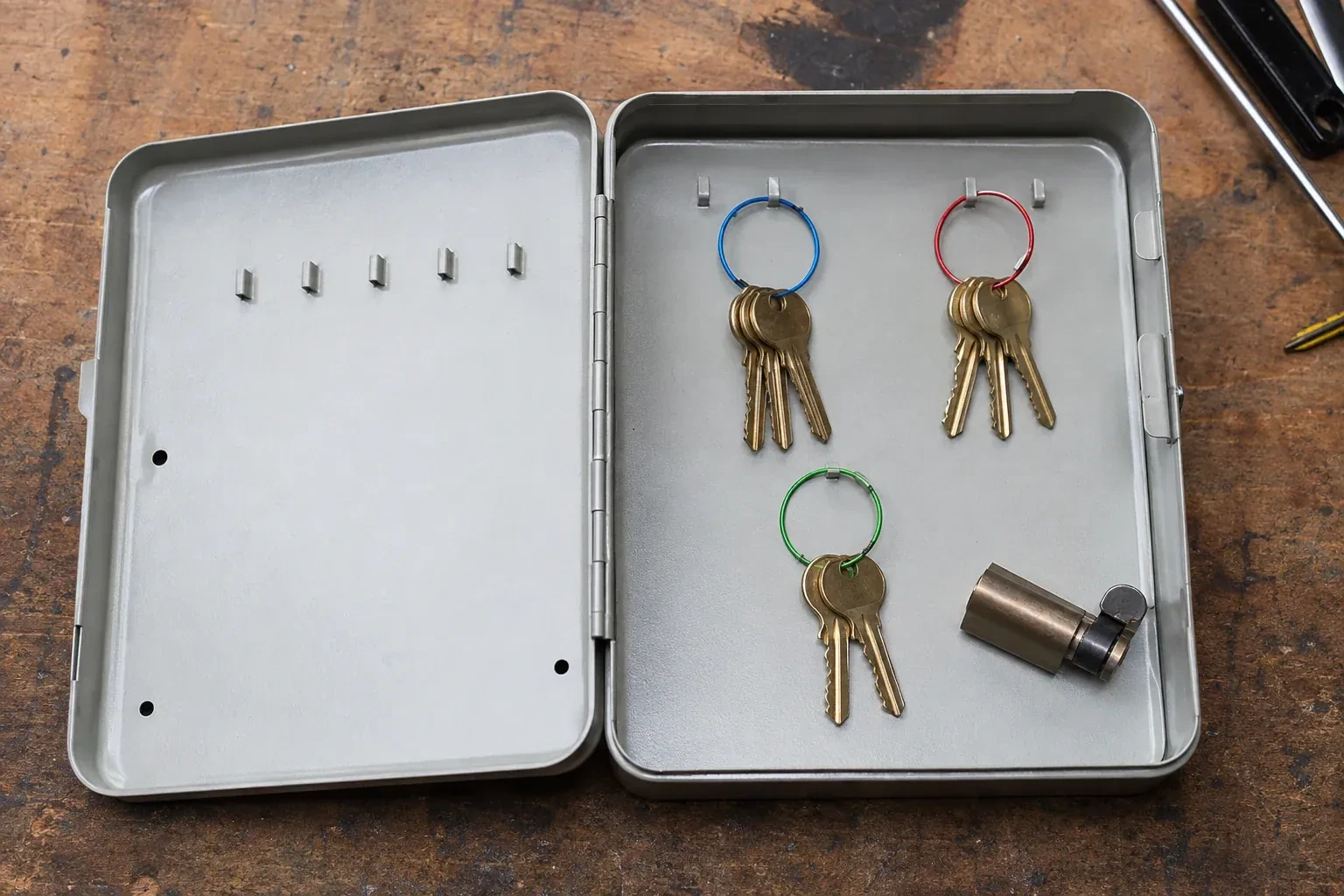
The process behind a master key system runs from conversation to chart. First comes a walk-through of every door and a conversation about who needs to open what, now and as the business grows. Next comes the design itself: grouping doors into change-key sets, deciding where sub-masters belong, and reserving a top-level master for a short list of people. Then the cylinders are pinned, cut and tested individually before any key is handed over. What the owner receives at the end is not just keys but a working hierarchy matched to compatible hardware and documented in a chart they control.
How the visit goesA new hire at the shop gets handed whatever spare key happens to be in the drawer, and it turns out to open the stockroom, the back office and the safe room all at once. The owner realizes nobody actually decided who should open what.
Master Key System Design
How the visit goes


Room to grow before it is needed
The assessment asks about plans the business already has in mind: a leased unit expected to fill, a department likely to split in two, a location due to open next year. Building spare capacity into the keying platform now is far simpler than adding a level to a system that is already fully pinned, which can mean touching cylinders that were never meant to change. This forward-looking check shapes which keying platform and how many reserved combinations the design settles on before any cylinder is committed to a specific level.
Fitting or replacing hardware to match the plan
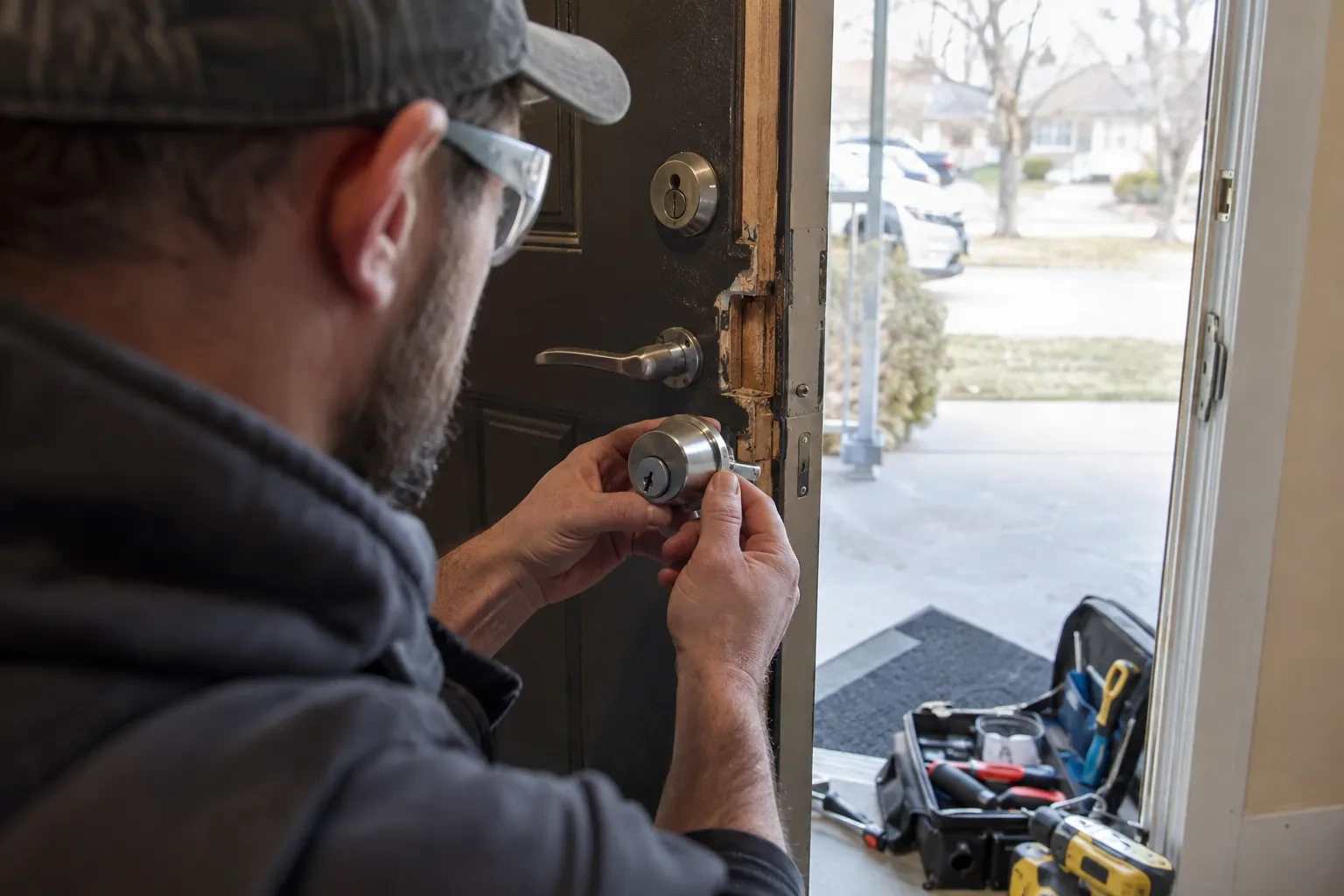
Cylinders that can join the new hierarchy without modification are pinned in place; those that cannot, whether because of age, a mismatched keyway or simple wear, are replaced with compatible hardware chosen to match the finish and function already on the door. Locksets on a barrier-free path of travel are fitted with lever or paddle-style hardware that can be operated with a closed fist, keeping those doors usable for everyone while still carrying their assigned level in the same hierarchy as the rest of the building.
A plan for the next new hire or department
Adding someone to the system afterward is usually a matter of consulting the existing chart and issuing them a copy of the authorized key their role already calls for, rather than opening the whole hierarchy back up. A genuinely new combination is only usable on doors whose cylinders are pinned to accept it, so the same chart shows whether that means picking an existing bitting or scheduling a repin, keeping the decision informed rather than improvised.
Master Key System Design
In the van
Key marking tools
Cylinder decoders
Master pin kits
Bench test fixture
Change and master keys
Master Key System Design
What affects the quote
How many locations are involved
A single building is simpler to assess and pin than several sites intended to share related levels of access. Travel between locations, and keeping the hierarchy consistent across more than one property, both add to the overall scope of the project.
Condition of the property's current keys
A property with a reasonably current, if informal, sense of who holds which key gives the assessment a shorter starting point than one where keys have been copied and reissued for years with no record at all. More reconstruction work at the start affects the overall quote.
Testing scope before handover
Testing every cylinder individually and then testing each master and sub-master across its full group takes time proportional to how many doors and levels exist. A larger hierarchy with more levels to verify against more doors adds to that testing time.
What to have ready
- Do any doors need restricted or patented keys for duplication control?
- Are any doors on a barrier-free path of travel?
- Is a top-level master needed, and for how many people?
Master Key System Design: questions
QuestionsWhat is tested before the keys are handed over?
Every cylinder is tested on the bench against its assigned keys, then again once installed: the change key on its own door, the relevant sub-master across its whole group, and the top-level master across every door in the system. Any lock that responds to a key it should not is corrected before handover rather than left for the owner to discover later.
How do you decide how many sub-master levels a business actually needs?
The number follows the organization, not a preference for tidy diagrams. Genuinely distinct groups, such as separate departments or floors with different access needs, each justify a level; access differences that exist only on paper usually do not. A hierarchy with more levels than the business uses in practice is harder to administer without making anyone's day-to-day access meaningfully better.
What records should I keep once the system is installed?
The keying chart itself, a log of which key or fob was issued to which person or role, and receipts signed when keys change hands. Together these let the business answer, at any point, who currently holds which level and when it was issued, rather than relying on memory once the locksmith who built the system is no longer involved.
Related services
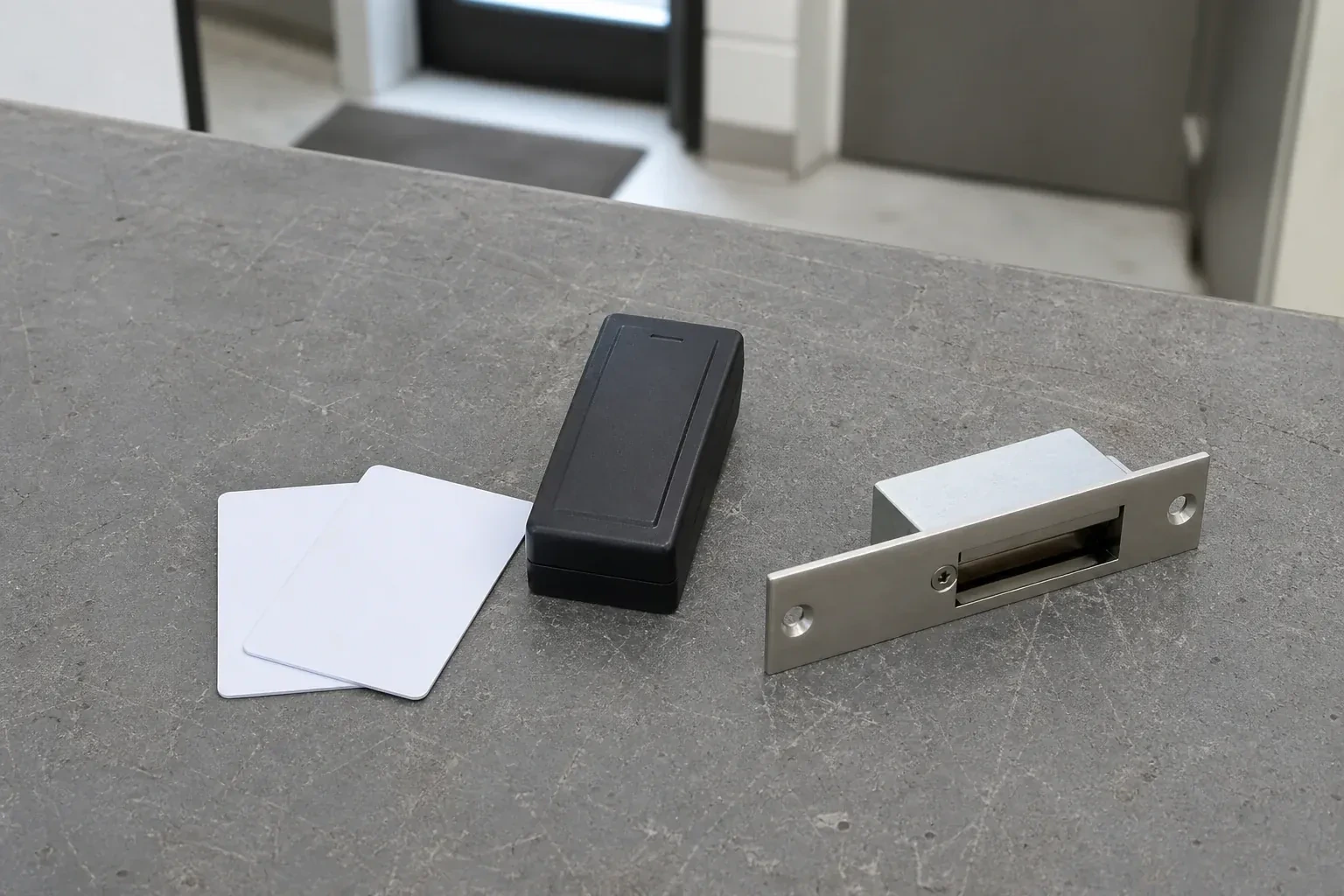
- Access Control InstallationThe keypad on the side door has started sticking on cold mornings, codes get shared instead of reset, and half the staff still remember a code you meant to retire two hires ago.
- Panic & Exit HardwareThe fire inspector's note is blunt: the banquet hall's second exit still turns on a deadbolt, and the crowd it is rated to hold needs a door that opens under one motion, no key involved.
- Commercial-Grade Lock ReplacementHead office wants every branch keyed alike under one system, and half the locations are still running whatever lockset the original contractor happened to install years ago.