Lockouts · Toronto
Home Lockout Service in Toronto
You reached the front step with the groceries, patted every pocket twice, and the house key is simply not there.
In plain words
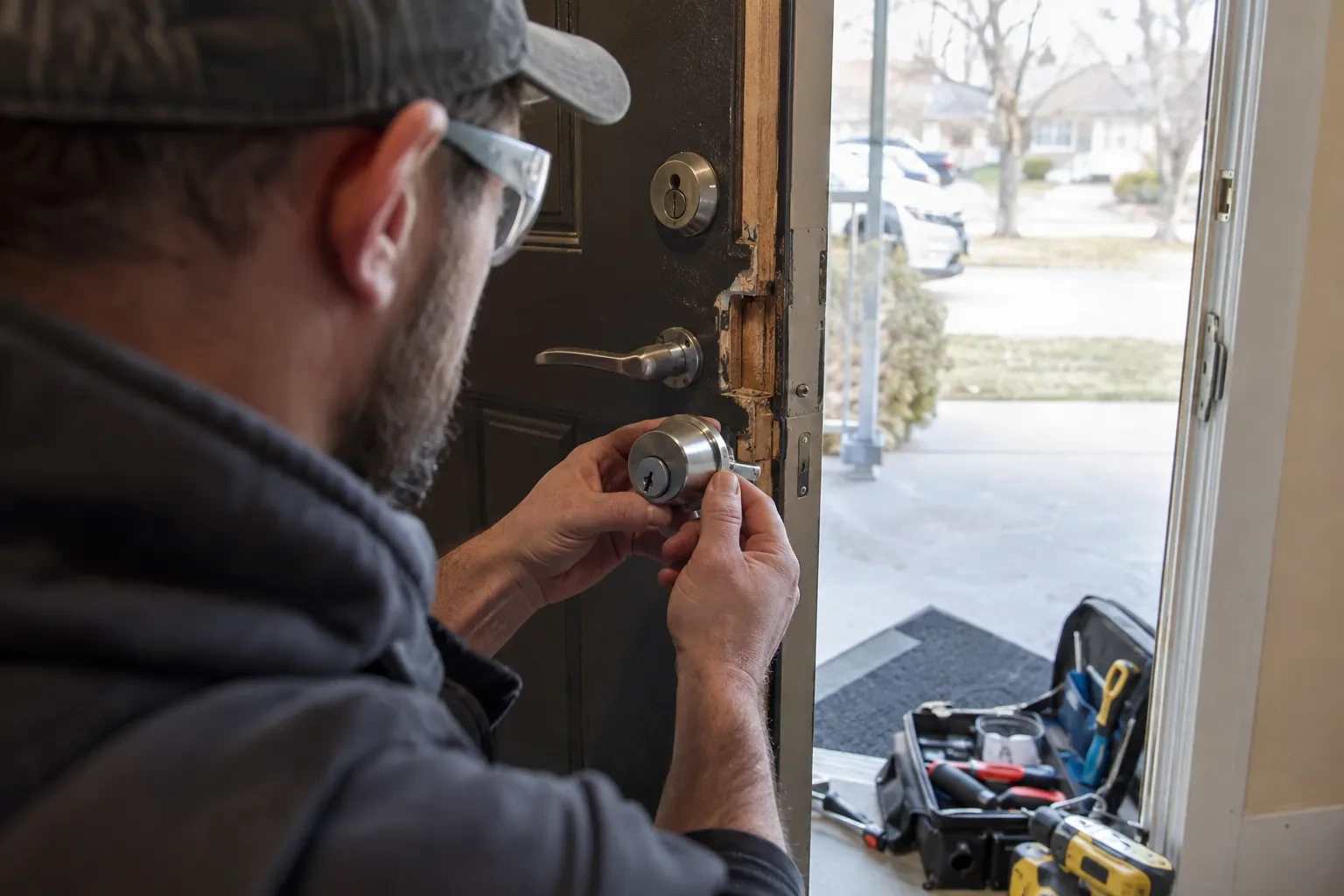
Winter creates its own kind of lockout. Meltwater runs into a keyway during the day and freezes overnight, a weather-exposed cylinder stiffens in the cold, and a door that shrank in January may drop its bolt out of line with the strike. A home lockout visit in these conditions is as much about the door as the lock: the locksmith thaws and frees the cylinder without forcing it, checks whether the bolt or the frame is the real obstacle, and opens the door in a way that leaves the hardware sound. A little dry lubricant and a tube of de-icer usually finish the job.
How the visit goesThe moving truck has left, half the boxes are inside, and the single key the previous owner handed over turns the knob but not the deadbolt. Someone locked it on the way out, and nobody has a key that fits it.
Home Lockout Service
How the visit goes
Anything already damaged, and anyone inside
Two practical questions round out the first look. First, has anything been tried already? A bent latch from a credit card, a scratched cylinder from a screwdriver, or a previous locksmith's drill mark all change the approach, and the locksmith notes them so you know what was there before work began. Second, is anyone or anything inside that changes the pace: a child napping, a pet, a stove left on, a running tap? That answer sets how the opening is sequenced and whether the most careful method or the most direct one comes first. Both questions take moments and make the rest of the visit calmer.
Freeing a frozen cylinder
Ice is handled with patience rather than force. The locksmith applies a lock de-icer or warms the cylinder face gently so the meltwater inside turns back to liquid and drains, then works the key or a pick in small movements until the plug turns freely. Hot water is never poured on the lock, because it refreezes in the keyway and can crack a cold cylinder. Once open, the cylinder is dried and given the lubricant that model's maker approves, a dry graphite, PTFE or specified liquid product, applied sparingly since too much can gum the mechanism. If the door itself had frozen to its weatherstripping, that seal is cleared and checked too.
Smart lock back online, with a backup this time
Once a keypad or app lock has been opened it is put back on its feet properly: fresh batteries of the type the maker specifies, the auto-lock and code settings confirmed, and a walk-through of the low-battery warning so you recognize the beep or blink before it turns into a dead lock. The small mechanical override key is the piece most people never think about, and the sensible place for it is outside the home, on a keyring, in a lockbox or with a neighbour, rather than in the kitchen drawer. A second user code for a family member, set up before the locksmith leaves, means a flat phone stops being a lockout.
Home Lockout Service
In the van
Latch and bypass tools
Plug follower and repinning kit
Replacement cylinder or deadbolt
Key blanks and key cutter
Strike plate and long hinge screws
Home Lockout Service
What affects the quote
Distance to your door
Travel is part of every call-out. A house across town and a rural property at the end of a long road involve different driving time, and the quote reflects the trip as well as the work.
How many locks need opening
One front door is the simplest case. A front door plus a garage man-door, a storm door that latched and a mailbox in the lobby is a longer visit with more hardware to work through.
Electronic lock work
A dead smart lock may need batteries, a reset, reprogramming of codes or pairing to your phone once the door is open. Each of those is a small task that the quote names separately.
What to have ready
- Has the lock been stiff, sticky or hard to turn in recent weeks?
- Is the door swollen, sagging or hard to close even when it is unlocked?
- Has anyone already tried to open the door with a card or tool?
Home Lockout Service: questions
QuestionsDo I have to show identification before you open my door?
Yes, and it is a reassuring step rather than a hurdle. Photo identification that matches the address settles it in seconds. When your identification still carries a previous address, other proof does the job: a tenancy agreement, a recent bill, a piece of addressed mail, or a word with your building manager. Locksmiths take this seriously because it protects every home they are asked to open, including yours.
I rent my place. Can I call a locksmith myself?
Yes. A tenant locked out of their own unit can arrange entry directly, and the identification check is the same: something that ties you to the address, such as a lease, a bill or a piece of mail, plus photo identification. Where you may want to involve your landlord is any change to the lock afterwards, because tenancy rules in this province expect landlords and tenants to agree on lock changes and to share keys. A locksmith can note what was done for the building manager.
Can you get me in if my smart lock has died?
Yes, usually. Backup access on a keypad or app-controlled deadbolt depends on the model. Many carry small external terminals that wake the lock when a fresh nine-volt battery is touched to them, long enough to enter your code; some also keep a conventional keyed override behind a cover, which a locksmith can pick or decode like any other cylinder, while other current models have no cylinder at all and rely only on their own recovery method. Once inside, the batteries are replaced and your codes are checked.