Commercial · Maryvale
Panic & Exit Hardware in Maryvale
The fire inspector's note is blunt: the banquet hall's second exit still turns on a deadbolt, and the crowd it is rated to hold needs a door that opens under one motion, no key involved.
In plain words
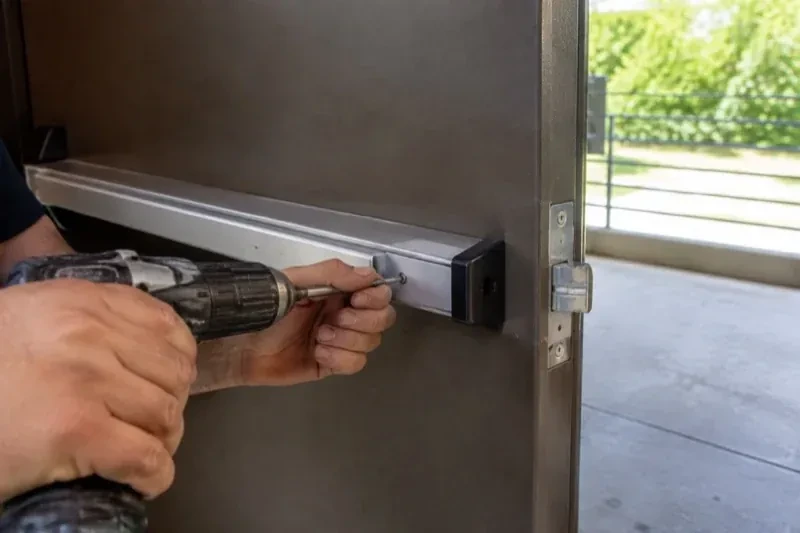
Electrified exit hardware adds a layer without changing the basic behaviour of the door: a person inside can still leave under one motion of the hand, every time. A request-to-exit switch tells an access-control panel that the pushpad or crossbar was actuated, usually paired with a door-position contact so the panel can also tell a normal exit from a forced or propped door. Electric latch retraction lets a fire-rated opening behave like a push-pull door for staff, provided it relatches automatically on a fire-alarm signal, since that kind of door never carries a mechanical dogging function. An alarm module sounds when the device is used.
How the visit goesTwo doors used to swing as a pair at the community hall entrance, but one leaf has started closing before the other, catching the astragal and leaving a gap wide enough to worry the caretaker.
Panic & Exit Hardware
How the visit goes

How the space is actually used day to day
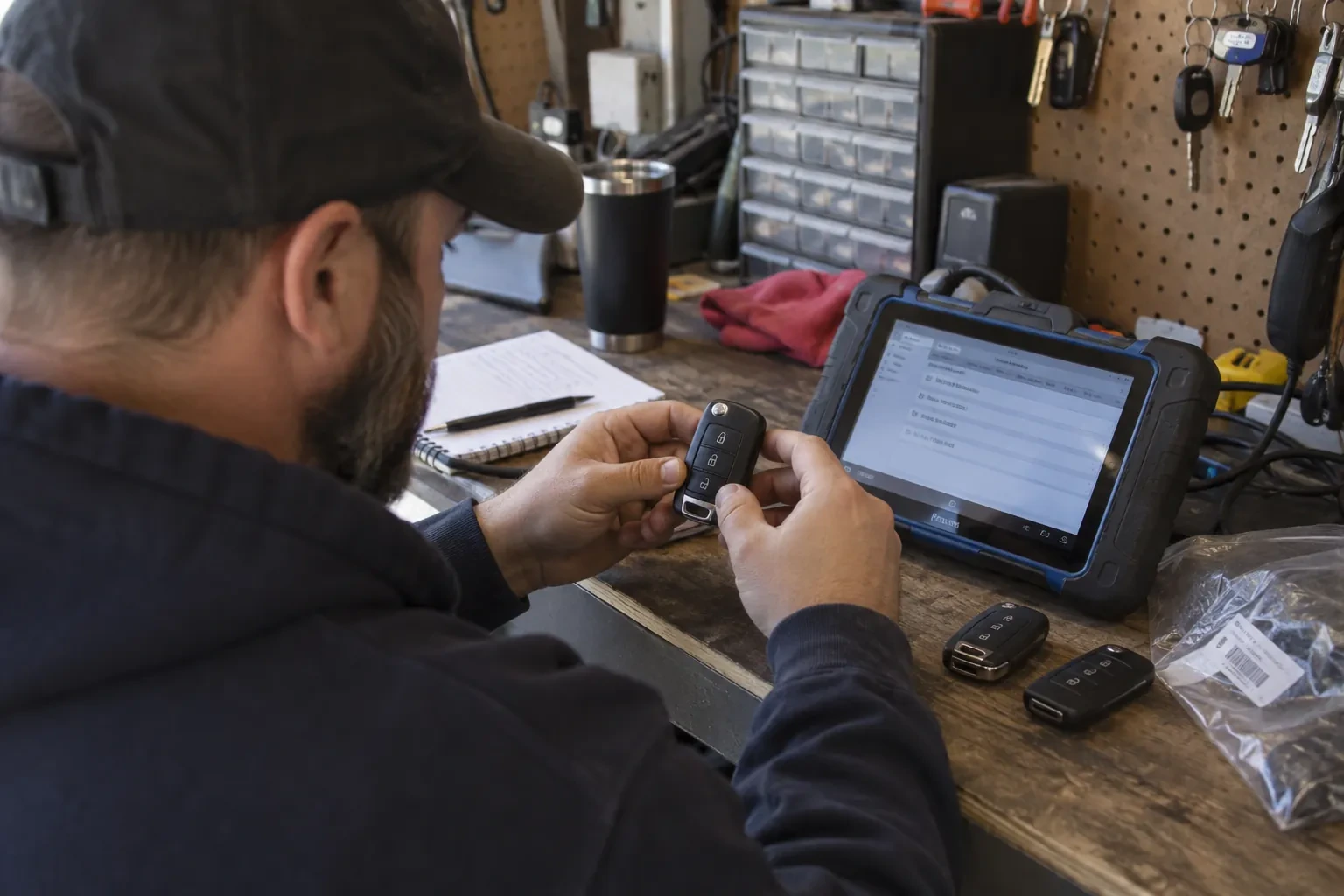
Beyond the code question, the locksmith asks how people actually move through the door: whether it is propped open during business hours, whether deliveries come through it, whether staff dog it open for a shift and forget to release it afterward. These habits shape which options make sense, such as a keyed dogging cylinder that limits who can hold the door open, or an alarm module that tells staff the moment a door meant to stay closed has been used.
Recording what was fitted
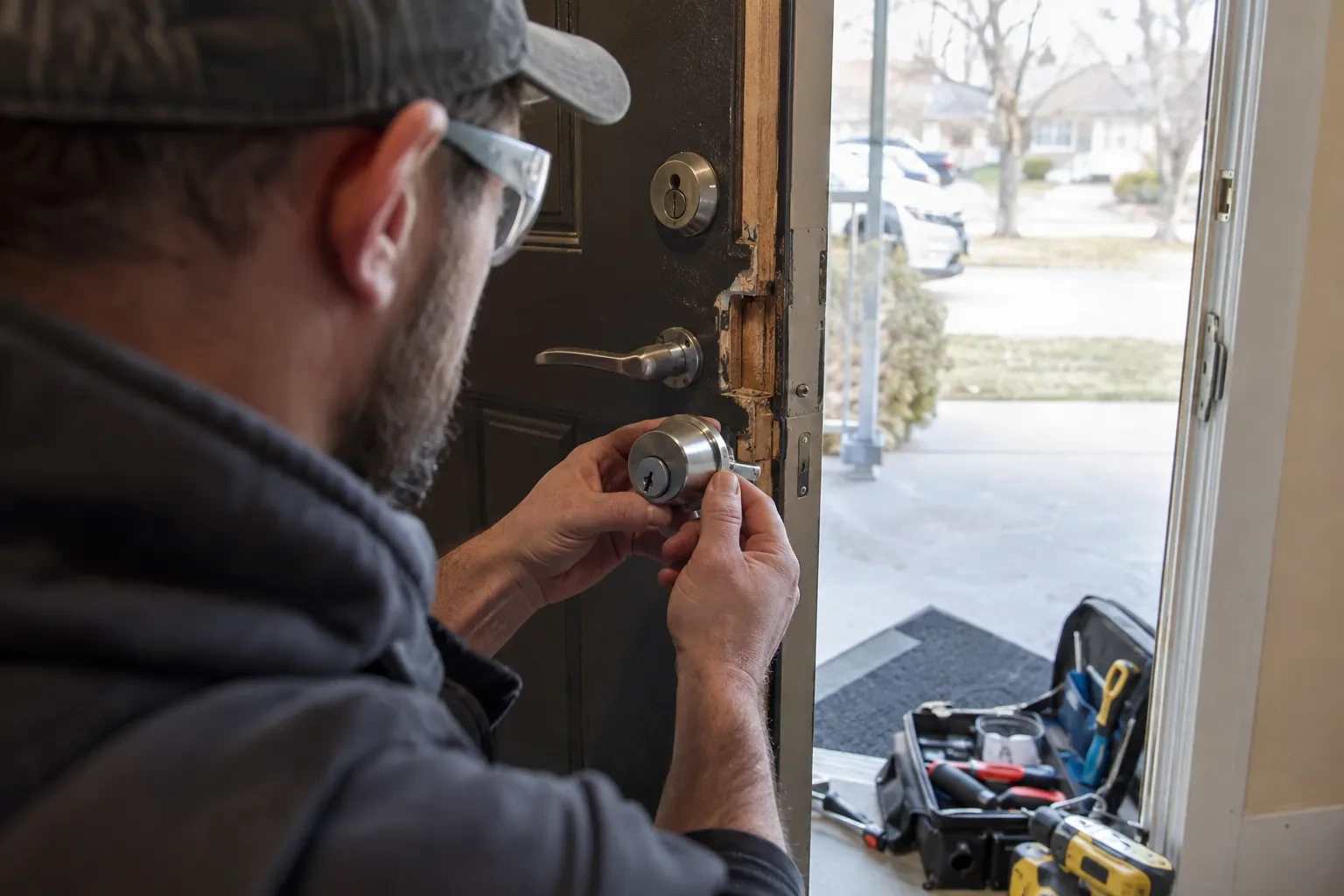
The visit closes with a written account of the work: which device went on which door, its type and rating, the outside trim fitted, any electrified function added, and the tests the assembly passed. This record travels with the building rather than staying in the locksmith's memory, so a fire inspector, an insurer or a new manager reviewing the space later has a clear account of the exit hardware and when it was fitted.
Entry that stays separate from exit, permanently
The building keeps full control over who enters through the trim on the outside of the door, independent of what happens on the inside. A lost key, a staff change or a new access-control card affects only the entry side; the exit side keeps working exactly as it did on installation day. That separation is the point of the whole installation, and it is worth remembering when any future change is proposed for that door, so entry security is never solved by touching the inside crossbar.
Panic & Exit Hardware
In the van
Request-to-exit switch
Through-fixings and mounting hardware
Coordinator for door pairs
Installation template and jig
Signage and labels
Panic & Exit Hardware
What affects the quote
Outside trim selected
A plain pull is the simplest outside trim. A lever with a key cylinder, or a trim matched to other hardware finishes in the building, involves more parts and more fitting time.
Single door or a pair
A pair of doors that needs ordered closing calls for a coordinator or an astragal, and one being converted into a single wide exit needs a mullion removed and replaced with vertical-rod devices on each leaf, both of which add work beyond a single-door installation.
Door and frame condition
A door that has sagged, a frame that has shifted, or a strike pocket that no longer lines up needs correcting before hardware is fitted, which adds its own line to the quote.
What to have ready
- Is any door part of a pair with a second leaf?
- What is the room's intended use and approximate occupant load?
- Which doors are involved, and are any of them fire-rated?
Panic & Exit Hardware: questions
QuestionsHow is occupant load actually counted for this decision?
Occupant load is calculated from the floor area and the intended use of the room, using published factors for that occupancy type, rather than a headcount taken on a busy night. A building official or a locksmith familiar with the calculation can work through it for a specific room, and the result is what decides whether the exit doors serving that room need a releasing device.
Does a retrofit into an older building work the same way as new construction?
The device and trim choices are the same, but a retrofit usually has to work with a door and frame that already carry someone else's old hardware preparation. Reading what holes and reinforcement already exist, and choosing a device that can use or cleanly replace them, is a bigger part of a retrofit than of a new opening built with the hardware in mind from the start.
What is the difference between a rim, mortise and vertical-rod device?
A rim device sits on the surface of the door and suits most single openings, including many tall and fire-rated doors on their own. A mortise device fits into a pocket cut in the door's edge and is chosen where a heavier case or a particular trim style is wanted. A vertical-rod device runs rods to the top, or top and bottom, of the frame, which suits an opening that specifically needs latching at more than one point rather than height by itself.
Related services
- Master Key System DesignThe office key ring has become the org chart.
- Access Control InstallationThe keypad on the side door has started sticking on cold mornings, codes get shared instead of reset, and half the staff still remember a code you meant to retire two hires ago.
- Commercial-Grade Lock ReplacementHead office wants every branch keyed alike under one system, and half the locations are still running whatever lockset the original contractor happened to install years ago.