Change or rekey · Maryvale
Deadbolt Installation in Maryvale
The back door has a deadbolt in name only: a short bolt, a thin brass strike held by two little screws, and a jamb you can flex with your palm.
In plain words
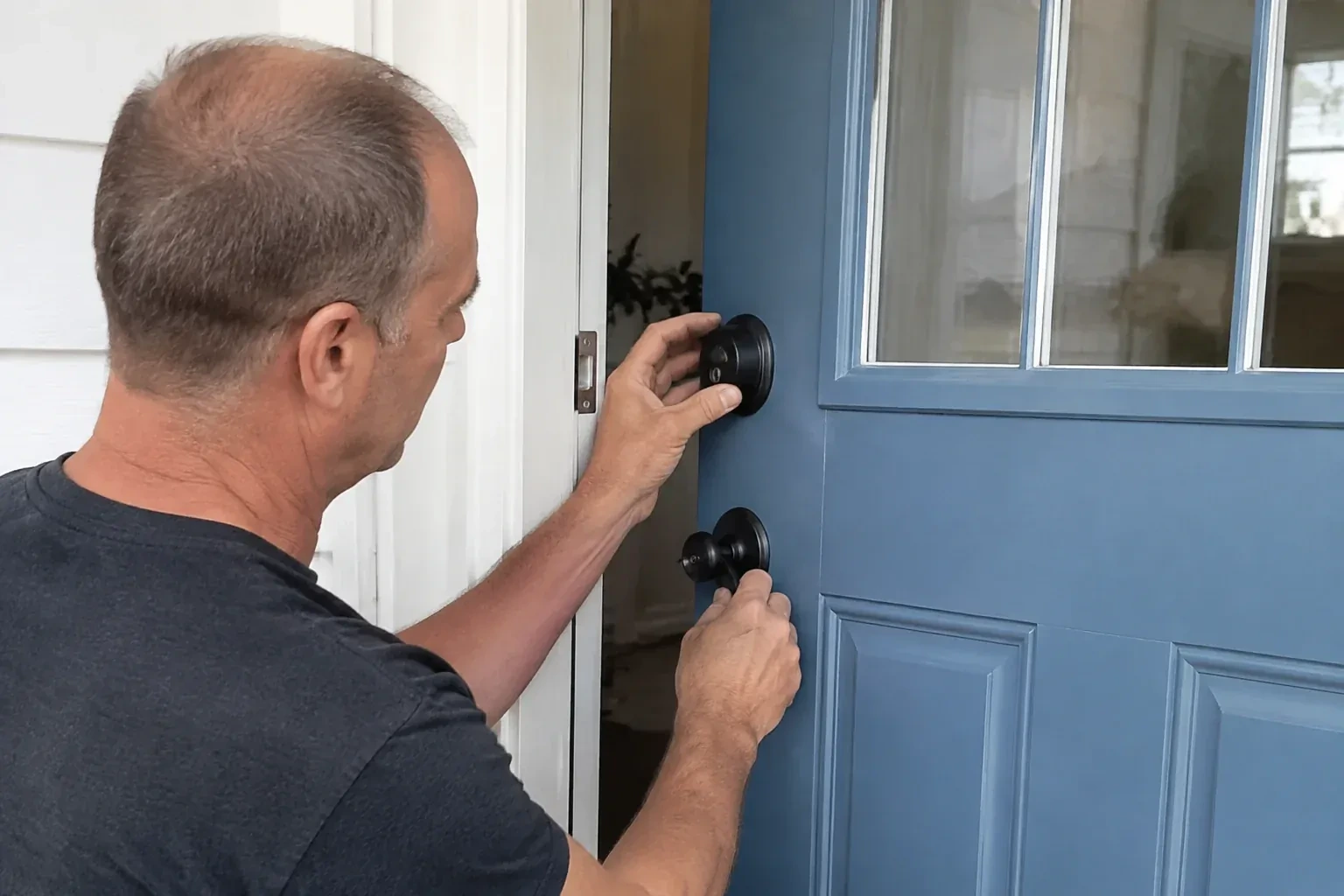
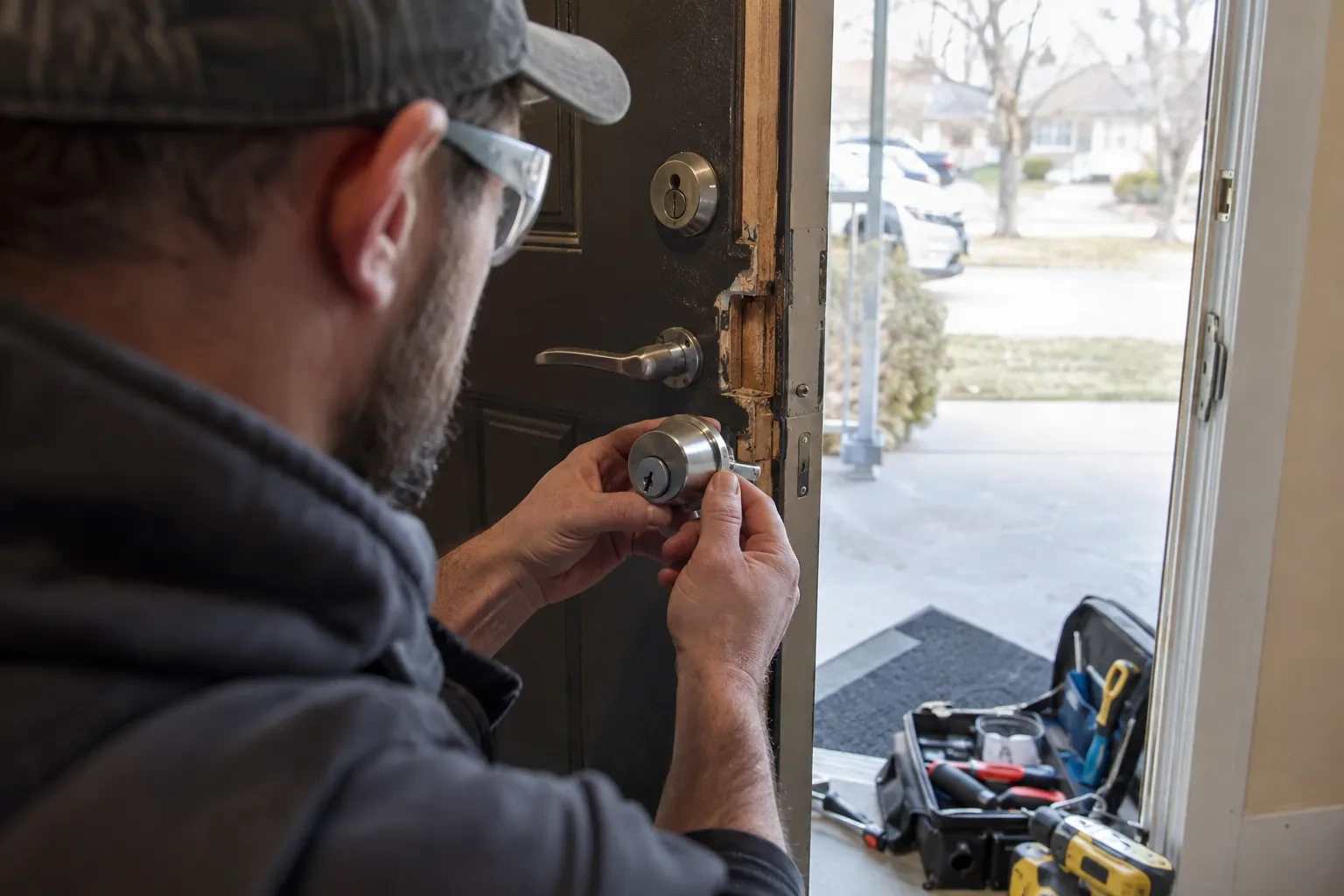
Replacing an existing deadbolt is usually a matter of matching rather than cutting. The locksmith measures the cross bore, the edge bore and the backset, checks the door thickness, and picks a bolt that drops into the holes you already have. Where the old lock was a builder-grade unit, the replacement can step up to a heavier grade with a hardened bolt, a free-turning collar around the cylinder and a low-profile face that gives a wrench nothing to grip. The old strike is checked against the new bolt's instructions, and where it calls for it, a reinforced strike and long screws go in while the door is already apart.
How the visit goesThe bolt on the front door is keyed on both sides. Getting out at night means finding the key in the dark, and with a toddler in the house you have decided the inside should turn by hand. You want it done properly, not just swapped.
Deadbolt Installation
How the visit goes
Where the bolt should sit on the door
On a door with no deadbolt yet, its height is not fixed by the manufacturer but by the door in front of you. The usual spot is 140 to 150 mm above the centre of the knob, which places the bolt near the strongest part of the lock stile and keeps both locks within one comfortable reach. The locksmith checks that this height misses any glass, decorative panel, hinge line or the wood block inside an insulated door, and that the frame behind that spot is solid rather than a gap between shims. If a storm door or screen door shares the opening, the bolt's thumb-turn and cylinder have to clear it as well.
Marking and boring a fresh door
With the height agreed, the paper template is folded over the door edge and the two centres are marked: the cross bore on the face and the edge bore on the stile. A boring jig clamps over the door so the hole saw cannot wander, and the cross bore is cut from both faces to leave clean veneer or skin on each side. The edge bore is drilled with a 25 mm bit through the stile until it meets the larger hole. The locksmith then traces the bolt faceplate on the edge and chisels a shallow mortise so the plate sits flush, keeping the cut inside the lines so the edge stays sound.
A safer way out as well as a stronger way in
With a thumb-turn inside, everyone in the household can leave through this door without hunting for a key, day or night. The locksmith walks the family through the thumb-turn and shows children how it turns. If a double-cylinder bolt was replaced, the inside key is no longer needed at all and can be retired. Where glass sits near the lock, whatever measure you agreed on, a thumb-turn that locks with its own small key, a laminated pane, or a tested security-film system that can delay an arm's reach, is in place, so security did not come at the cost of a clear way out.
Deadbolt Installation
In the van
Sharp chisel and mallet
Boring jig and 54 mm hole saw
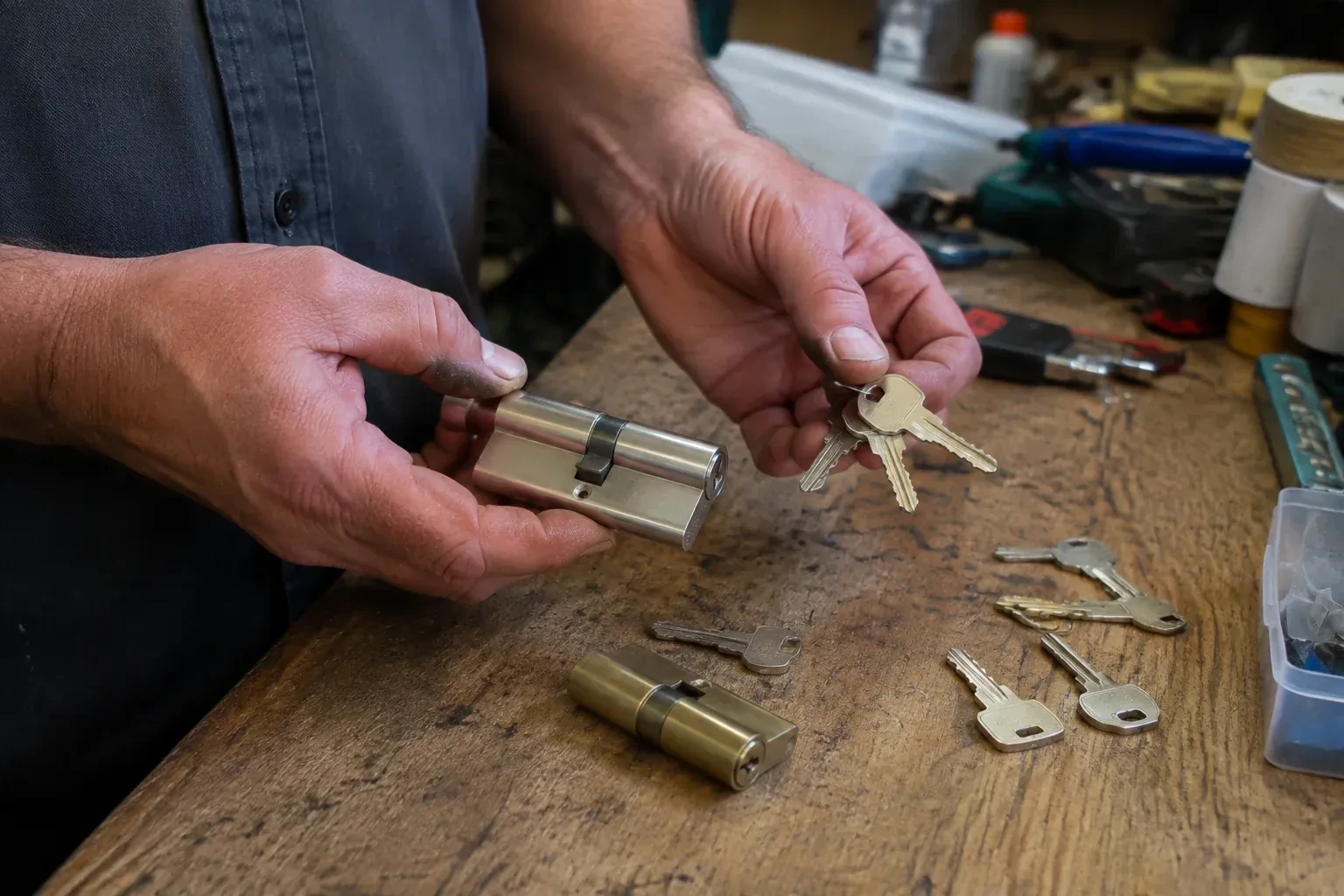
Rekeying pins and key blanks
Dry PTFE lubricant
Bolt faceplate or drive-in collar
Deadbolt Installation
What affects the quote
Glass near the lock
A captive thumb-turn, laminated glass, security film or a relocated bolt height each carry their own cost, and the choice you make about glass shapes that part of the quote.
Number of doors
One front door is the simplest case. Front, back, side and garage-to-house doors done in one visit share the travel and setup, so the per-door figure usually eases as the count rises.
Storm door or restricted clearance
A tight storm door, a narrow lock stile or a decorative panel at bolt height can require low-profile trim or a shifted position, which is settled and quoted at the assessment.
What to have ready
- Do you own the home, rent it, or manage it for someone else?
- Do you want the new deadbolt to work on the same key as your other doors?
- Which doors do you want a deadbolt on, and does each one already have a bolt or only a knob?
Deadbolt Installation: questions
QuestionsDoes a deadbolt work with a storm door or screen door?
It does, with one check: the thumb-turn and the outside cylinder have to clear the storm door when it closes. Most storm doors leave enough depth, but a low-profile deadbolt trim is chosen where the gap is tight. The storm door's own latch is separate and does not replace a bolt on the main door, since a screen frame gives little resistance on its own.
What is the difference between a deadbolt and the lock in my door knob?
The knob or lever holds the door shut with a spring latch: a bevelled tongue that snaps into the frame and can be pushed back by anything slid into the gap. A deadbolt is a solid rectangular bar driven by the key or thumb-turn alone, and when fully thrown it locks in place so it cannot be pressed back from the edge. The knob keeps the door closed; the deadbolt keeps it locked.
Should I choose a single-cylinder or a double-cylinder deadbolt?
For any door people leave the house through, a single cylinder with an inside thumb-turn is the sensible choice, and provincial building rules for dwellings call for exit doors that open from inside without a key. Double-cylinder bolts are keyed on both faces and are sometimes proposed where glass is near the lock, but a captive thumb-turn, laminated glass, or a tested security-film system with its specified attachment, addresses that without a key on the inside.
Related services
- Lock Replacement & UpgradeThe century home's original mortise lock takes a key the size of a spoon, sticks in humid weather and has worn its strike to a groove.
- Vintage Mortise Lock ServiceSomeone painted the door years ago without removing the hardware.
- Smart Lock InstallationYou have just taken possession of the house and the previous owners handed over a keypad deadbolt with a code nobody wrote down and an app account you cannot get into.