Car keys · Victoria Village
Car Lockout Service in Victoria Village
You dropped the duffel bag in the trunk, closed the lid with your elbow, and heard the keys land inside a heartbeat too late.
In plain words
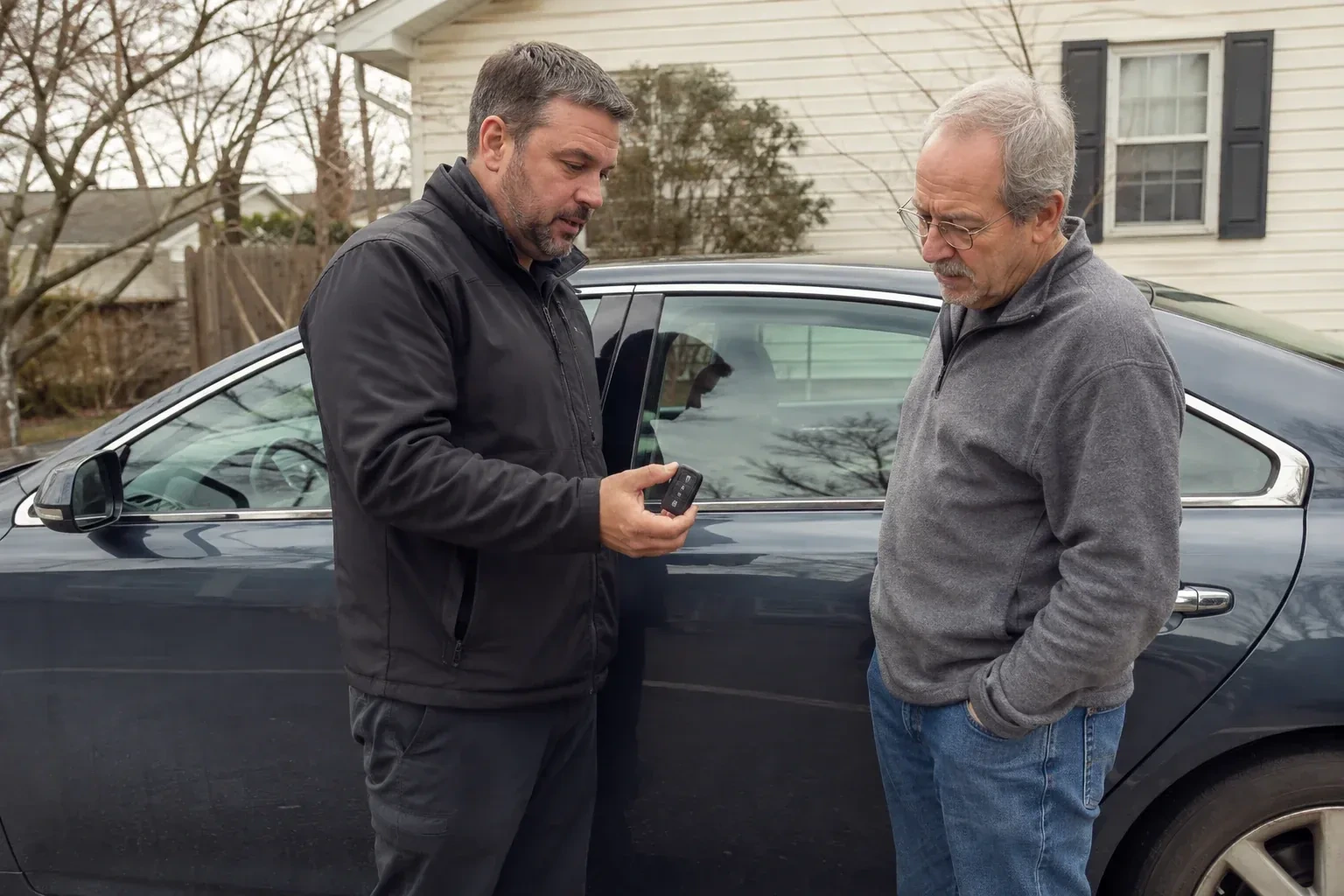
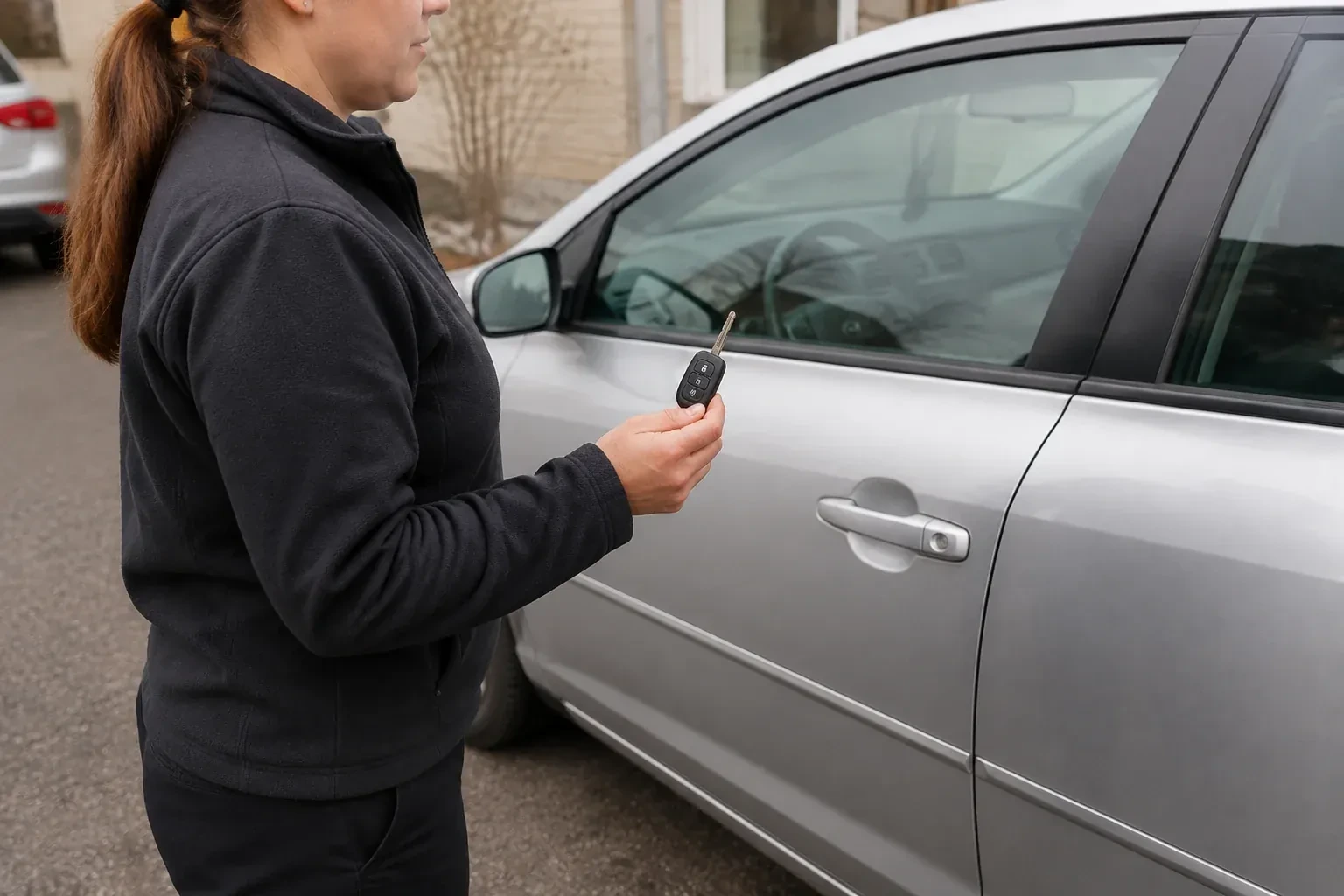
Where the keys are shapes the visit. If they are on the seat, the job is simply a careful opening and the car is handed back exactly as it was. If they are in a closed trunk, the cabin is tried first where a usable release exists, or the trunk cylinder itself is decoded like a door lock where it does not. If the keys are lost, opening the door is only half the answer; a replacement is decoded, cut and, where the vehicle supports it, programmed so you can drive away. Each path begins with confirming you belong with that vehicle and ends with a test of every lock.
How the visit goesYour toddler is buckled in the back seat, the doors locked when you shut yours, and your keys are on the front seat beside your phone. It is hot, the child is starting to fuss, and you need help this minute, not a discussion.
Car Lockout Service
How the visit goes
Where the car is sitting
A car in a driveway, a lit parking lot, an underground garage or on the shoulder of a four-hundred-series highway each ask for a different approach. On a highway the locksmith parks to shield the work, keeps hazard lights on and works from the side away from traffic, the same routine the provincial driver's handbook gives stranded drivers. In a tight garage the question is clearance to open the door and light to see inside the cabin. In a private lot or a building with gated access, someone may need to let the van in. Telling the locksmith exactly where the car is, and how to reach it, saves the first ten minutes on site.
Thawing a frozen lock or door
Ice is met with patience. Lock de-icer goes into the keyway and a gentle heat source warms the cylinder face until the plug turns without resistance; hot water is never used, because it refreezes and can crack cold metal or glass. A door frozen to its seal is released by pressing along the edge to break the ice rather than yanking the handle, which can tear the rubber. Once open, the cylinder is dried and dressed with whatever lubricant the vehicle maker specifies for cold weather, the seals are wiped and treated with silicone so they do not bond again, and the fob battery is checked since cold is hard on coin cells.
Every door and the trunk, working as before
The visit closes with a full circuit of the car. The mechanical key is tested in whichever exterior cylinder or cylinders the car actually has, the fob and interior switch are tested across every door, the trunk is opened and latched, and the door that was worked on is closed and reopened so you can hear it seat normally. The window is checked for a true fit in its channel and the seal is run with a finger for any lift. Any handle cap that came off is snapped back and the cylinder is wiped down. You watch the last lock-and-unlock yourself, so there is no doubt that the car is exactly as you left it, only open.
Car Lockout Service
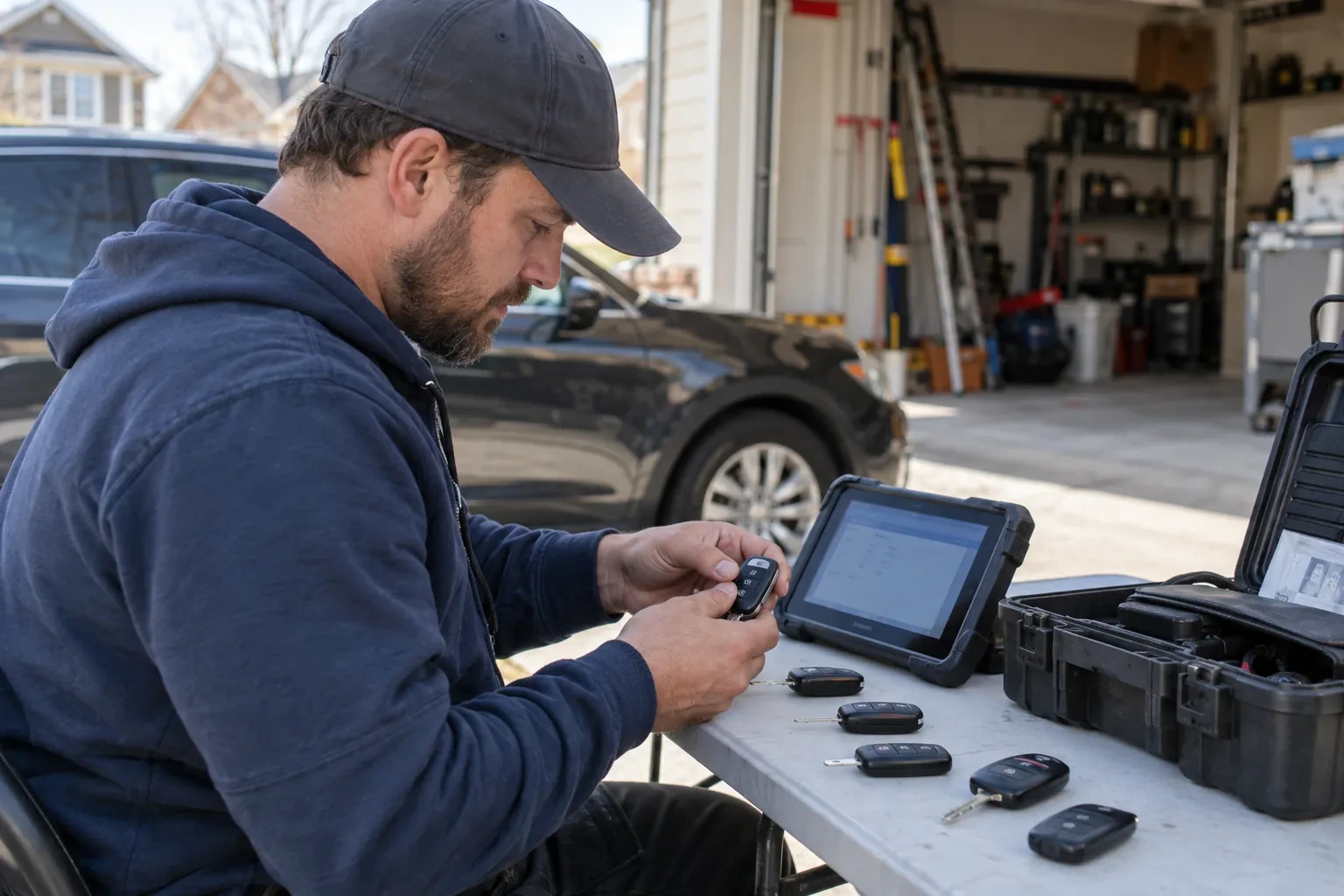
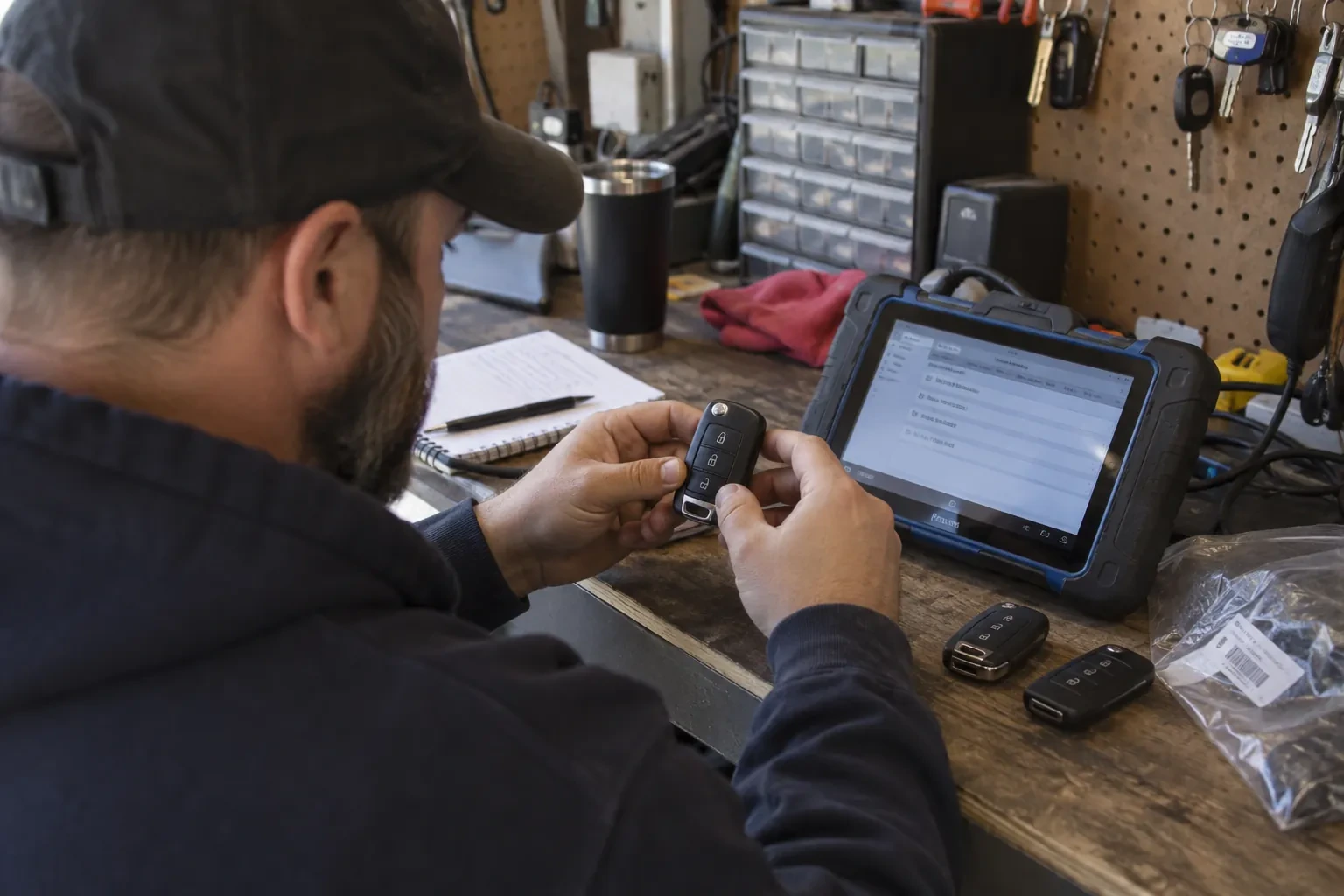
In the van
Door-edge guards
Transponder key blanks
Fob coin batteries
Lock de-icer
Padded long-reach tool
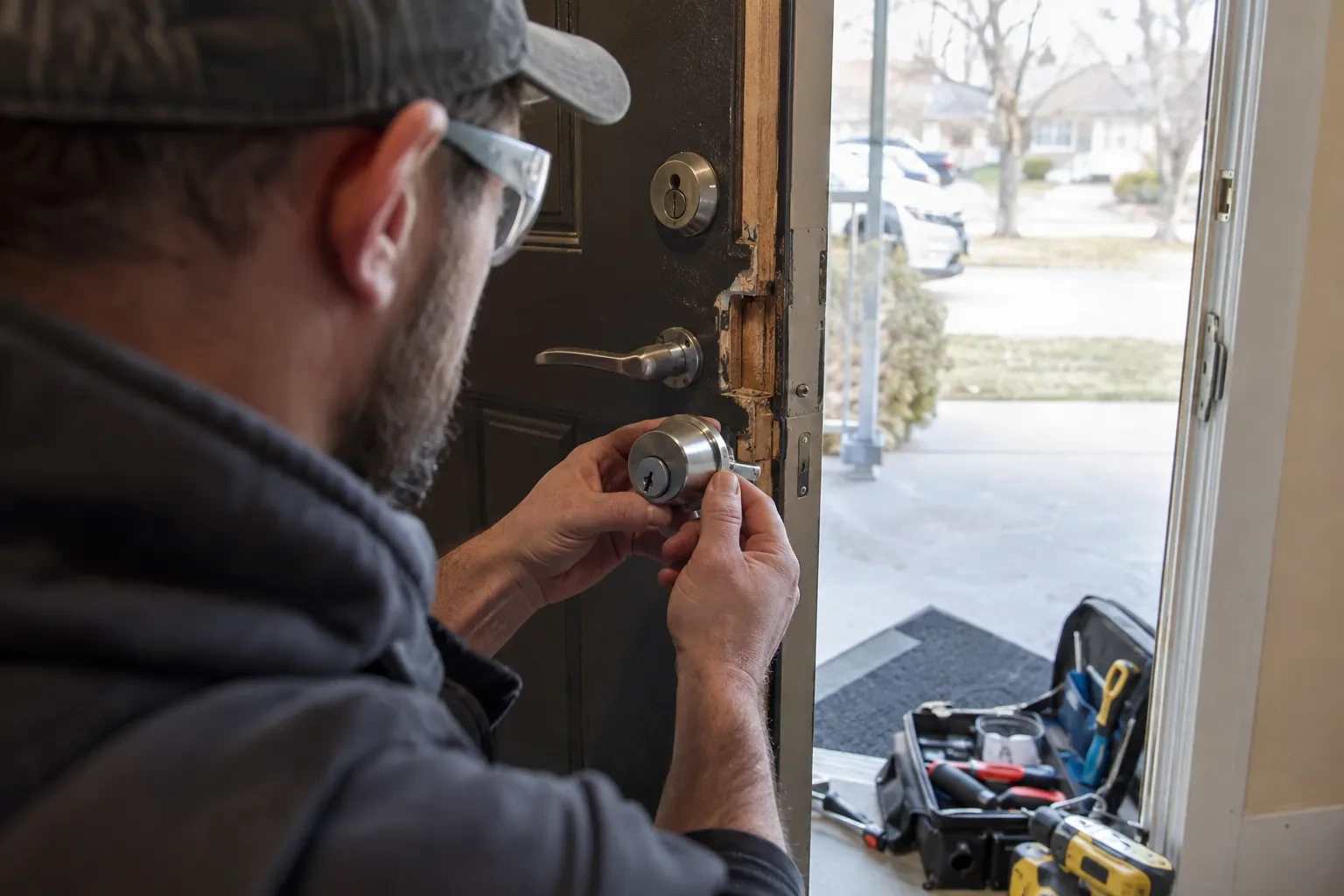
Car Lockout Service
What affects the quote
Trunk-only or full cabin lockout
Keys in the trunk usually mean a cabin opening followed by an interior release. A car with a valet-isolated trunk means decoding the trunk cylinder as well, which is a longer job.
Distance to the vehicle
Travel is part of every call-out. A car in the next neighbourhood and a car on a rural road an hour away involve different driving time, and the trip is reflected in the quote.
Damage from earlier attempts
A seal stretched by a coat hanger or a cylinder scarred by a screwdriver may need attention beyond the opening. The locksmith points out what was already there before quoting any repair.
What to have ready
- Is the car on a highway shoulder or anywhere near moving traffic?
- What is the make, model and year of the vehicle?
- Is the vehicle yours, a rental, or a company vehicle?
Car Lockout Service: questions
QuestionsThe lock is frozen and the door will not budge. What will you do?
Ice is handled gently. Lock de-icer and mild warmth free the cylinder so it turns without force, and a door stuck to its seal is released by pressing along the edge to crack the ice rather than pulling the handle, which can tear the rubber. Hot water is never used because it refreezes and can crack glass. Afterwards the cylinder is lubricated with whatever product the vehicle maker specifies and the seals are treated with silicone.
The alarm went off. Is that a problem?
It is expected. Opening a door without the fob or key wakes most factory alarms, and quieting them is part of finishing the job: a turn of the key in the door or ignition, or a press of the fob once the car has power, usually does it. An aftermarket alarm is reset from its own valet switch. The locksmith stays until the car is quiet and every lock has been cycled.
There is a dog inside and the car is getting hot. Who do I call?
Call 911, and the provincial animal protection line if you cannot reach the owner; the province asks the public to report animals left in hot or cold vehicles rather than break glass themselves. Police and animal welfare inspectors have authority to enter a vehicle for an animal in distress. A locksmith can attend as well, and if you are the owner, the same careful opening gets you and the dog reunited with the car undamaged.
Related services
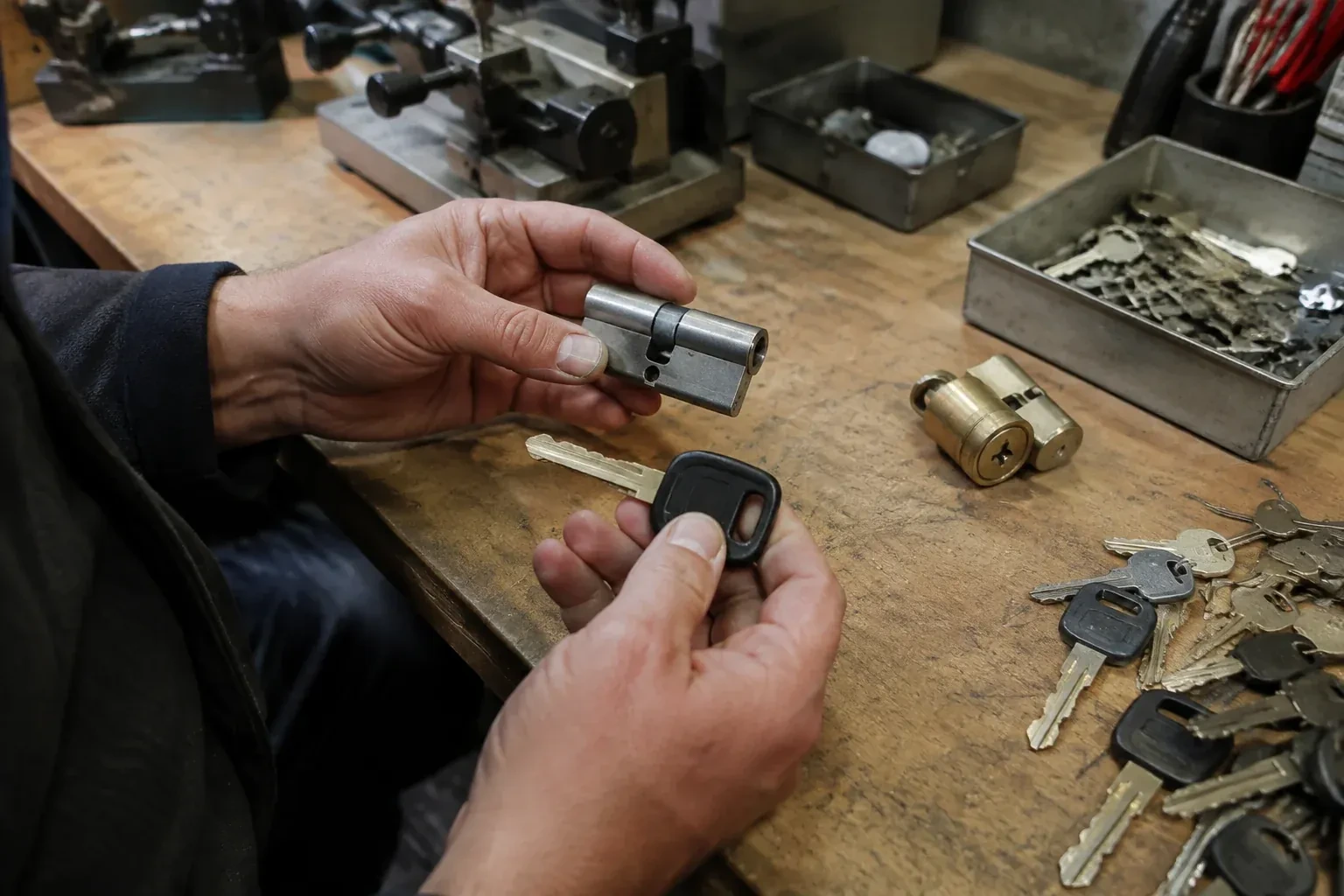
- Spare Car Key DuplicationA lockout last month ended with a locksmith opening the door and going home, and the same single key has been carried ever since with nothing behind it.
- Key Fob ProgrammingButtons on the fob still light up and the remote still clicks, but the vehicle refuses to start even with the fob sitting in the cupholder.
- Transponder Key ProgrammingThe remote fob has gone silent, the doors won't unlock with a button press, and the little emergency blade tucked inside it has not been used since the day the car was bought.