Change or rekey · Victoria Village
Vintage Mortise Lock Service in Victoria Village
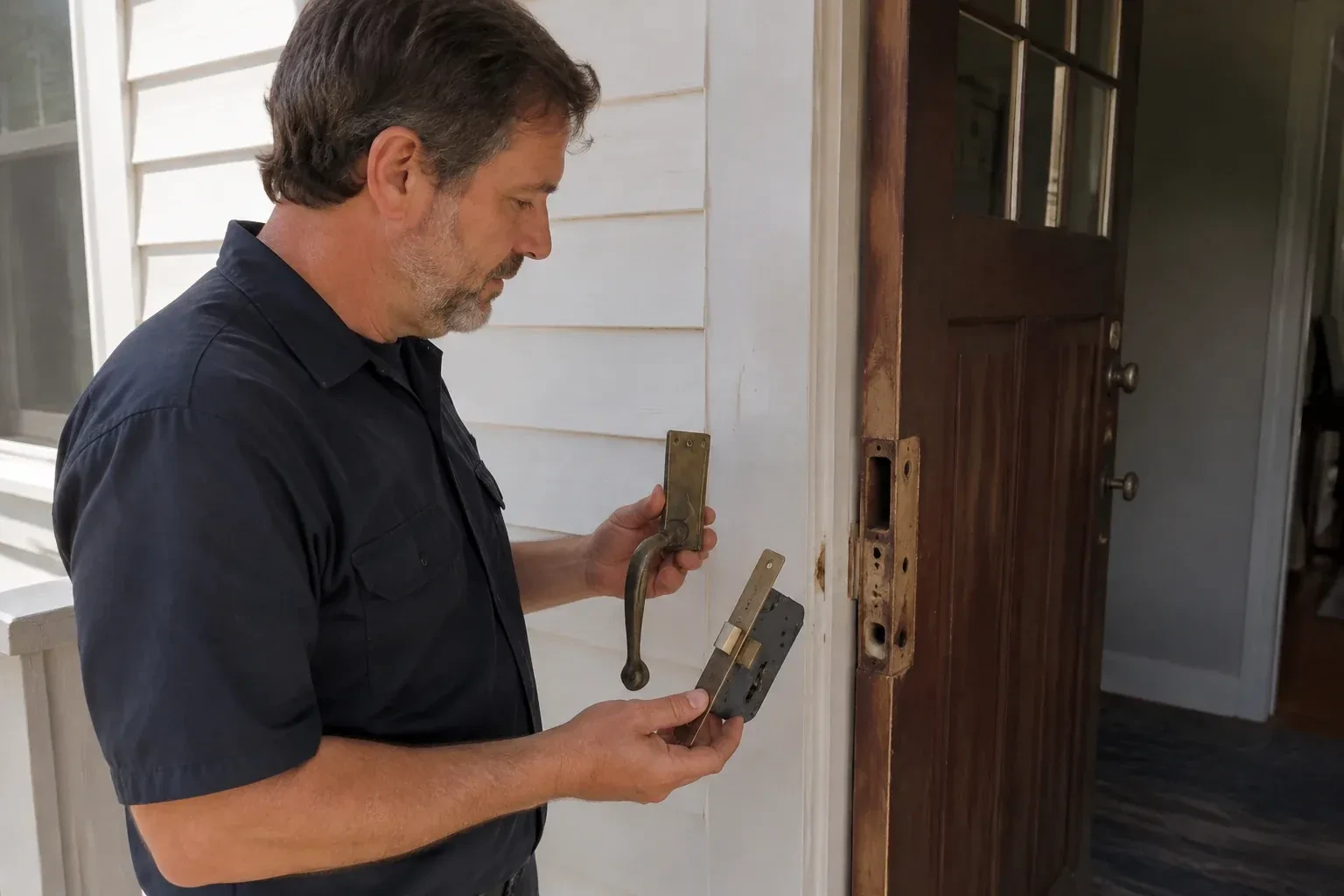
Someone painted the door years ago without removing the hardware.
In plain words
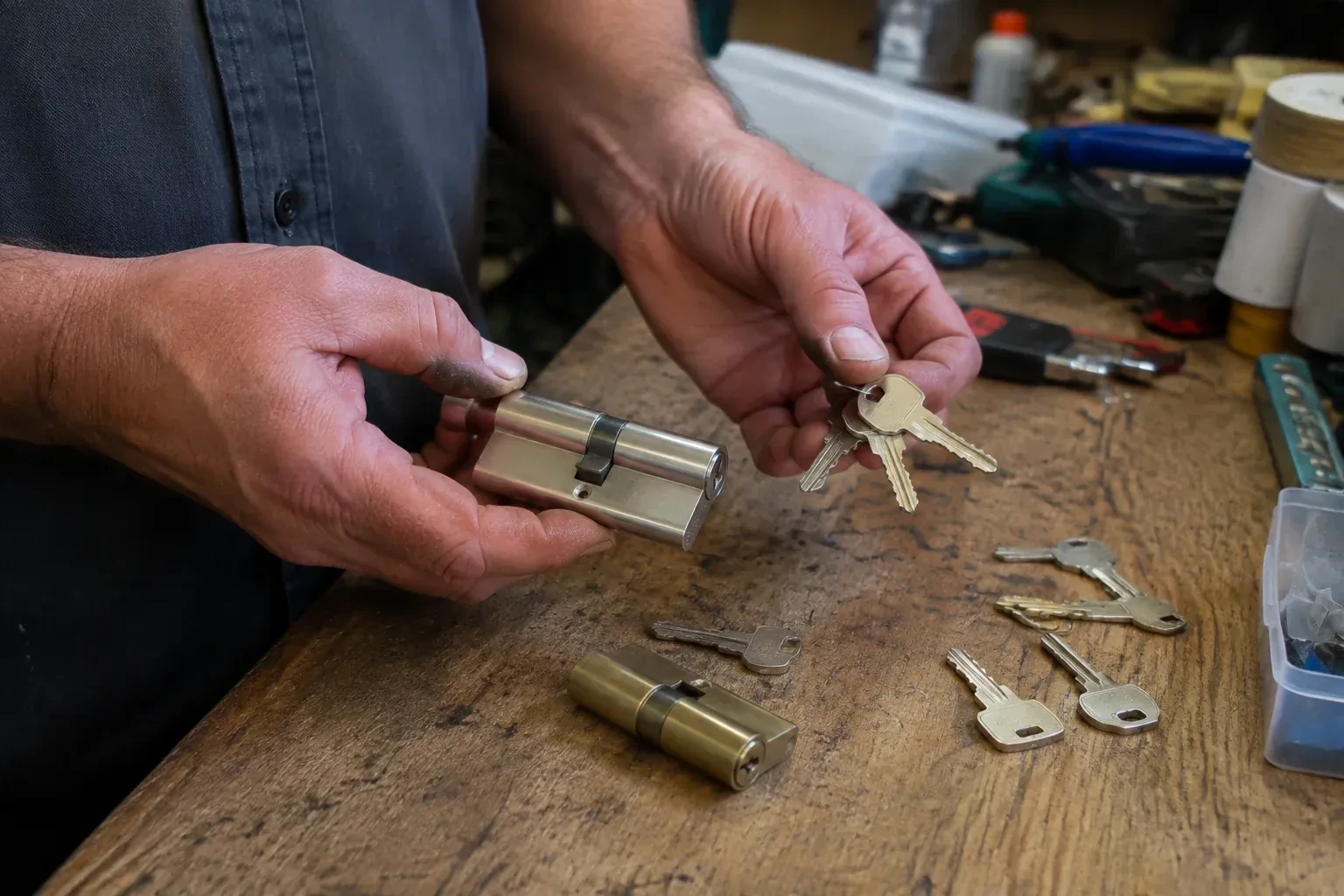
Keys are the part of the job people expect to be impossible, and they rarely are. A bit key, the skeleton key style used on older doors, is cut and filed on the bench to the wards and levers of your particular case, so a lost key can be replaced from the lock itself. A round cylinder on a later mortise lock is rekeyed like any modern cylinder, or exchanged for a new cylinder of matching thread and cam if it is worn out. Either way the service ends with keys in your hand that turn the original lock, and a spare made while the case is on the bench.
How the visit goesThe knob flops loose on its spindle and never springs back to level. When you turn it the latch pulls in, but you have to push the knob back yourself, and lately the latch has started staying inside the door instead of catching.
Vintage Mortise Lock Service
How the visit goes

Who owns the door
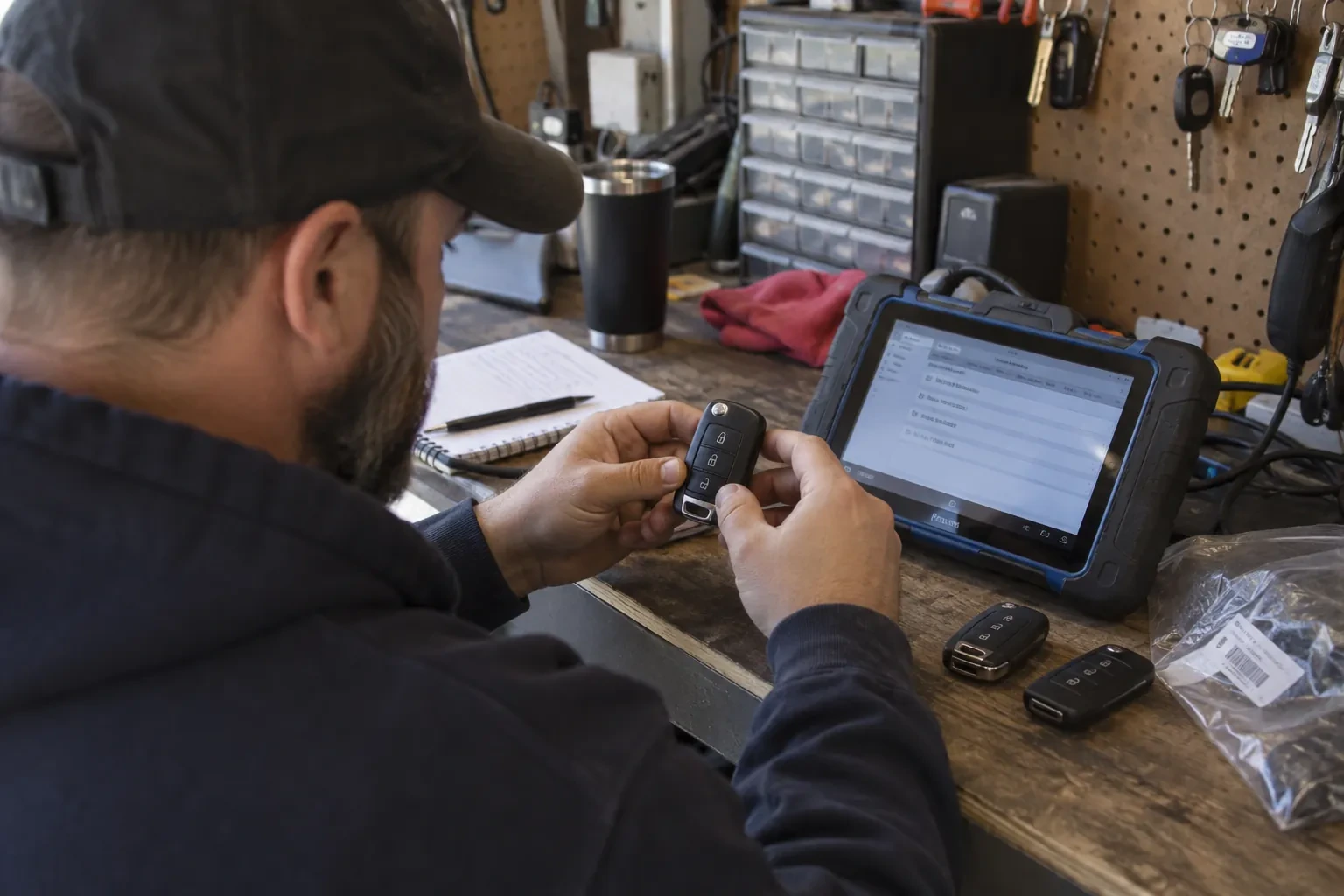
The first check has nothing to do with the lock. The locksmith confirms that the person asking for the work owns the home or lawfully lives in it, since a serviced lock and a freshly cut key are, in the end, a way into someone's house. Photo identification and something tying you to the address usually settles it in a moment. On a rental, the landlord and the tenant are expected to agree on lock changes and share keys, so the locksmith asks who should hold the new bit keys or cylinder keys and notes it. This small formality protects the household as much as anyone, and it is done before a screwdriver comes out.
Cutting a bit key to the lock
For a bit-key lock, keys are made to the case rather than copied from a pattern. A blank with the right bow, shank and bit size is chosen, then the bit is filed by hand to clear the wards inside the case and to lift each lever to the correct height. The key is tried, marked, filed again and tried again until it turns the bolt cleanly from both sides. A second key is made to match while the first is fresh. Where a working original exists, it is used as a guide and the new key is cut to it, and a worn original can itself be gently restored if the customer wants to keep using it.
Keys that fit the lock, and a spare
You are handed keys made to the restored lock, counted into your hand, and each one is tried in the door before the locksmith drives away. For a bit-key lock that means keys filed to your case; copying one needs the right blanks and equipment, which most hardware counters do not stock, so the locksmith keeps the record needed to make more. For a cylinder lock it means keys cut to the new combination, with any old keys now useless. Keep one spare somewhere other than the door, ideally with a neighbour or in a lockbox, and treat bit keys gently: they bend in a pocket and a bent key is how most of these locks become stiff again.
Vintage Mortise Lock Service
In the van
Hub followers and lever packs
Latch and hub springs
Reproduction mortise case
Spindle and knob set screws
Bit key blanks
Vintage Mortise Lock Service
What affects the quote
Making the inside key-free
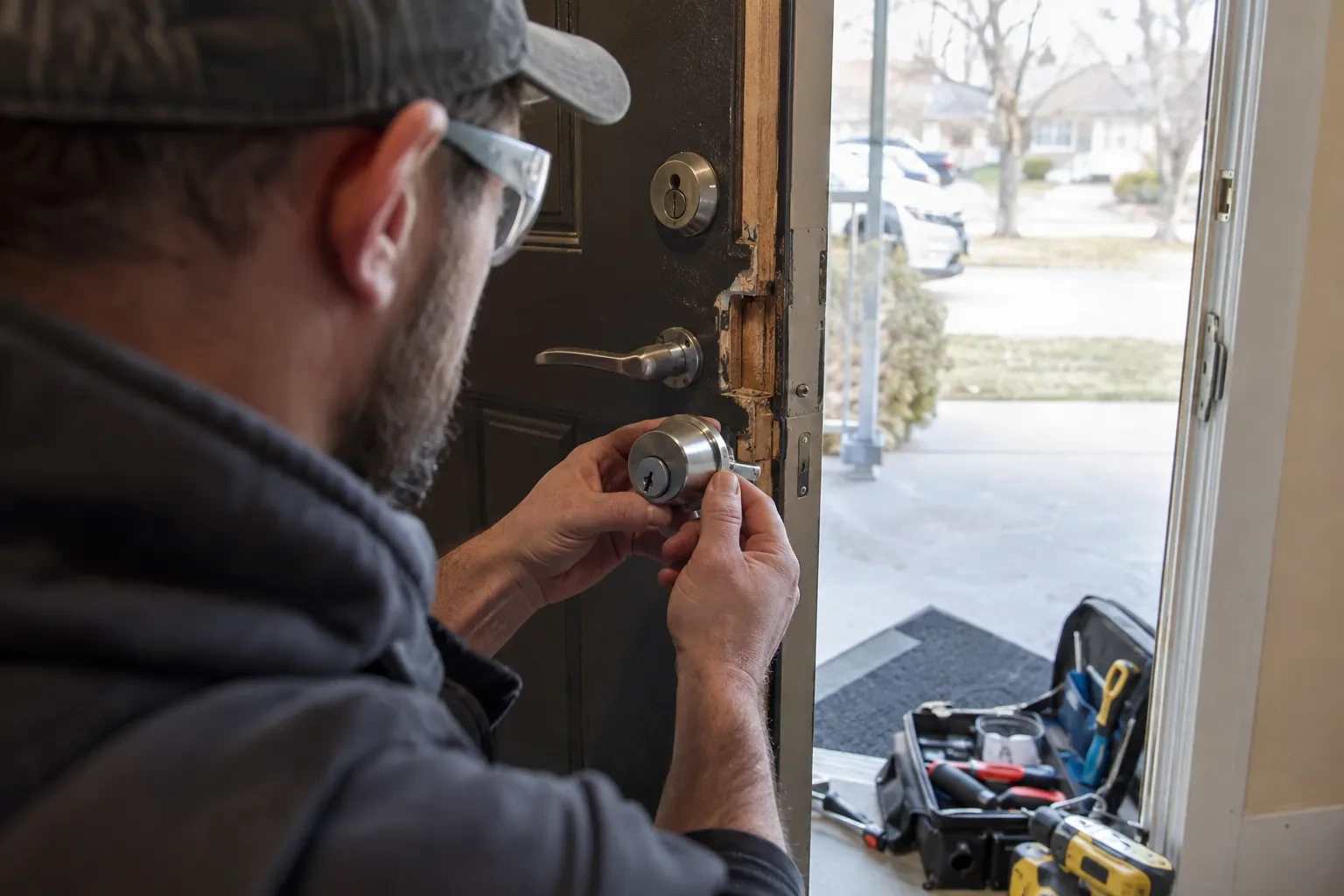
Fitting a thumb-turn or interior release to a deadbolt that was keyed on both sides is its own small item, and one most owners of an entry door choose to include.
Replacement case
A case that is cracked or worn through is replaced with a reproduction or modern mortise case sized to the pocket. The case itself, any trimming of the pocket and the refitting are itemised separately from a repair.
Bit key or cylinder lock
A bit-key case has keys filed by hand on the bench, while a cylinder lock is rekeyed or fitted with a new cylinder on a key machine. The two take different time and materials, and the quote follows.
What to have ready
- Can you send a photo of the plate in the door edge and one of the keyhole?
- Roughly when was the house built, and is the door original to it?
- How many keys would you like to have afterwards?
Vintage Mortise Lock Service: questions
QuestionsCan a modern cylinder be fitted to my old mortise lock?
Often, on cases that already take a threaded cylinder. Mortise cylinders are made in standard thread sizes and lengths with different cam shapes, and a new one is selected to match the case and the door thickness. That gives you keys cut on a machine and the option of keying the door alike with the rest of the house. A bit-key case has no cylinder to swap; its keys are made on the bench instead.
How should I look after the lock once it is serviced?
A drop of the right lock oil into the latch and bolt once a year is plenty. If the lock has a pin-tumbler cylinder, use whatever lubricant that cylinder's maker specifies, since some take a dry graphite or PTFE product and others a specified liquid one. Try the latch and deadbolt each spring and fall; if the bolt starts to scrape, the strike wants a small adjustment before anything is strained. Keep bit keys out of a pocket where they bend.
My home is a designated heritage property. Does that change anything?
It reinforces the choice to service rather than replace. Where a property carries a heritage designation, changes affecting listed features can need extra sign-off, and original door hardware is occasionally among those features. A rebuilt mortise case with its original trim is preservation rather than alteration, and the locksmith's written record of what was retained and what was replaced is useful for your file.
Related services
- Deadbolt InstallationThe back door has a deadbolt in name only: a short bolt, a thin brass strike held by two little screws, and a jamb you can flex with your palm.
- Lock Replacement & UpgradeThe century home's original mortise lock takes a key the size of a spoon, sticks in humid weather and has worn its strike to a groove.
- Smart Lock InstallationYou have just taken possession of the house and the previous owners handed over a keypad deadbolt with a code nobody wrote down and an app account you cannot get into.