Change or rekey · Wexford
Vintage Mortise Lock Service in Wexford
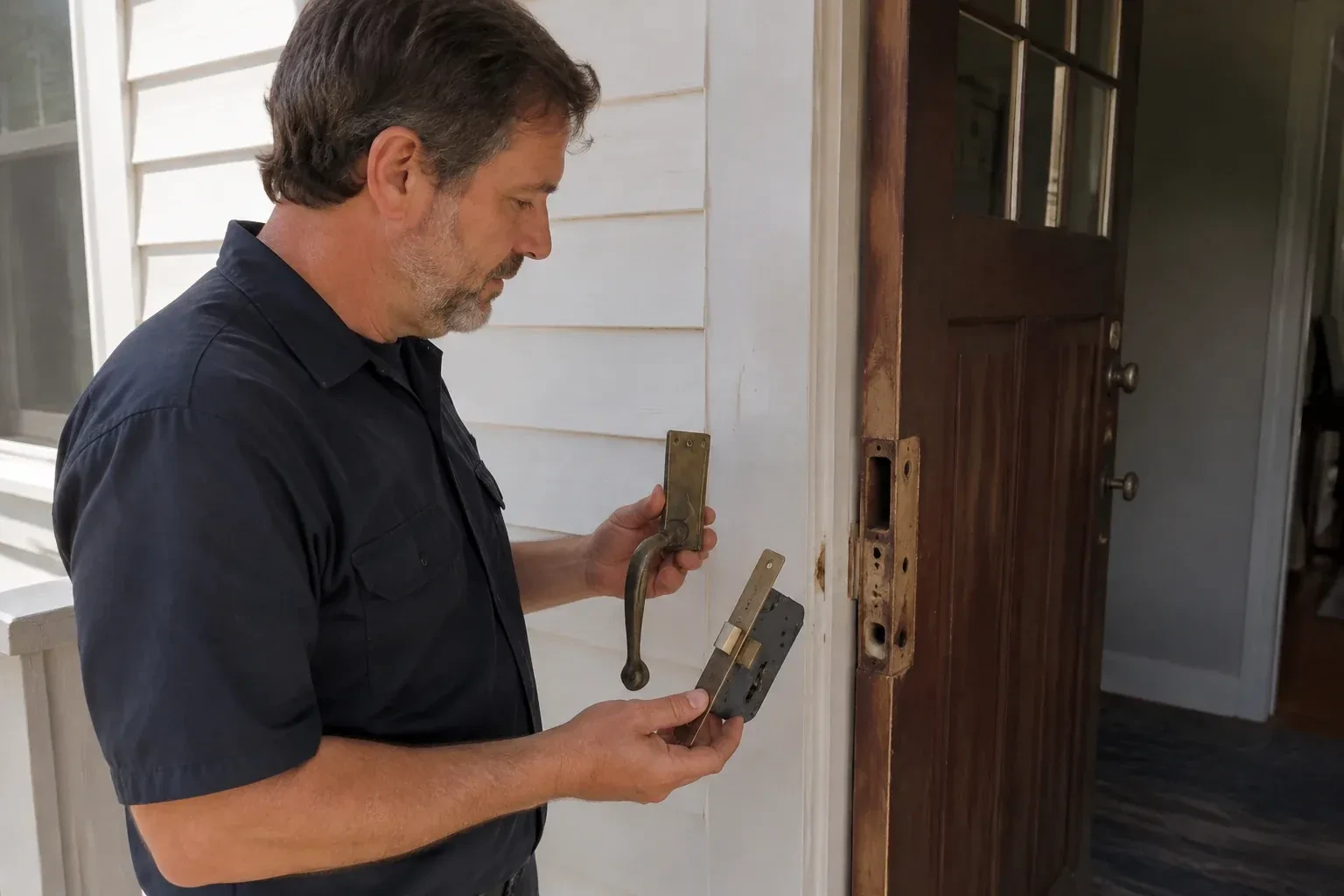
Someone painted the door years ago without removing the hardware.
In plain words
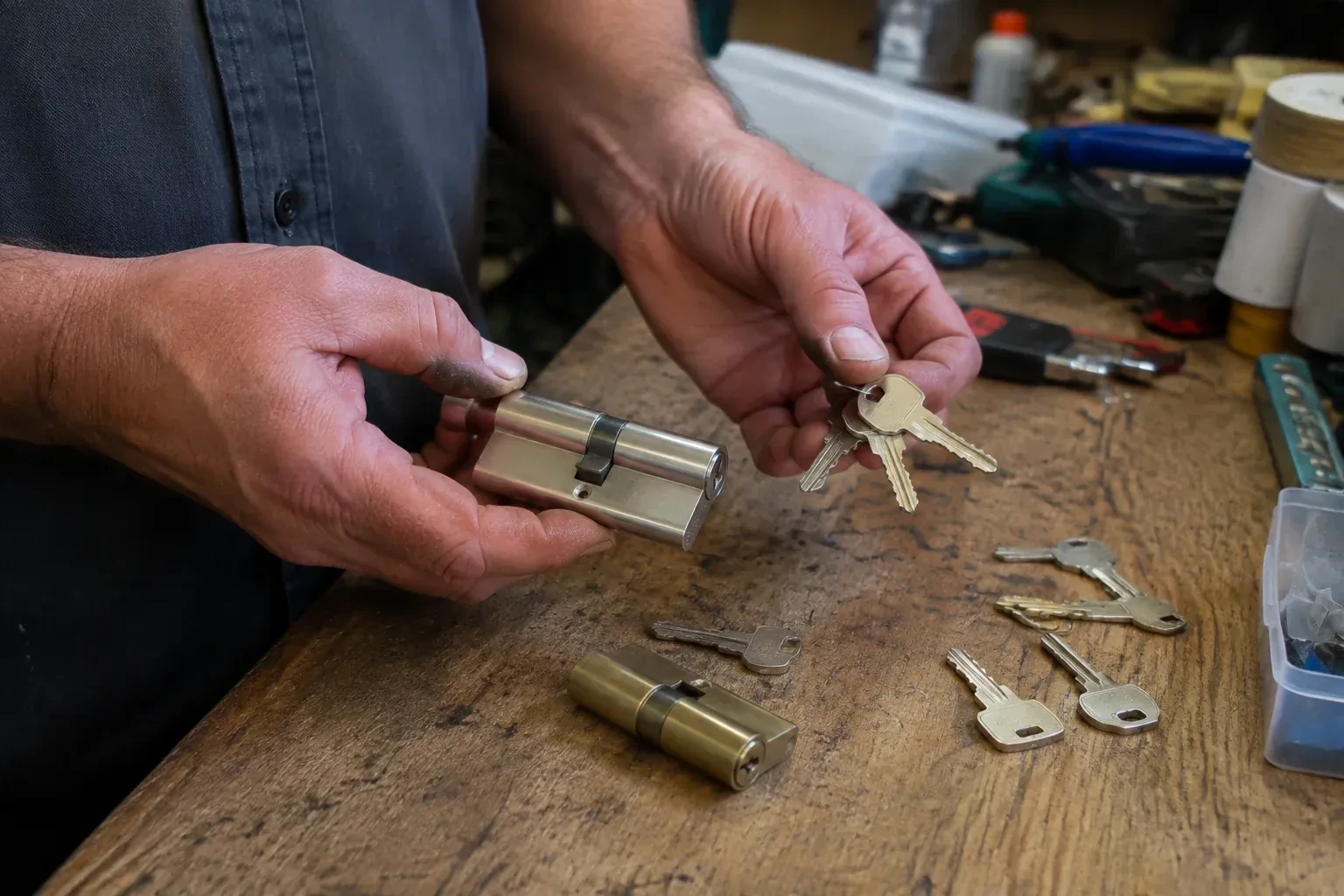
Keys are the part of the job people expect to be impossible, and they rarely are. A bit key, the skeleton key style used on older doors, is cut and filed on the bench to the wards and levers of your particular case, so a lost key can be replaced from the lock itself. A round cylinder on a later mortise lock is rekeyed like any modern cylinder, or exchanged for a new cylinder of matching thread and cam if it is worn out. Either way the service ends with keys in your hand that turn the original lock, and a spare made while the case is on the bench.
How the visit goesThe old skeleton key still fits the keyhole, but it now needs a jiggle, a lean on the door and a little luck before the bolt moves. Last week it took three tries. You have one key and no idea where a second could come from.
Vintage Mortise Lock Service
How the visit goes

Which keys exist and who has them
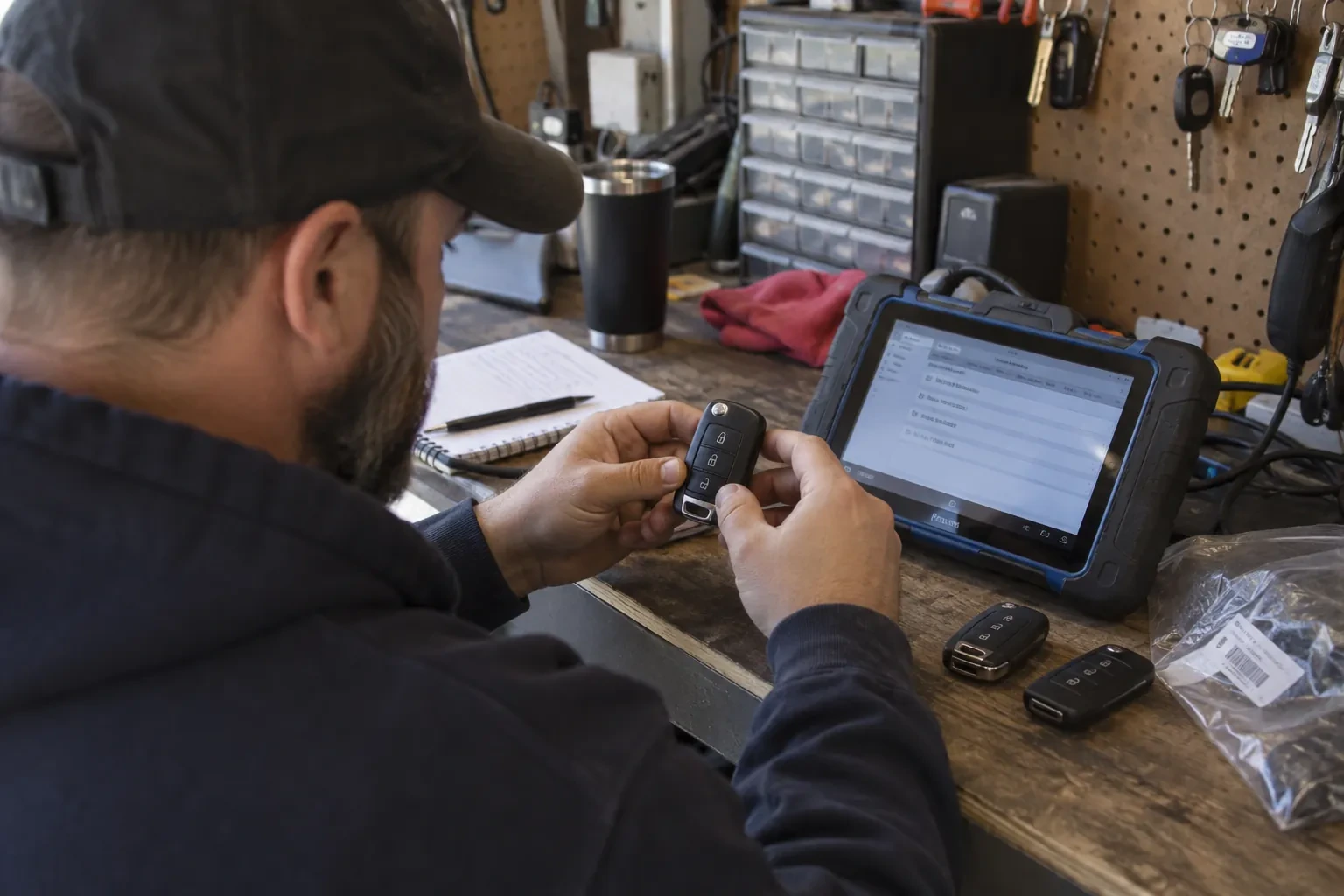
The locksmith asks to see every key that goes with the door: the one that works, the ones that used to, and the bag of loose bit keys that came with the house. A worn original is still the most useful pattern for a new key, and a bent one explains why the lock has become temperamental. For a cylinder lock, a lost or stolen key is a reason to rekey while the case is out, and a key that only a former occupant holds is worth retiring. The count of keys wanted afterwards is settled now too, so the spares are cut while the lock is on the bench rather than on a return visit.
Cylinder work on a later mortise lock
A pin-tumbler cylinder on a mortise lock is serviced the same way as a modern one. The plug is pushed out with a follower, the old bottom pins are replaced to a new combination, and keys are cut to match, so a lost key stops mattering. If the plug is worn past rekeying, a new mortise cylinder is selected with the same thread length, the same cam shape and a finish close to the trim, and threaded into the case to the correct depth so the cam swings the bolt without binding. The set screw is seated into the cylinder's groove, and the key is tested with the case in the door.
A lock that feels new and looks old
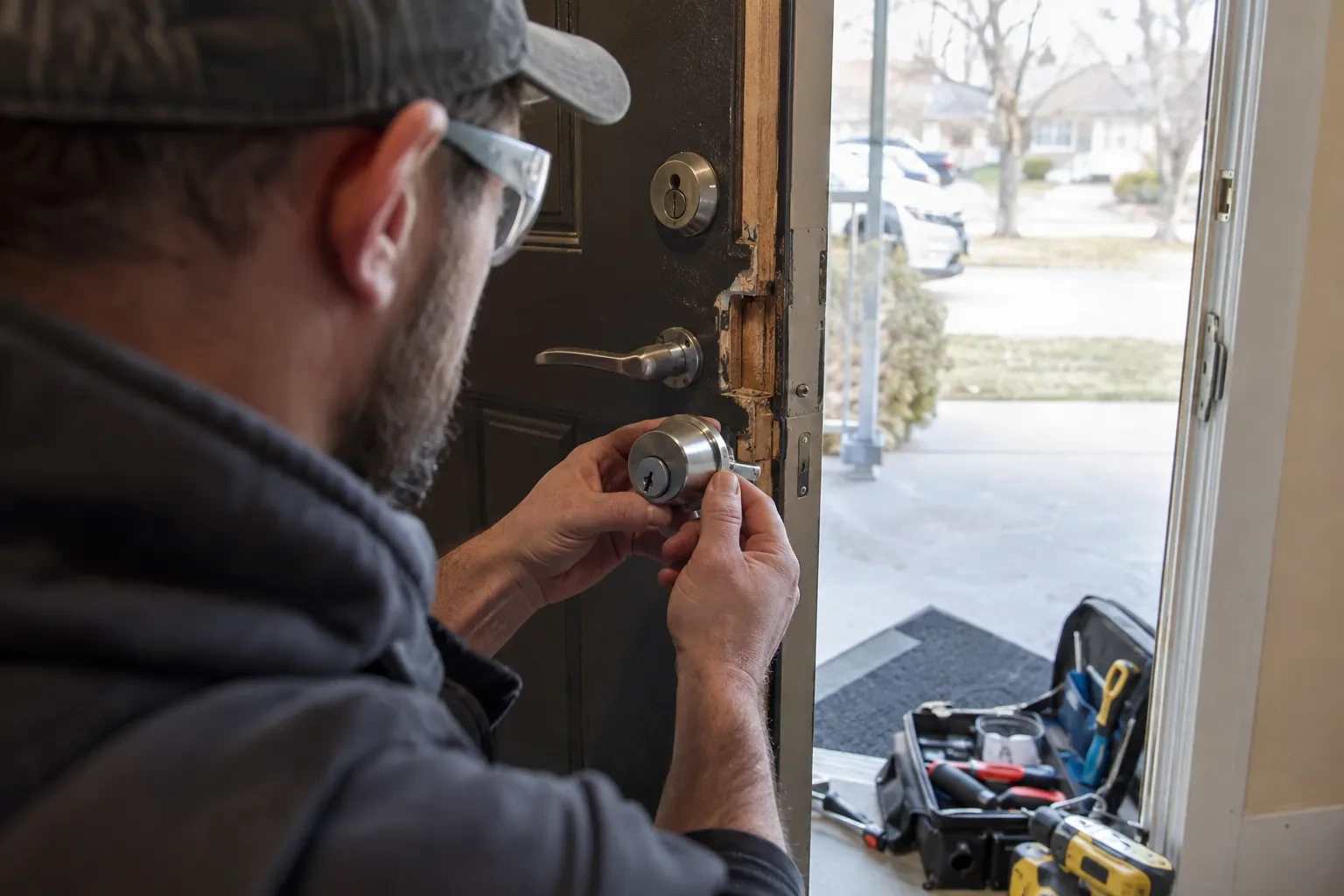
What you get back is the door you had, with the lock working as it was designed to. The knob returns level with a snap, the latch catches when the door is pushed shut, the deadbolt throws with a light turn of the key or the thumb-turn, and the key goes in and out without a wiggle. Nothing on the face of the door has changed except that the brass has been cleaned where it was handled. The locksmith runs through each function with you from both sides before leaving, so the standard of what has been done is something you have seen, not something you have been told.
Vintage Mortise Lock Service
In the van
Hub followers and lever packs
Latch and hub springs
Reproduction mortise case
Spindle and knob set screws
Bit key blanks
Vintage Mortise Lock Service
What affects the quote
Keying doors alike
Bringing several interior locks onto one bit key, or several cylinders onto one flat key, is extra bench work per lock and is simplest to arrange while all the cases are out on the same visit.
Missing or mismatched trim
Sourcing a knob, escutcheon or thumb-turn to match the survivors, from salvage or reproduction stock, is quoted as parts plus the search. Reusing your own trim from another door avoids that line.
Strike and hinge work
Where the door has dropped or swelled, adjusting or moving the strike and tightening or packing hinges is part of the fix. It is small work but it is listed, so you see what was done to the door.
What to have ready
- How many keys would you like to have afterwards?
- Is the property designated as a heritage building?
- Does the deadbolt throw fully with the key or the thumb-turn?
Vintage Mortise Lock Service: questions
QuestionsCan a modern cylinder be fitted to my old mortise lock?
Often, on cases that already take a threaded cylinder. Mortise cylinders are made in standard thread sizes and lengths with different cam shapes, and a new one is selected to match the case and the door thickness. That gives you keys cut on a machine and the option of keying the door alike with the rest of the house. A bit-key case has no cylinder to swap; its keys are made on the bench instead.
How should I look after the lock once it is serviced?
A drop of the right lock oil into the latch and bolt once a year is plenty. If the lock has a pin-tumbler cylinder, use whatever lubricant that cylinder's maker specifies, since some take a dry graphite or PTFE product and others a specified liquid one. Try the latch and deadbolt each spring and fall; if the bolt starts to scrape, the strike wants a small adjustment before anything is strained. Keep bit keys out of a pocket where they bend.
My home is a designated heritage property. Does that change anything?
It reinforces the choice to service rather than replace. Where a property carries a heritage designation, changes affecting listed features can need extra sign-off, and original door hardware is occasionally among those features. A rebuilt mortise case with its original trim is preservation rather than alteration, and the locksmith's written record of what was retained and what was replaced is useful for your file.
Related services
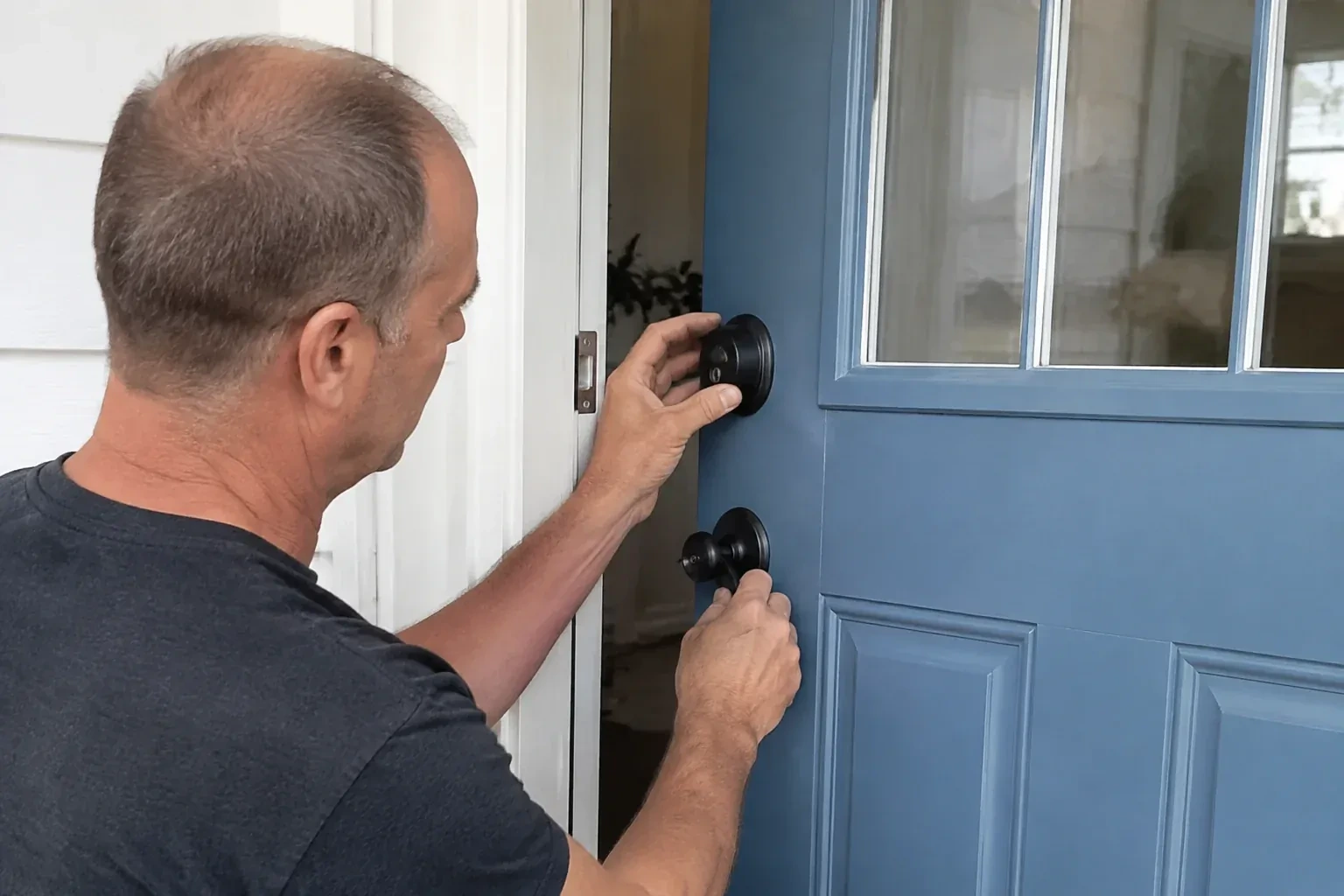
- Deadbolt InstallationThe back door has a deadbolt in name only: a short bolt, a thin brass strike held by two little screws, and a jamb you can flex with your palm.
- Lock Replacement & UpgradeThe century home's original mortise lock takes a key the size of a spoon, sticks in humid weather and has worn its strike to a groove.
- Smart Lock InstallationYou have just taken possession of the house and the previous owners handed over a keypad deadbolt with a code nobody wrote down and an app account you cannot get into.