Commercial · Henry Farm
Commercial Rekeying in Henry Farm
The renovation is finished and the contractors have gone, along with the loaner keys they used for six weeks.
In plain words
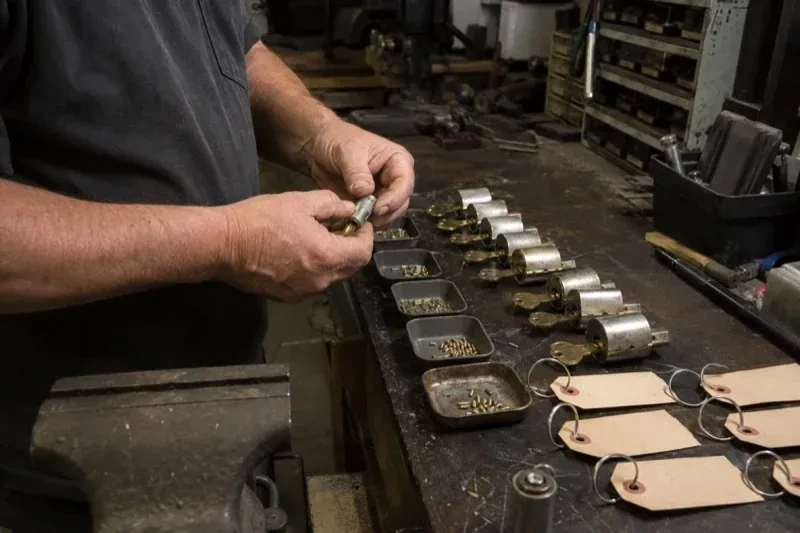
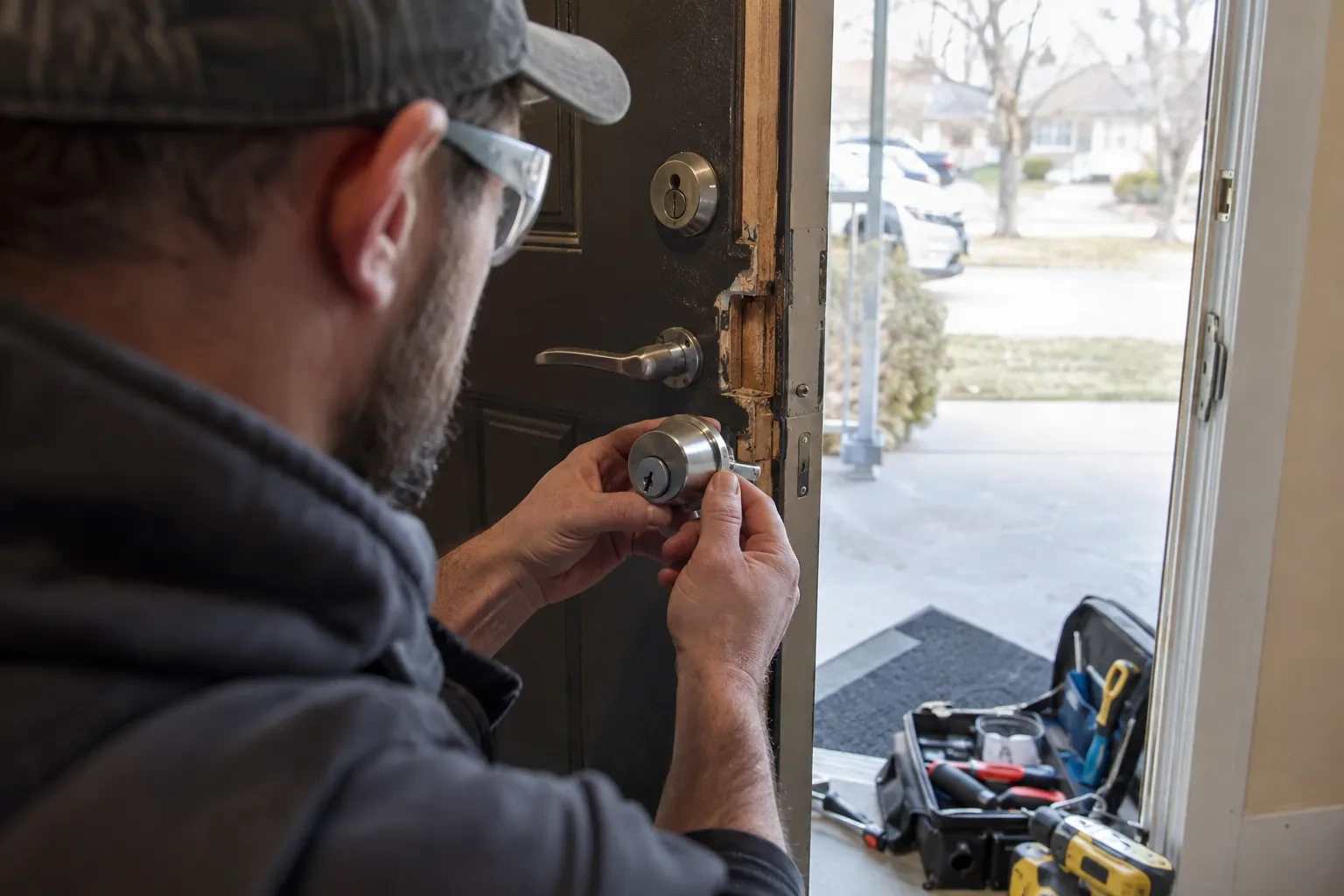
Commercial rekeying changes the pins inside a business's existing lock cylinders so that a new key operates them and every earlier key stops working, while the hardware itself stays on the door. The locksmith works from a list of the openings the business controls and the people who need to pass through each one, sets the cylinders to fresh combinations, cuts keys to match and records which key opens which door. Because nothing is replaced unless it is worn, a whole premises can be brought back under control in one scheduled visit, with the doors locking and unlocking exactly as before but answering only to keys you have counted.
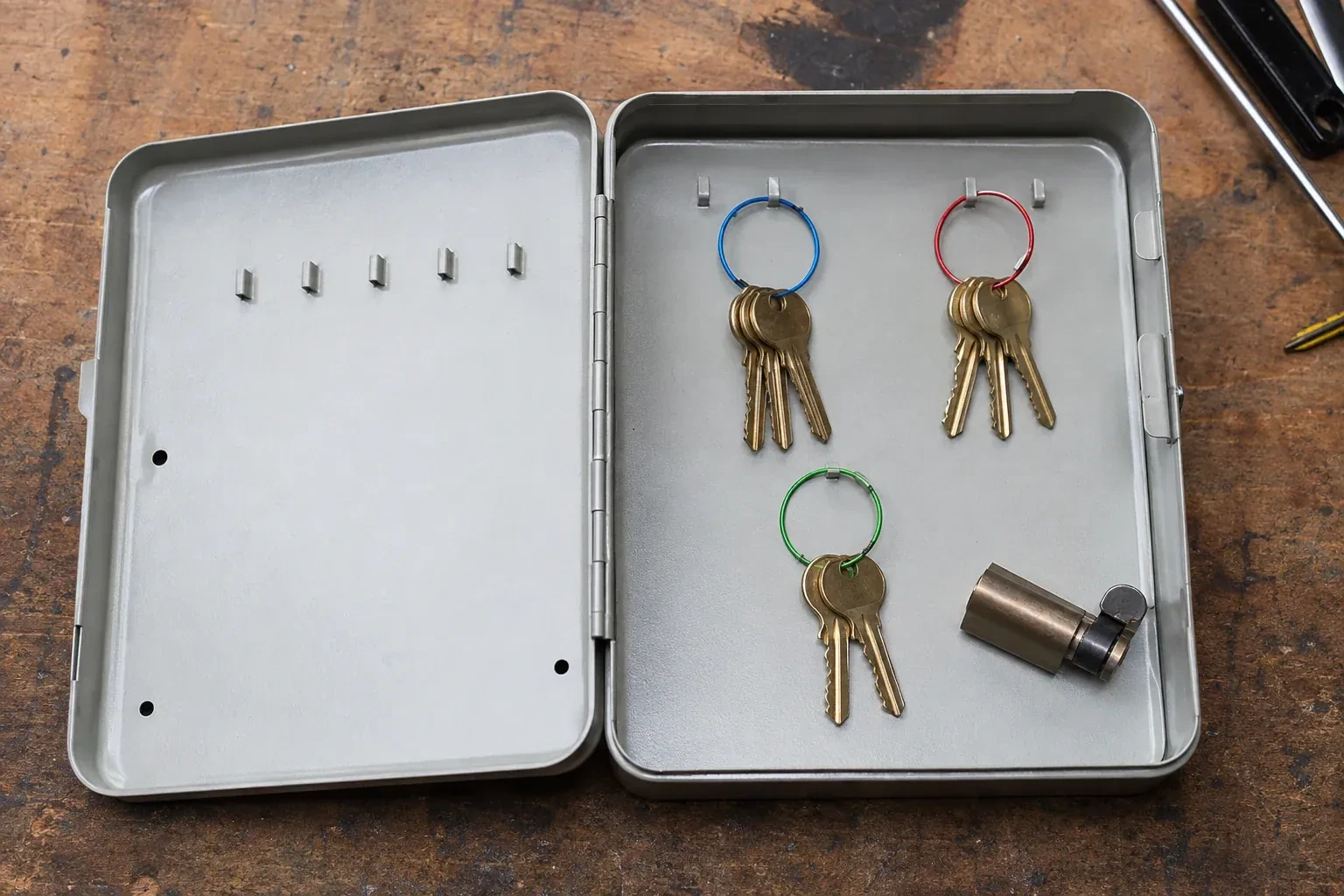
How the visit goesThe drawer behind the counter holds a tangle of keys with tape labels: front old, side, Dave. Some open things, some open nothing, and the hardware-store copies mean the true count drifted long ago past anything written down.
Commercial Rekeying
How the visit goes
Which doors are the landlord's
In a plaza, an office building or a multi-tenant industrial unit, some doors on your floor plan are not yours to rekey. Corridor doors, electrical and mechanical rooms, shared loading doors and the building's fire exits usually sit on the landlord's master system, and a suite entrance may be required to accept the landlord's key as well as yours. The locksmith sorts the openings into two columns before starting: those the lease puts under your control, which get the new plan, and those that stay as they are or need the property manager's say-so. Where a suite door must accept both a tenant key and the building master, it is pinned to do exactly that.
Door by door, never a gap
The sequence agreed at the assessment is followed on the day. The locksmith finishes one opening entirely before beginning the next: cylinder out, repinned, refitted, tested with both the new key and the old, and locked again. Only then does the next door come apart. The main entrance is usually left for last and done while someone from the business is present, so there is never a moment when the premises has a door that will not lock. Staff who are working during the visit are handed their new key before the door they use is changed, and a short note goes to anyone off shift about where to collect theirs.
Telling the landlord and the alarm company
A rekey touches a few people outside the business, and the handover covers them. If the lease asks for it, the landlord or property manager receives a key to the suite entrance and a note that the locks were changed, which keeps you onside for emergencies and inspections. The alarm monitoring company is given the updated keyholder list, and it is a good moment to change the alarm codes of anyone who no longer works there, since a key and a code usually leave together. Cleaners, the courier with after-hours access and the neighbour who watches the place on holidays each collect their new key against the register like everyone else.
Commercial Rekeying
In the van
Interchangeable cores and control key
Plug follower
Code key machine
Key stamp set and tags
Commercial pin kit
Commercial Rekeying
What affects the quote
A master key plan
Pinning cylinders to accept both a change key and a master, and designing the chart so no key opens a door it should not, is more work per cylinder than keying everything alike.
No existing chart or keys
When nobody knows what the current keys open, the locksmith reads and records each cylinder before planning the new keying, and that reconstruction is time in the quote.
Upgrades chosen on the day
Some businesses use the visit to move to interchangeable cores, add a lockbox for the alarm company or fit a heavier cylinder on the cash room. Each is a separate line you can accept or leave.
What to have ready
- Can you gather every existing key so they can be read on site?
- How many keys do you need cut, and for whom?
- Are any cylinders stiff, loose or hard to turn at the moment?
Commercial Rekeying: questions
QuestionsDo I need my landlord's consent before rekeying my unit?
Read the lease, because that is where the answer lives. Commercial tenancies are governed mostly by the lease itself, and many leases require the tenant to tell the landlord when locks change, to provide a key for emergencies, or to use the landlord's approved locksmith. Doors on the building's master system, such as corridor or service doors, are normally the landlord's to change. Bring the lease to the assessment and the locksmith will sort the doors accordingly.
What is the difference between rekeying a business and replacing its locks?
Rekeying keeps every lock on the door and changes only the pins inside the cylinder, so a new key works and the old ones stop. Replacing swaps the hardware itself. Commercial cylinders are made to be repinned many times, so rekeying suits any lock in sound condition and leaves the levers, trim and door untouched. Replacement is chosen door by door for cylinders that are worn, corroded or too light for what they protect.
Does stamping keys 'do not duplicate' stop people copying them?
Not reliably. The stamp is a request, and any key on a standard blank can be copied by anyone with the blank and a machine. What does work is controlling the blank itself through a restricted keyway, or controlling access to the lock through interchangeable cores and a tight register. Stamping still has a place: a serial code on each key, instead of the business name, lets you track it without telling a finder where it fits.
Related services
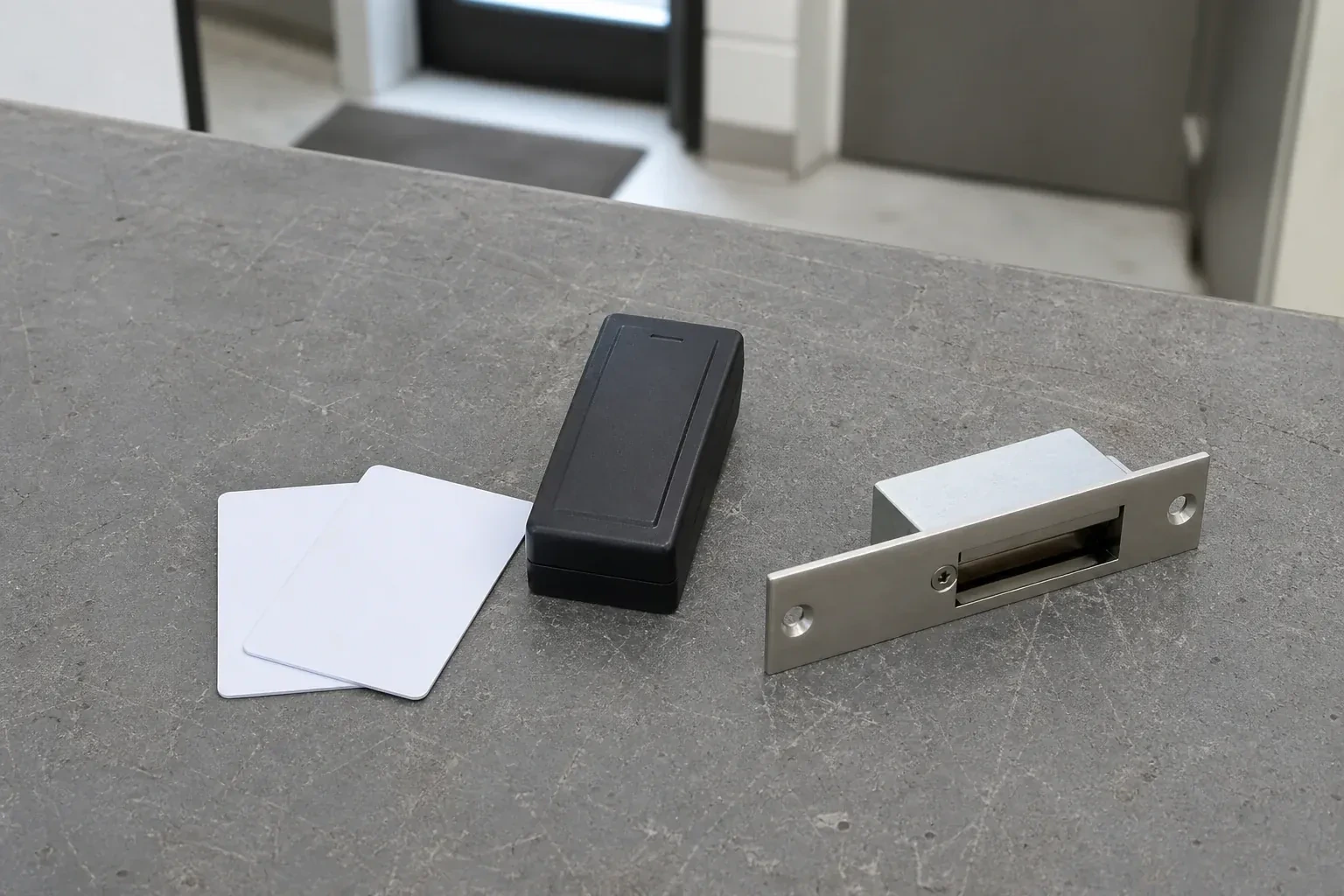
- Access Control InstallationThe keypad on the side door has started sticking on cold mornings, codes get shared instead of reset, and half the staff still remember a code you meant to retire two hires ago.
- Panic & Exit HardwareThe fire inspector's note is blunt: the banquet hall's second exit still turns on a deadbolt, and the crowd it is rated to hold needs a door that opens under one motion, no key involved.
- Commercial-Grade Lock ReplacementHead office wants every branch keyed alike under one system, and half the locations are still running whatever lockset the original contractor happened to install years ago.