High security · Henry Farm
High Security Locks in Henry Farm
Your shop has had four employees leave in two years and each one had a key.
In plain words
Upgrading to high security rarely means new doors or a big disruption. Many high security cylinders retrofit into the existing deadbolt or lever, so the door preparation stays as it is and only the cylinder and keys change. A heavier deadbolt uses the same bore as the old one in most cases. The strike and hinge screws are swapped for long ones that bite into the framing. The visible difference afterwards is small; the practical difference is that the door resists the tools and tricks that defeat ordinary hardware, and that nobody can copy your key without you knowing.
How the visit goesAfter the attempted break-in the police officer pointed at your door and said the strike plate was held by two short screws. Nobody got in, but you have looked at that door differently every evening since.
High Security Locks
How the visit goes
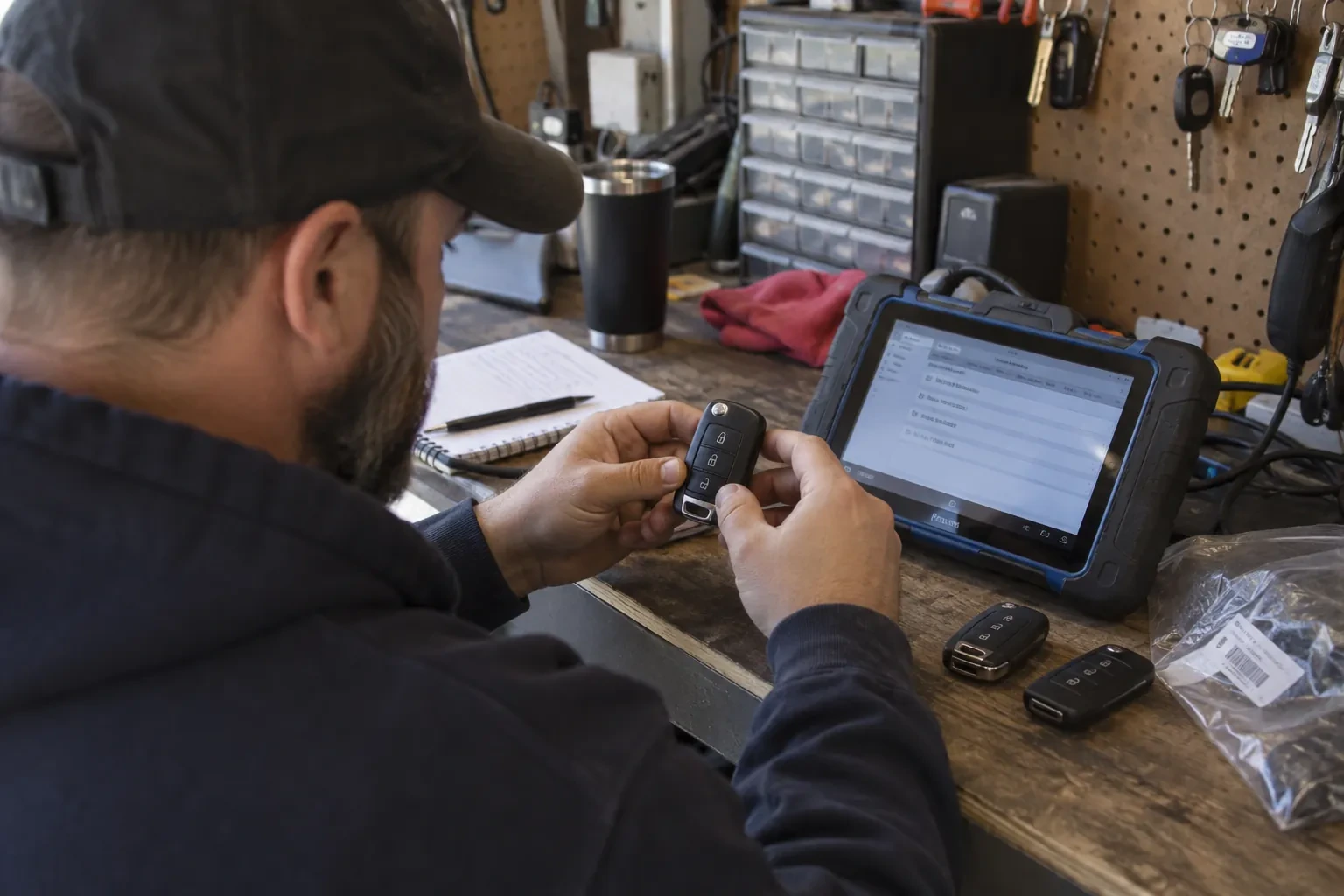
Matching the rating to the risk
Ratings are only useful if someone explains them. A residential deadbolt carries a hardware grade for security, durability and finish based on hammer blows, pulling force and cycle testing. A high-security cylinder carries a separate laboratory listing based on how many minutes it resists picking, drilling and forcing. The locksmith explains what each figure means in practice for your door and points out the rule that matters most: the whole assembly takes the grade of its weakest part. That conversation ends with a recommendation you understand rather than a part number you have to trust.
Reinforcing the strike and frame
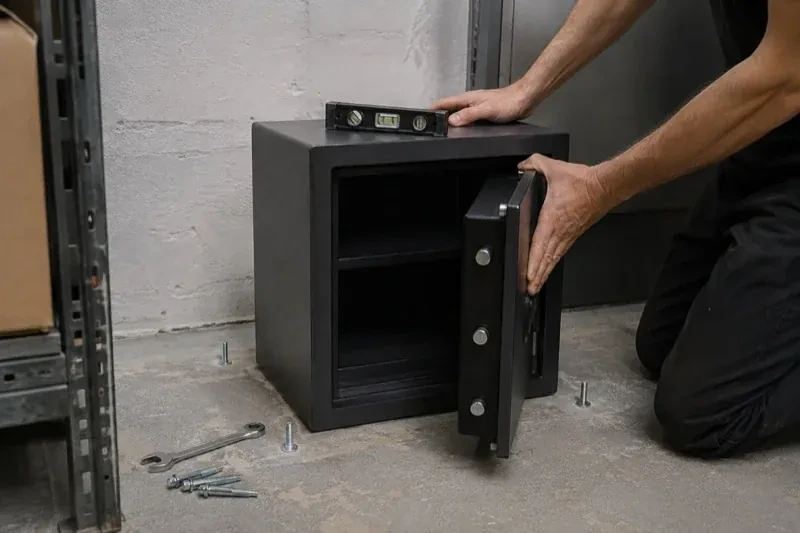
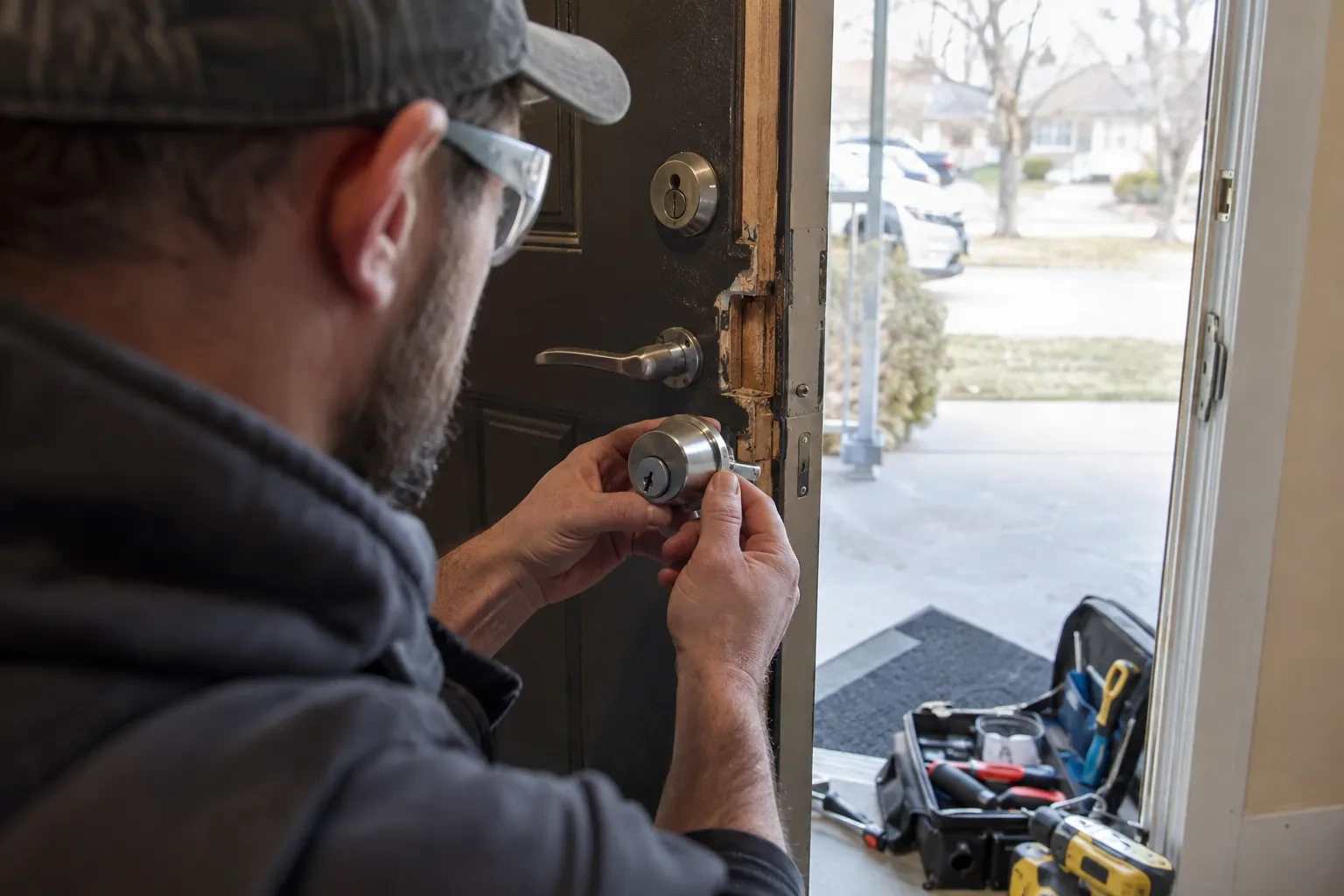
The strike is where a forced door actually fails, so it gets serious attention. The stamped plate comes off and the pocket is deepened to accept a box strike or a long reinforced strike, fastened with three-inch screws that pass through the jamb into the wall framing. Stripped or split wood is filled and doweled first so the screws have something to hold. Where the frame is thin, a wrap-around reinforcer around the door edge and a full-length jamb plate are options. The result is a bolt that ties the door into the house rather than into a strip of trim.
Looking after a precision cylinder
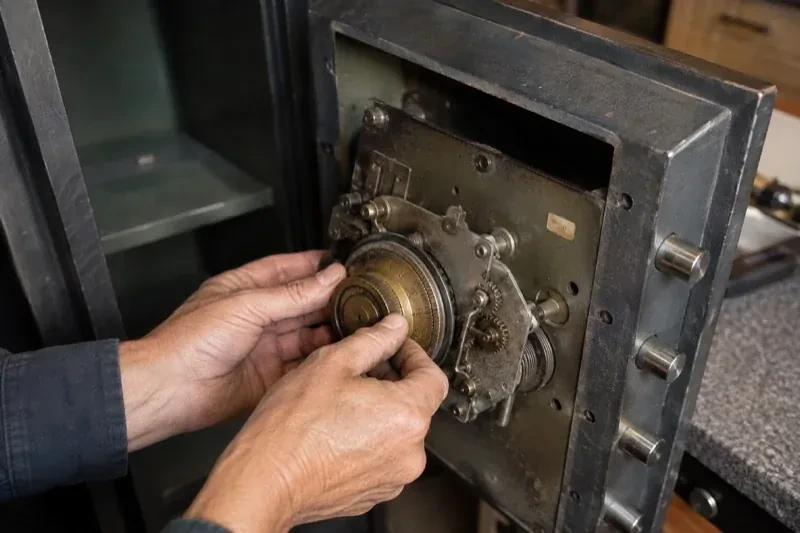
High-security cylinders are finer mechanisms than the pin tumblers they replace, and a little care keeps them turning sweetly. Use only the dry lubricant the locksmith recommends, once or twice a year and sparingly, and never household oil, which gathers grit around the finger pins and sidebar. In cold weather, if the key resists, warm it in your hand or use a de-icer rather than forcing it. Insert the key fully before turning. Keep a spare key indoors so a bent or worn key is retired rather than pushed on. Treated this way, the cylinder outlasts the door around it.
High Security Locks
In the van
Patented key blanks
Reinforced strike plate
Graded deadbolt with hardened bolt
Box strike
High-security cylinder
High Security Locks
What affects the quote
Exit devices and closers on the same door
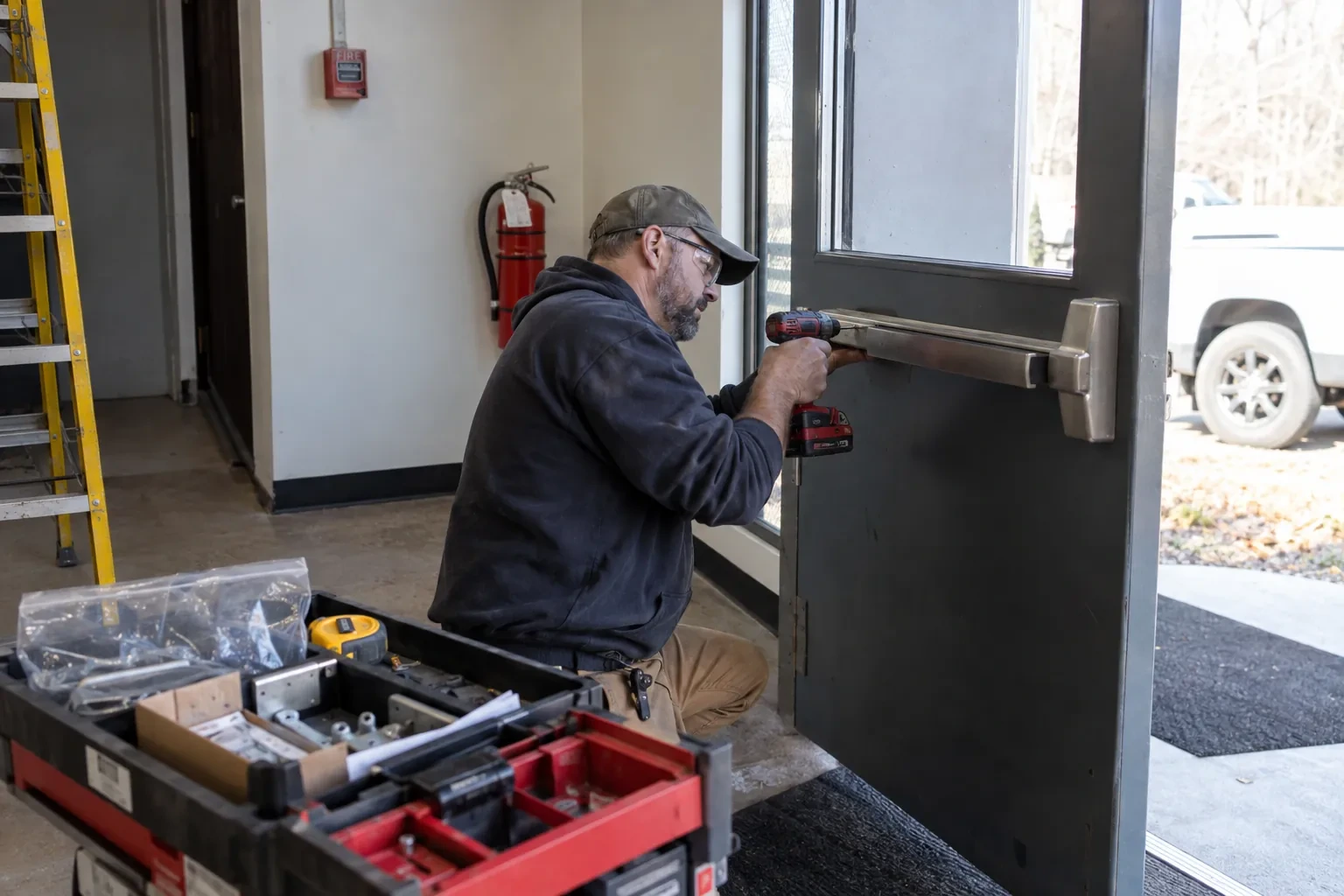
Where a commercial door carries a push bar or closer, the new lock must work with them, and adjusting or replacing that hardware is part of the same visit.
Documentation and registration
Setting up the key register, recording signatories and providing a written schedule of cylinders and keys is real work on a business system and is listed rather than hidden.
Number of doors
Each door gets its own cylinder or lock, strike work and testing. Several doors on one keyway share the setup cost of the key system but add hardware and time per opening.
What to have ready
- Is the door wood, steel-clad, fibreglass or aluminium with glass?
- Has the door ever been forced, or has a key been lost or not returned?
- For a business, who should be allowed to authorise new keys?
High Security Locks: questions
QuestionsWhat proof do I need to show before locks are changed?
The locksmith confirms that the person ordering the work is entitled to change the locks: the owner, a tenant with the landlord's agreement, or a property or facilities manager for a business. Photo identification and something linking you to the address usually settle it, and for a company a letter or a call to the named contact does the same. It protects you as much as anyone, since the same check stops someone else from changing your locks.
What does key control mean in practice?
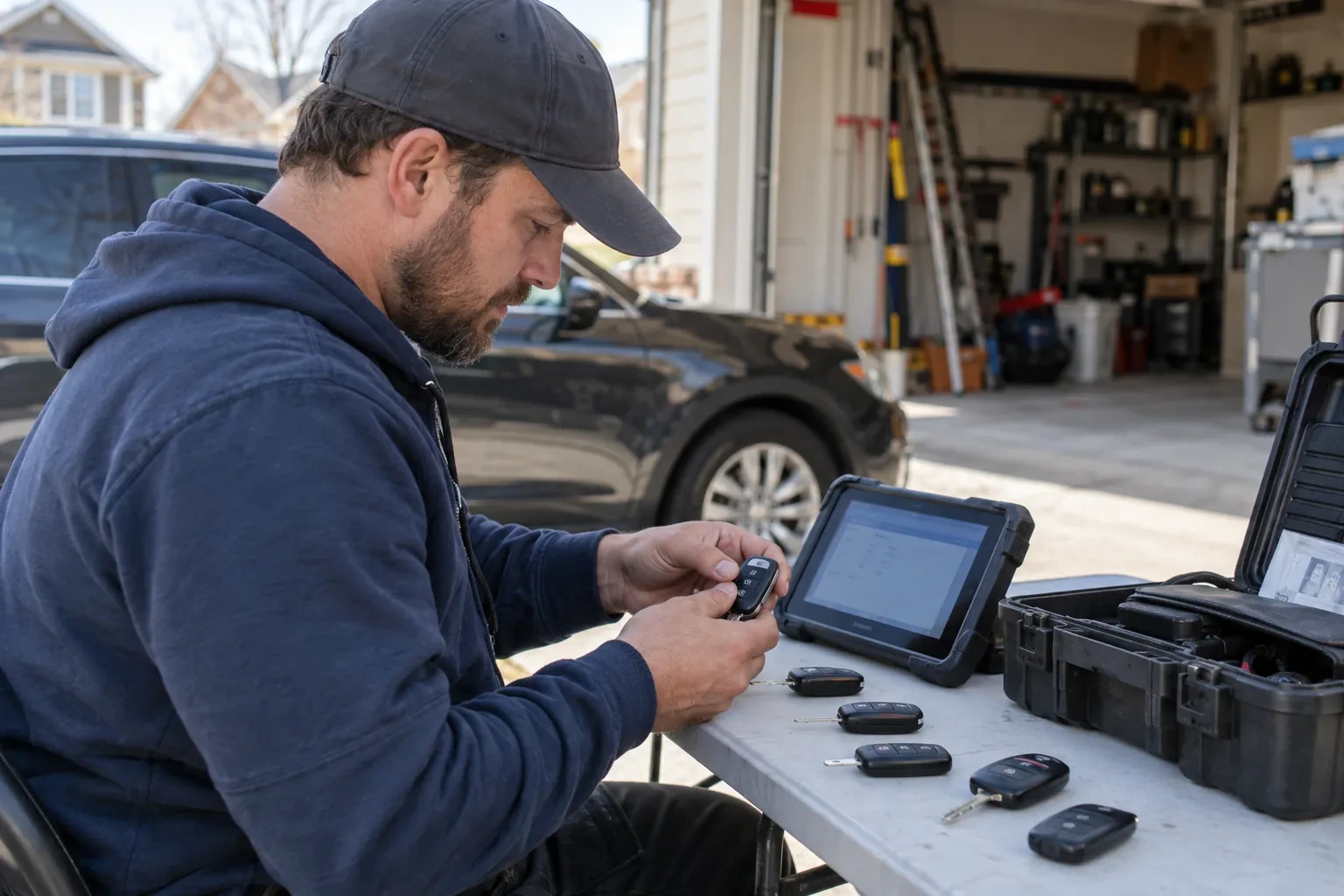
It means your key can only be copied through the locksmith who manages your system, after checking that the person asking is on your list of authorised names. Blanks for the keyway are not sold to hardware stores or kiosks while the patent lasts. Each key is numbered and recorded, so you know how many exist. For a home that ends the worry about old copies; for a business it turns a lost staff key into a known, manageable event.
How long does the installation take?
A cylinder swap with new keys on one door is a short visit. A new deadbolt, reinforced strike and frame repair takes longer, and several doors keyed to a plan take longer again, mostly in bench time pinning cylinders. The locksmith gives you a realistic estimate once the doors have been looked at, because the frame condition and the door preparation matter more than the count of locks alone.