Henry Farm Lock Experts · Toronto
Lost Keys — Same-Visit Rekey: what the visit covers
Locksmith · Toronto, Ontario
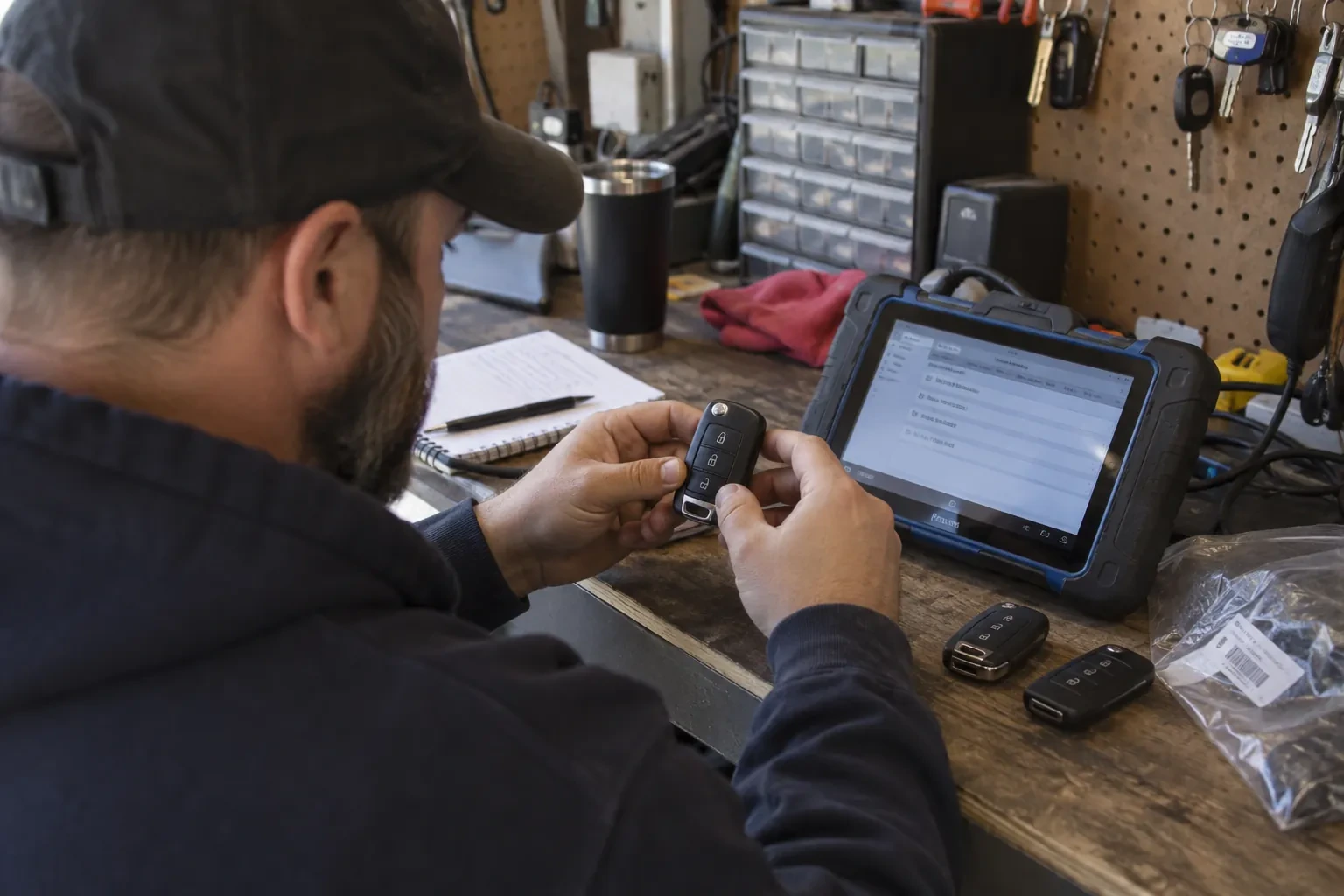
When a key disappears, cutting yourself another copy solves the wrong half of the problem. You can get in again, but so can whoever finds the original. A same-visit rekey turns that around: the locksmith works through each cylinder the missing key operated, fitting new bottom pins on a conventional lock or resetting a homeowner-rekeyable one through its own procedure, and refits the lock to the door. The lost key still slides into the keyway but no longer lifts the pins to the right height, so it turns nothing. You leave with fresh keys cut on site and the same locks you already had.
How many keys, and who gets them
Before pins are touched, the number of keys is agreed, because that number is the whole point of key control. The locksmith asks who in the household or business needs one: each adult, a teenager, a caregiver, the neighbour who feeds the cat, the landlord, the cleaner. Each name gets a key and the total is written down. Anyone who had a copy of the old key but is not on the new list is, from that moment, simply someone without a key. Knowing the count on day one is what makes it possible, years later, to say with confidence exactly how many keys to this property exist.
Removing the cylinder without disturbing the door
Each cylinder comes off in the way its lock allows, and the door itself is never cut or drilled. A knob or lever lock releases its cylinder once the knob is slipped off its spindle and a retaining clip or cap is eased back. A deadbolt cylinder comes out when the interior thumb-turn assembly is unscrewed and the housing lifts away. A mortise cylinder in an older door backs out after its small set screw is loosened, and a rim cylinder on a night latch unscrews from its back plate. Each piece is set aside with its own screws so the door goes back together exactly as it was.
When to think about rekeying again
Rekeying is a repeatable act, and after this visit you know what triggers it. Moving into a new home, because previous occupants and their helpers may hold copies. A contractor or tenant leaving without handing a key back. A separation or a change of roommates. A ring lost with anything that names your address. Manufacturers list exactly these moments, and a household that treats them as routine stays in control of its doors for decades with the same hardware. The locks on the door today can be repinned many more times; only the small pins and the keys change each time.